
On the Politics of Womanhood and Self-Definition
Curator and writer Sarah Aldihbashi interviews artist Fa Razavi
Born in Bushehr, Iran, and now based in London, Fa Razavi’s paintings bring personal memories alongside the histories, expectations, family dynamics and social structures that shape women’s individual and collective lives. Her work examines her childhood, the experience of growing up in Iran, the restrictions surrounding womanhood and the relationship between private experience and collective struggle. Through her depictions of women, Razavi explores the tensions between self-perception and the identities imposed upon them.
In her artist statement, Razavi recalls drawing her reflection in secret as a child, an early act of defiance that continues to inform her practice. Her paintings begin with imagined stories inspired by real events, which she develops through drawings, gouache studies and photographs staged with life models. Working with oil, she draws on the compositions of Renaissance and Baroque painting to bring overlooked experiences of women into the frame, while questioning the traditions through which history has been told.
In our conversation, we speak about the expectations that shaped Razavi’s early understanding of womanhood, how her experiences of living abroad have informed her practice, and the relationship between personal memory and collective resistance. We also discuss the shift in her paintings from individual figures towards collective scenes, her recent residency in Norway, and her return to education.
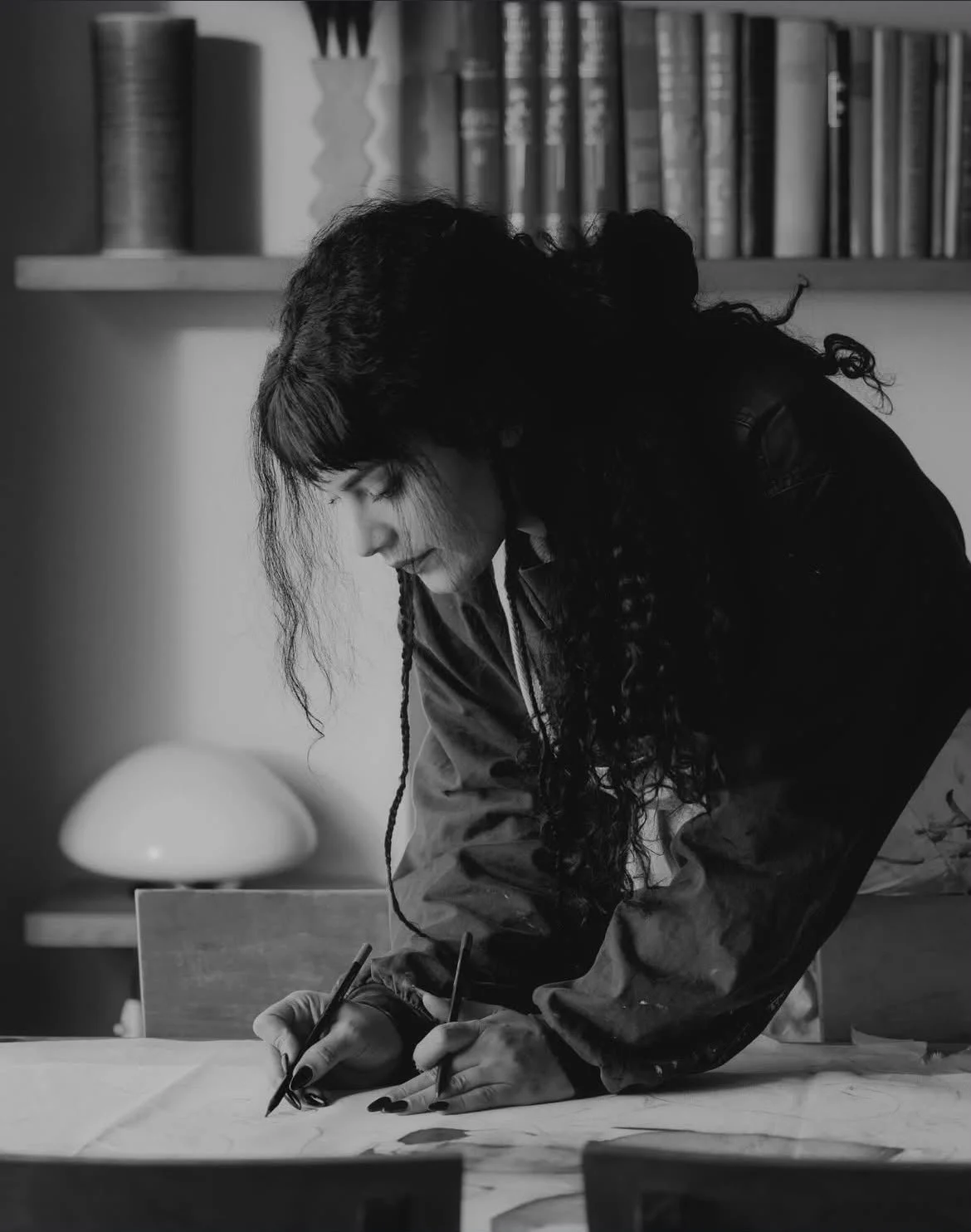
Cover image is Courtesy of Mariell A Lind Hansen and the artist
Sarah Aldihbashi: I was really happy to have the opportunity to interview you, You were the first person I thought of to interview for Naso. I recognise certain similarities between us that are beyond our geography, especially in the ways women from our part of the world are so often expected to understand themselves through perspectives imposed on them always from elsewhere. What I’ve always admired in your work is your conviction in holding onto your own understanding of yourself and your womanhood, without allowing that understanding to be sabotaged by a foreign lens. I’m curious about how you got to that conviction, and if your relationship with this outside gaze has changed over time?
Fa Razavi: I’m happy, too, that our shared experiences have brought us to this conversation. I think we need conversations like this now more than ever.
As a child, when I began to understand the differences between myself and my brother, and the rules of the world I had been born into, I realised how difficult becoming a woman in Iran could be. So, from the beginning, I didn’t want to be what I was. Not that I wanted to be a man, no. I just didn’t want to be a woman. I was afraid of puberty, of my body becoming a woman’s body, of my first period and the ceremony at nine marking the beginning of my religious obligations. In my child’s mind, I imagined that perhaps I could delay that day. I cut my hair short like a boy’s and hid my body under my clothes. Womanhood felt like a heavy burden, like chains binding my free spirit.
But eventually, a day came when I could no longer run away from myself. So I began putting on masks, one over another. The good daughter, the good woman, the good girlfriend. I grew my hair long, painted my nails, laughed quietly and tried to be who others expected me to be. But gradually, those masks became so heavy that I could no longer bear them. It felt as though a lifetime of exhaustion had come crashing down on my shoulders. The day I decided to take them all off was the strangest day of my life. When I looked in the mirror, what remained no longer had a gender. I was simply myself.
My liberation began the moment I set aside all Eastern and Western standards of womanhood and saw myself through my own eyes.
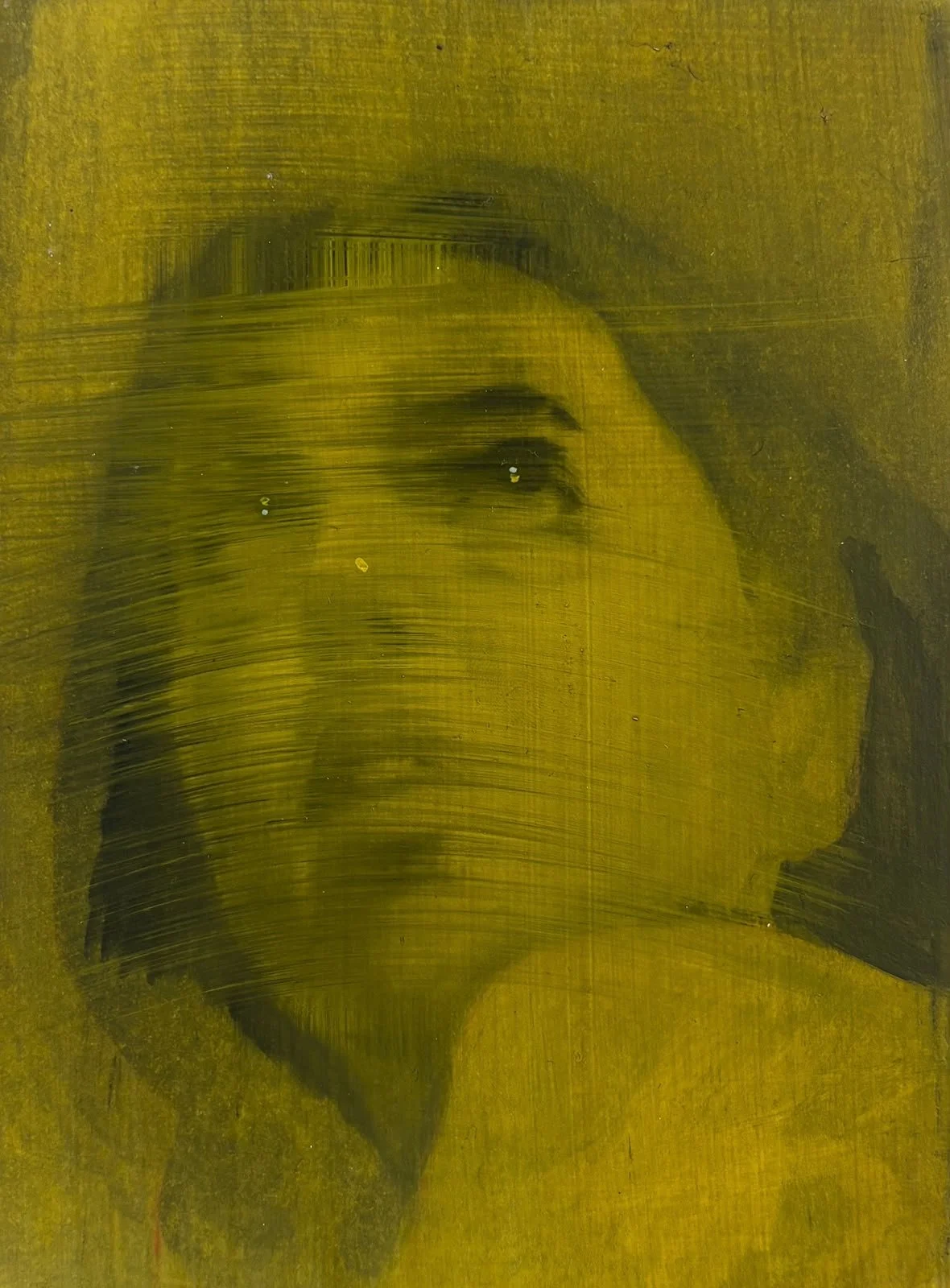
S.A: You have spoken about the restrictions that shaped your understanding of womanhood. I’m interested in the relationship between those restrictions and the intimacy your figures seem to have with themselves. I think about the barriers that can form between a woman and her own sense of self, whether they are imposed within the household or exist more broadly in the world around her. What does it mean to make that private relationship with oneself visible, especially when visibility can itself become an act of rebellion?
F.R: I think the first thing being a woman taught me was to hide. A mother who swallowed her anger, a grandmother who wasn’t allowed to look at her body in the mirror, even in the privacy of the bathroom, and women who had to laugh quietly and make themselves less visible.
In the culture I grew up in, being a woman was deeply tied to remaining hidden. Perhaps that is why my first response to all that silence was a desire to be seen. I wanted to express myself, to shout, to be angry. I wanted my grandmother to look at herself in the mirror, my mother to shout out her anger, and to have the right to speak myself.
When I was a child, at family gatherings, the men would go into one room after the meal and the women into another. I don’t know what the men talked about, but the women with their stories, their unspoken words, and the things they only dared to say when the men weren’t there could have set everything on fire. Perhaps that was when I began to believe in the power of women coming together, in a shared anger and passion that could change the fate of future generations.
S.A: Since moving away from your home country, have the barriers between yourself and your sense of self taken on a different form? I wonder too, whether distance has allowed you to approach these experiences differently in your work, or whether it has raised other questions.
F.R: After I moved abroad, those barriers didn’t disappear. They became more complex and layered. Distance gave me the chance to see other forms of the same restrictions, restrictions that persist in other countries through different languages and values. More than giving me answers, this experience deepened my questions.
Why, in different parts of the world, are women’s bodies and identities still subject to other people’s decisions? Why do politicians still make decisions about women’s most personal rights? pregnancy, abortion, what they wear and even standards of beauty?
How can a person’s most basic right be taken away so easily?
Being away from Iran showed me how widespread this wound is, and how far we still are from equality.
Today, these questions have become part of my painting, too.
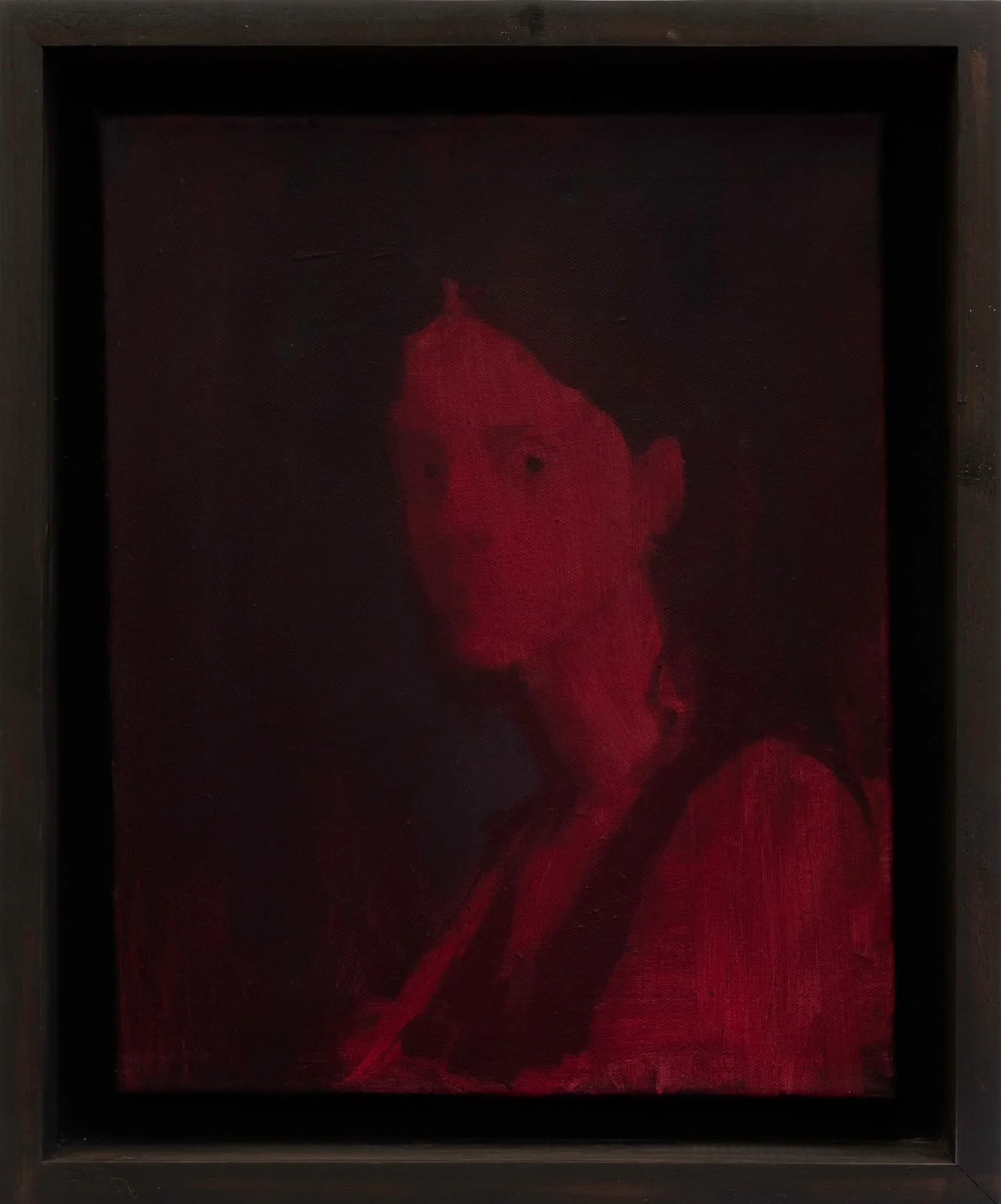
S.A: I’ve been interested in the way your use of colour seems to have shifted over time, with the palette becoming more intense, and in the move from more singular figures towards compositions with multiple figures. I wonder how you understand that development now, and what has changed in the way you approach your subjects?
F.R: I feel that, over the course of my practice, my perspective has gradually shifted from “I” to “we”. At one time, I wanted to understand myself in solitude. But the more I returned to my childhood memories, my mother, my grandmother and the women around me, the more I realised that I couldn’t understand myself without understanding them. Perhaps this change began the day I decided to listen to my mother instead of being angry with her, to understand what she had been through and why. This change in my perspective and thinking found its way into my paintings through intense colours, freer lines and figures who were rebellious, caring and supportive.
In a strange way, this change became intertwined with the “Woman, Life, Freedom” movement. Those days were like a storm for me, an immense emotional release. For years, I had tried to forget my memories so that I could live in peace, but that collective anger gave me the courage to remember. The fire that was lit inside me then has never gone out.The protests In Iran In January 2026, and everything that followed, made it burn even more fiercely
S.A: You use the visual languages of Renaissance and Baroque painting, what interests you about using those styles and compositions in your work? Is there something in those techniques that you want to push for or against especially given the topics of your practice?
F.R: What draws me to Renaissance and Baroque painting is its power to tell stories through figures and the relationships between them. This visual language helped me make space for women whose stories and experiences have rarely been recorded in history, women I wanted to see included in that history.
But now I feel that I am gradually moving towards breaking apart those very structures.
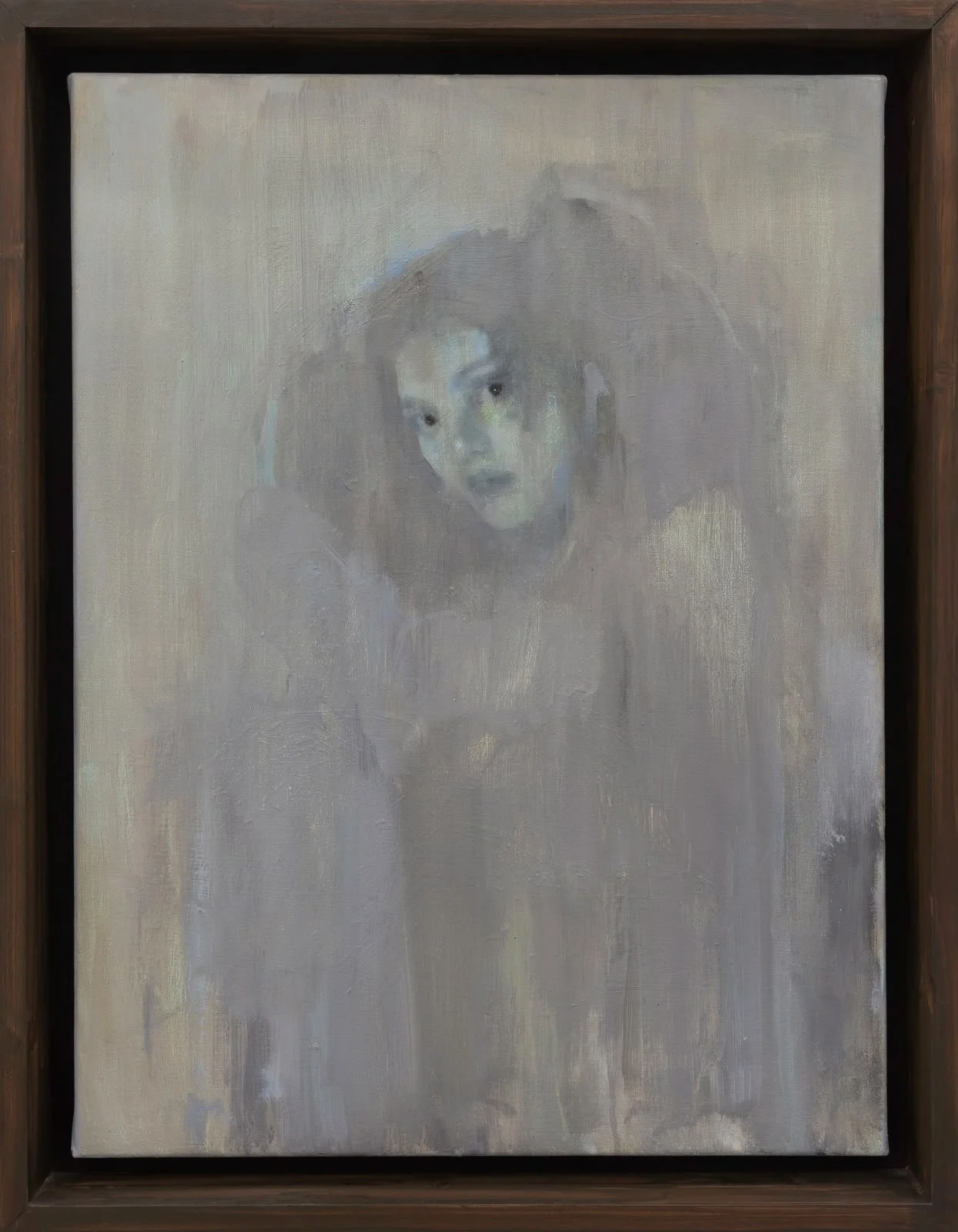
S.A: You’ve recently completed your residency at House of Hulda a cottage surrounded by endless snow in a small village in Andøya, Norway. The landscape and quietness of that environment seem quite different from your previous studio in central London. Did spending time there bring you back to anything from your childhood, particularly the bedroom where you used to draw in secret?
F.R: Silence and solitude have always been an important part of my painting. For years, I would paint through the night until morning because I needed those quiet hours to escape the noise of the day. But in Norway, I no longer had to wait until night for that silence. I would wake up in the morning and it would still be there.
I love the intervals between painting and everyday life, those moments when you seem to be doing nothing, but your mind is wandering. A memory comes back, something forgotten comes to life, or a new image forms in your imagination. For me, those moments are part of painting, too. Norway gave me the chance to spend more time in that inner world, to remember, to daydream and to follow my thoughts without hurrying.
Perhaps what I rediscovered in the silence of Norway was the daydreaming child who used to paint in her room.
S.A: You have also recently started a new MA programme. What brought you back to education at this stage in your practice, and how has returning to study changed your relationship with the work you are making?
F.R: More than anything, I wanted to give myself room to experiment again, without every experiment having to lead to a finished painting. I wanted to try things out, to have the freedom to make mistakes and follow what sometimes emerges from a mistake on the canvas. I also needed time to study, to research and to explore art history more deeply. I wanted to feel the joy of discovery again.
S.A: I always love being in the smoking area with you, where is your favourite smoking area in London?
F.R: For me, it matters more who I’m smoking with than where I’m smoking. I’m happy spending time with people I love and enjoy talking to. I can’t wait to see you again, have a conversation and share a cigarette.
