
Posters to the Olive Tree at P21 Gallery
by Shayhana AlGhareeb
P21 Gallery, the London-based charitable organisation promoting Arab arts and culture, has presented yet another moving exhibition with the current solo show ‘Posters to the Olive Tree of Exile’: an exhibition of artworks aiming to preserve collective memory and bear witness. Turkish artist Yusuf Aygeç and curator Samed Karagöz mark their first exhibition in London with 20 paintings representing powerful visuals of the genocide in Gaza and the wider Palestinian cause. Almost a year in making, this exhibition centers and documents the Palestinian and Gazan experience using widespread images and scenes captured by photographers and journalists on the ground. Moreover, nearly all of the paintings in the exhibition use Mahmoud Darwish’s texts from his poetry and literature, layering the heaviness of the imagery with the moving storytelling of Darwish’s lines.
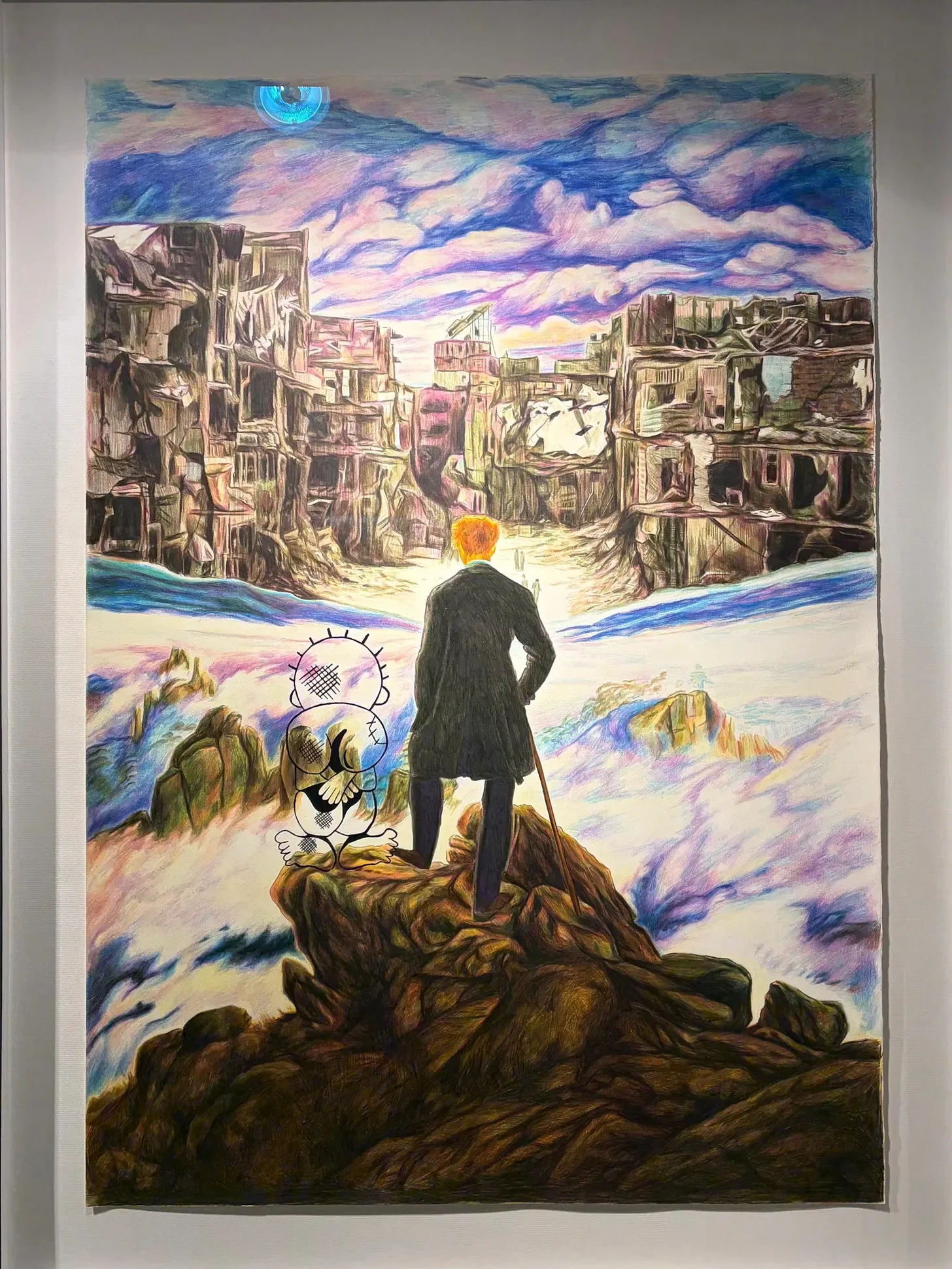
Handala, Soft Pastel on Fabriano Paper
Each piece in this exhibition presents themes, central to Palestine and Gaza. Destruction is paired with dignity and when Aygeç paints displacement, he infuses his color with Gazans’ dreams. As he illustrates hunger and displacement, he reminds the viewers of Gazan’s heroism and faith. Every painful moment that we witness through the news of Gaza, Aygeç foregrounds Gazan’s resistance in the process which, in turn, reminds us to not to forget nor to give up hope. Bearing witness is the golden thread throughout Karagöz’s meticulous curation. The exhibition calls on the audience to actively bear witness to the images of suffering, destruction, strength, and endurance, to remind us that these stories are not shared to numb us or distance us from the cause; rather, Aygeç and Karagöz artistically ignite our profound sense of responsibility and empathy. Asking the viewer in the west to not shift its gaze away from Gaza.
The paintings are painted as political posters and presented as letters addressed to the Olive tree, an important symbol for Palestinian rootedness, history, strength, endurance, and resistance. As the project is primarily concerned with memory, the power of this exhibition lies in the role of art as a tool of political and personal documentation against attempts of erasure. This is significant in a world where algorithms and technology is used by powerful actors to conceal and censor reality. This exhibition demands recognition and remembrance from the viewers.
The artist’s use of relatively fragile materials like pencil, soft pastel, paper, and gauze to produce the paintings also portrays the vulnerability of the Gazan Genocide that is being represented. Moreover, the curator and artist make a clear statement in refusing to turn this exhibition into an aestheticized view of dispossession and violence in Gaza. Instead, the paintings contribute to an effort of preserving, registering, and documenting visual archives.
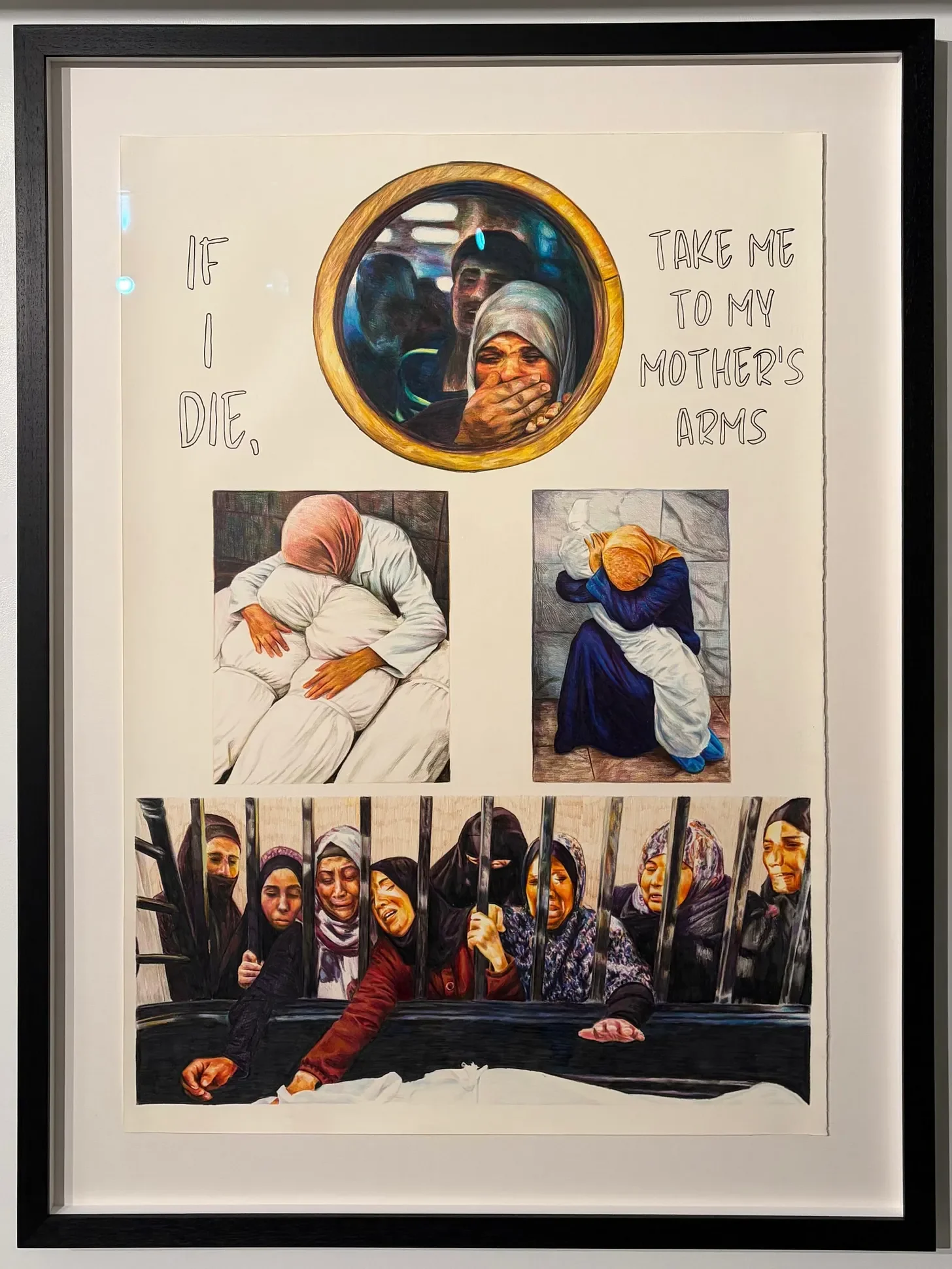
Mother’s Arms - Soft Pastel and Polycolor Pencil on Fabriano Paper
On ‘Mawtini’
As soon as you enter the exhibition, your eye is immediately fixed upon the piece ‘Mawtini’ - My homeland. Against the backdrop of the verses of Palestine’s national anthem written by Ibrahim Tuqan, Aygeç embroiders Palestine onto the page with the symbolic Keffiyeh at the top, and tatreez along the borders.
But these are not the first things your eye is drawn towards. It is the faces, the burning olive tree, and the fire burning it that drags your eyes downwards and keeps you staring; imagining how such a beautiful song, such a beautiful scarf, and beautiful culture is constantly being violated by Zionism. Throughout the exhibition, Aygeç’s use of bright colors is entrancing yet in this painting, the faces of inspiring and iconic Palestinian figures, like writer Ghassan Kanafani and poet Fadwa Tuqan, are drawn in black and white; not only representing their past lives and ongoing legacy, but creating a contrast with such detail that ultimately captures your eye. It allows the viewer to reflect on the long history of Palestinian artists, writers, and poets whose work embodies the Palestinian cause and its resistance. It also represents that while bodies may fall, their ideas and values remain.
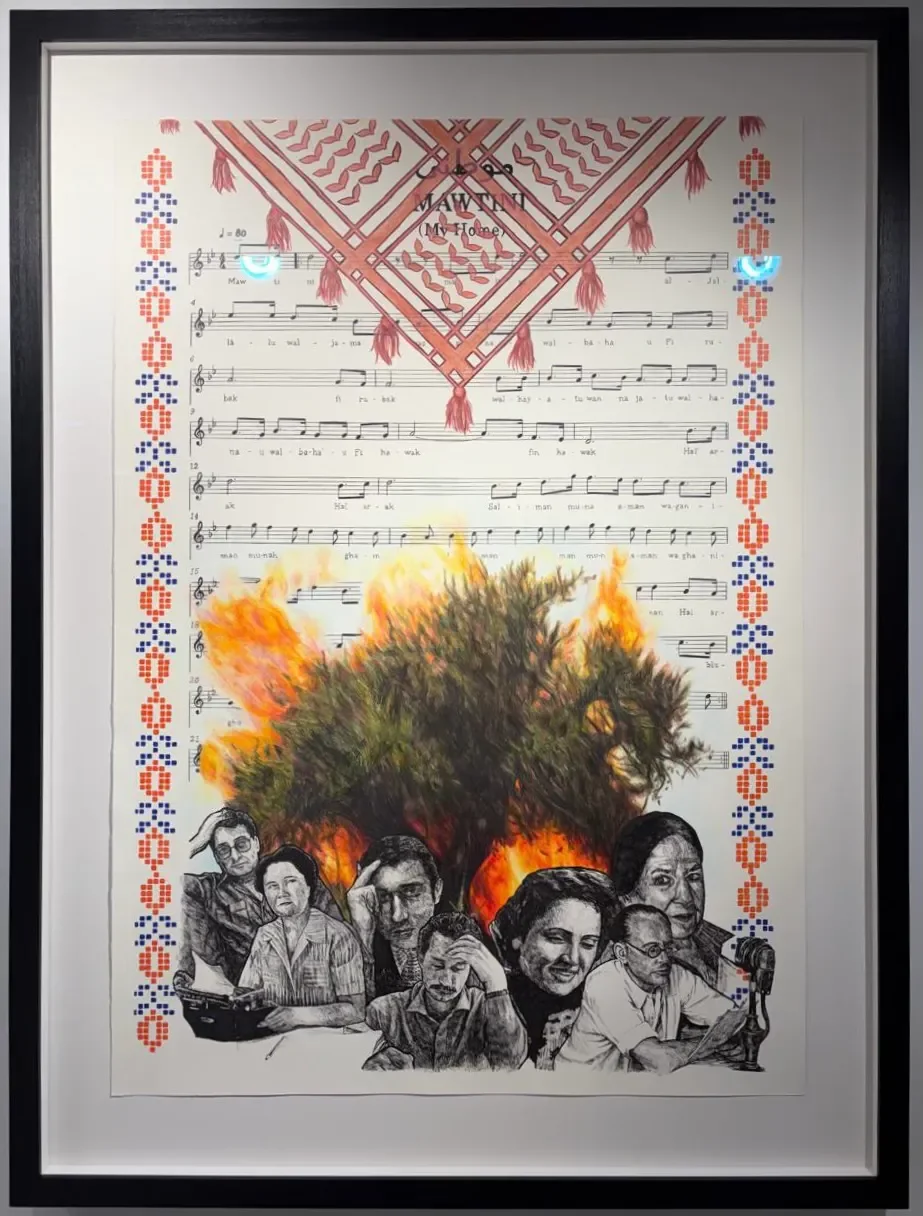
Mawtini, Polycolor Pencil on Fabriano Paper
On ‘Wounds’
In ‘There are wounds that never heal’, Aygeç evokes the lines of Darwish to showcase that Gaza’s wounds are multiple, physical and emotional, with the injured face of a Palestinian boy. Covering the entirety of the painting except for the boy’s eyes, is real gauze. Materially, it covers and heals physical wounds yet symbolically, gauze which originates from Gaza, is not enough to heal its deep historical and ongoing wounds. Attaching the gauze to the painting with tatreez stitches in the border is also an ode to the cultural value of tatreez embroidery in Palestinian communities. What the gauze does not cover is also what transfixes the viewers the most: the boy’s eyes which allude to the deeper emotional and physiological violence endured.
As the bigger message of the exhibition reminds us, what is not wounded in Gaza is the faith of its people.
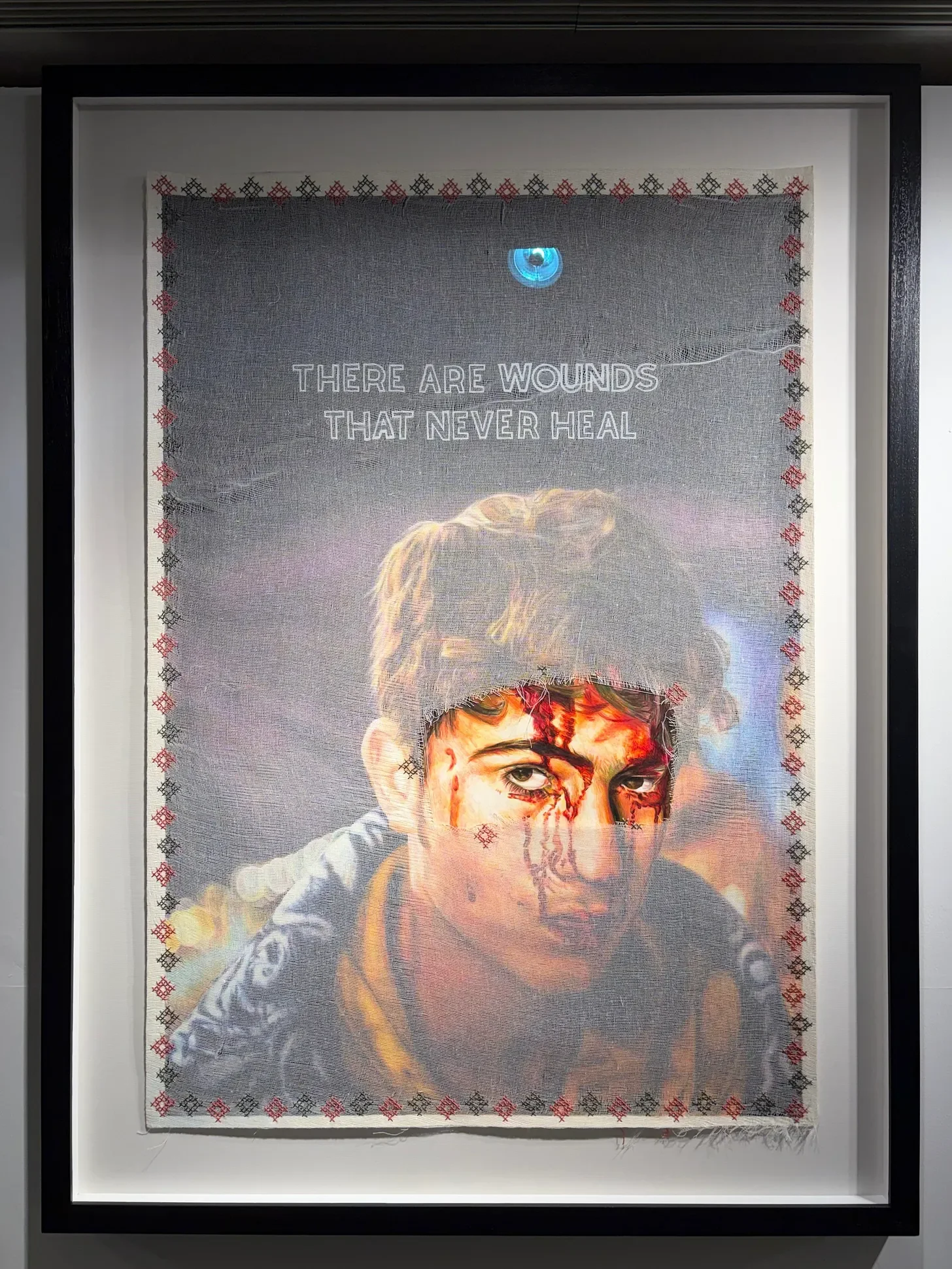
Wounds, Soft pastel, Polycolor Pencil, and gauze on Fabriano paper
On ‘Faith’
In this painting, Aygeç highlights that the places of worship might be destroyed, but the faith of the people in Gaza cannot be destroyed. We see the collapsed minaret’s remains and the mosque’s rubbles portrayed with worshippers kneeling down next to the rubbles. Powerful in this painting is the fading of some of the worshippers. Aygeç leaves the grey figures with silhouettes undetailed to symbolise the soul of Gaza’s martyrs as he sadly questions who of the people captured in the photograph are alive as the killing persists in Gaza. Using the contrasting color of red, Aygeç writes Darwish’s line ‘‘Faith is stronger than despair” to construct the enduring hope, resilience, and faith of Palestinians in the face of destruction, demolition, and death.
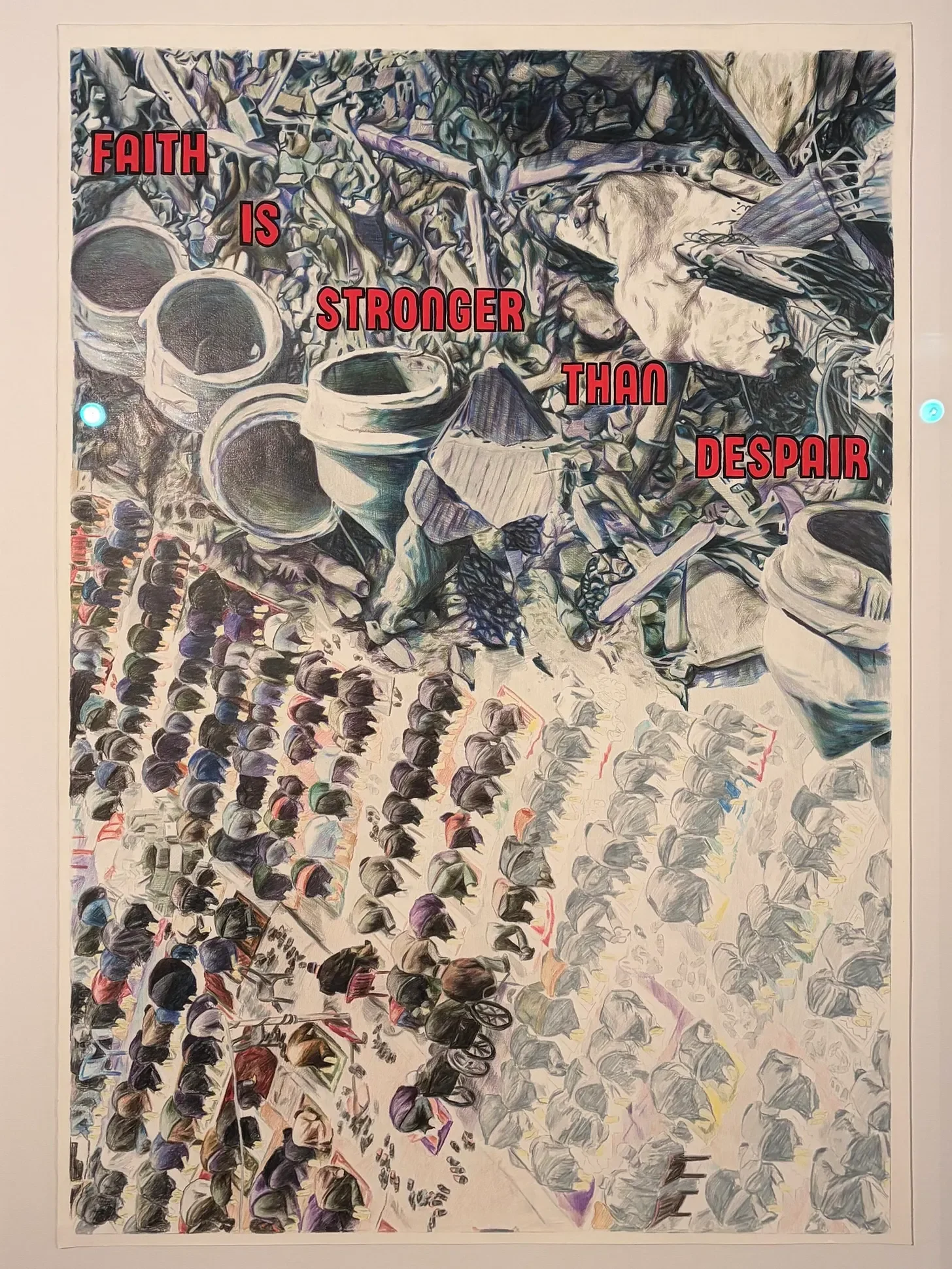
Faith, Polycolor Pencil on Fabriano Paper
On ‘Intifada’
In an exhibition of paintings of various violent themes yet endowed with Aygeç’s style of bright colors, Intifada is the only fully black and white painting. It refers to an iconic and historical image captured on analog film of a child throwing a stone during the first intifada in 1987. This is a visual that many will recognise as a familiar symbol for resistance in Palestine. The child is captured in different scenes, resisting physical and structural violence of settler-colonialism with the only things he can grab from the ground. Next to the child, Aygeç draws another iconic photograph of the renowned Palestinian professor Edward Said’s gesture of throwing stones to symbolise a political stance against the violence of borders and military occupation. Against a backdrop of houses burning, this is a powerful image that depicts the historical and ongoing resistance of Palestinians against dispossession in Gaza and the rest of Palestine. The artist and curator place emphasis on memory by positioning significant historical moments in Palestine alongside crucial contemporary events of genocide; showing the settler-colonial violence and resistance that persists. It is a testimony to the past and present and a commitment to bearing witness to the long fight for freedom and liberation.
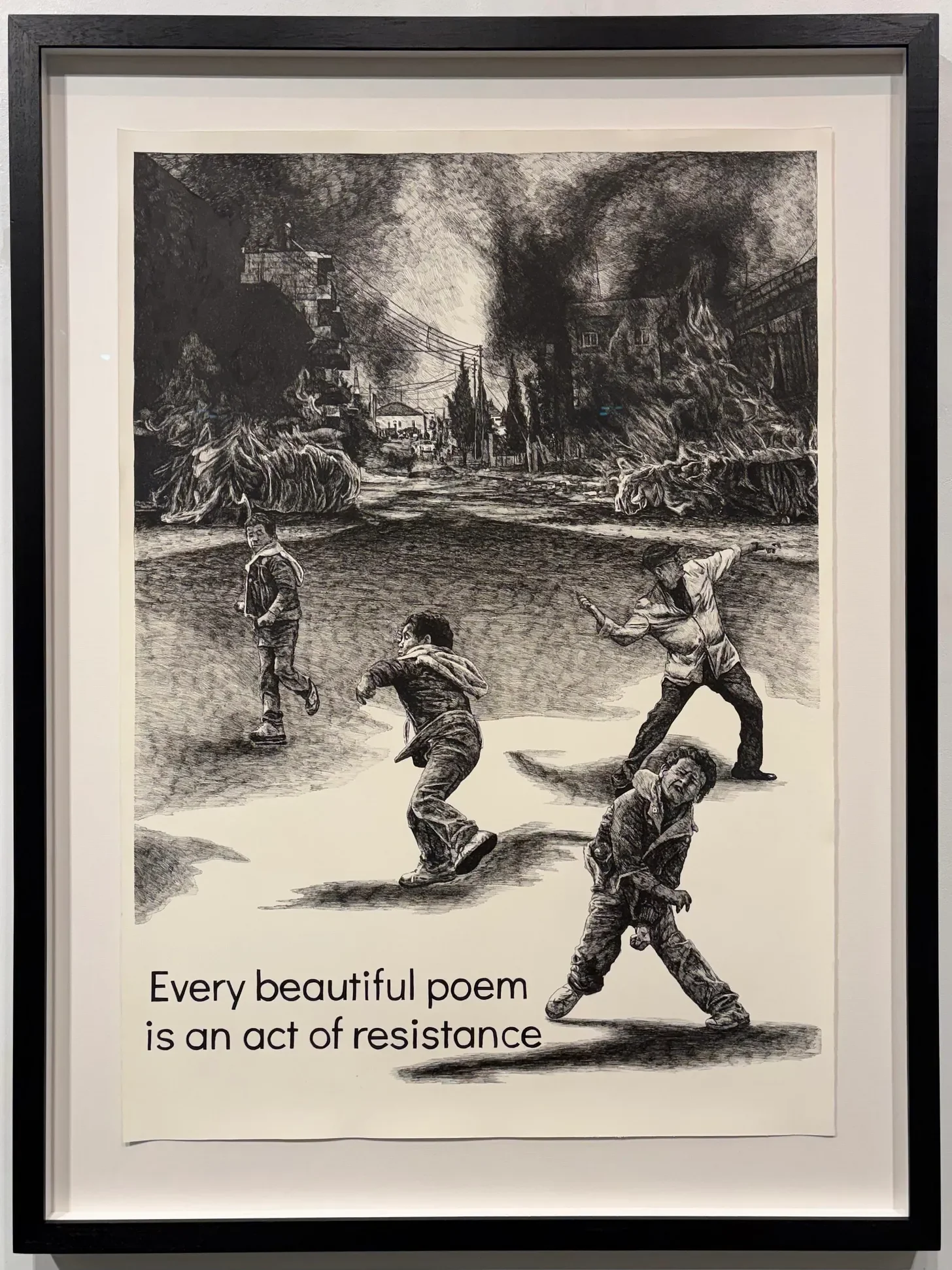
Intifada, Pigment Ink on Fabriano Paper
‘Posters to the Olive Tree of Exile’ is an exhibition that stays with the visitor after they leave. It pulls the viewer to remember and bear witness to the atrocities of the genocide in Gaza and the violence of settler-colonialism in Palestine. The exhibition’s art works and message is especially significant today as the ceasefire in Gaza reveals more of the enduring suffering after destruction and displacement. Aygeç and Karagöz remind us that the images of mothers’ suffering, the search for clean water, the political issues of aid, the feeling of forced exile in the homeland, and living amongst rubble are not issues of the past. They are living proof of constant crimes against humanity that must not be forgotten, thus, they call on collective memory and emotions to resist any political attempts to erase the real narrative.
Aygeç and Karagöz present images of Gaza and Palestine in ways that do not merely portray suffering and grief amid destruction and displacement, but they also show the steadfastness, resilience, and resistance of the Palestinian people. They intentionally showcase in the paintings the strength, strong will, joy, and dreams of Palestinian children, men, and women. In one of the paintings, they pay homage to the photographers and journalists whom without their documentation of the genocide and brutal reality, this exhibition would not be possible. With a vivid and bright range of colors, Aygeç paints painful images of mothers holding their dead children and people chasing a bag of flour that remain etched in your mind long after leaving the exhibition. The powerful paintings on aid instead of justice and tents instead of homes highlights humanity’s unfulfilled responsibilities and the world’s enduring inequalities. P21 gallery showcases yet again a powerful exhibition of artworks but this time by Turkish artist and curator on the theme of memory and remembrance of the colonial violence in Palestine and Gaza.
About the Artist
The artist of the exhibition Yusuf Aygeç (b. 1989, Istanbul) is one of the most important young figures in the contemporary art scene in Turkey. His works often revolve around ideas of identity, memory, and space. The image of natural landscapes and the sky and its clouds feature heavily in his works. While he primarily works with oil paint, the works in this exhibition are painted using pencil, ink, and soft pastel. This exhibition marks his first show in London, marking a development in his artistic journey and his global exposure.
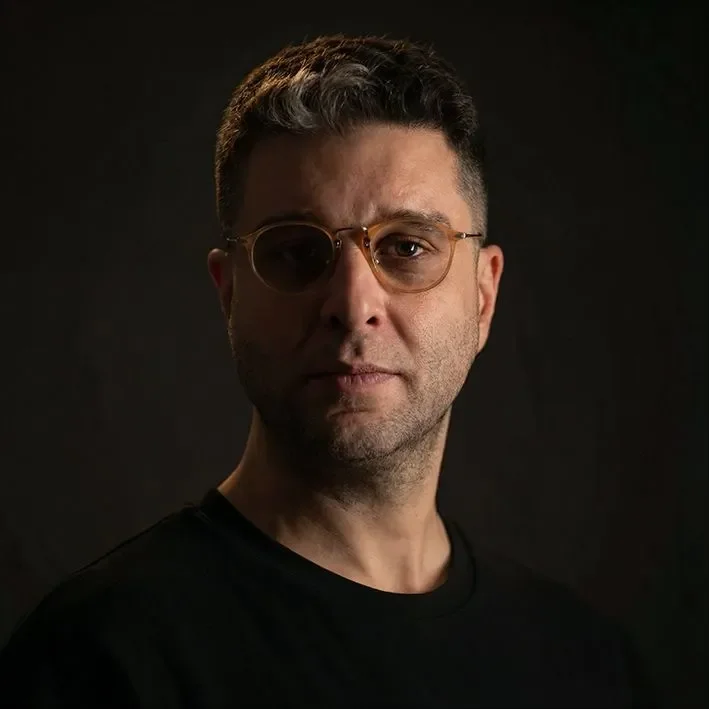
Courtesy of the artist & P21 Gallery
About the Curator
Following a series of curatorial works based on memory, culture, and storytelling, Turkish and Istanbul-based Samed Karagöz curates this exhibition. Karagöz is a curator, writer, and television producer. Karagöz has previously worked with and curated exhibitions with Palestinian artists like Sliman Mansour and Nabil Anani, one of which was part of the Istanbul Culture Route Festival. His curatorial vision is shaped by visual narratives of identity, memory, resilience, survival, and belonging.
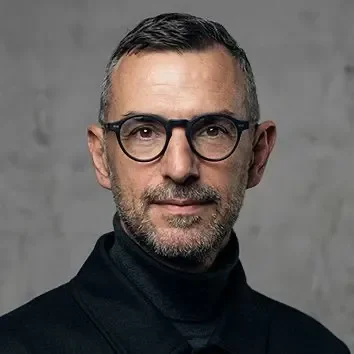
Courtesy of the curator & P21 Gallery
