
A Season of Two Speeds: MENA and the Art World's Q4
Earlier this year, the Art Basel and UBS Global Art Market Report described an art world returning to health, with global sales rising four percent in 2025 to an estimated 59.6 billion dollars, the first year of growth since 2022. Dealers reported the same lift, with forty three percent expecting sales to improve into 2026, a rise of ten percentage points on the year before, and the report went so far as to read the wave of gallery downsizing and closure across the past two years not as distress but as a form of recalibration, a market adjusting its expectations rather than one in trouble. Reading it again this summer, alongside conversations with friends and peers across the region’s galleries, fairs, and collections, and against a wider year shaped by war, displacement, and economic strain, the report’s confidence has been difficult to square with what people on the ground are actually saying, which is, plainly, that the market is down.
Both readings may be true at once. At the level of aggregate value, the market has indeed recovered, and the recovery accelerated through the first half of this year, with Christie’s, Sotheby’s, and Phillips posting a combined seventy percent rise in global auction sales to 6.8 billion dollars, their strongest first half since 2022, driven by a handful of trophy lots. That figure sits comfortably inside the report’s optimism. It says little, however, about the level at which most of the art world actually operates. Stephen Friedman has closed its New York space, while Sean Kelly has scaled back in Los Angeles, both part of a broader contraction as galleries contend with rising rents, fair fees, staffing costs, and shipping expenses, regardless of what happens at the top of an evening sale. The Art Newspaper described this split plainly in June, noting that one season of strong auctions at the very top of the market does very little to change conditions for the dealers and artists working beneath it. The market, then, is not one market but at least two, moving at different speeds, and whether it feels as though it is up or down likely depends on which speed a person happens to be standing in.
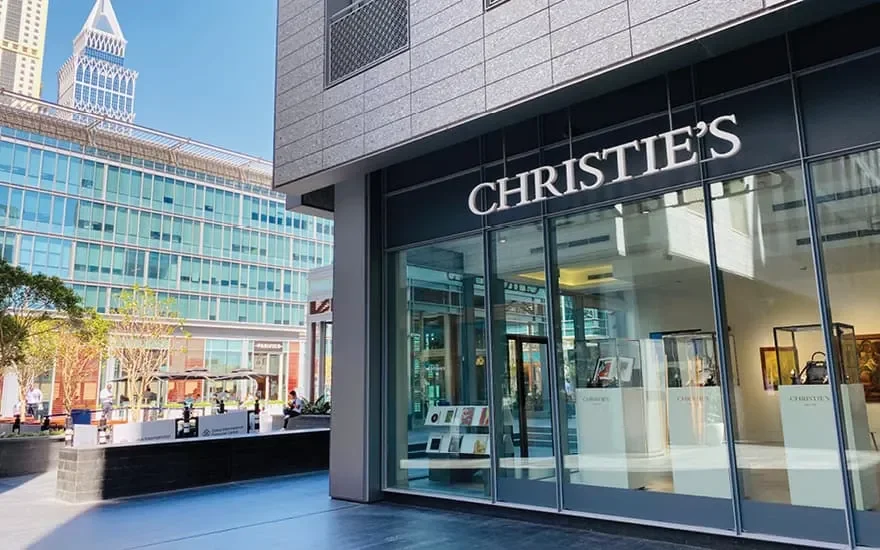
Courtesy of Christie’s
Our region carries this same split with unusual clarity. Art Dubai’s twentieth-anniversary edition in May drew a record audience of more than twenty-five thousand visitors. At the same time, the number of participating galleries fell to around fifty, down from roughly one hundred and twenty in past editions, after more than seventy-five international galleries withdrew amid the cost of freight, war-risk insurance, and the wider instability of moving work through the region. In the same season, Christie’s online sale of modern and contemporary Middle Eastern art sold ninety eight percent of lots and one hundred percent by value, a result that is structurally strong, and evidence that public appetite in the region has grown even as the trading floor beneath it has thinned.
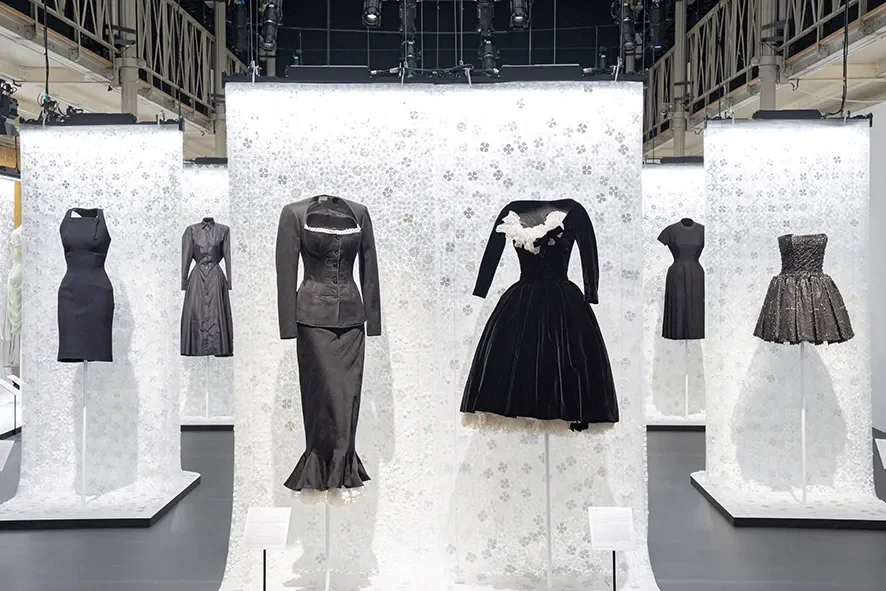
Courtesy of MENART Fair Paris
Q4 will be where this duality is tested in real time, and much of the testing will happen through MENA’s own presence on the calendar. Frieze London and Frieze Masters open the season at Regent’s Park, offering a baseline of an established, if cautious, market. The following week, Art Basel Paris returns to the Grand Palais under its new director Karim Crippa, in the same days that Menart Fair holds its seventh edition under the theme Where Is Home, and Asia Now marks its tenth anniversary at the Monnaie de Paris. The season then moves toward the Gulf, where Frieze Abu Dhabi holds its inaugural edition at Manarat Al Saadiyat, taking over from Abu Dhabi Art, and where, three weeks later, on the eleventh of December, the Guggenheim Abu Dhabi opens on Saadiyat Island, joining the Louvre Abu Dhabi and the recently opened Zayed National Museum to complete a cultural district built over nearly two decades.
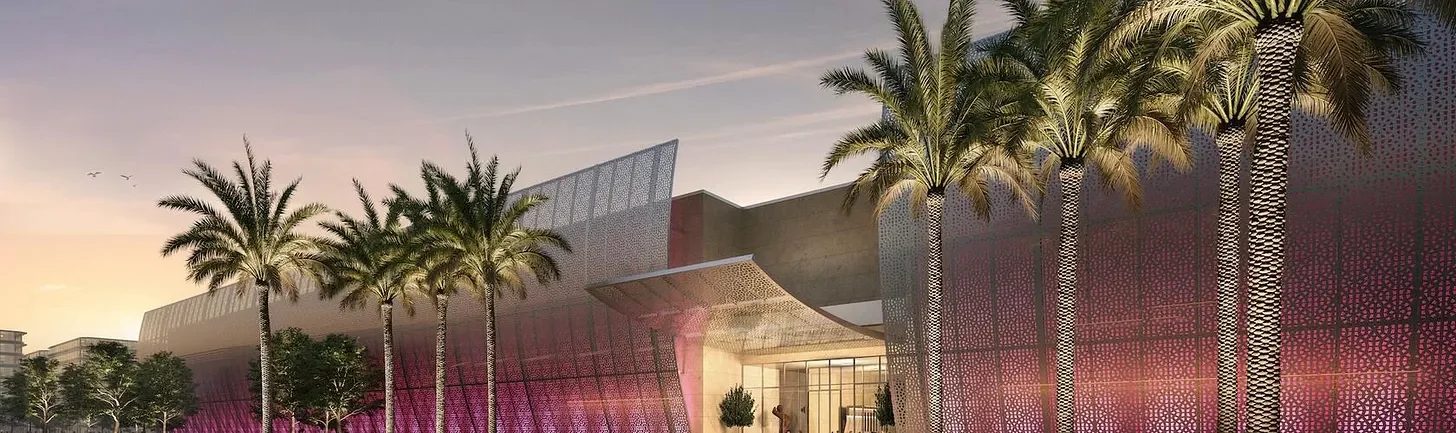
Courtesy of Frieze
Taking a step back, perhaps the more honest way to hold the question is to accept that Q4 may reproduce the same confusion that has defined the year so far: confidence at the level of major sales, institutions, and headline events, alongside a more cautious reality for the galleries and artists working beneath them. It may also begin to tell a different story. With MENA occupying a more visible place across the season’s fairs, museums, and international calendar, the coming months offer a chance to see whether that visibility can generate momentum beyond the top of the market. The season’s significance may ultimately lie in whether the two speeds of the art world begin, even briefly, to move closer together.
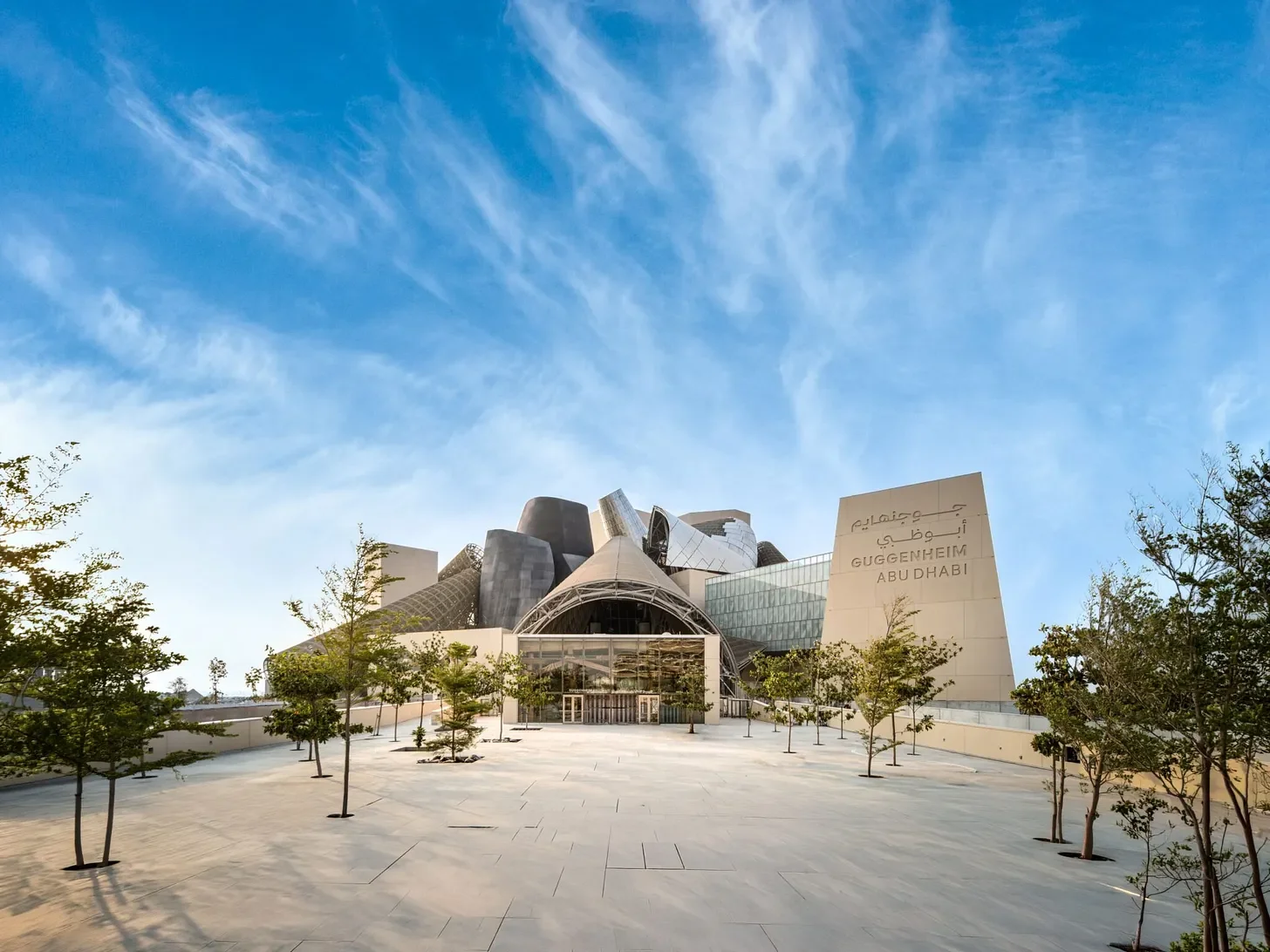
Courtesy of Guggenheim Abu Dhabi
Words copyright of Naso Art Journal.
Sources:
Art Basel and UBS Global Art Market Report 2026
Art Dubai announces updated gallery list for embattled postponed edition – The Art Newspaper
Christie’s Modern and Contemporary Middle Eastern Art Online Auction Exceeds Pre-Sale High Estimate – Canvas Magazine
Art Dubai announces details for revised 2026 edition – ArtReview
Christie’s and Sotheby’s 2026 half-year results — The Art Newspaper
