
Adam Rouhana
On bringing Palestinian life to the page
Written by Soraya
Adam Rouhana is a Palestinian-American photographer who grew up in Boston, returning to Palestine every year, and now lives between Jerusalem and London. He picked up a camera at twelve and worked under the guidance of the Magnum photographer Gilles Peress during his formative years. His work has been shown at the 60th Venice Biennale, Les Rencontres d'Arles and Kyotographie, with solo exhibitions at Frieze’s No.9 Cork Street Gallery in London and at the Kunsthal in Rotterdam. In 2026, he was selected as a Foam Talent.
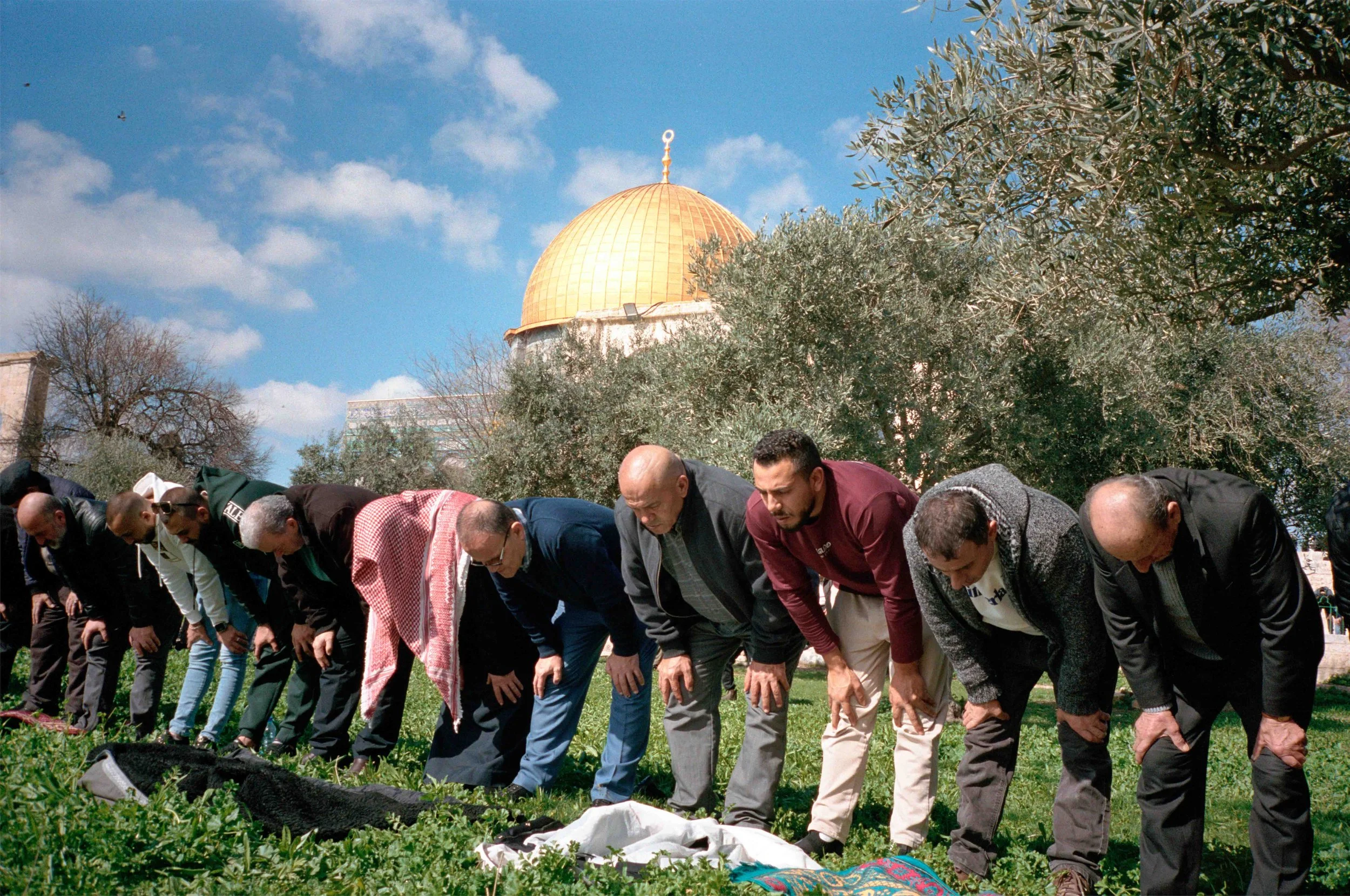
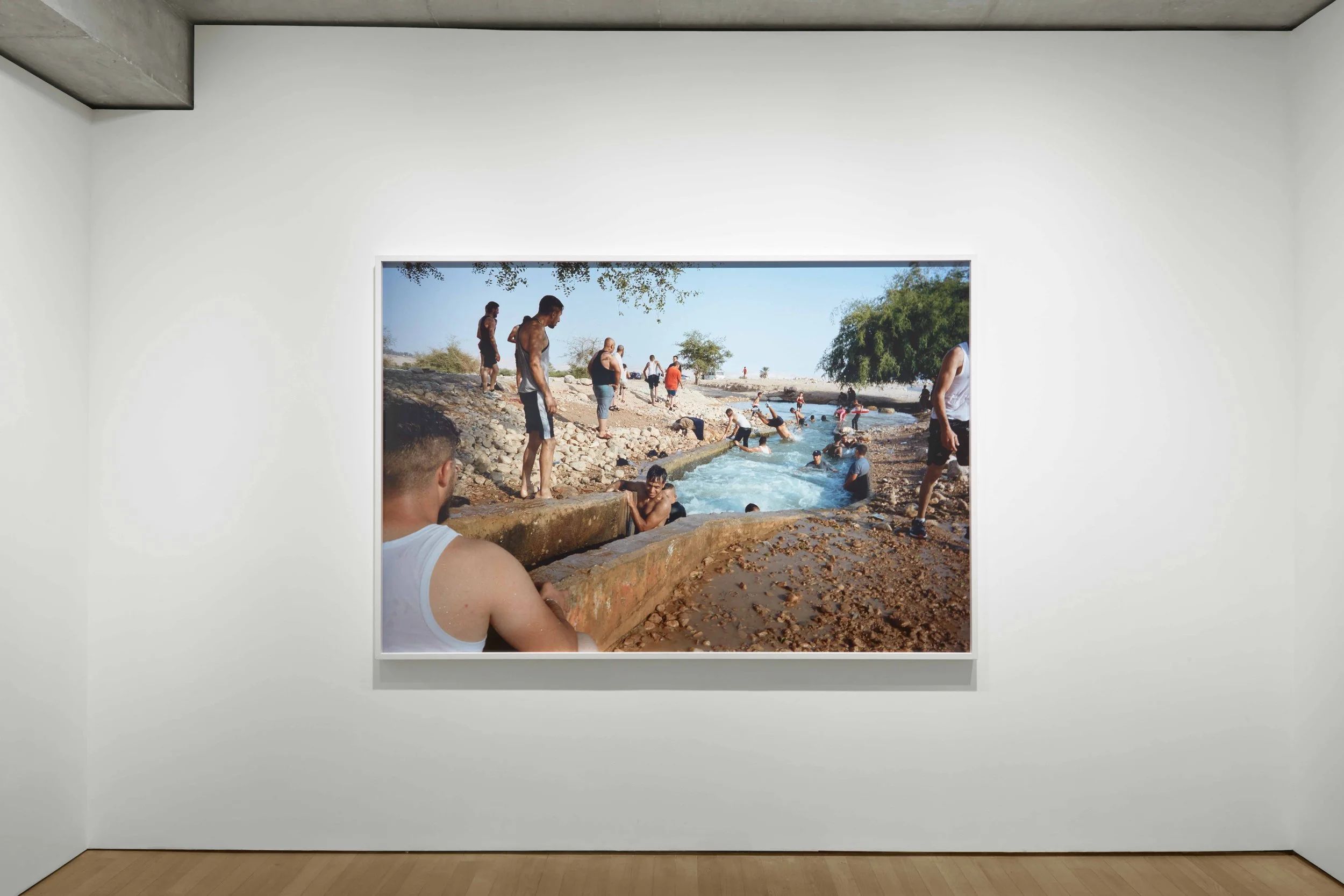
Since 2022, his practice centred on his first body of work, Before Freedom, a series photographing everyday life across historic Palestine, in Jerusalem, Hebron, Jericho, Bethlehem and Haifa. Children play, friends get ready for a football match, families gather in gardens. Working in natural light, with an eye for the composed, almost staged frame, Rouhana sets out to show what so much of the coverage of Palestine leaves out. He has described the series as being about "the moment before we are free." In an interview for Aperture’s Introducing series, he extends the scholar Ruth Wilson Gilmore's idea that freedom is a place, adding that “freedom is a place you can call home.”
Now Before Freedom has become a book. We spoke to him about why, and about what a photograph can and cannot hold.
The moment before we are free
In 2022, Rouhana described the series as being about "the moment before we are free." Three years on, with the genocide in Gaza still unfolding, the phrase carries a different weight. The book, he says, is an argument as much as a document. It moves deliberately between fact and fiction, making the case for a fuller, more subjective picture of Palestinian life and imagining a freedom he treats not as a hope but as a certainty.
That position is shaped by what the rest of the world has been looking at. For three years, images of Palestinian death have circulated almost without pause. Rouhana's response has been to insist on the opposite: to put Palestinian life, in all its fullness, at the centre of the frame.
A book lives forever
Before Freedom has already had a long public life, with exhibitions and festival presentations around the world a place in Foam Talent. The decision to publish it was a natural next step. In the photography world, a book is the logical conclusion of a finished body of work, the point at which the idea is fixed in print. With that said, Rouhana says that the book is just another instantiation of the work, which is comprised of thousands of image, and has room to take on a multiplicity of forms in the future.
He also sees it as the more open of the two forms. An exhibition reaches only those who can travel to it, during the weeks it happens to be on view, and often a narrow audience at that. A book can be carried anywhere and picked up by anyone, at any time. "An exhibition is limited to the time frame that it is on view," he says. "A book lives forever."
A split reality
The project began with a gap. Growing up in the United States, Rouhana kept hearing about a Palestine that did not match the one he knew from his visits, seen through what he calls "this very singular lens of either violence or oppression." Before Freedom was his way of expanding the two, and of making sense of "that split reality."
So he turned his attention elsewhere. "I wanted to look at everything else, the mundane, the family, the everyday, that is so full of life in Palestine, despite it all."
An incomplete but not false image
That choice has consequences, and Rouhana is open about them. Checkpoints and closures shape where he can go and what he can photograph, and the book does not pretend otherwise. "This book is, intentionally, an incomplete, but not false image of the place," referencing the Argentinian writer and poet Jorge Luis Borges. He chose to point his camera away from what the news media almost exclusively focuses on, "violence, apartheid, and suffering." Those realities, he says, have not been erased from the pages. "They are still there for all to see in the book."
His time studying photojournalism gave him the tools of the trade, but not its claim to neutrality. Documentary photography is widely considered objective, he notes, and the camera does freeze space in time. Yet his practice argues the opposite: that photography is "a highly subjective medium entangled with the epistemological gaze of those making and publishing pictures." Every image, in other words, carries the view of whoever took and printed it. Before Freedom simply makes that view explicit.
Left to the reader
Rouhana's photographs now circulate widely as images of everyday Palestinian life, and a book becomes an archive. Yet he does not have a particular reader in mind, whether a family in Hebron or a collector in London. "I don't have any expectations for who will pick up the book," he says. The edit, he adds, did not change with any particular audience in mind; the book is "the natural evolution of the project."
Nor will he tell anyone what to take from it. Asked what he hopes stays with someone after they close the book, an image, a feeling or a question, his answer is brief: "That's up to the reader to decide."
It is a fitting stance for a body of work that argues for Palestinian life on its own terms. Rouhana does not explain his images or guide the reader through them. He gives them a place to exist, between fact and imagination, before freedom.
Words copyright of Naso Art Journal.
Images courtesy of Adam Rouhana.
