
Samar Hejazi
I've never understood identity or belonging as something that can be defined entirely by a place
Written by Nayla
Palestinian artist Samar Hejazi works across textiles, sculpture, installation and printmaking, exploring questions of perception, identity and the ways we construct meaning. Ahead of her presentation with Nasij at MENART Paris 2026, Naso Art Journal spoke with Hejazi about the development of her practice, the works she is bringing together for this year's fair, and the materials and ideas she hopes to explore further.
1. To begin, could you tell us a little about your practice and the work you’re making today?
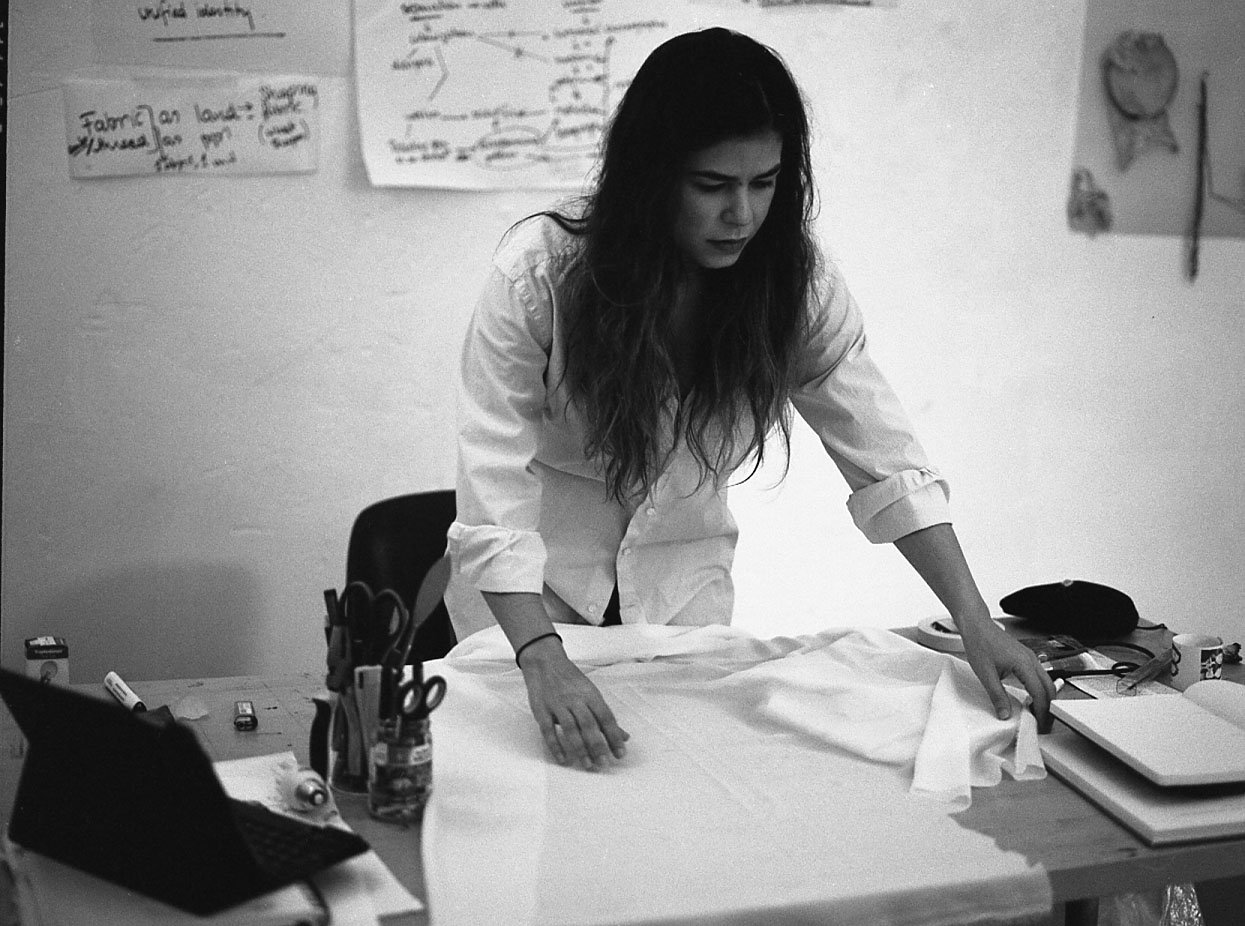
My practice moves between textiles, sculpture, installation and printmaking, exploring the instability of perception and the ways we construct meaning. Much of my work examines how our understanding of the world is shaped by the systems through which we interpret it.
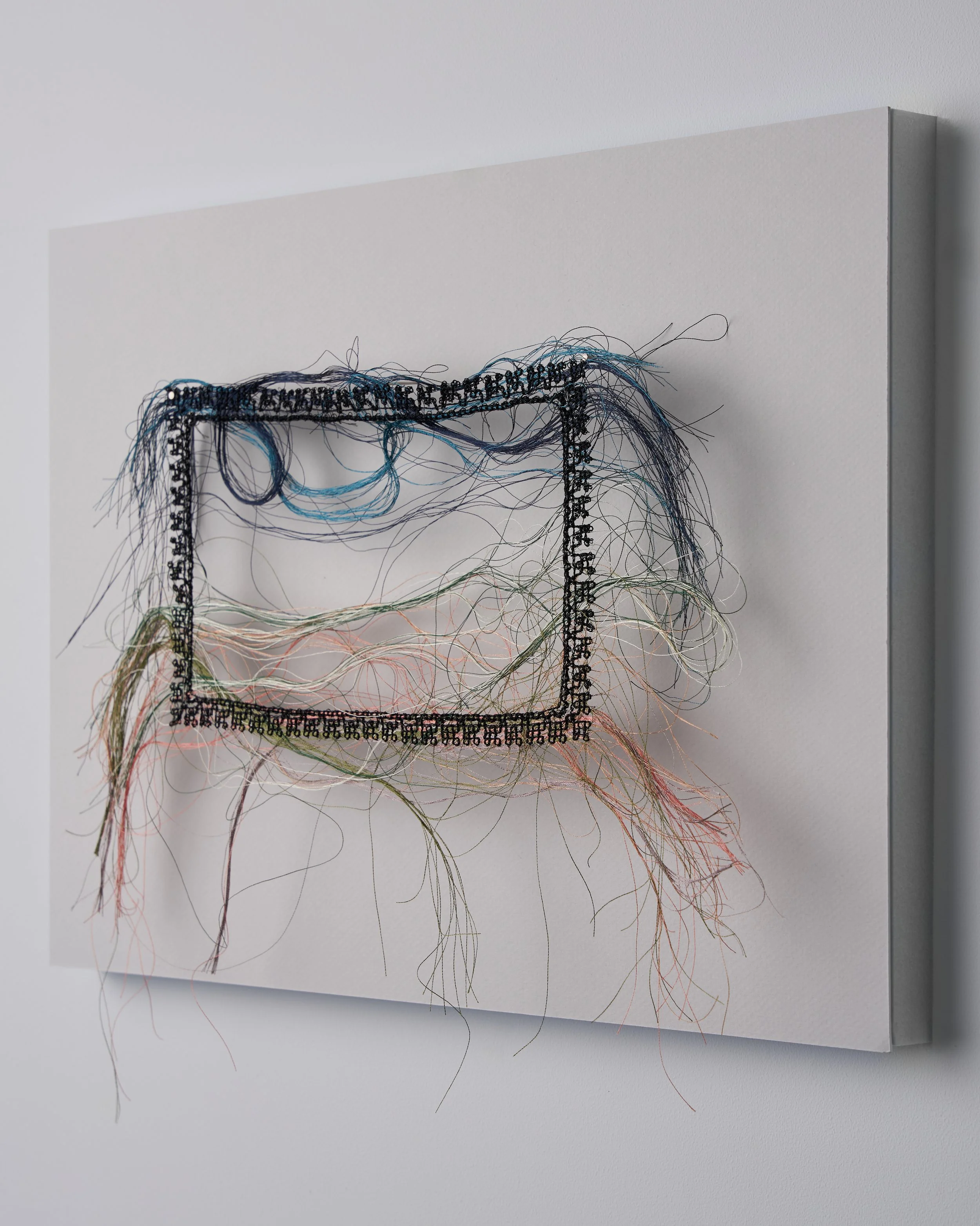
Repetition, layering and material manipulation are central to my process. I've developed techniques that allow me to construct forms entirely from thread, removing the fabric that would ordinarily support them. I also work with shadows, reflections and transparency to extend an artwork beyond its physical boundaries.
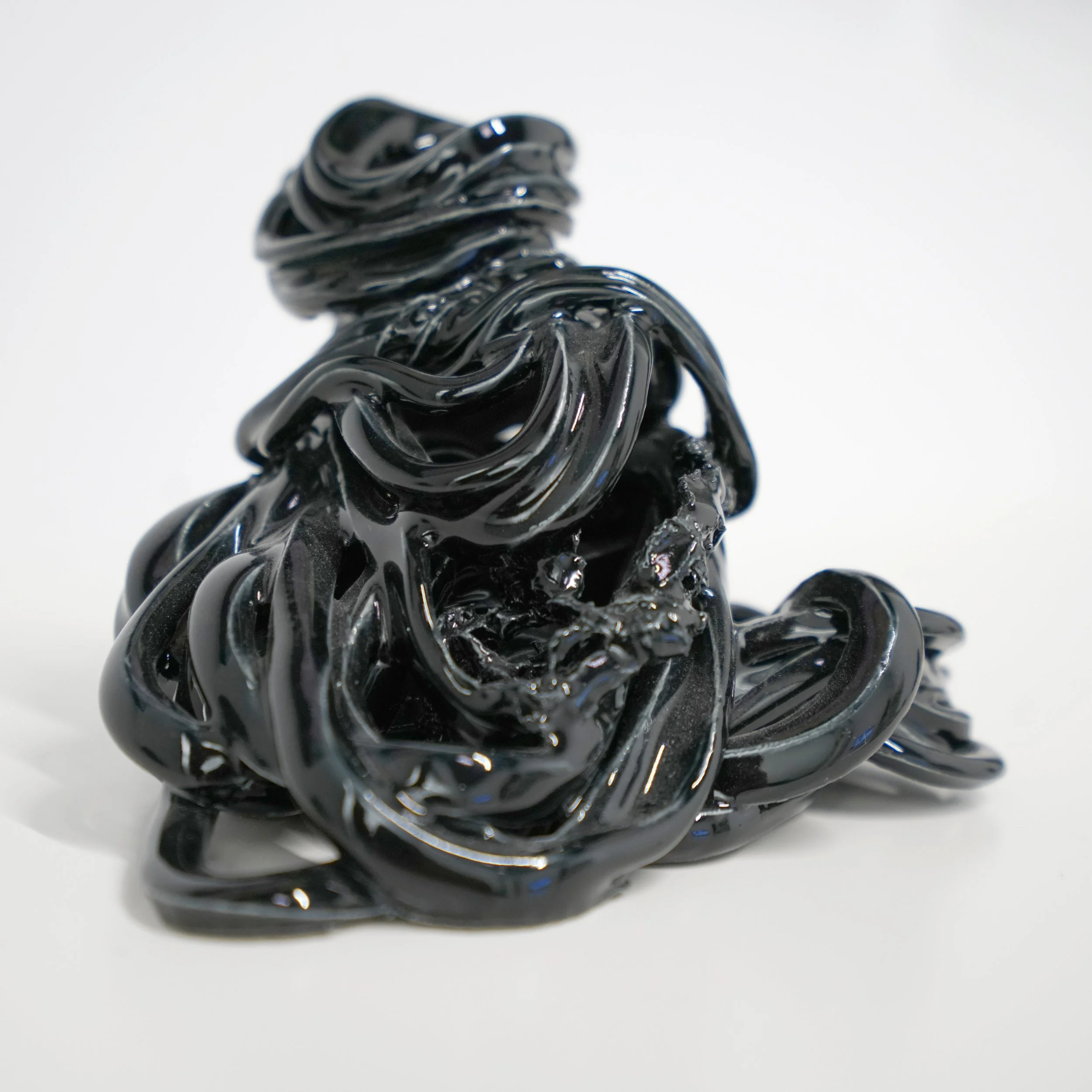
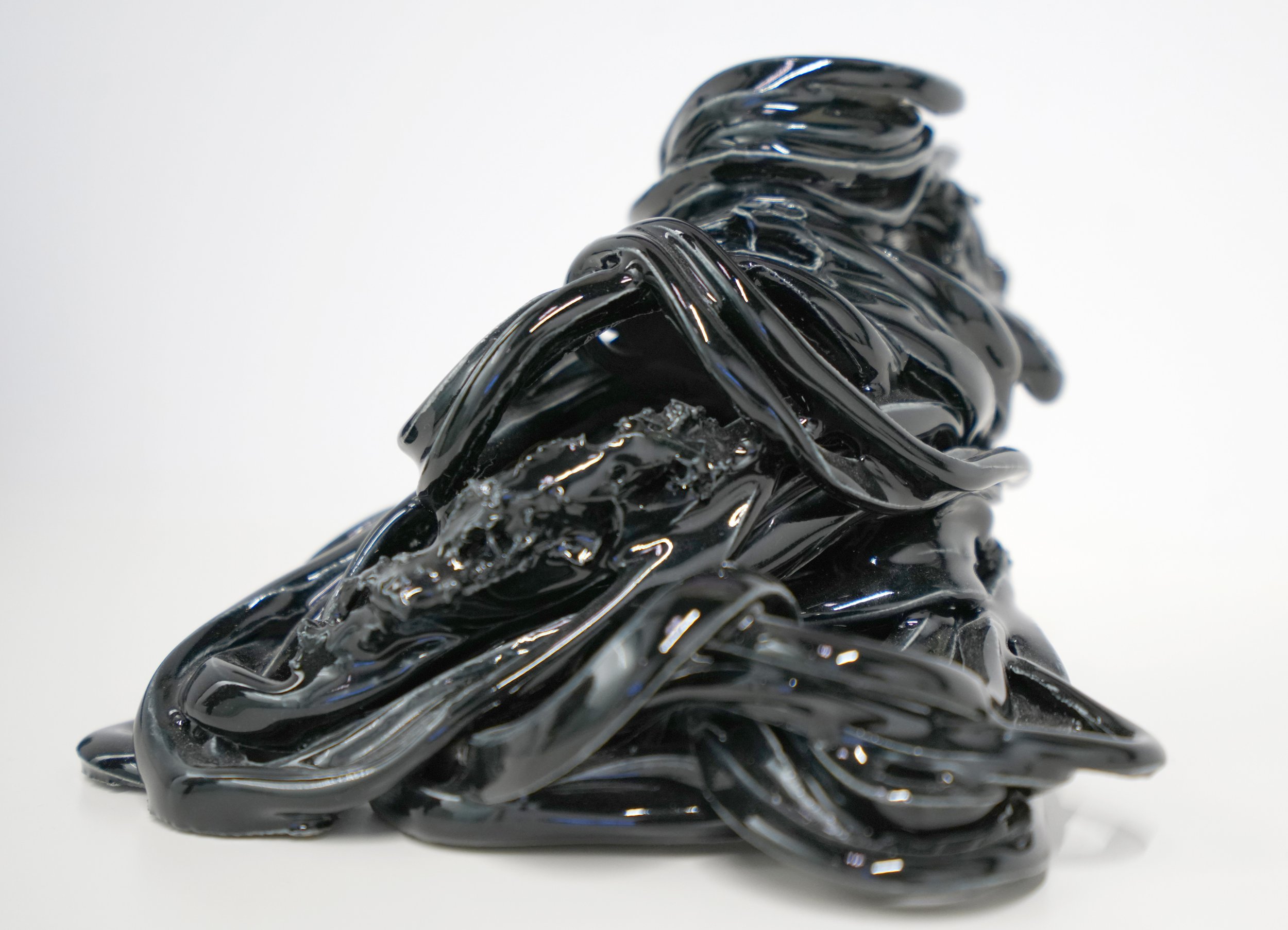
More recently, I've been returning to sculpture, experimenting with transparent and embossed surfaces that are almost invisible until light reveals their forms. Across these processes, I aim to create works that resist a singular reading and invite viewers to question what they see.
2. What initially drew you to working with textiles, sculpture, installation and printmaking, and how has your relationship with these different materials and processes developed over time?
I've always been drawn to materials and the possibilities that emerge through experimentation. I don't necessarily see textiles, sculpture, installation and printmaking as separate disciplines, but as different ways of investigating similar questions.
My relationship with embroidery began through an appreciation of its cultural significance, particularly Palestinian embroidery, but gradually evolved into an exploration of its structural possibilities. This led me toward more sculptural work, questioning how something traditionally associated with a surface could occupy space and interact with its surroundings.
Printmaking introduced another dimension through repetition, impression and variation. I'm drawn to how an image can change as it moves between materials and techniques.
Over time, I've become less concerned with defining a work by its medium. Often, one process leads into another, introducing possibilities I hadn't initially considered.
3. Could you introduce us to the body of work you’re presenting with Nasij at this year’s MENART Fair in Paris? What were some of the ideas and considerations that guided the presentation?
The presentation brings together works from different periods of my practice, including Maw6ini, alongside more recent textile and print-based works. Although created at different moments, they're connected by recurring questions around identity, perception and the ways we interpret language, materials and visual systems.
Maw6ini engages with language, cultural identity and nationhood, while the more recent works approach perception through abstraction, repetition and material transformation.
Bringing these works together reveals how similar questions can be approached through different processes, with a recurring tension between what is physically present and what exists beyond the material form of the work.
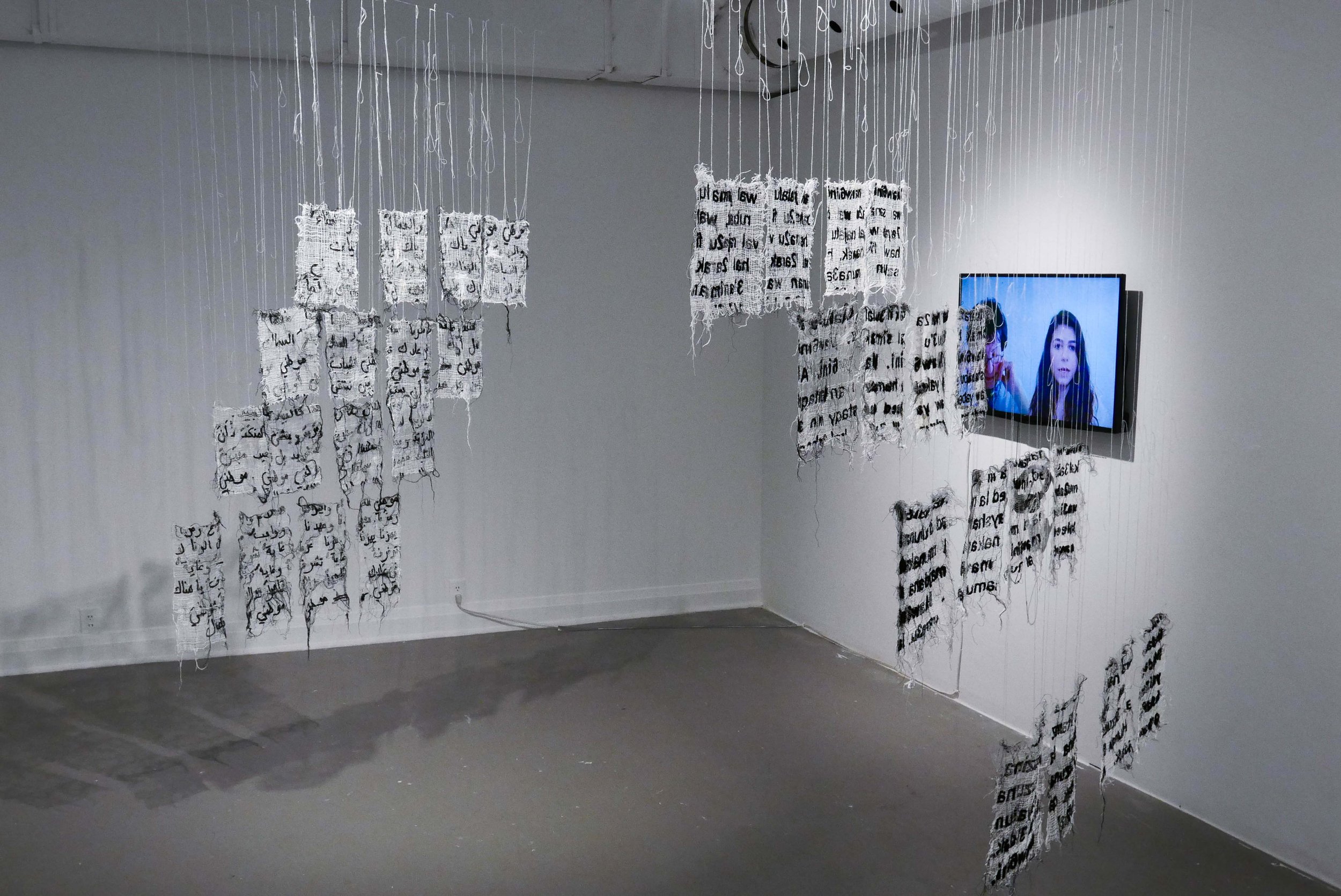
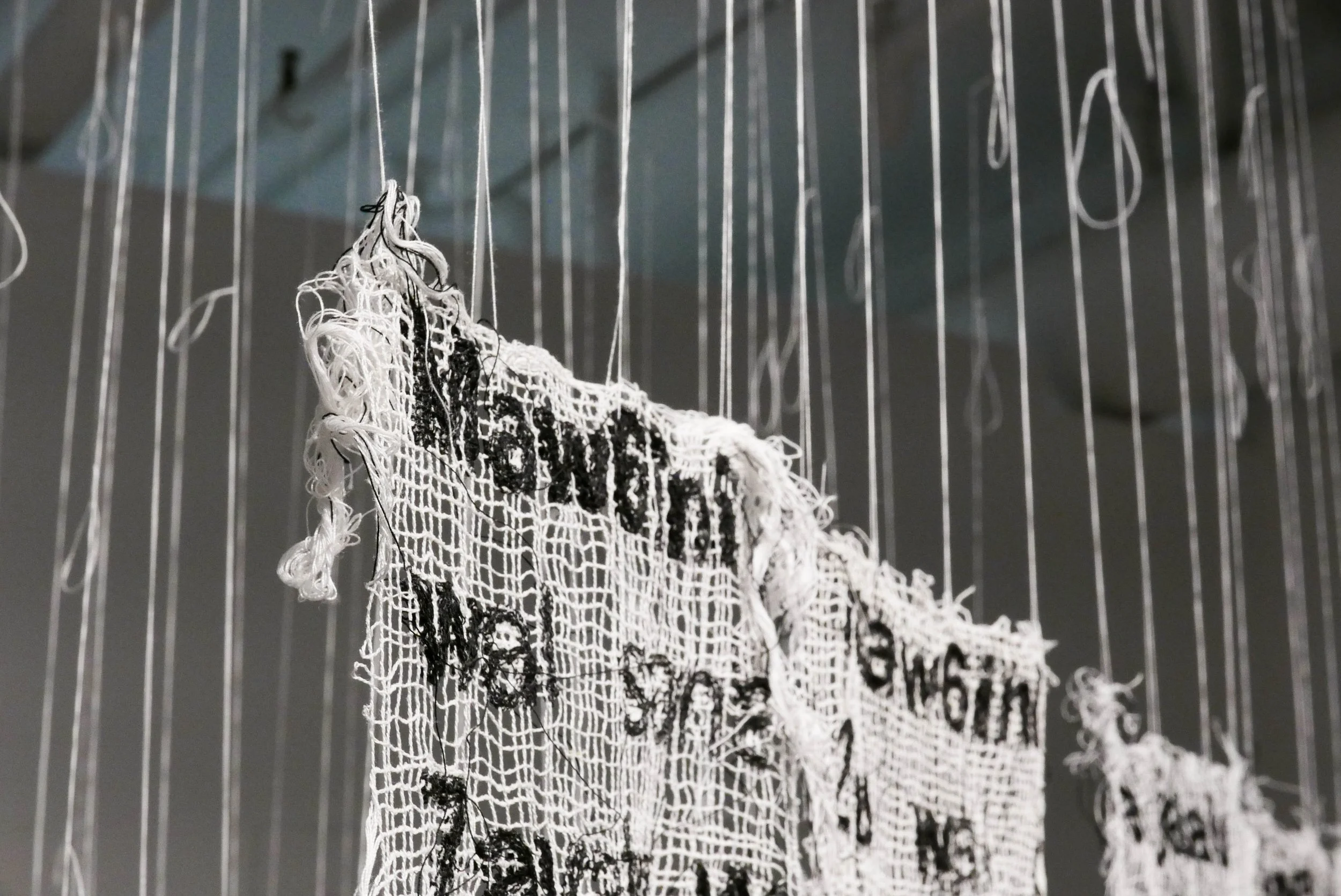
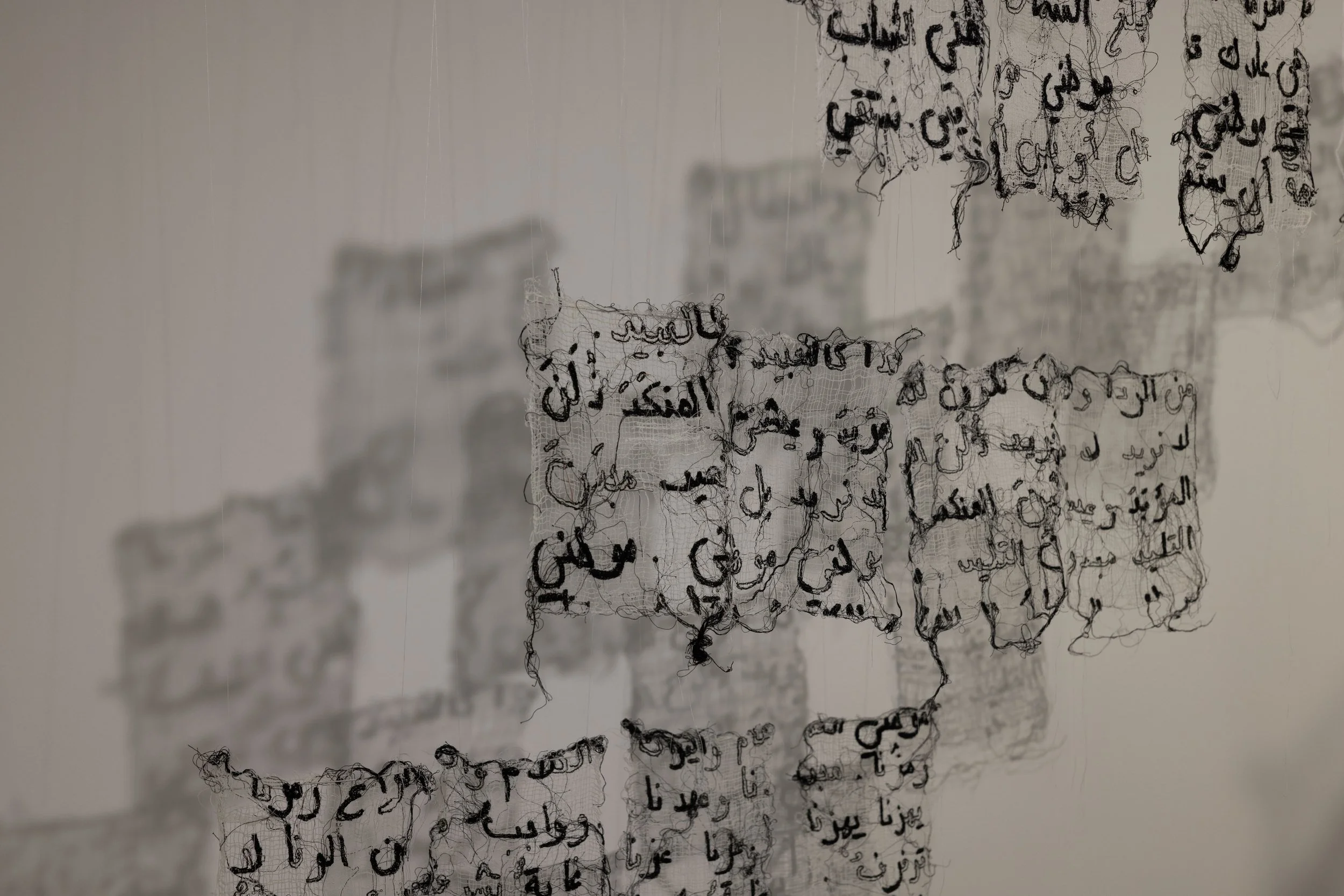
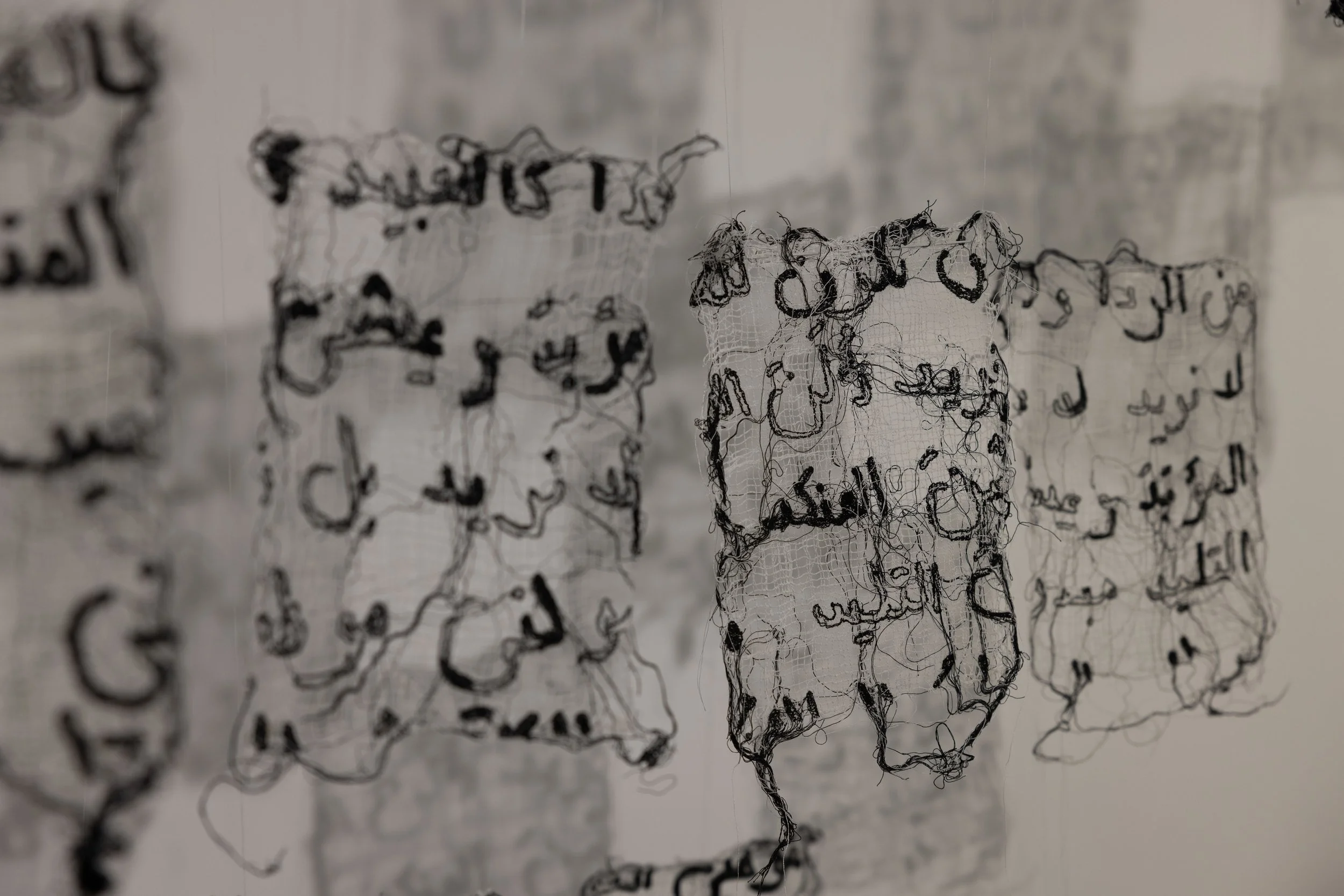
Maw6ini (2018)
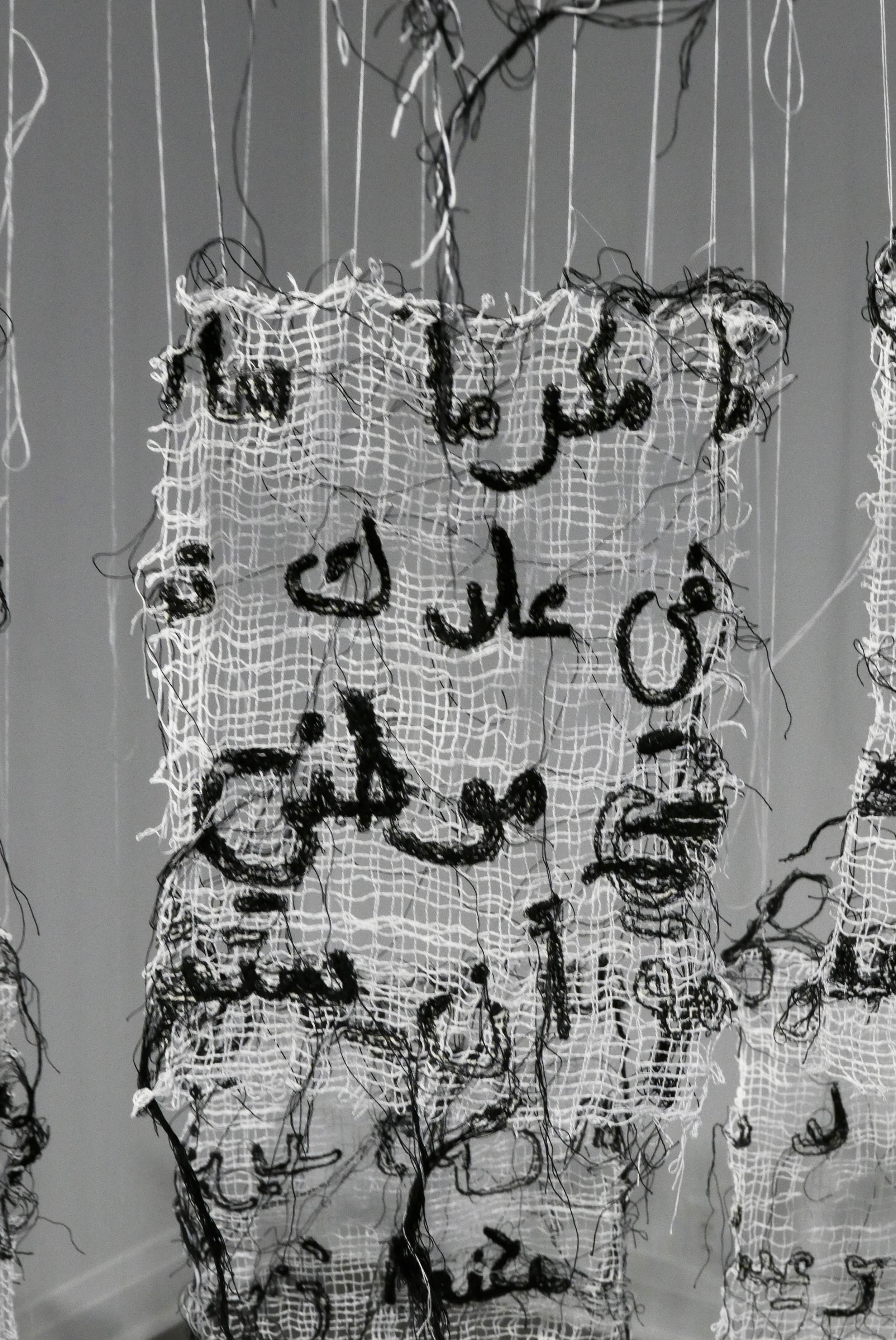
4. Could you tell us about Maw6ini (2018)? What interested you in exploring the idea of homeland through this particular work?
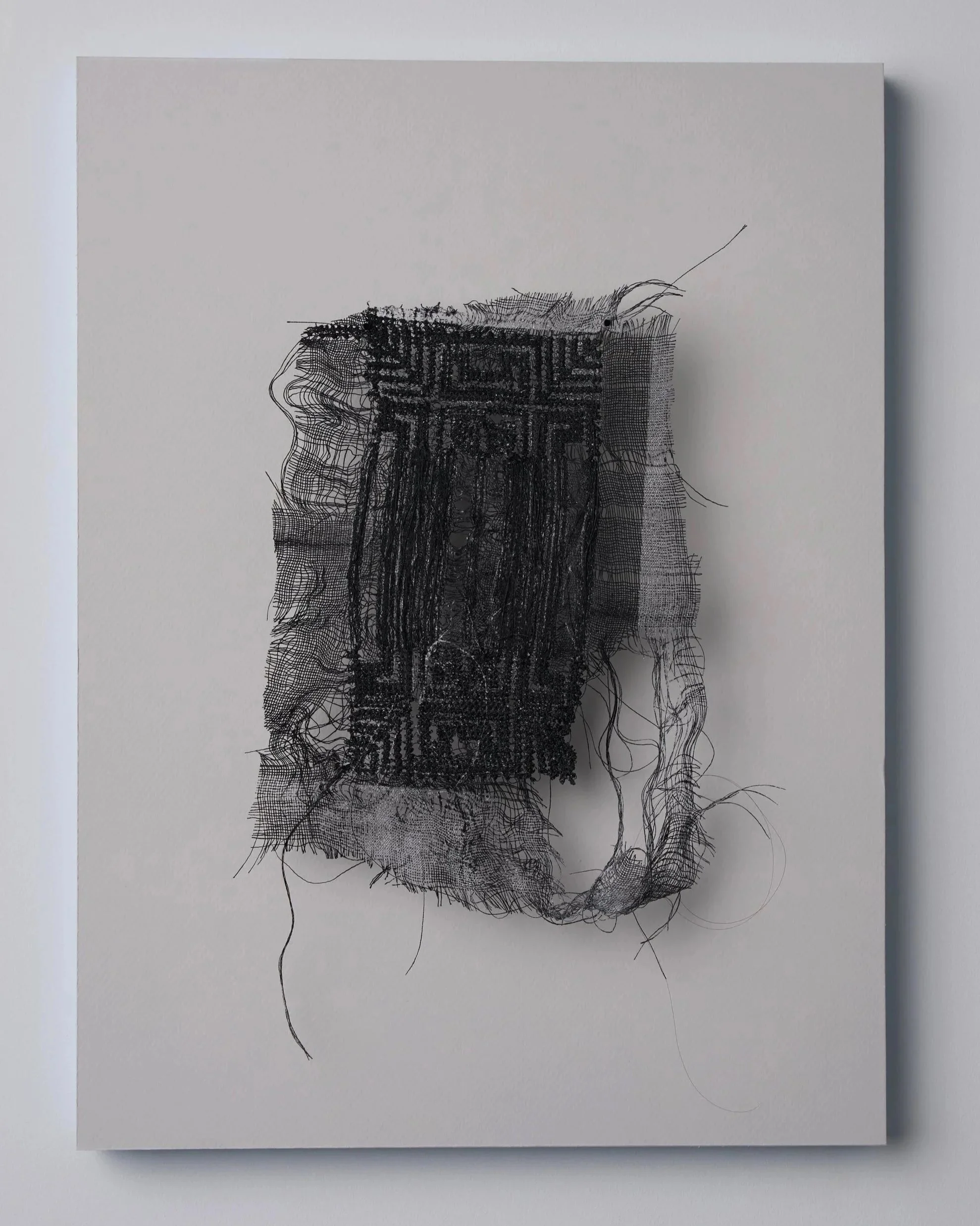
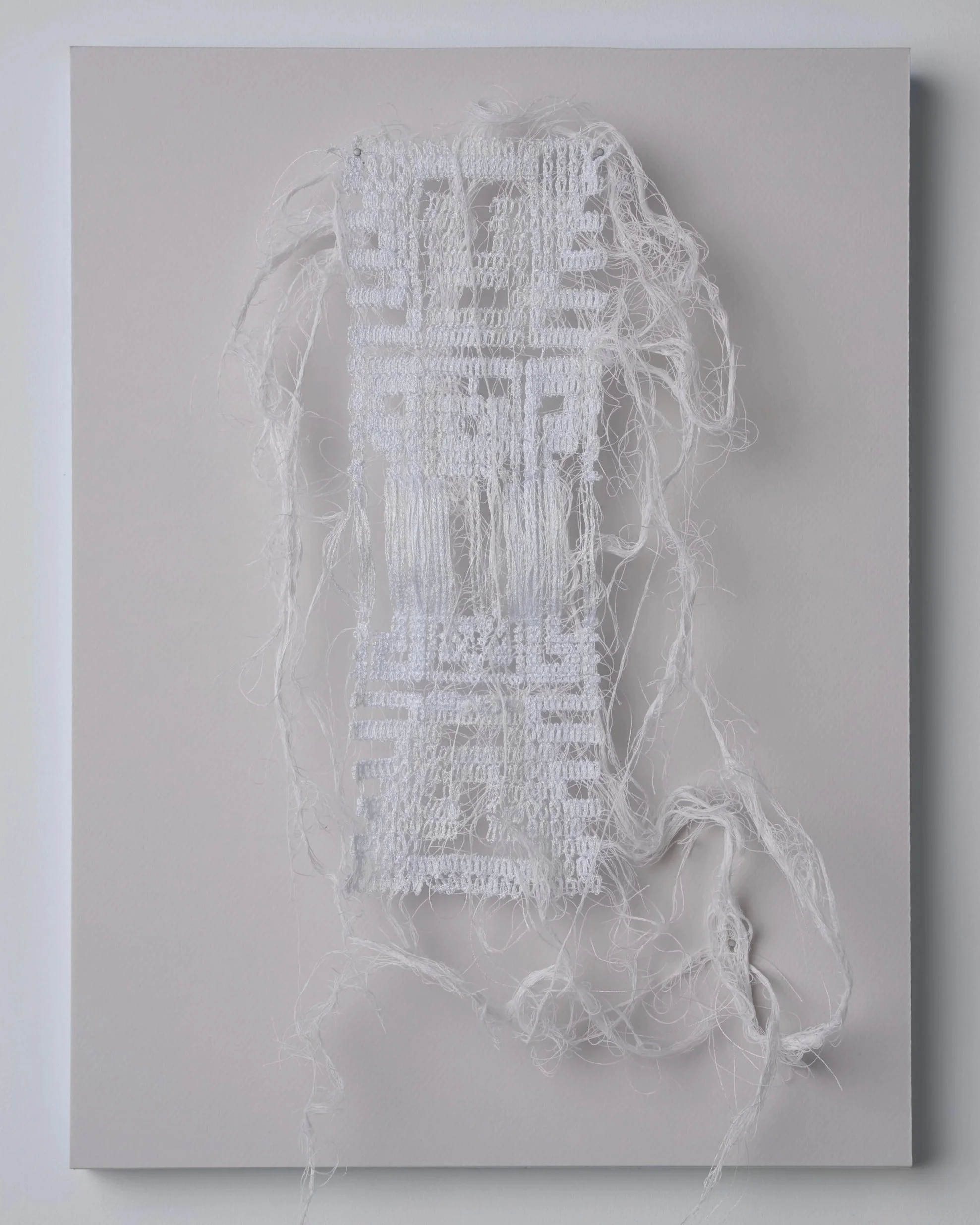
Maw6ini takes its title from the Arabic word for "my homeland" and references the Palestinian poem and song, Mawtini. The installation consists of the song transcribed phonetically using Latin letters and additional symbols to represent Arabic sounds that don't exist in the English alphabet.
I embroider the text entirely from thread, without fabric, so the letters appear to float in space. As light passes through the installation, the threads cast shadows that extend the text beyond its physical form.
The work emerged from my experience of being Palestinian in the diaspora and the difficulty of communicating an identity that doesn't necessarily correspond to a singular geographical experience.
I began questioning what happens when something so closely associated with national identity is translated into another linguistic system. The words remain recognizable through sound, but their visual form changes, and their meaning becomes dependent on the viewer's familiarity with the language.
For me, there's a form of resistance in refusing a singular meaning. The work questions how concepts such as nation, territory, identity and belonging are defined, and how those definitions shift depending on who is interpreting them.
Rather than defining homeland, I wanted to reflect the complexity of articulating an identity that exists across different spaces.
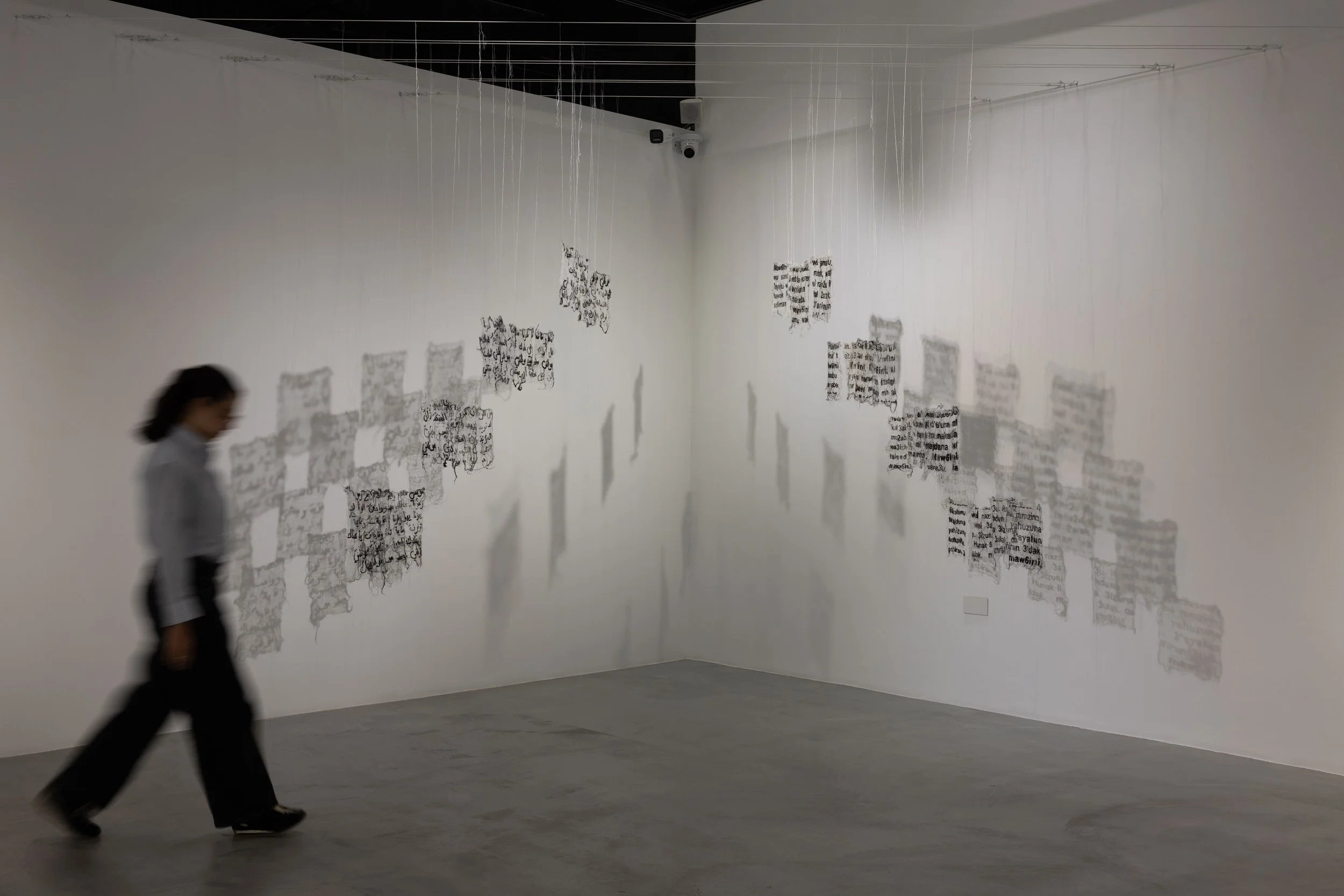
In Circulation
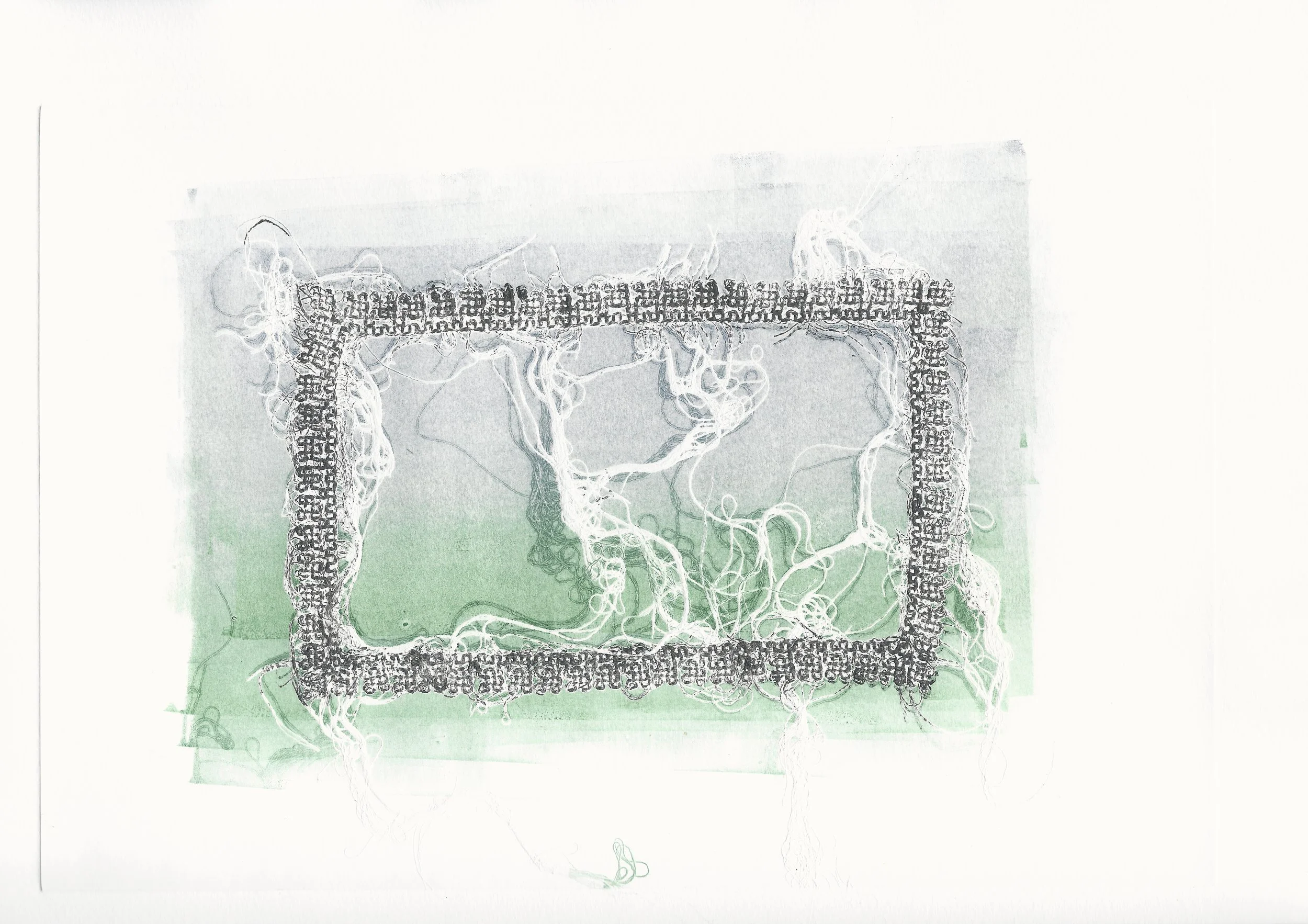
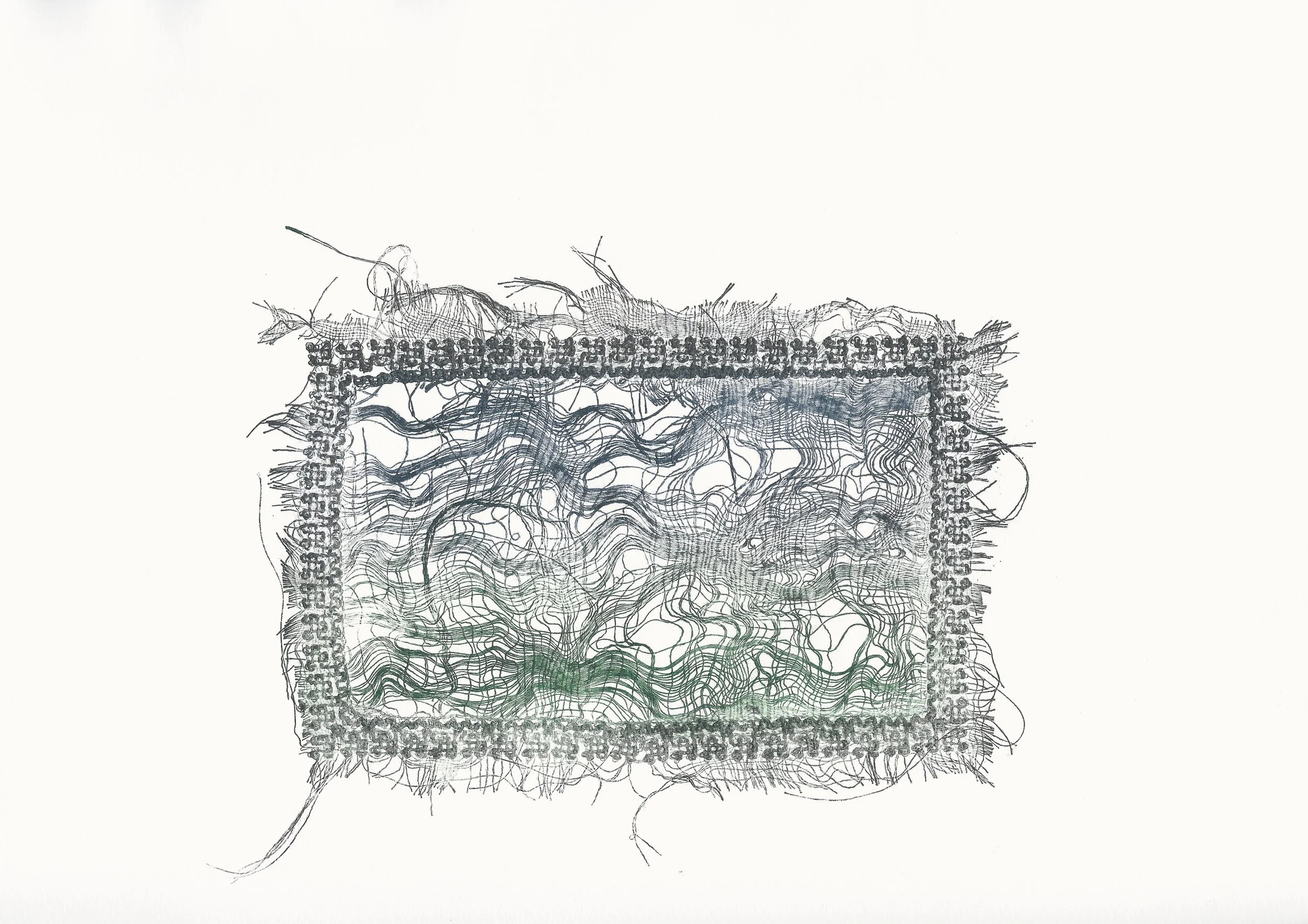
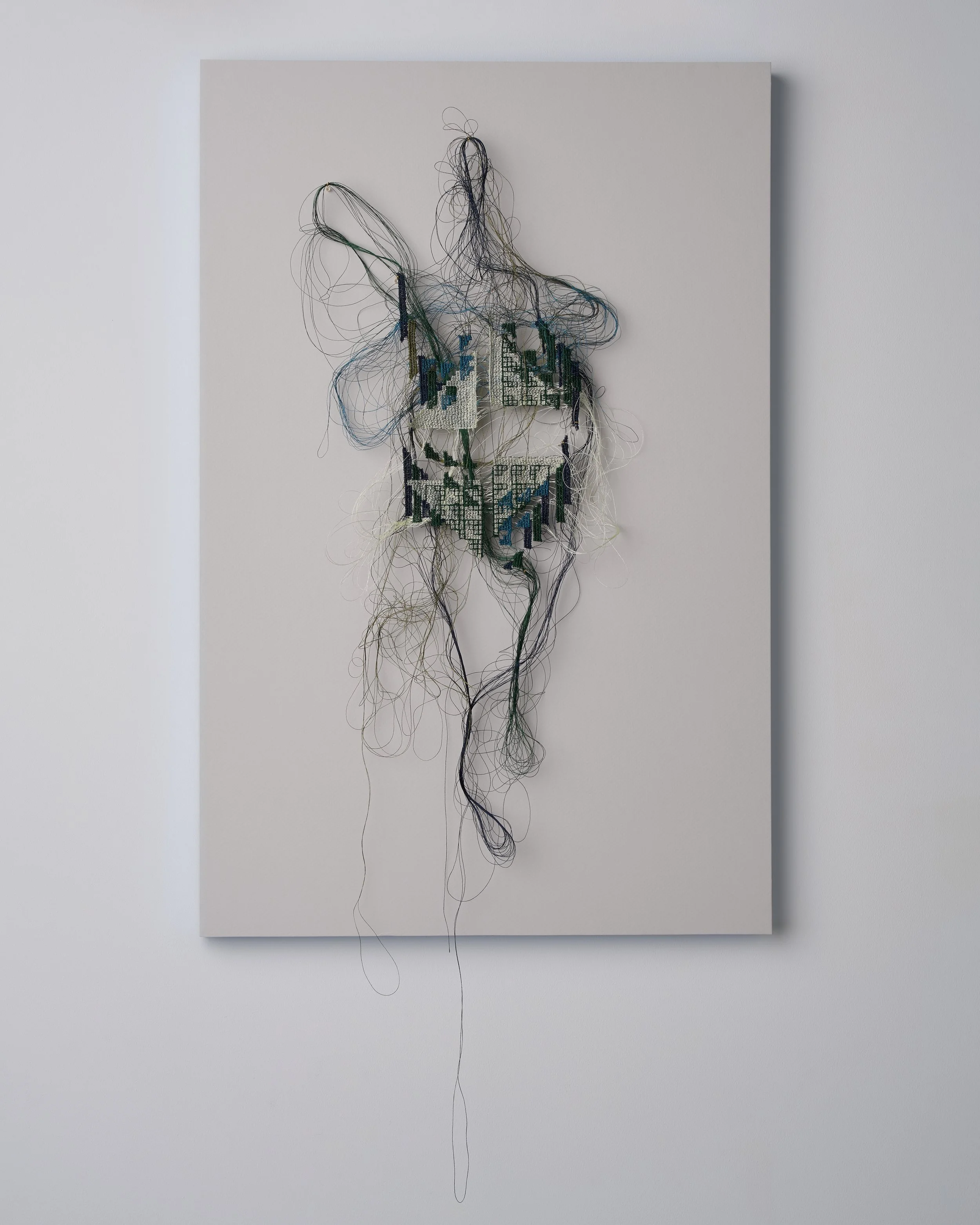
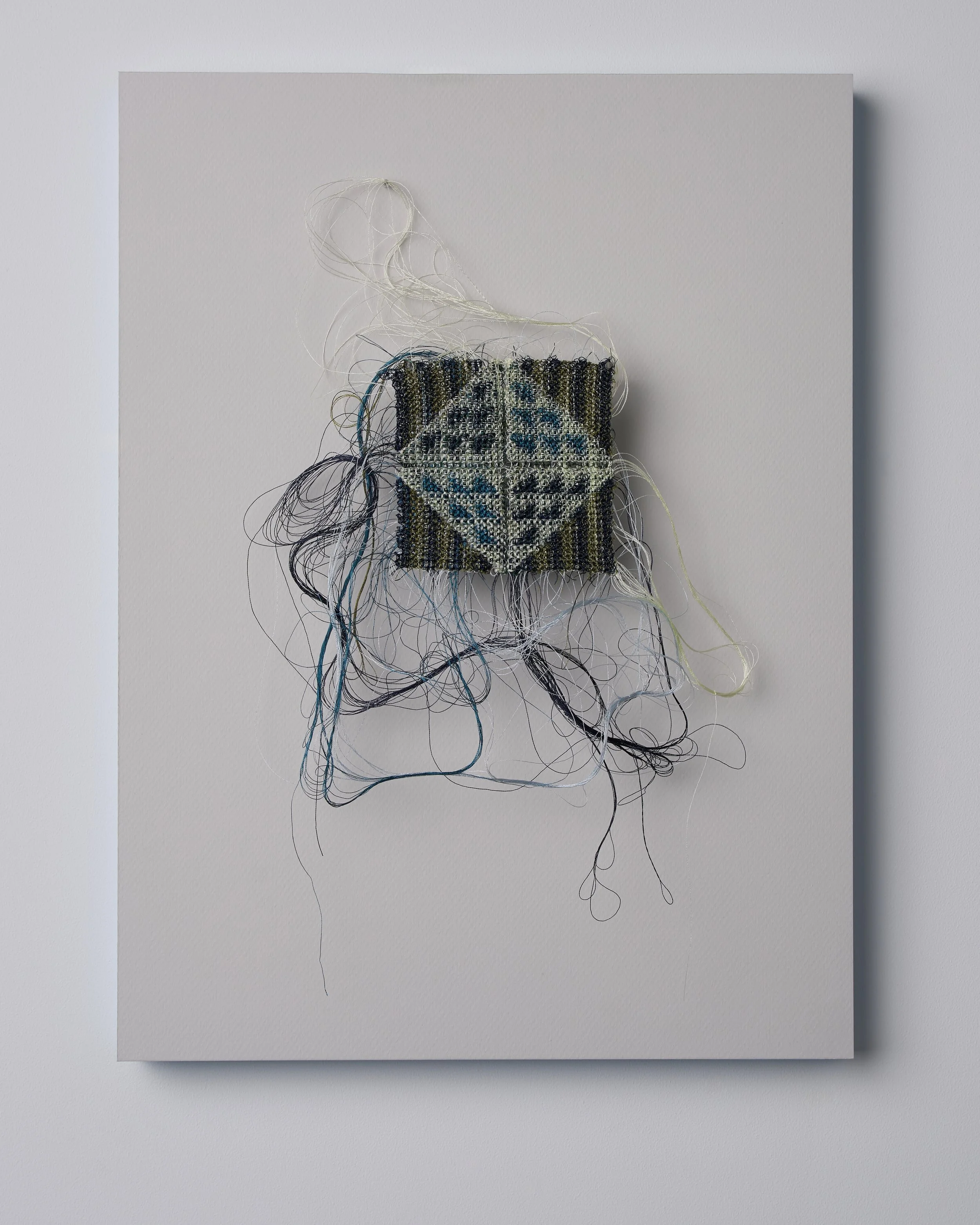
5. How do works such as In Circulation, Fatma’s Amulet and Framing the Imaginary relate to one another within the presentation? Are there particular ideas or material processes that connect them?
Although these works take different forms, they're connected through the relationship between individual elements and the larger systems they become part of.
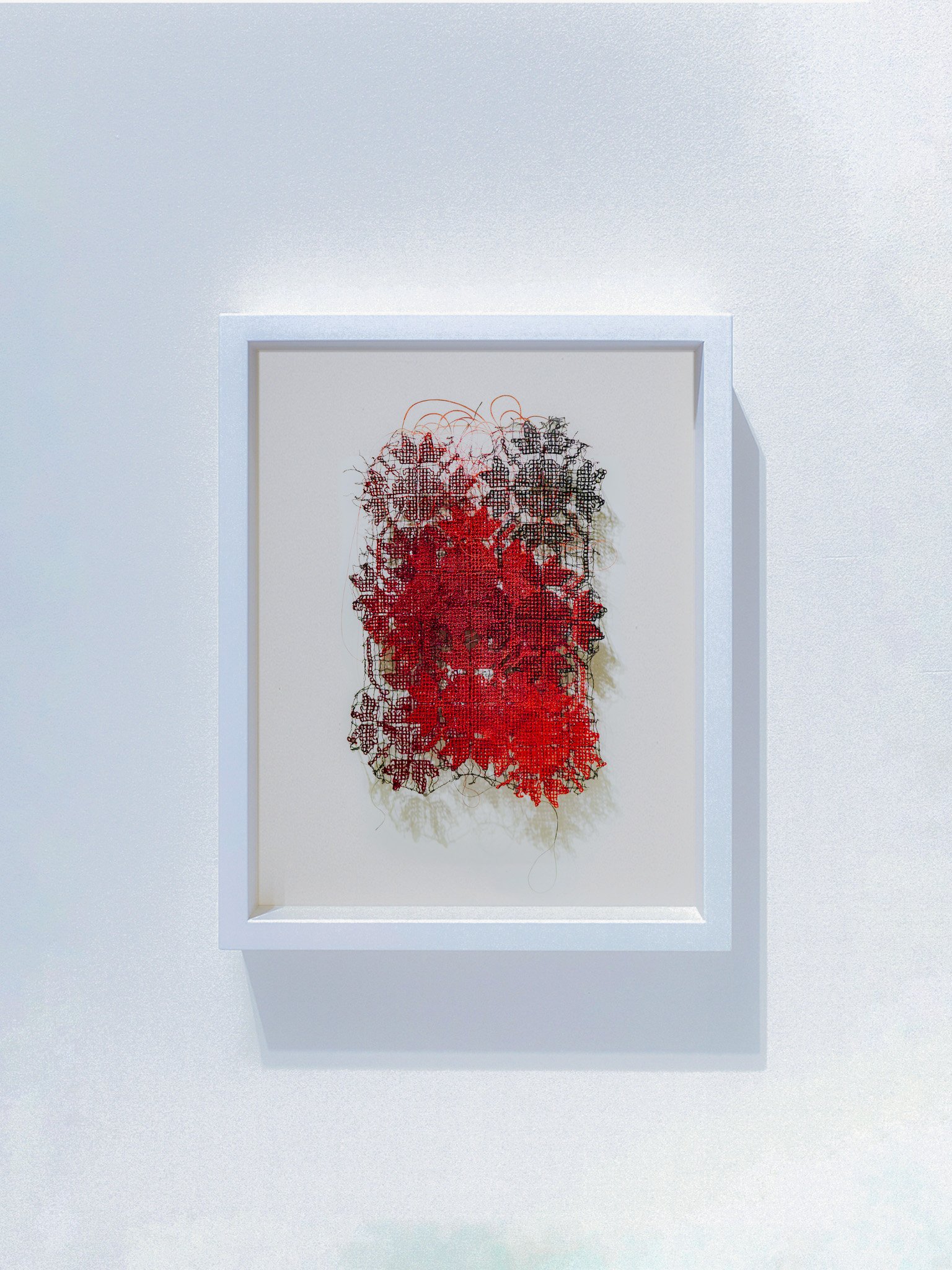
Repetition is central to this relationship, both as a physical process and as a way of thinking about how meaning is constructed. A single thread, mark or form may appear insignificant on its own, but through accumulation and its relationship to other elements, it becomes part of something more complex.
Across these works, familiar visual languages are transformed through changes in material, scale and context. Embroidery, layering and impression become ways of negotiating what is revealed and what remains concealed.
I see them as different approaches to questions of perception and interdependence, rather than works intended to communicate fixed ideas.
Framing the Imaginary #11
Framing the Imaginary #9
6. This year’s MENART Fair takes Where Is Home? as its central theme. How has your understanding of home and belonging developed through your experiences across Palestine, Canada and Dubai, and how does this find expression in your work?
I've never understood identity or belonging as something that can be defined entirely by a place.
As a Palestinian in the diaspora, there's a particular complexity to that relationship. Palestine is central to my identity, but my experience of being Palestinian has been shaped by living outside of it, through language, cultural memory, inherited histories and the environments I've moved through.
This has made me conscious of how identity is defined, both by ourselves and by others. We're often expected to explain where we're from or where we belong as though these questions have straightforward answers.
Rather than defining home, I question the structures that determine what home, nationhood and belonging are supposed to mean.
In my work, this often takes the form of translating familiar cultural references into something less immediately legible, creating space for other interpretations.
I don't see belonging as a fixed condition, but as something continuously negotiated through our relationships, experiences and the meanings we attach to them.
7. What role does experimentation play in your creative process? How much of a work’s direction is determined before you begin, and how much develops through the process of making?
Experimentation is fundamental to my practice. I usually begin with a question or an idea, but rarely know exactly what the final work will look like.
I spend a lot of time testing materials, often without a specific outcome in mind. Sometimes a material behaves unexpectedly, and that becomes the starting point for an entirely new direction.
My thread-only embroidery, for example, developed through experimenting with water-soluble fabrics. What began as a technical process became a way of thinking about absence, structure and the space around an object.
There's also a great deal of planning, particularly with large-scale installations and sculptures, but I try to leave room for the work to evolve. For me, making is a form of research. Materials aren't simply a means of executing an idea; they're actively involved in shaping it.
8. Earlier this year, you contributed to Costume Art at The Metropolitan Museum of Art in New York. Could you tell us a little about that experience and what it meant for you and your practice?
I was commissioned by The Metropolitan Museum of Art's Costume Institute to develop sculptural heads for the mannequins in Costume Art, working in collaboration with Andrew Bolton and the exhibition team.
The heads incorporated polished, mirror-finished stainless steel faces in place of conventional facial features. The reflective surfaces introduce the viewer into the relationship between the mannequin and the garments, complicating the distinction between looking at something and becoming part of what is being seen.
It was an incredible opportunity to work at that scale and in a context that brought together fashion, sculpture and the history of the body.
The project also pushed my practice technically, requiring a different approach to fabrication, precision and collaboration. It reinforced questions I've been exploring for years, while encouraging me to return more deeply to sculpture and continue experimenting with reflective and transparent materials.
9. How do you approach the relationship between the personal histories and experiences that inform your work and the interpretations that viewers bring to it? Is this something you consider during the making process?
My experiences inevitably inform the work, but I don't necessarily aim to communicate them as a fixed narrative. What matters to me is how something personal can open up questions that extend beyond my own experience.
We all approach things through our histories, cultural references and assumptions, which inevitably influence what we take away from an artwork.
I don't think the artist has complete authority over what a work means once it enters the world, nor do I think that's desirable. I want viewers to bring their own experiences into the work, even when their interpretations differ from my intentions.
Meaning isn't contained entirely within the artwork. It emerges through the encounter between the work and the person experiencing it.
10. Looking ahead, what are you most interested in exploring further within your practice?
I'm looking forward to returning to sculpture and developing a more spatial approach to the materials I've been working with over the past few years.
I've been experimenting with embossed transparent acrylic, creating surfaces where patterns are almost invisible until light passes through them and casts shadows. The shadow becomes an extension of the sculptural form, sometimes revealing more than the object itself.
I'd also like to continue developing the possibilities of embroidery as sculpture, particularly how thread can function as a structural material rather than simply an image-making one.
More broadly, I want to keep challenging the boundaries between different mediums. I don't feel the need to arrive at a definitive visual language; I'd rather allow the practice to evolve through experimentation and the questions that emerge along the way.
Words copyright of Naso Art Journal
Images courtesy of Samar Hejazi
