
Amir Khojasteh
On Playing with the Monster
Written by Soraya
“Fantasy becomes a catalyst rather than an escape. Experiences that are “sharp and painful, both personal and collective” are exaggerated and reworked until they soften and change form. Through visual storytelling, he creates a space where pressure can be reimagined rather than merely endured.”
On Roots, Distance, and the Formation of a Visual Language
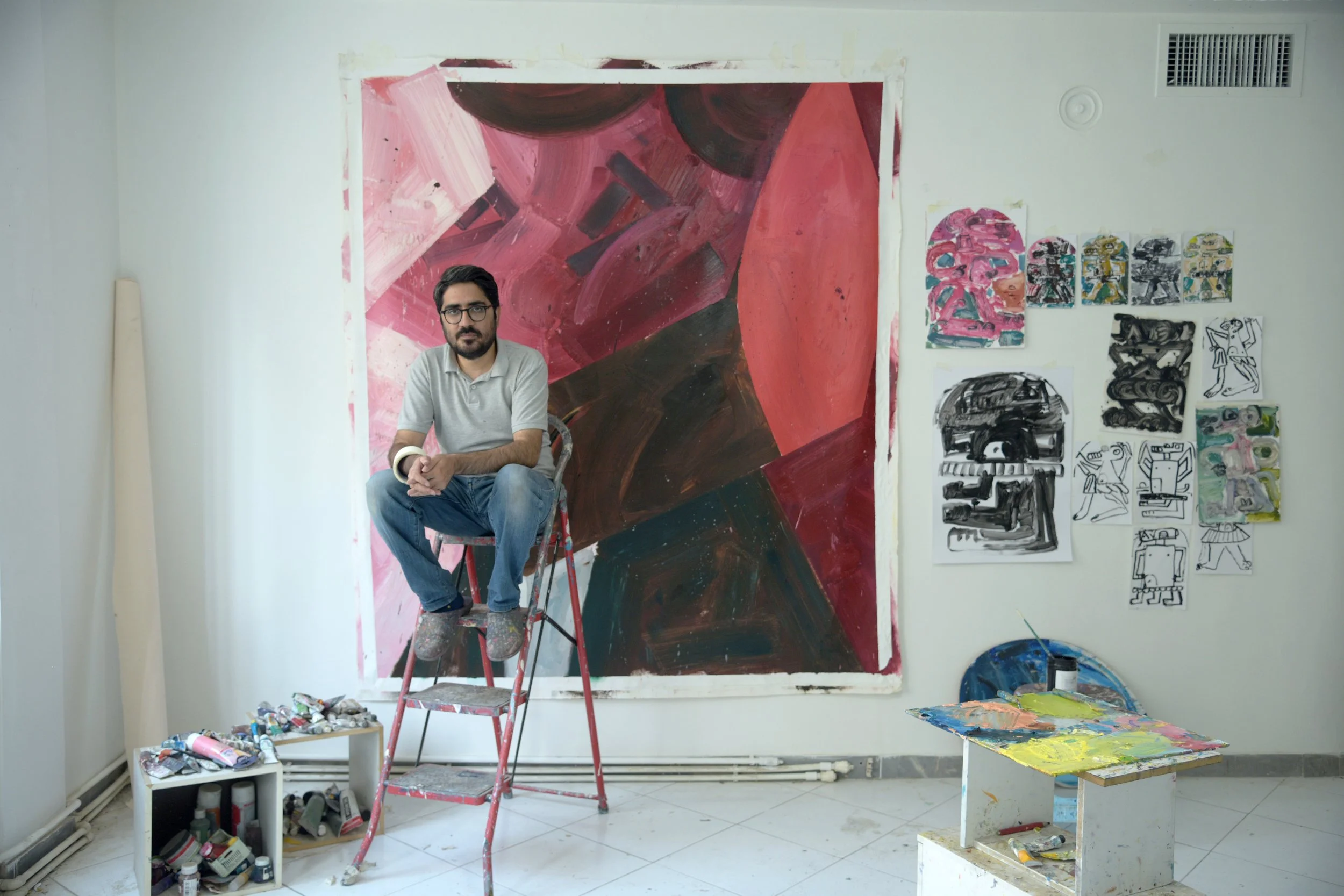
Born and raised in Iran, Amir is an artist whose practice moves between painting and sculpture, shaped by early encounters with image-making and storytelling. Now based in Ghent, Belgium, he lives and works at a physical and emotional distance from his place of origin, a distance that has sharpened rather than diluted his connection to it.
“I am an Iranian artist working primarily with painting and sculpture,” he explains. “I was born and raised in Iran, where my roots are deeply connected to cultural history, visual traditions, and storytelling.”
This sense of rootedness, intensified by migration, has become increasingly visible in his recent work. Distance, he notes, has made the idea of home more fragile and therefore more valuable. “Being away made my roots feel more visible, almost like something fragile that remains from my past life.” The notion of shelter, specifically the Iranian garden historically conceived as an oasis of order within chaos, has emerged as a central metaphor in his new body of work.
On Early Encounters: From Copying Caricatures to Claiming Art
Amir’s commitment to art did not arrive as a sudden decision, but as a gradual deepening of a childhood instinct. “As a child, I was always drawing or trying to make things with my hands,” he recalls, describing hours spent copying caricatures from newspapers his father brought home.
A formative moment arrived during middle school on a school trip to the Tehran Museum of Contemporary Art. Encountering works by Warhol, Picasso, Bacon, and Magritte for the first time, he experienced what he describes as stepping into a world he had long imagined. “That experience stayed with me, making art feel like a space I could truly enter.”
From then on, drawing shifted from habit to intention, eventually leading him toward formal art studies.

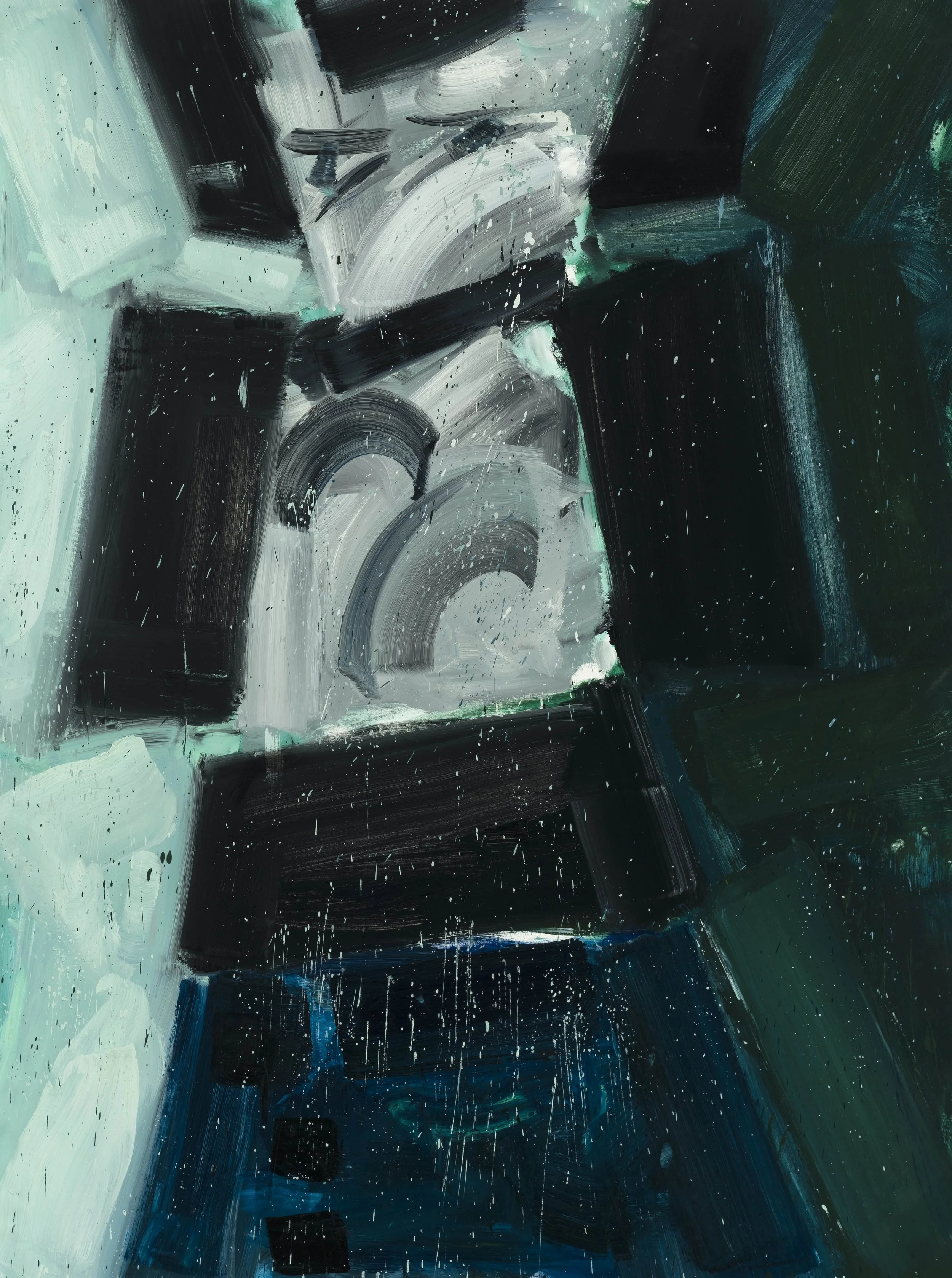
Wistful 2024, Oil on Canvas
On Contradictions as Material: Power, Failure, and the Everyday
At the core of Amir’s practice lies a fascination with contradiction, between public and private life, image and reality, authority and fragility. Growing up in Iran meant living within unresolved dualities, where images constructed to project power and grandeur routinely collapsed under lived experience.
“These idealized images repeatedly failed to match lived experience,” he says, “and this failure became central to how I understand power and representation.”
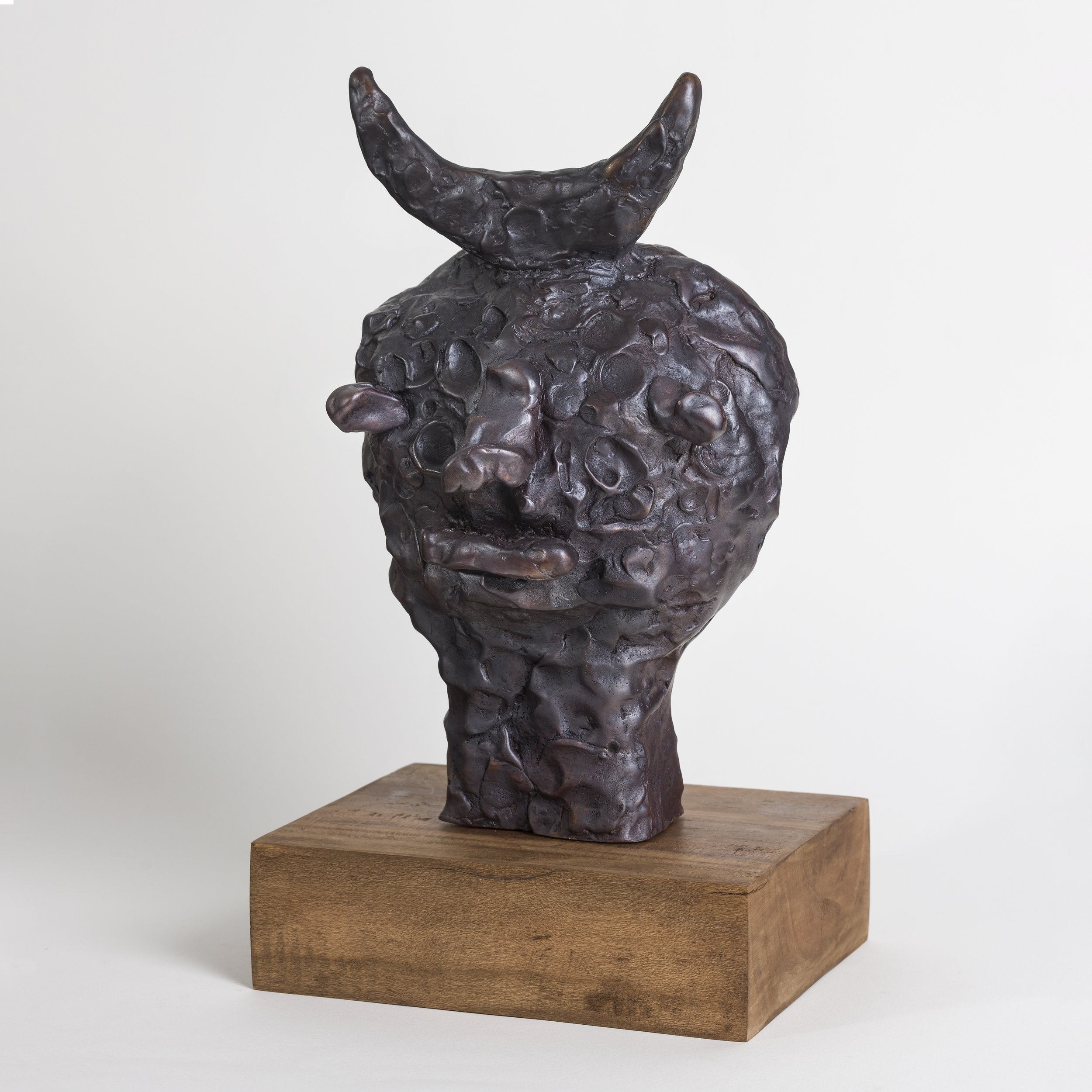
Though rooted in a specific geography, Amir now understands this tension as global. His visual language draws freely from Iranian narrative traditions, Western art history, classical sculpture, popular culture, and everyday observation. He treats these references as raw material rather than fixed symbols. “I consider these influences as materials to play with,” he explains, emphasizing that play, through exaggeration, collision, and distortion, is fundamental to his method.
On Dark Humor and Formal Transformation
Fear appears repeatedly in Amir’s work, not only as subject matter, but as something actively reshaped. Rather than confronting fear head-on, he approaches it through dark humor and formal play.
“I start playing formally with the fear, giving it shape, stretching, and exaggerating it, until it detaches from its original essence,” he explains. While it was central to his earlier work, the term feels less precise in relation to his recent practice. What was once fear has shifted into something more diffuse - closer to tension, pressure, or unease. Rather than engaging with fear as a direct or singular emotion, he is now more interested in disarming this sensation through play, exaggeration, and dark humor, allowing it to loosen, mutate, and lose its authority.
On Fantasy, Politics, and the Refusal of Direct Statements
Political reality is inseparable from daily life, and Amir does not attempt to separate his work from this condition. Yet he resists the idea of making declarative political art. “I don’t approach these subjects by making political statements,” he says. Instead, his work functions as a defensive mechanism, a form of resistance through play.
Fantasy becomes a catalyst rather than an escape. Experiences that are “sharp and painful, both personal and collective” are exaggerated and reworked until they soften and change form. Through visual storytelling, he creates a space where pressure can be reimagined rather than merely endured.
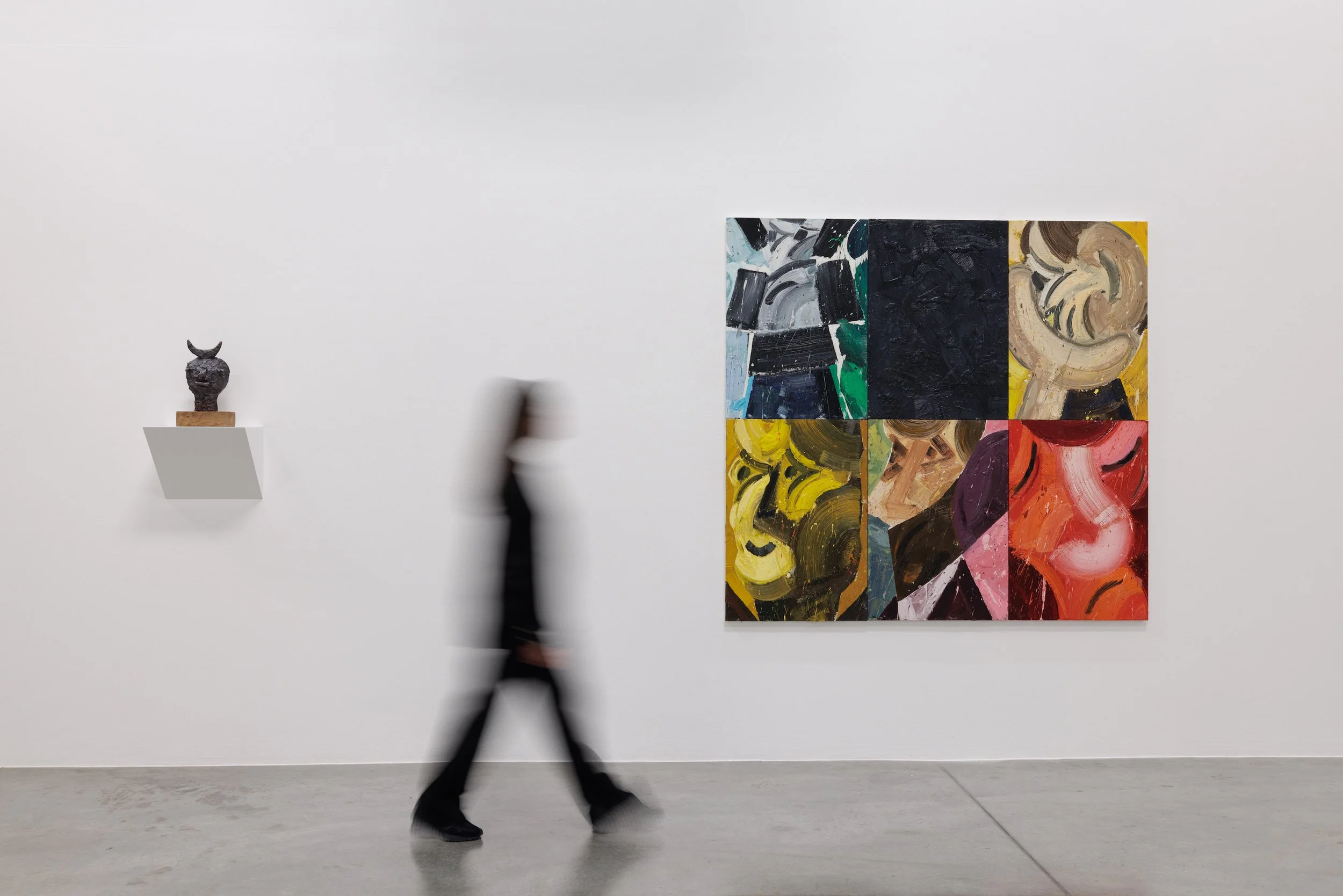
Never show up empty handed, 2025, Acrylic on canvas
On Growing Within Community
As one of the youngest artists in several group exhibitions, Samer views her position as an ongoing learning experience. Exposure to seasoned artists has allowed her to witness the many ways a practice can be built and sustained. This diversity has helped her develop confidence in her own voice while remaining open to growth.
Working alongside more established artists has expanded the contexts in which her work is seen - and strengthened her appreciation for shared knowledge and mentorship.
Images Courtesy of the Artist.
The full interview is exclusively in print, Issue 3.
Words Copyright of Naso Art Journal
