
Shaima Shamsi
On Absence, and What it Holds
Written by Nayla
“Looking at the eye of the needle became the beginning of thinking about absence.”
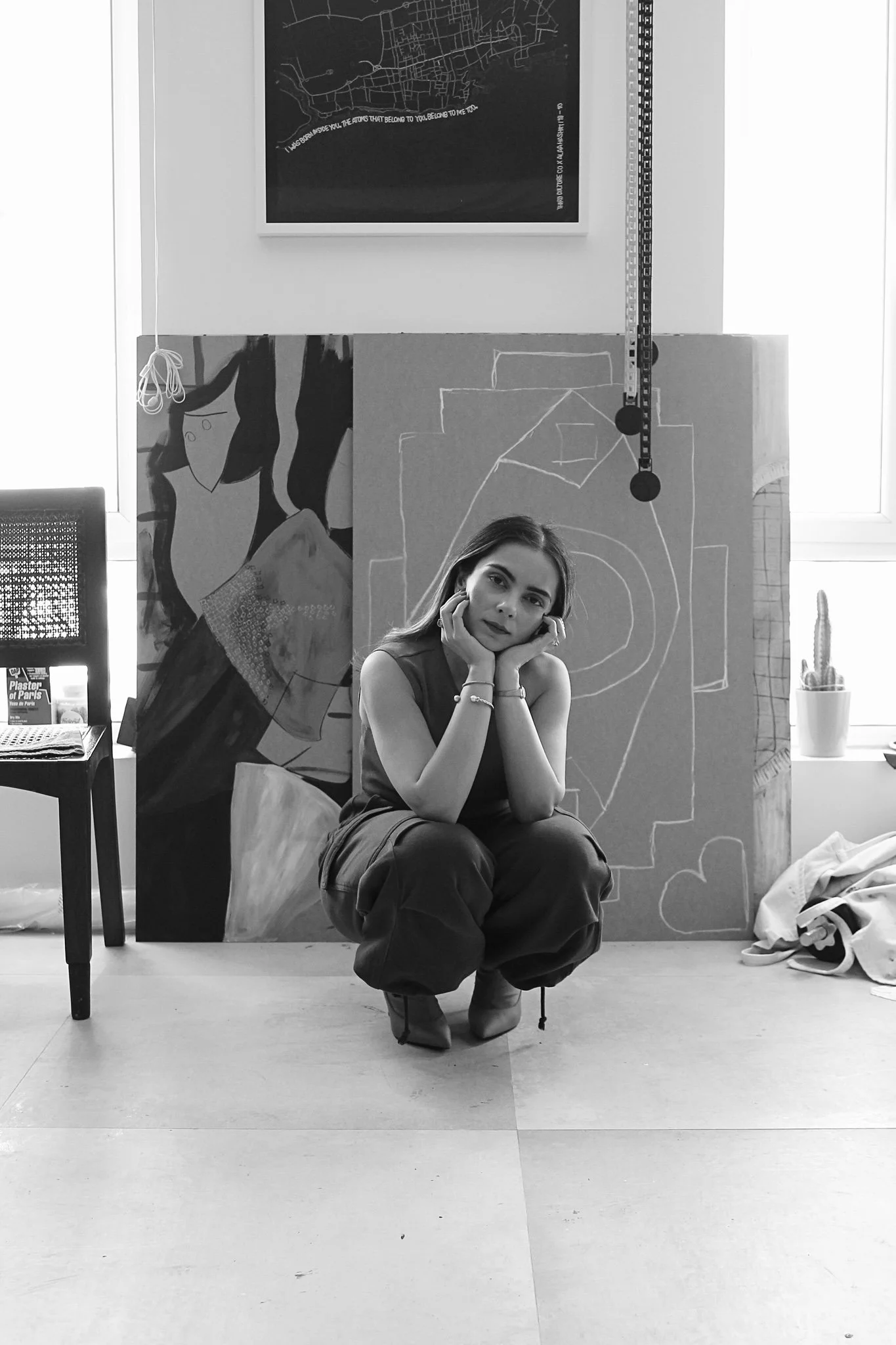
Shaima Shamsi’s practice unfolds through material and process. Working across sculpture, paper, and installation, she approaches making as a way of thinking; allowing ideas to emerge through what materials do and how they behave.
At the centre of her work is an ongoing enquiry into absence. Not as emptiness, but as something that takes form — through separation, through material gestures, and through the systems that shape how land and history are understood. Raised in Jeddah and later based between Bahrain and Abu Dhabi, her experience of movement informs this sensitivity to belonging. Nonetheless, displacement operates as a framework rather than the focus of her work. What Shamsi’s work traces instead is how absence is encountered, produced, and held.
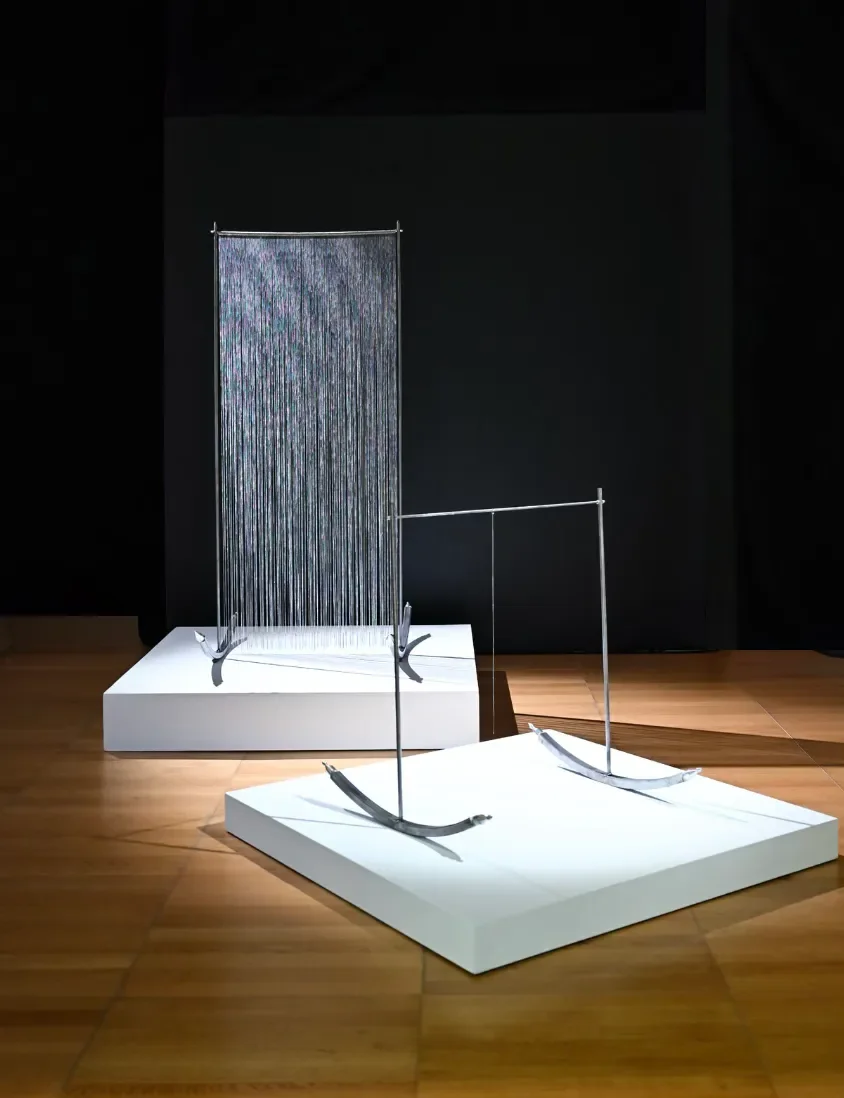
Sharp Comforts, 2025, Steel, metal, thread, needles
On Separation, Material, and the Formation of Absence
Building on the ideas explored in Sharp Comforts, Shamsi turns toward separation, approaching it as something that unfolds across distance.
“It was trying to understand what happens in separation. What even is a separation?”
In Geographies of Absence, this enquiry becomes deeply personal. Through an exchange of handwritten letters with her mother, Shamsi begins to trace how separation stretches across time, geography, and relationships.
“I started to think about how separation stretches, and as it stretches, it creates these absences.”
Using the needle as a tool, she perforates these letters onto paper. Without thread, the gesture does not repair but punctures, leaving behind a surface marked by absence.
“Material already has a meaning and a characteristic. I work alongside that.”
For Shamsi, material is not something applied to an idea, but the ground through which meaning is formed. With lead, drawn to its toxicity, she introduces a material that resists touch and enforces distance.
“It became something you shouldn’t touch. That inability to access became important.”
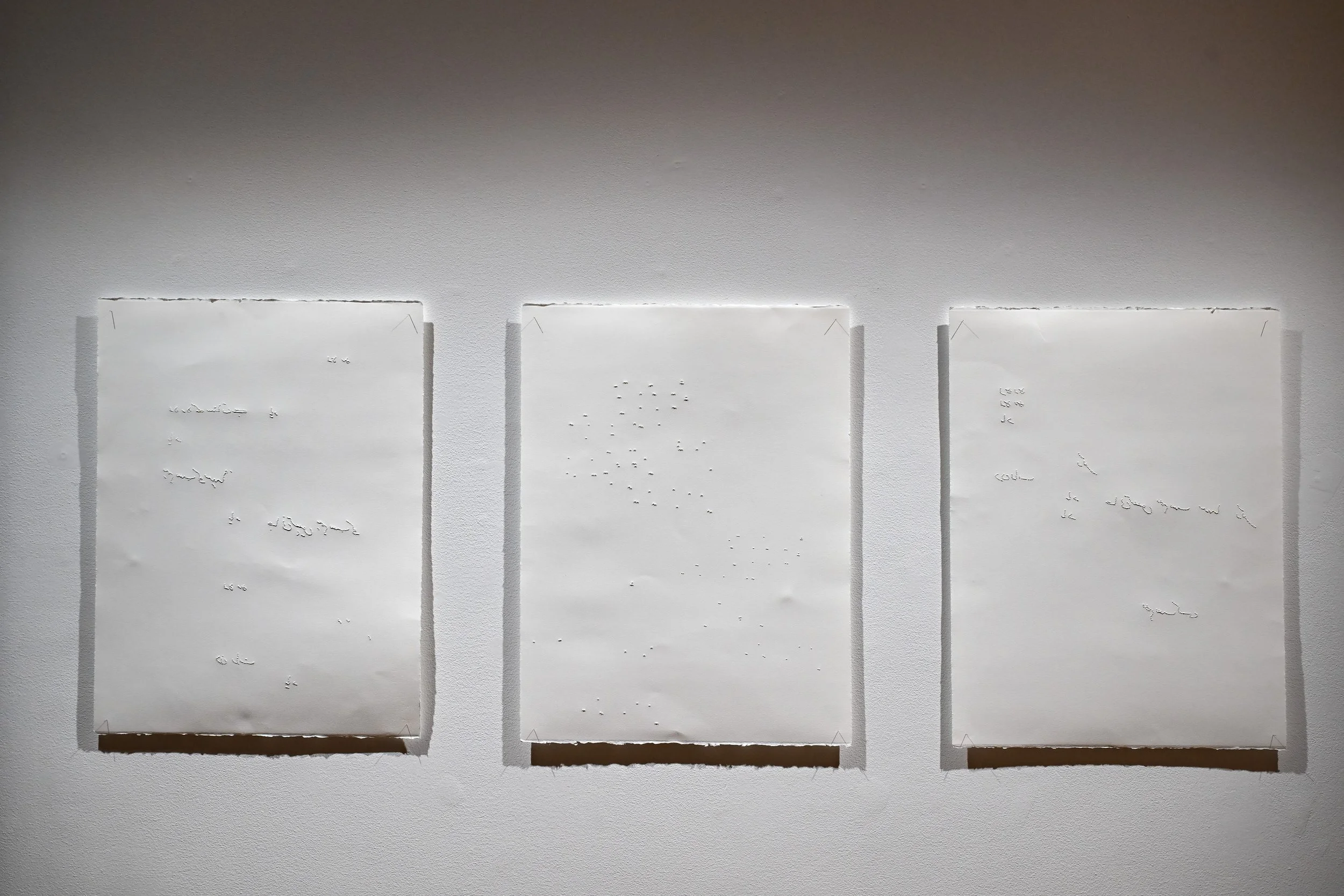
Geographies of Absence, 2025, Archival Paper
On Land and Constructed Absence
From material, Shamsi’s enquiry expands outward into systems that produce absence at a larger scale. Her research into geological archives leads her toward colonial surveys of the Gulf.
“I realised how extractive geology has always been, how it flattens land into something empty, something to be mapped and extracted from.”
These archives do not simply document land, but actively construct it, producing absence through the erasure of culture, community, and lived histories.
On Land, Memory, and Holding
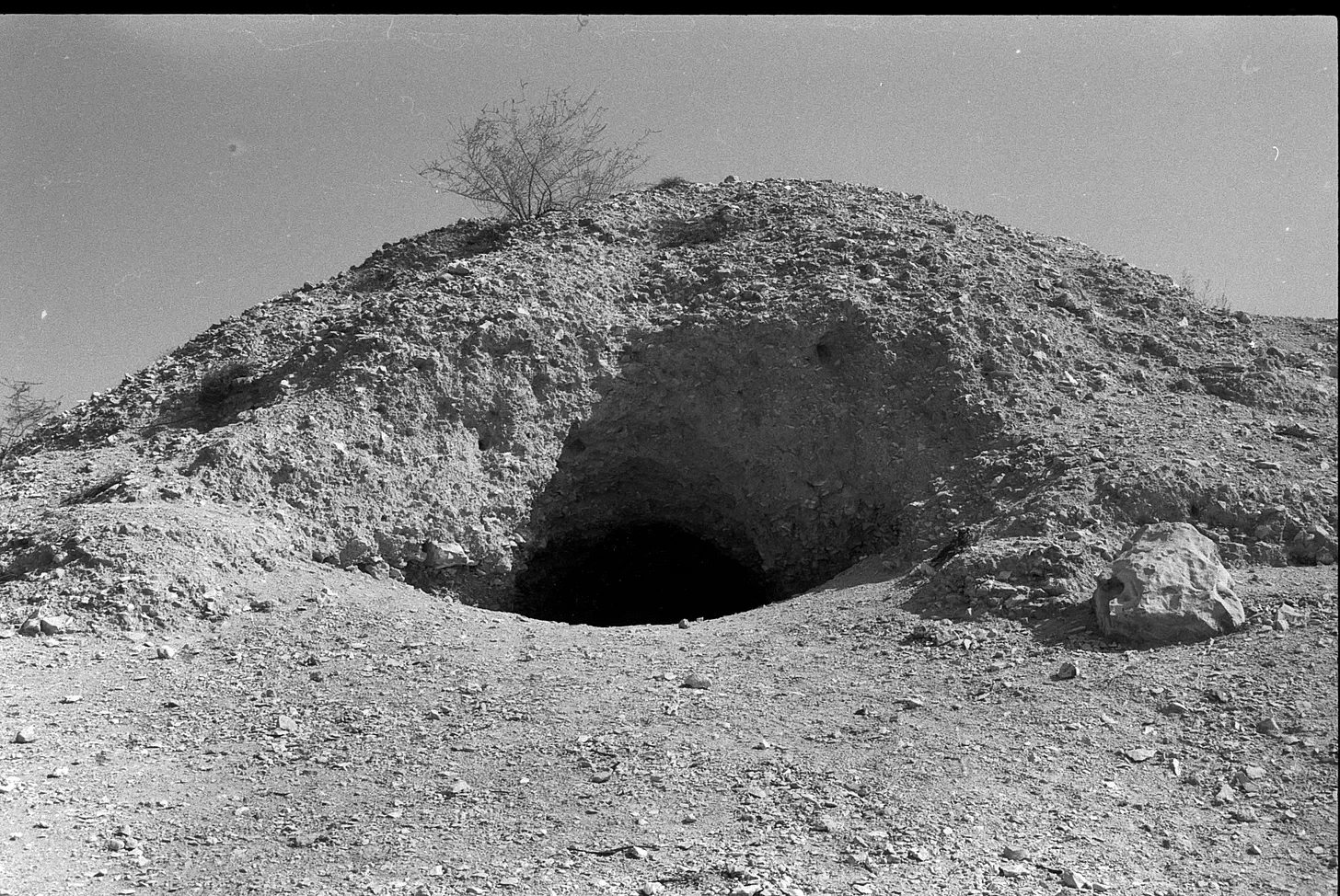
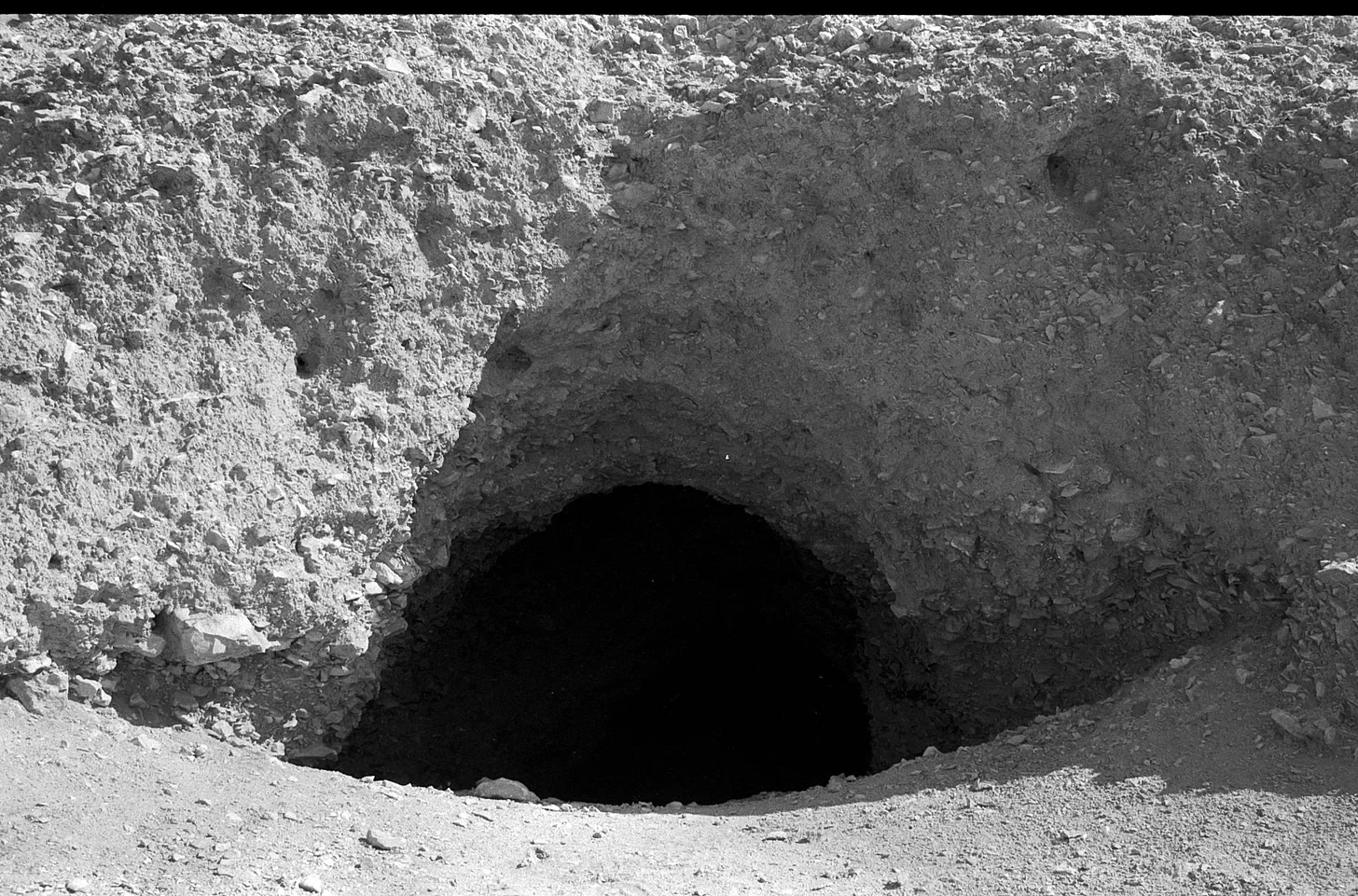
It is through the burial mounds of Bahrain that these threads begin to converge. Encountered as part of everyday life, the mounds become a central point of return within her practice, something consistently present yet often overlooked.
“They are always there, but you don’t see them unless you choose to look.”
What draws her is not their exterior form, but the cavity they hold within. Shaped by erosion and time, the mound protects an interior space that remains concealed, shifting attention away from surface and toward what is held inside.
“It’s not emptiness. It’s something denser.”
In this context, absence is understood not as loss, but as a condition of holding, one that involves protection, concealment, and accumulation over time.
On Absence as Ongoing Enquiry
Across her practice, absence moves between object, material, and terrain, shifting across different conditions and scales. From the eye of a needle to the surface of land, and from personal experiences of separation to the systems that shape how history is recorded and understood, her work traces how absence takes form rather than treating it as something fixed.
Currently completing her MFA at NYU Abu Dhabi, and with recent works presented in Blue Gold at Isola Gallery in Dubai, her practice continues to develop across materials, forms, and research. Shamsi describes this process as one that evolves through shifts in thinking rather than abrupt departures, with each body of work extending from the last.
Rather than attempting to define absence, her work remains attentive to how it is formed, encountered, and held.
Images Courtesy of the Artist.
The full interview is exclusively in print, Issue 3.
Words Copyright of Naso Art Journal
