
Natalie Ayoub
On memory, temporality, and building a personal archaeology of Rome
Written by Soraya
Foreword
Naso was passing through Rome this summer, briefly — a few days, the kind of trip that doesn’t leave time for the slow work of arriving somewhere and gradually finding the people who make it interesting. So we asked instead. One story, posted.
The replies arrived faster than we could read them. Studio shots, portfolio links, messages typed in a hurry and then corrected a minute later. Painters, photographers, creatives. Natalie Ayoub’s work caught our attention. Something in it resisted being scrolled past: images that seemed to be holding still on purpose, films that treat a photograph less as a captured second than as an event with its own duration. We responded.
We say this often at Naso, but it’s worth repeating when given the opportunity to:: most of what ends up in these pages exists because somebody reached out first. A message, a story, a reply from a stranger who decided to answer. Collaboration is not a byproduct of the work: it is the work, and the stories are almost always closer to us than we assume.
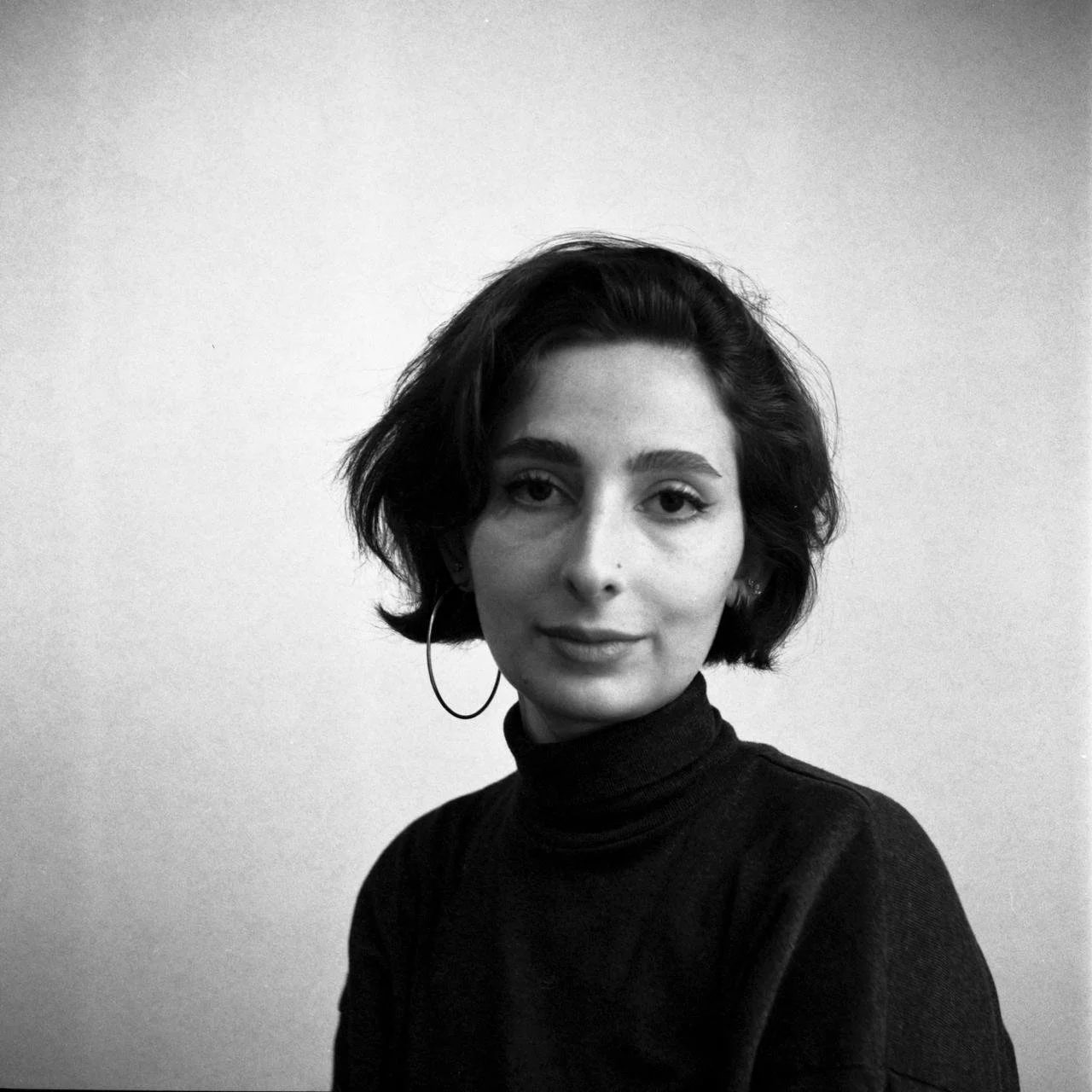
“This is also why I move between different materials in my practice. I tend to work with whatever material feels most appropriate to what I’m trying to explore or articulate at a particular moment. Once I work with it, though, I don’t think of the material as becoming mine. What I make simply becomes another part of its history; something that evolves in meaning, or becomes part of someone else’s experience.”
Natalie Ayoub is a Jordanian artist currently based in Rome, where she is pursuing a Master’s in Visual Arts and Curatorial Studies at NABA, Nuova Accademia di Belle Arti. She studied Environmental Health at the American University of Beirut before returning for a second degree in Studio Arts, and for several years now she has worked as a Senior Editor at Kaph Books, where she develops art and cultural publications.
She moves between media — film, photography, gameplay footage, digital imagery, sculpture, sometimes a stone picked up off the ground — with a consistency of question rather than of medium. What follows is a conversation about inheritance and accumulation, about time as an active agent, and about what a seed bank becomes when the thing being preserved is no longer biological.
“Seeing my father draw was what first made me want to draw too”
Before talking about your work, could you tell us a little about yourself and what first drew you towards becoming an artist? Where are you from, and how does home inspire you day to day?
I’m Natalie Ayoub, I’m Jordanian, and I’m currently pursuing a Master’s in Visual Arts and Curatorial Studies at NABA in Rome. I did my undergraduate studies at the American University of Beirut, where I studied Environmental Health and later decided to pursue a second degree in Studio Arts. Alongside my own practice, I’ve also been working as a Senior Editor at Kaph Books for the past several years, where I work primarily on art and cultural publications. That experience has become integral to rethinking artistic practices and production through researching, editing, contextualising, and working closely with other artists and writers.
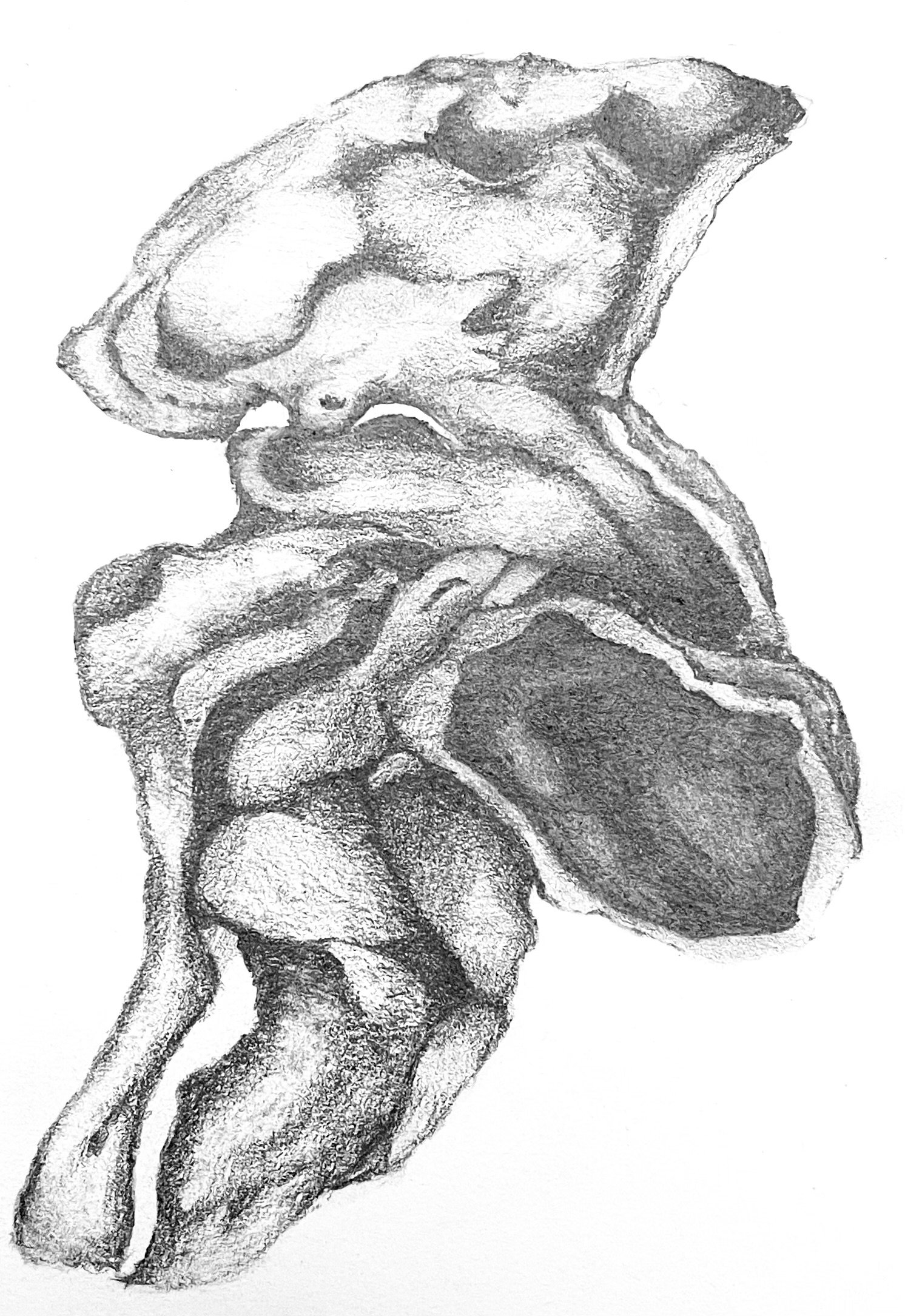
My relationship with art really began in childhood, but I think the biggest inspiration for me was my father. He’s an architect, and he was always drawing. He would leave his sketches around the house, so I grew up seeing drawing as something that was simply part of everyday life. Although most of his drawings were architectural sketches, he would sometimes draw portraits as well, and that really encouraged me to start sketching myself. I became particularly interested in drawing the body, anatomy, and portraits — especially eyes, for some reason. So in many ways, seeing my father draw was what first made me want to draw too.
I’ve also lived between several places — Jordan, Lebanon, and now Rome — so the idea of home has always been somewhat mobile for me. It has moved through different cities and countries rather than being tied to one place. At the same time, I continue to find inspiration in my surroundings and in what I’ve learned along the way.
My studies in Environmental Health, for example, made me increasingly attentive to the environment as something that has its own agency, processes, complexities. I think this way of observing the world around me has become an important part of how I approach my practice. In that sense, home for me is less about a fixed location and more about observing and engaging with my surroundings.
A physics teacher, a blackboard, and the idea that art might live anywhere
Looking back at your childhood and early education, were there particular moments, places or people that fundamentally shaped the way you think about making art today?
There were a few people and experiences that really shaped the way I think about art today. One of them was Reem Zawaneh, an art teacher I had during my school years. I believe she had a background in art history, and she was incredibly supportive of me and my ideas. She pushed me to develop my technical skills and encouraged me to take art seriously.
Another person, also from my school years, who had a significant influence on me was my physics teacher, Samia Abif. I was around sixteen or seventeen at the time, and she would constantly sketch illustrations and diagrams on the board to explain different concepts in physics. What inspired me was the way she used drawing as a tool for understanding and communicating something that held complex signifiers and meanings.
That experience made me start reconsidering what art could be, and more broadly, how many things can carry artistic notions and gestures without necessarily being created as works of art. It made me think about art as something that could exist across disciplines, rather than something confined to a particular medium or field.
Between memory and material
Your work seems to exist somewhere between memory and material. Rather than simply using materials as a medium, they often appear to carry their own histories. What attracts you to this relationship?
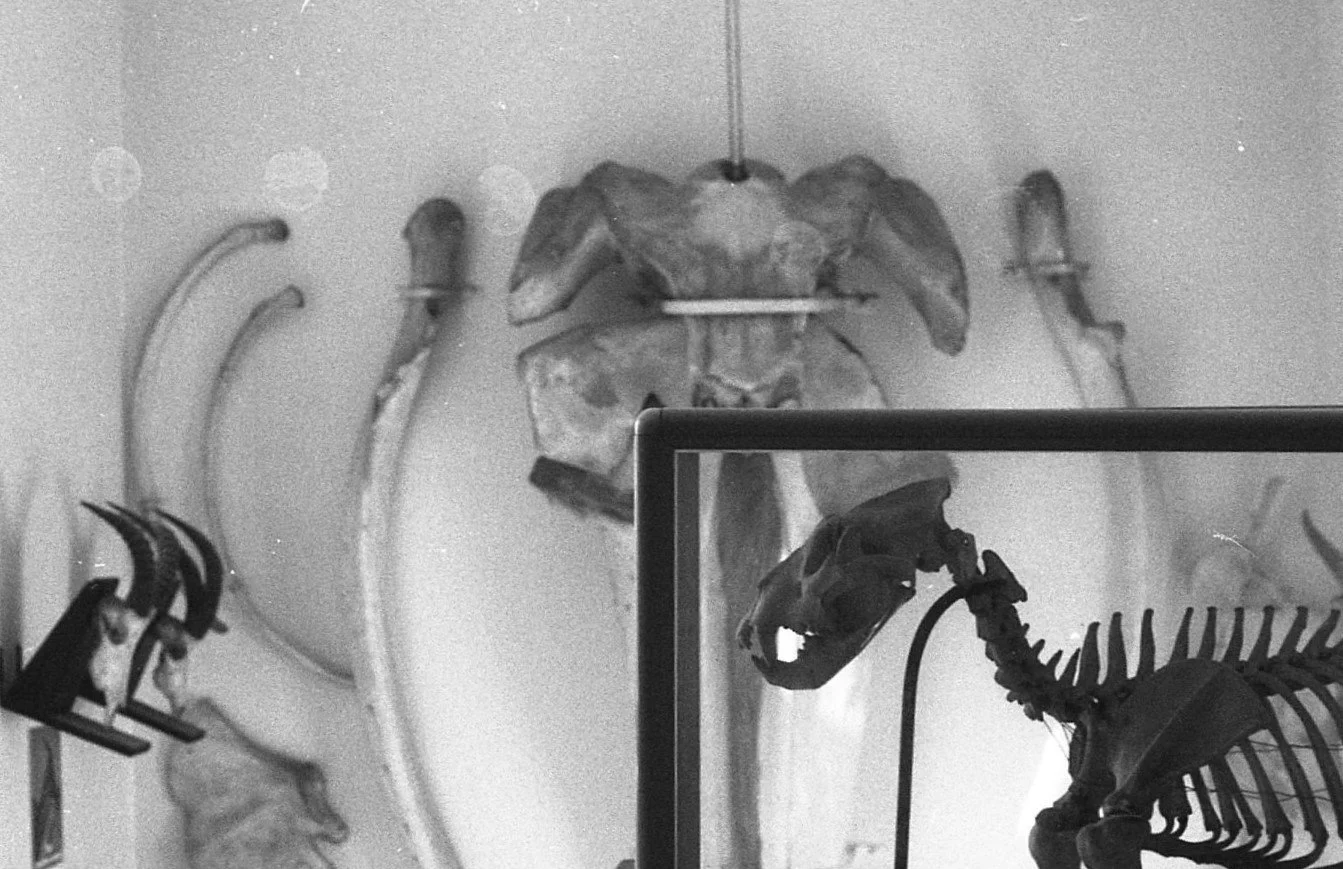
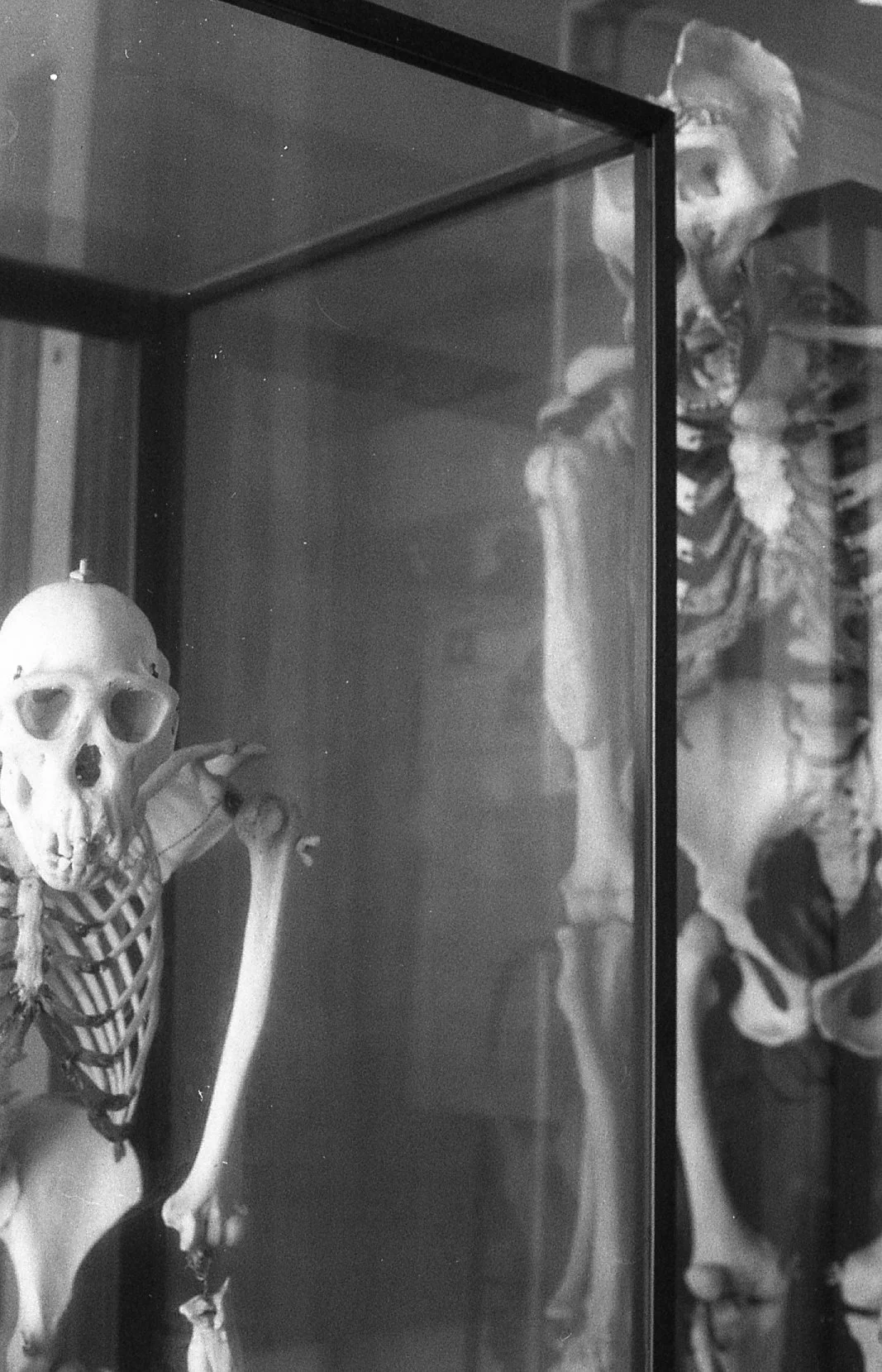
Yes, I think my work does exist somewhere between memory and material. I don’t think of material as something that is devoid of memory. Every material has had a past life; it has a history that existed before my intervention. In a way, that history is made up of many smaller histories that accumulate into a larger one.
For me, a material has had many lives and will continue to have many lives, even after I interact with it. This could be anything ranging from digital data, video, photography, painting, sculpture, or something as banal as a stone or a rock. I don’t necessarily have a singular material that I return to, because I’m more interested in what a material can do and what it can carry at a particular moment.
I think of memory as something subjective that can also continue to accumulate and change over time. It is a layering of meanings and associations onto something. At any given moment, I find myself encountering a material with a certain history already attached to it, and I have the ability — and often the urge — to intervene in or manipulate it. But my intervention is only one part of that material’s much longer history.
Zooming into time
Many of your works feel intentionally quiet, inviting viewers to slow down rather than consume them quickly. Is creating this sense of stillness something you consciously pursue?
Yes, I think creating a sense of stillness is something I consciously pursue. I became particularly interested in questioning the idea of a photograph and what happens when we think of a photograph as having a beginning and an end — not simply as a single, complete, frozen moment, but as something that unfolds over a period of time, regardless of its duration. This led me to think about the different potentialities of treating time as an active agent, rather than simply as a natural consequence of observing an image, an event, an object, or a material.
Slowness can introduce a certain endurance and allow for a wider range of observation, even at a microscopic level; it feels to me like zooming into time. But I’m interested in temporality more broadly, and in the different forms it can take and the ways in which it can condition a work. Sometimes temporality can become an explicit condition of the work itself; at other times, it can operate through the way an event, image, or material unfolds.
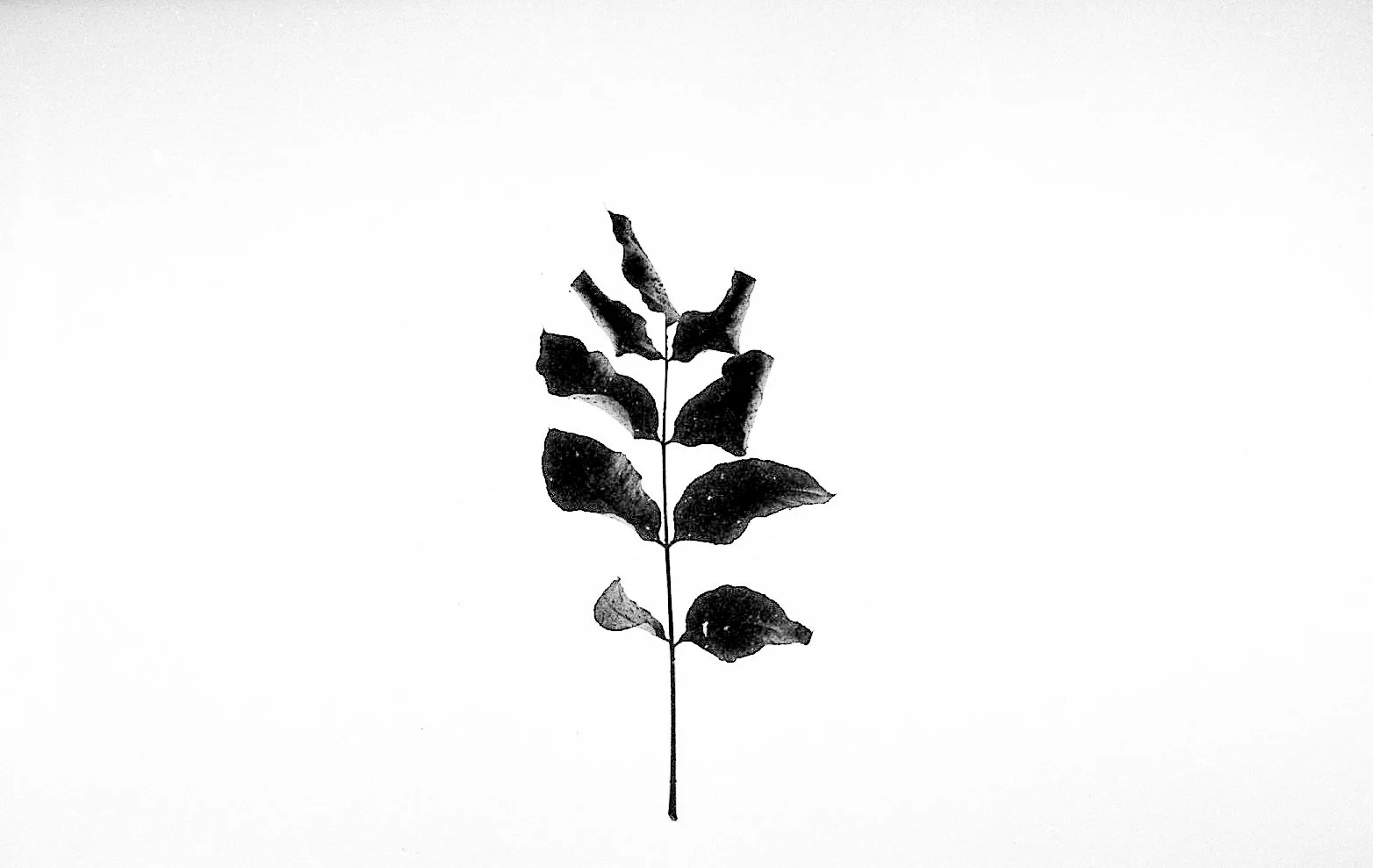
I think this is also why I’m interested in beginning from a particular point without necessarily knowing exactly where I will arrive. The work can develop its own duration and trajectory rather than being entirely predetermined from the beginning. Photography and the virtual world are particularly interesting to me in this regard, because they allow me to access things that might not otherwise be materially or physically accessible, while also creating different ways for those things to exist and unfold.
So the stillness in my work is not necessarily about slowness for its own sake. It is more about creating a different relationship to time — one in which temporality can become part of the work’s internal conditions, and where events are allowed to exist according to their own internal logic and duration.
A personal archaeology of Rome
Living and working in Rome means being surrounded by architecture, archaeology and centuries of accumulated history. In what ways does the city quietly enter your work, even when it isn’t directly represented?
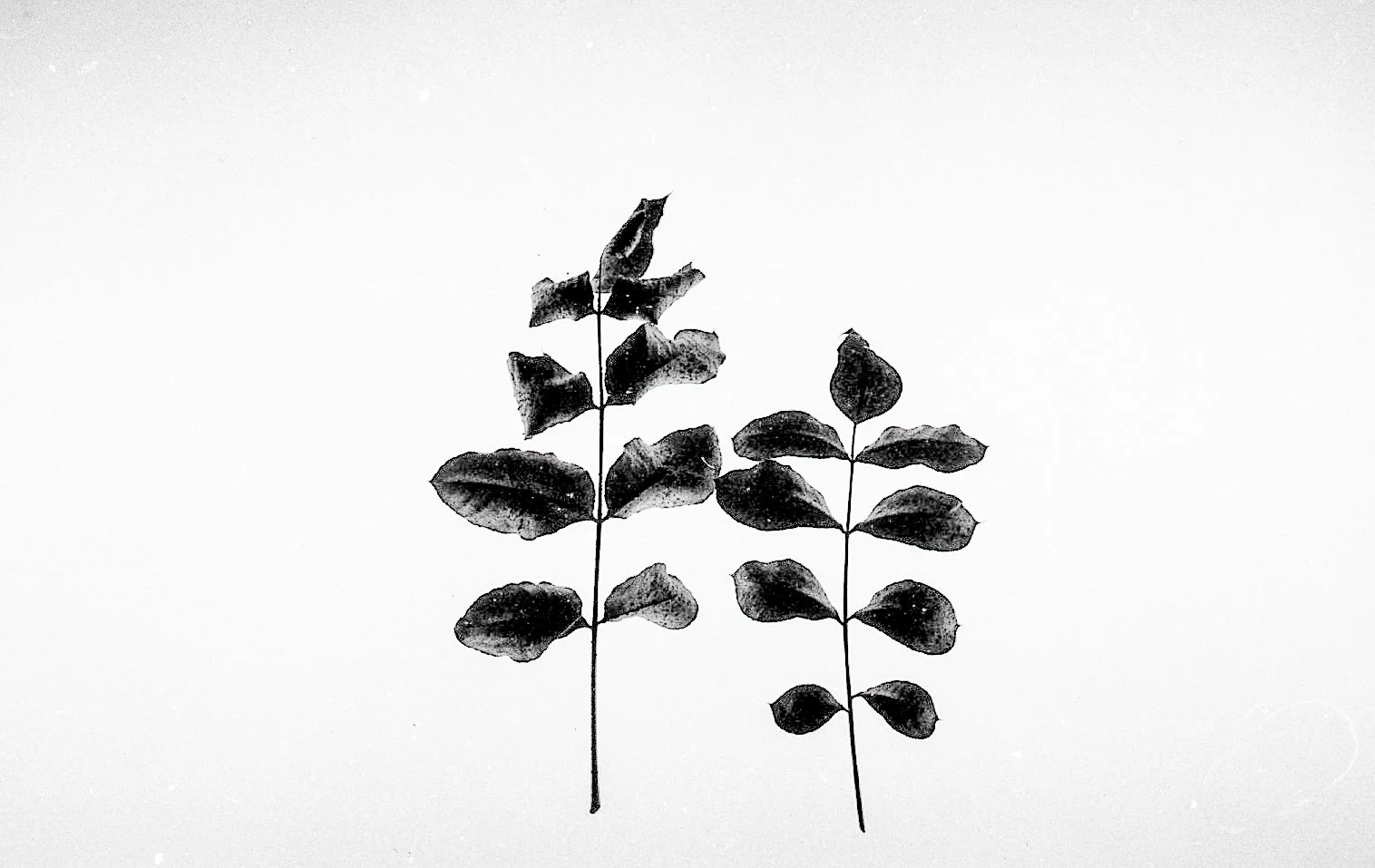
Rome hasn’t entered my work quite the way I expected. It was never a city I’d dreamed of living in, and honestly, living here has been difficult at times. I also don’t live in the historic centre, so my day-to-day experience of Rome is pretty far from the postcard version most people picture.
Whenever I do go into the centre, I notice how much tourism shapes it, and how romanticised the “ancient, historical, monumental” image of the city has become. I’ve questioned that image a lot. There’s a kind of alienation in meeting a place that’s already been so heavily represented before you even arrive. Even walking into churches or historical sites, I’d catch myself expecting something I’d already imagined, and instead noticing my own distance from it.
That alienation eventually pushed me to build my own relationship with the city, through places and experiences that had nothing to do with that obvious image of Rome. Certain streets, neighbourhoods, buildings, encounters, even things I found uncomfortable, slowly became part of how I actually know the city. In a way, I’ve built my own personal archaeology of Rome, less about its monuments and more about the experiences that made it mine.
That’s also had me thinking about the difference between inheriting a history and accumulating one. Rome already carries an enormous amount of history, but my relationship to it is partial and situated; I arrived at a particular moment, from somewhere else, and started layering my own small histories onto a city that already had so many. That tension — between what’s already there and what I’ve actually been able to access and add to it — is probably where Rome shows up most in my work.
The Things That Suspend and Cling to the Void
Could you tell us about a specific body of work — the story behind it, and around it?
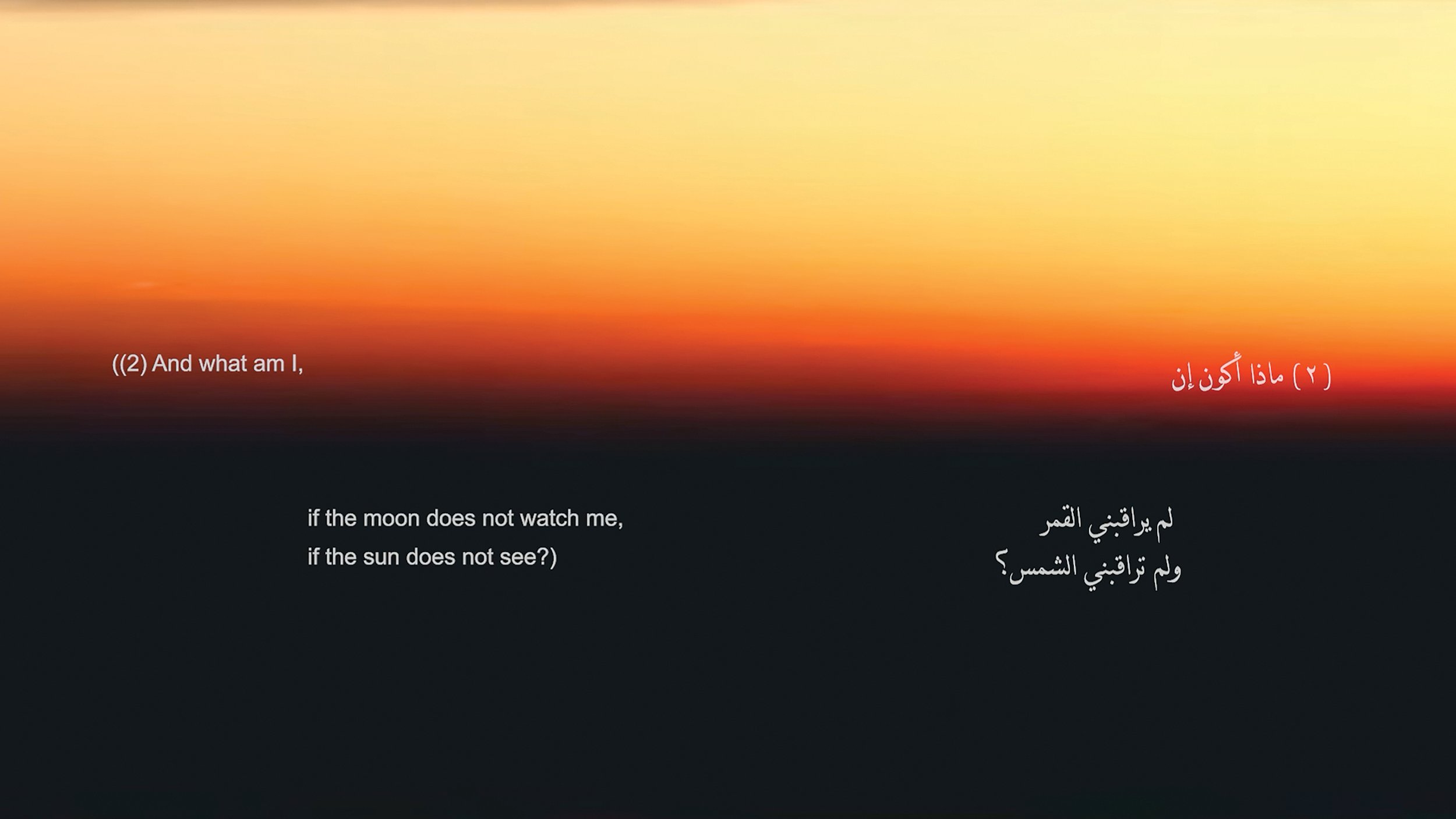
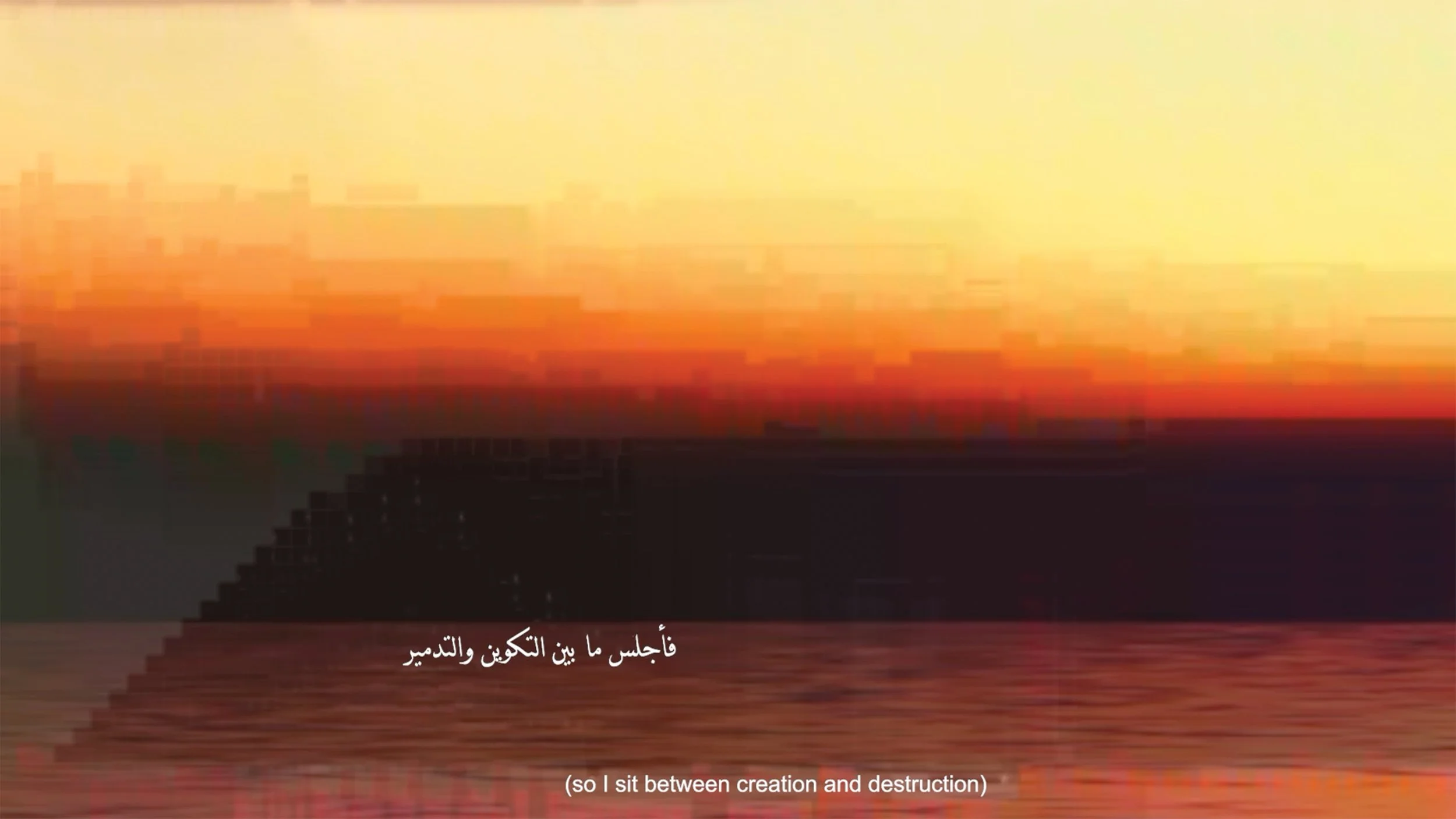
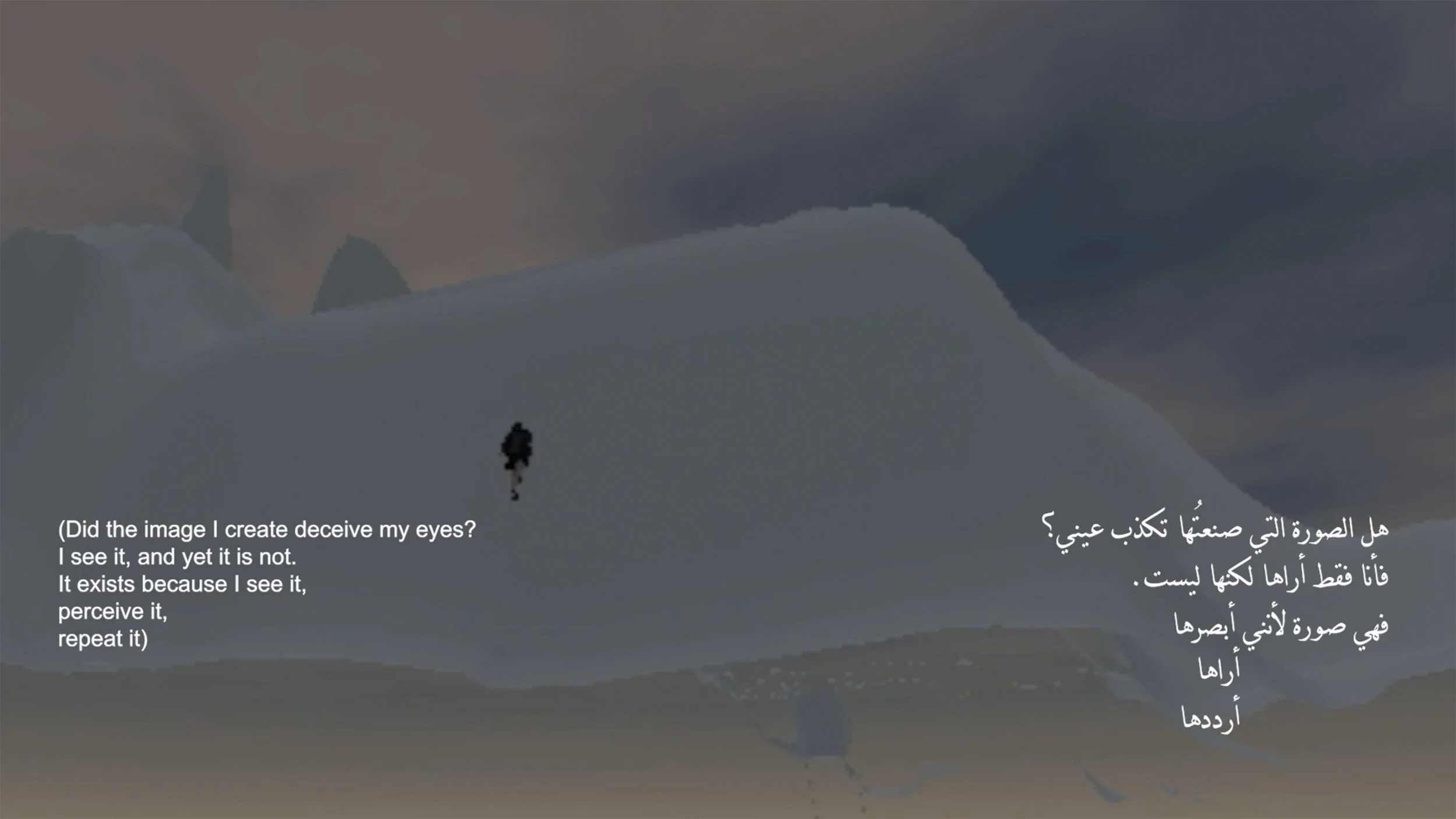
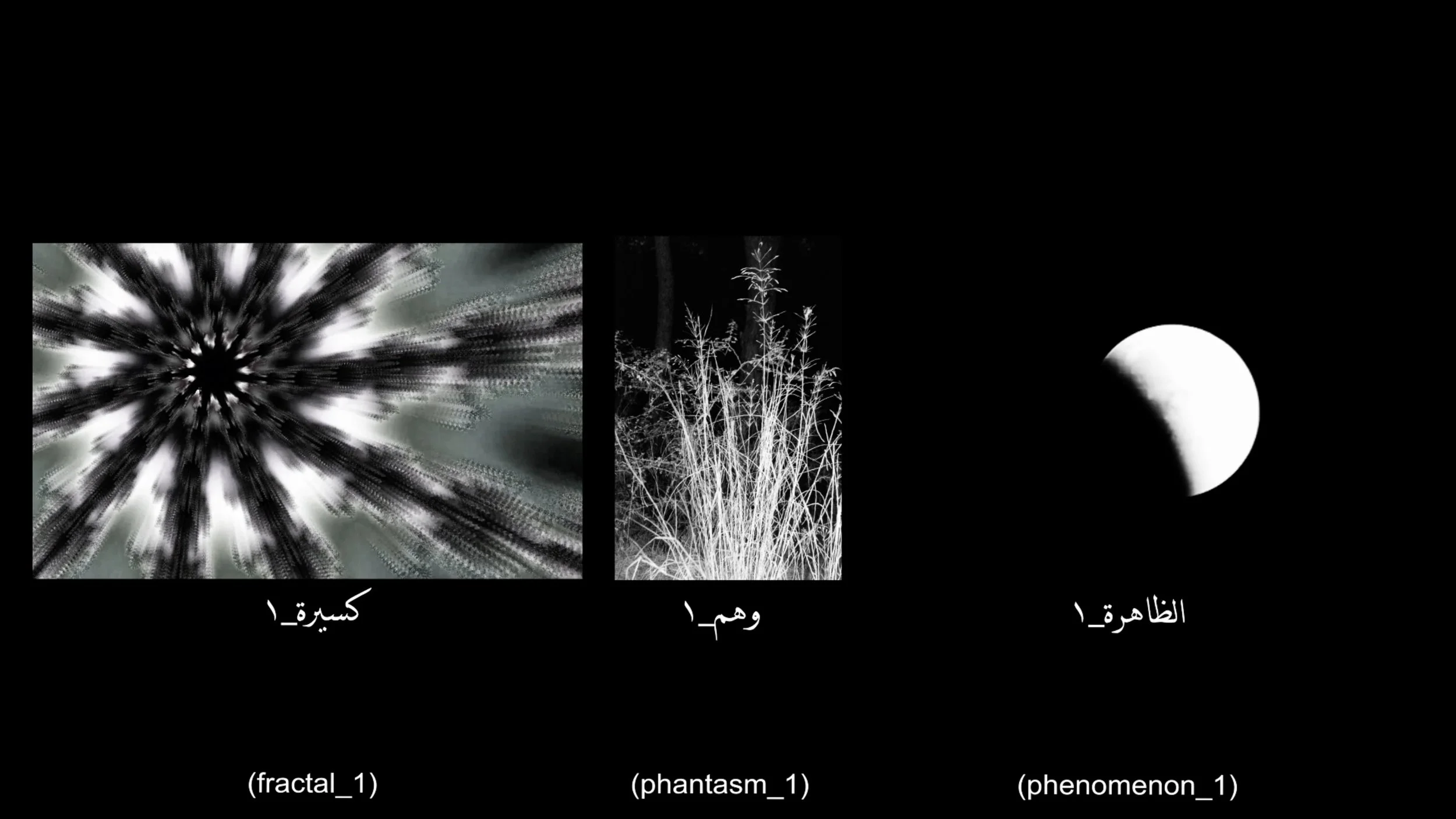
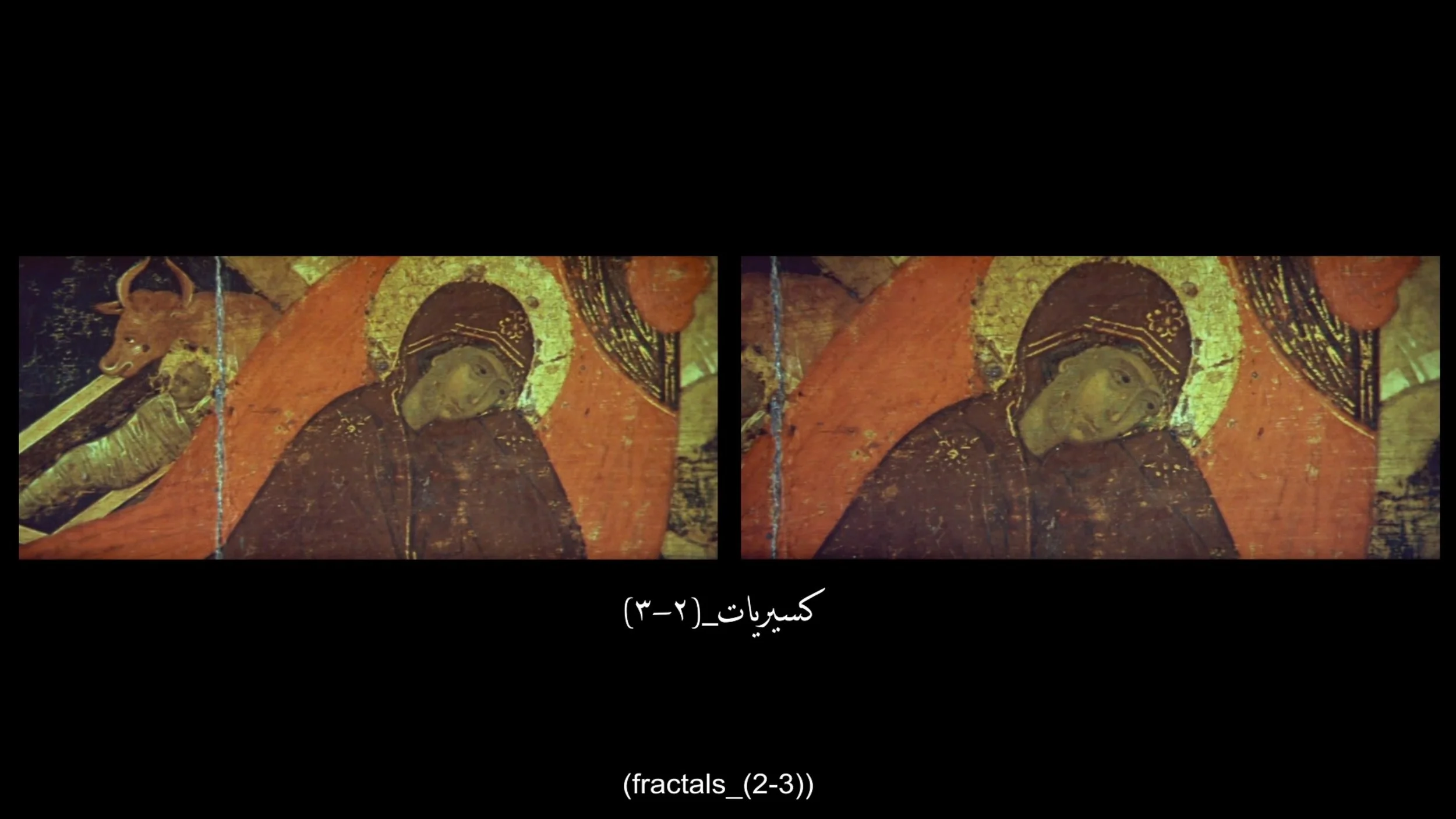
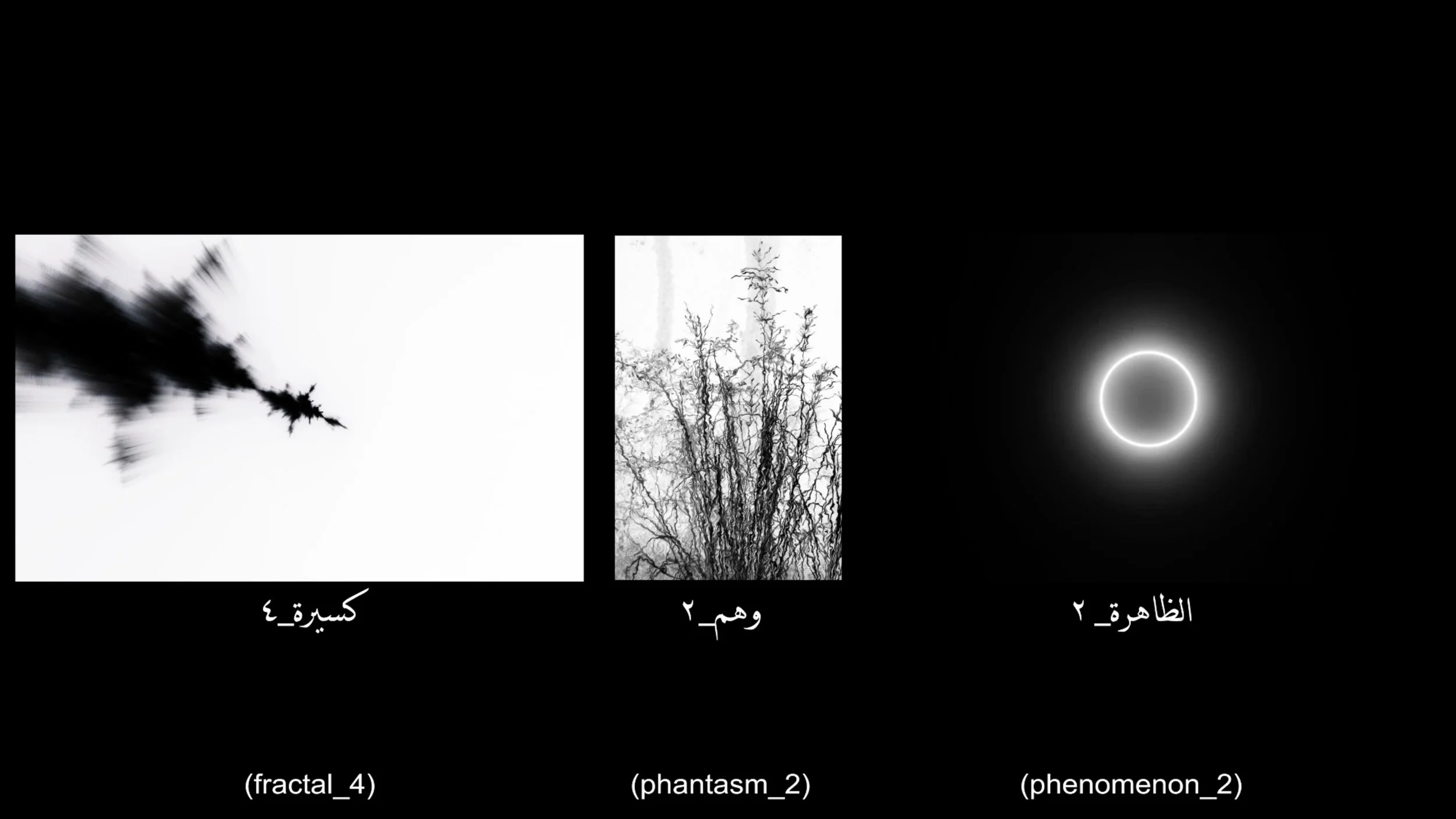
ne body of work that is particularly special to me is my film series The Things That Suspend and Cling to the Void (الأشياء التي تعلق وتتشبث في الخلاء).
What makes this work particularly special to me is that it began with its title. I had thought of the title quite randomly, before I really knew what the work was going to become. Once I had it, however, I started dissecting the words within it. What are these “things” that I am referring to? What does it mean for something to cling? How can something suspend? And what exactly is the “void”?
Following these questions gradually led me towards thinking about some very basic categories through which we understand the world. There is what we can directly perceive through our senses — the everyday phenomena we encounter around us. Then there are things we can formulate mathematically, even when they exist beyond our immediate perception or control. Between these different ways of understanding reality, I became increasingly interested in the idea of the phantasm: something that I can imagine or desire, but cannot necessarily access materially. It exists somewhere beyond what I can directly experience.
This also led me to think about belief as another kind of mediator between what I perceive and what I imagine or cannot access. These ideas eventually became less abstract and started to connect back to the events of my everyday life and to the way I experience reality myself.
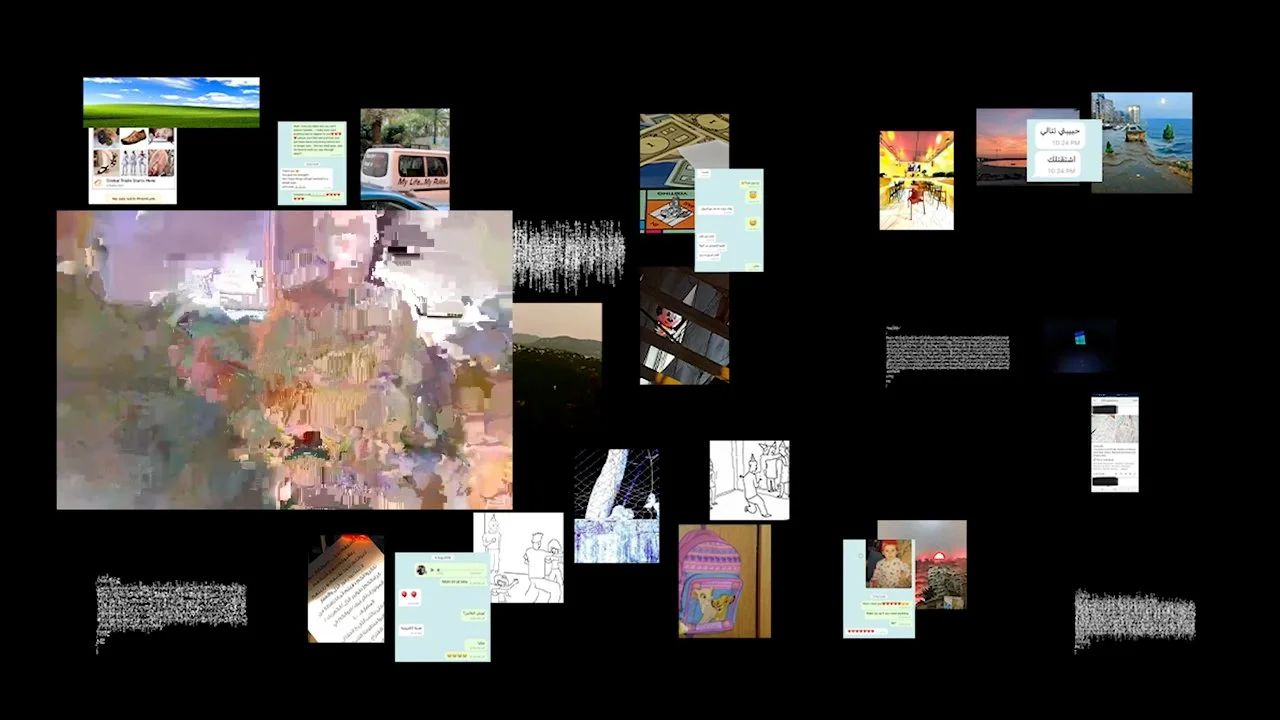
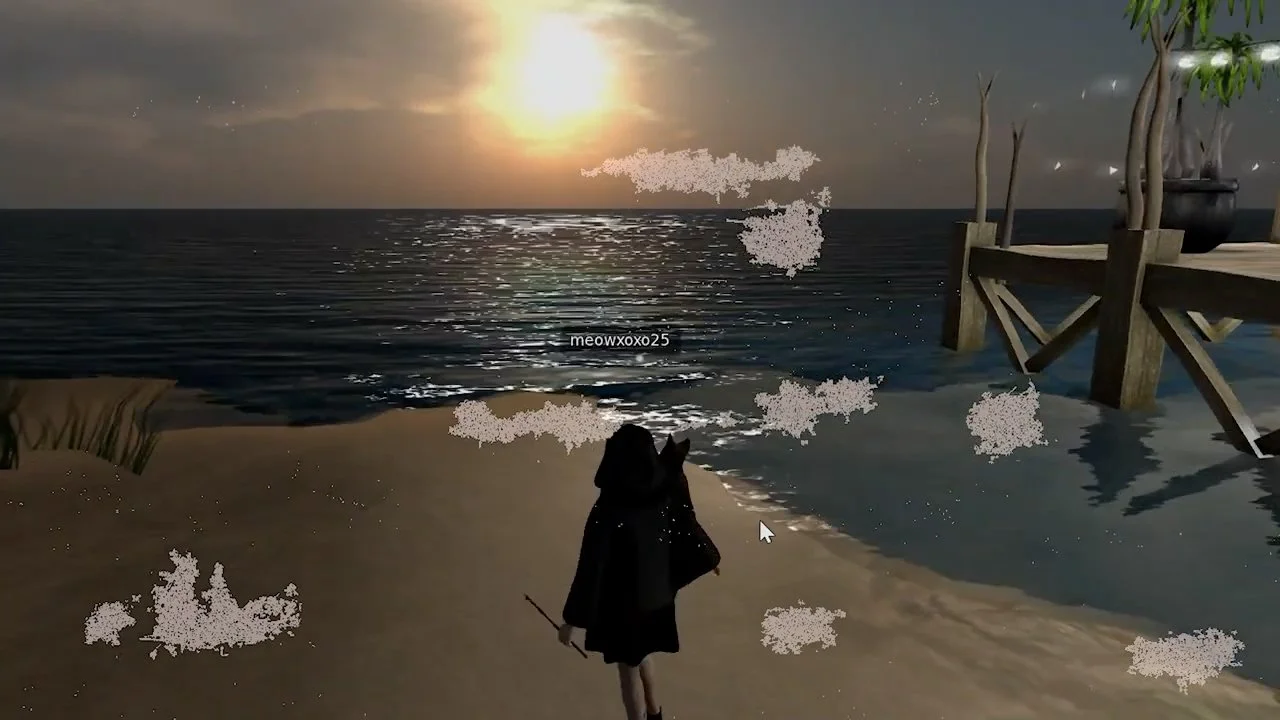
The process behind the films also became an opportunity to move between different media. I worked with gameplay, photography, and other forms of digital imagery, and I became particularly interested in questioning what a photograph actually is. A photograph appears to capture a single moment, but it also has a duration and exists within a continuous process of movement and transformation. This became another way for me to think about events, and about how something can appear fixed while actually existing within a much larger process.
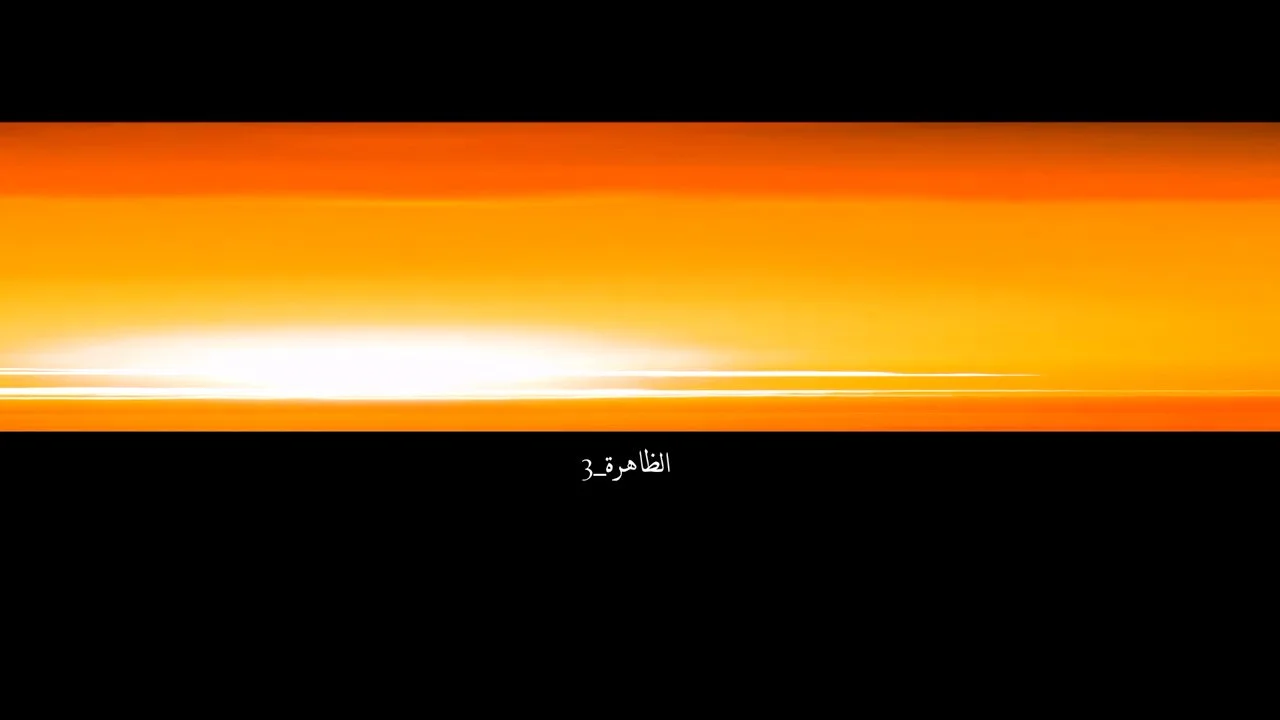
By the third volume of the series, the investigation had turned increasingly towards my own anatomy. I started thinking about myself as the observer within these events: what kind of body is it that moves through them, perceives them, and accepts a particular reality? So the series gradually moved from a very abstract question contained within a title towards something much more personal.
Afterword: What Accumulates
She opens by telling us that as a child she drew the body, anatomy, portraits — “especially eyes, for some reason.” Years later, by the third volume of The Things That Suspend and Cling to the Void, the films turn towards her own anatomy and towards the question of what kind of body it is that moves through an event, perceives it, and accepts it as real. The girl drawing eyes at her father’s kitchen table and the artist asking what an observer is made of are working the same problem from opposite ends.
Then there is her attention to small things with disproportionate consequences. Across every answer here, she is measuring the gap between how much a thing appears to be and how much it actually does. And she starts before she knows. The film series began with a title that arrived at random and was taken apart afterwards; she describes wanting to begin from a point without knowing where she will arrive, letting a work develop its own duration.
What holds all of it together is the conviction that nothing she works with arrives empty. Materials come with histories. A city comes pre-represented, which is its own kind of obstacle. An image comes with a duration that doesn’t stop at the shutter. Her intervention is one layer added to something already thick, and she is careful to say the thing never becomes hers. That is a modest way to describe a practice. It is also, given how much is moving underneath it, a generous one.
Images Courtesy of the Artist.
Words Copyright of Naso Art Journal
