
Jude Zahid
Written by Nayla
Memory, the Everyday, and Making the Familiar Strange
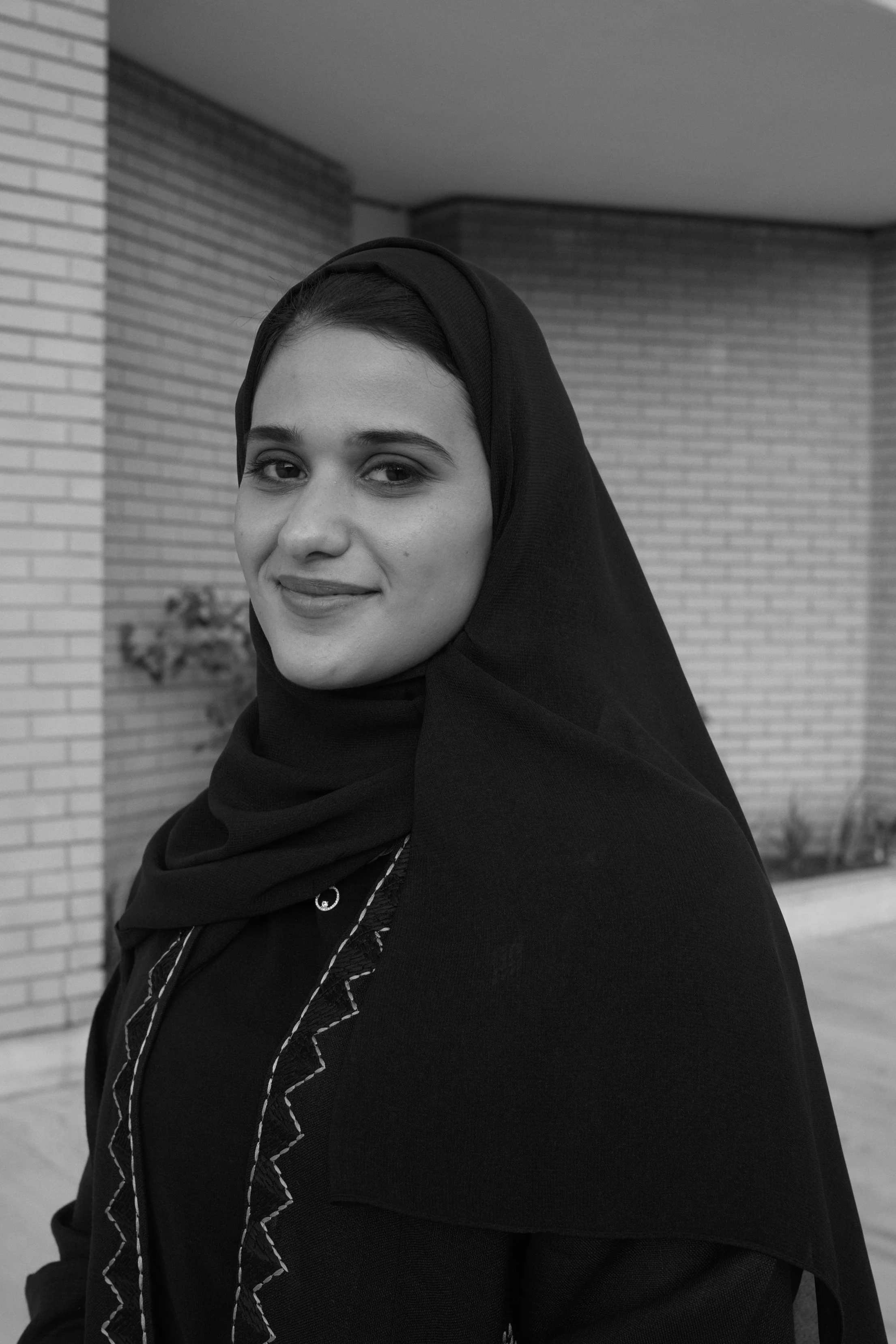
I first encountered Jude Zahid’s paintings in Riyadh earlier this year, at the tenth edition of YSA at Athr Foundation, an edition dedicated to contemporary painting. Among the works on view, I was drawn to the way she took familiar objects and placed them in settings that made them feel somehow changed. It is an approach that reflects Zahid’s own interest in “the surreal and the uncanny within the everyday,” and in the memories and associations that ordinary things can carry.
Zahid is a Saudi painter and multimedia artist based in Jeddah. Her relationship with making began early, through what she remembers as “building, cutting, inventing, and experimenting with materials.” During her undergraduate studies, which centred on craft and traditional art, she began experimenting independently with painting and eventually found her way to gouache. Her early work also grew from an interest in translating proverbs, poetry and traditional sayings into images, an exercise that would shape the way she continues to build meaning through her work today.
She later moved to Glasgow for her postgraduate studies at the Glasgow School of Art. Working in a new city and among an international group of artists prompted her to reconsider her methods and develop her practice in new directions. Works from this period were shown at Six Foot Gallery and Garage Space before Zahid returned to exhibit in Saudi Arabia, including at YSA earlier this year, followed by Misk Art Institute’s Masaha residency.
It was shortly after encountering her work in Riyadh that Zahid was featured as one of our Next Stars in the third issue of Naso Art Journal. Here, we continue that conversation, speaking about the beginnings of her practice, memory and the everyday, her years in Glasgow, and where she hopes to take her work next.
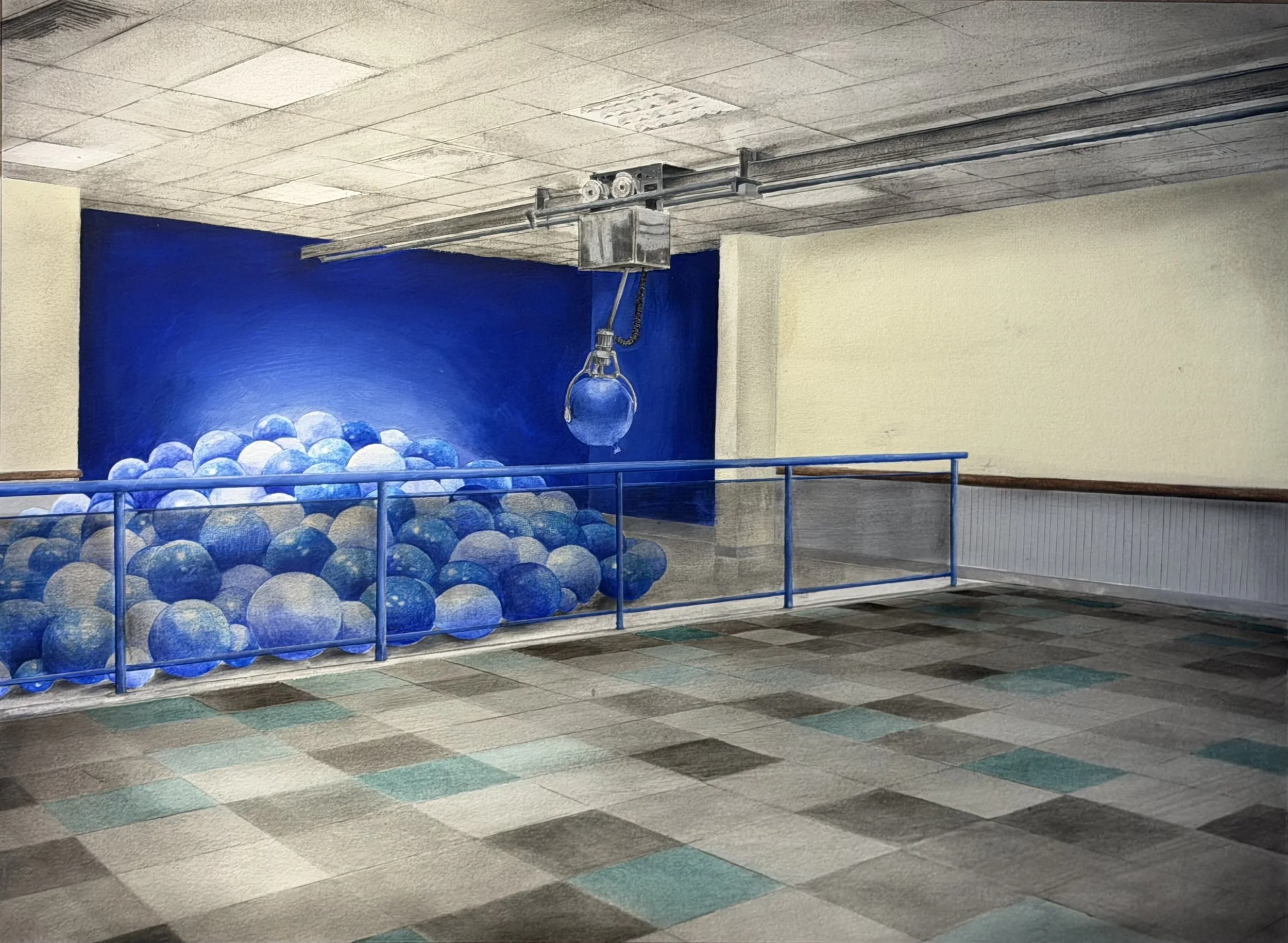
After The Party Ends No. 2 - 2026 - Gouache & screen printing on paper - 40 x 27 cm
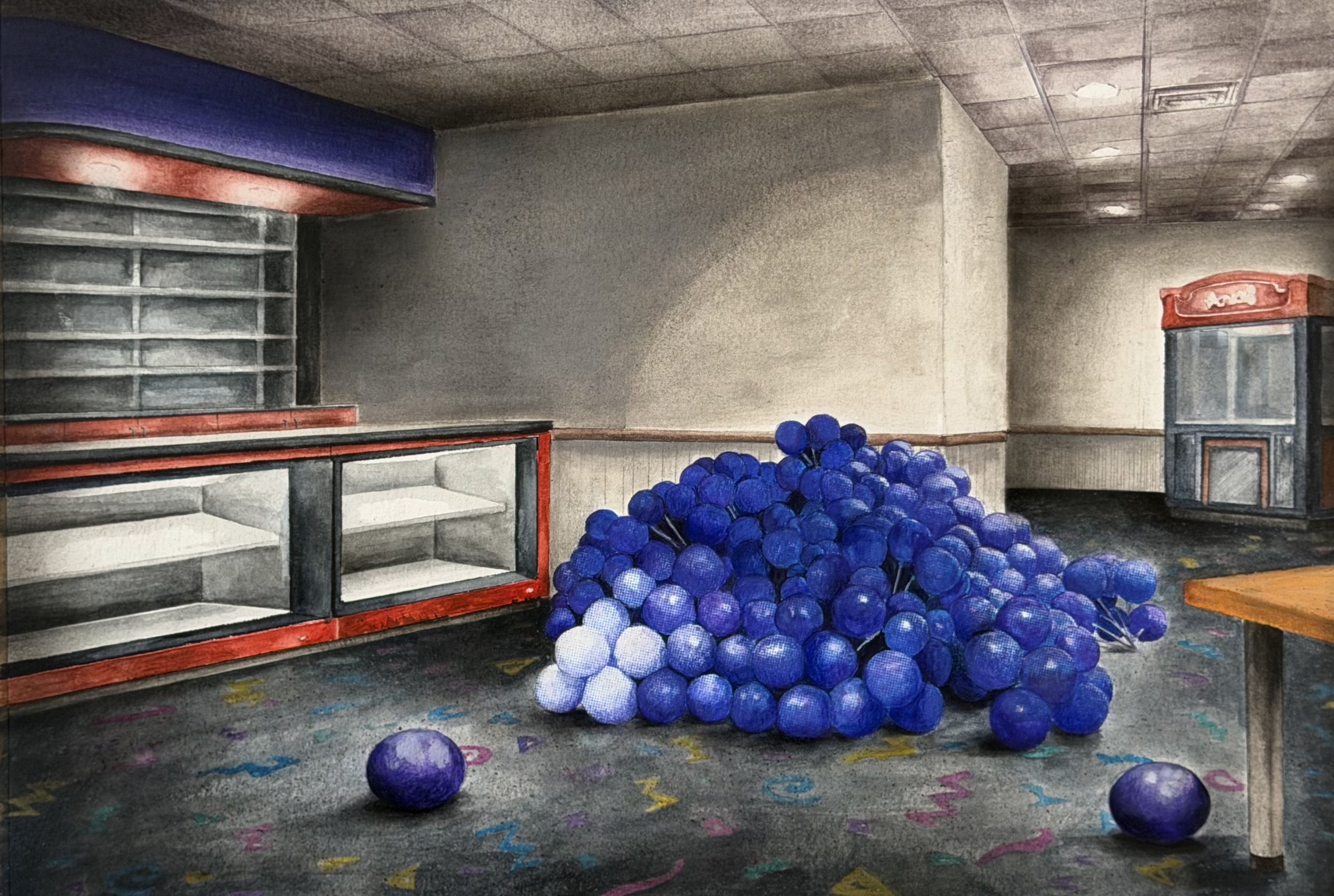
After The Party Ends No. 4 - 2026 - Gouache & screen printing on paper - 40 x 27 cm
On Beginnings
Can you tell us a little about yourself and how your practice first began?
I am a contemporary painter and multimedia artist based in Jeddah, Saudi Arabia. In my practice, I explore themes of quiet introspection, emotional spaces, and the surreal and the uncanny within the everyday.
Expressing myself through art was a big part of my childhood routine. I was always building, cutting, inventing, and experimenting with materials. As I grew older, drawing evolved with me, and I began developing my talent in summer camps and extra curricular activities.
My practice began gradually in my early college years. Even though my degree focused on crafts and traditional art rather than painting, I still had a strong inner desire to paint, and I felt like I was missing that in my studies.
During my college years, in my free time, I experimented with various mediums moving from acrylics to oils before discovering gouache during a university Design Foundations class. Though introduced for design rather than fine art, my interest grew, and I soon began using it to paint.
Early on, I was drawn to visualization and the translation of proverbs. I became fascinated by how written text such as poetry and traditional sayings could be turned into imagery. My creative process centered on taking these phrases, conceptualizing them through sketches, and bringing them to life.
The inherent ambiguity within these linguistic expressions fueled the intellectual foundation of my practice, teaching me how to bring deeper conceptual layers into my work. While I no longer rely on proverbs directly, they laid the crucial groundwork for how my artistic practice functions today.

Playroom - 2025 - Gouache & Collage - 73 × 54 cm

Golden Hour - 2025 - Gouache on paper - 73 × 54 cm
On the Everyday and the Uncanny
Familiar objects and spaces often take on a strange or unsettling quality within your paintings. What draws you to these everyday subjects, and how do you begin transforming them through the work?
I'm usually drawn to ordinary, everyday subjects simply through close observation. When I notice small details, they can trigger something, a sensory memory, a specific mood, or even a texture, and I find myself wanting to reimagine that scene and connect it to a bigger picture. It often starts with questions like "Why?" and "What if?"
This way of working started with my curiosity about using collage as a medium to build up the images. The juxtaposition of cut-out images creates these unsettling and uncanny scenes. Over time, working this way became second nature. I started naturally collecting these mental images and building them up in my mind before translating them into the work.
Do memory and the passage of time play a role in the way you approach your paintings? If so, how?
Yes, Memory and the passage of time are closely connected to the way I approach my paintings. I'm drawn to familiar objects and spaces that carry a sense of the past, especially things connected to childhood that are still present in some form today. I use these familiar elements to explore how our relationship with them changes over time.
The passage of time often comes through the way I recompose or reposition these objects, taking them out of their original context and placing them somewhere unexpected. This shift can make something familiar feel slightly strange, while also bringing attention to how its meaning and our relationship to it may have changed over the years.

Leftover - 2026 - Gouache & collage on paper - 90 × 60 cm
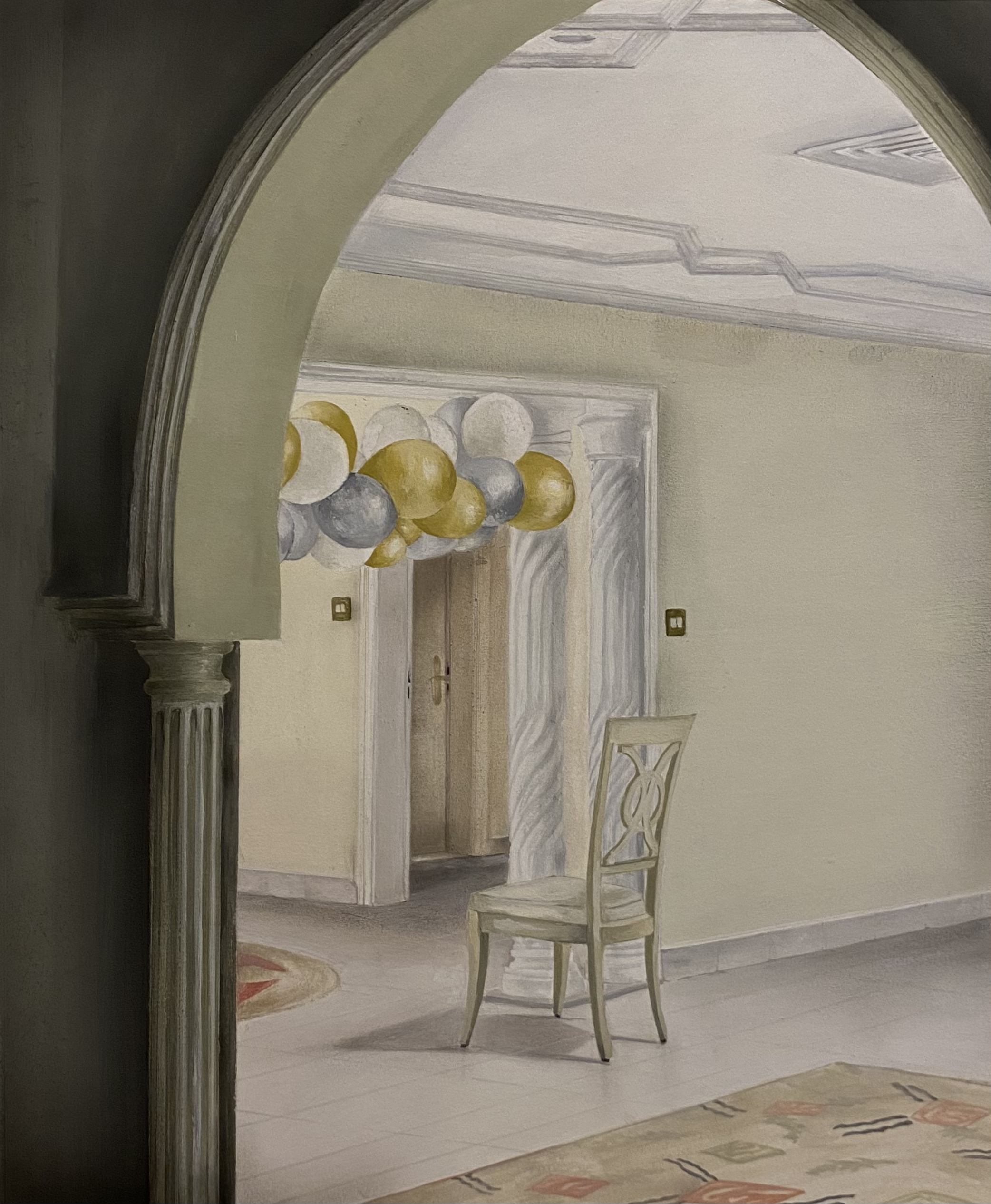
That Hour Before - 2026 - Gouache on paper - 29 × 36 cm
On Glasgow
You studied in Jeddah before moving to Glasgow for your postgraduate degree at Glasgow School of Art. How did working in a new city and environment affect your practice?
Studying for my Master's in Glasgow was a truly transformative turning point for my artistic practice and how I approach art in general. I chose this experience because I wanted to step out of my comfort zone and discover new dimensions of myself in an unfamiliar place, and practicing art in this city allowed me to explore my work in entirely new ways.
Glasgow is a gritty city with unpredictable weather, which influenced my mood and everyday atmosphere. Being challenged by a completely different environment, weather, people, and culture played a major role in helping me look inward and delve deeper into myself. My first semester, however, had its difficult moments and a steep learning curve; I felt creatively challenged and initially unsatisfied with my progress. Fortunately, navigating that discomfort forced me to reevaluate my methods. By the second semester, I was determined to shift my approach and turn things around. Building on that foundation, the independence of the program fostered a greater sense of responsibility in how I sought out information and perceived knowledge. Being surrounded by an international cohort of students from around the world also exposed me to diverse perspectives, practices, and ways of thinking.
During your time in Glasgow, you showed work in exhibitions including Something in the Mirage at Six Foot Gallery and Every(ART)day at Garage Space. Was there a particular work or exhibition from that period that felt significant in the development of your practice?
The works shown in these two exhibitions essentially shaped my practice; they served as a kind of starting point specifically, the pieces Identity in Question and Unraveled (2025).
Showing these two works was a very important opportunity to share art from outside a changing culture. At Six Foot Gallery in particular, being located right in the city center meant there was a very diverse turnout of visitors, leading to different conversations. Furthermore, public awareness and perspectives regarding the region I come from were very limited. Therefore, it was also a great experience for me to talk about my work in an environment completely different from the university setting.
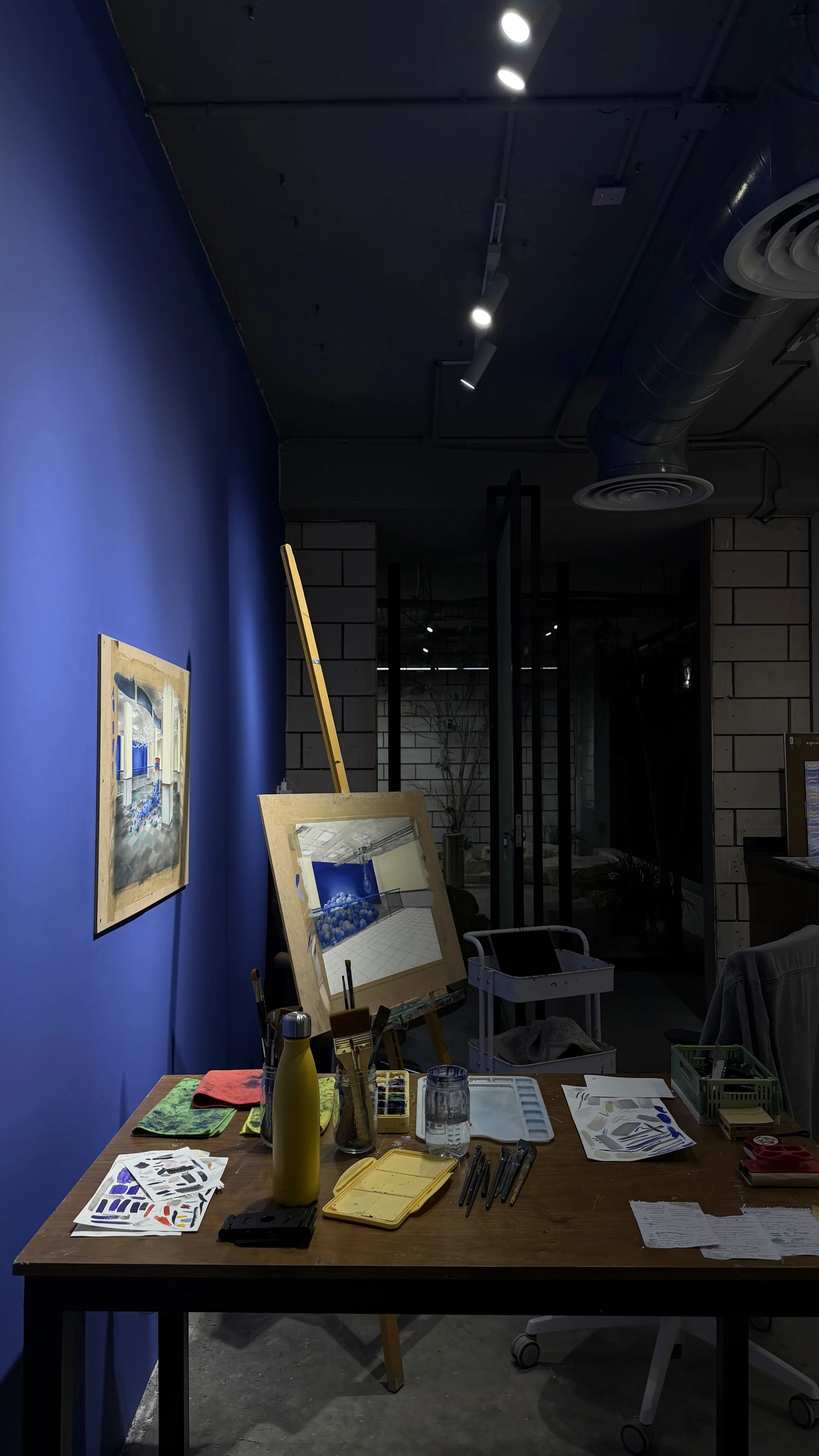
WIP - Jude’s Studio
On Returning
I first came across your work at the 10th edition of YSA – Contemporary Painting at Athr Foundation in Riyadh earlier this year. What did it mean to you to show your work there, particularly after several years of studying and exhibiting in Glasgow?
Participating in YSA was a wonderful opportunity to share my work within the Saudi art scene where its roots lie. Having previously exhibited my series 'As it Was - كان كما' in Glasgow, I was glad to see how viewers from a different culture connected with these shared human experiences. Afterward, I was eager to see how the work would resonate within my culture. Honestly, this is the most exciting part of art-making: stepping out of studio isolation to see how others experience the work and listening to the diverse stories it brings to life.
You also took part in Misk Art Institute's Masaha residency this year. What did working alongside other artists bring to your practice during that period?
It brought great opportunities and wonderful friendships. I was really inspired by the diverse disciplines of the other artists, and we often worked together almost like a team especially since the residency's theme was so personal and specific. In terms of my medium, the experience definitely opened my eyes to how different materials can interact with the subjects I explore, while letting me learn new techniques and gain knowledge from my peers.
On What's Next
As you look ahead, what are you most excited to explore or develop further in your practice?
I'd love to take my work to different parts of the world. I'm really curious about other cultures and how people live and work globally. On the art side, I love painting, but I'm excited to try new mediums and bring the imaginary worlds from my canvas into real life.
Images courtesy of Jude Zahid
Words copyright of Naso Art Journal
