
On Family, Memory and Afro-Arab Identity
Curator and writer Sarah Aldihbashi interviews Sumayah Fallatah
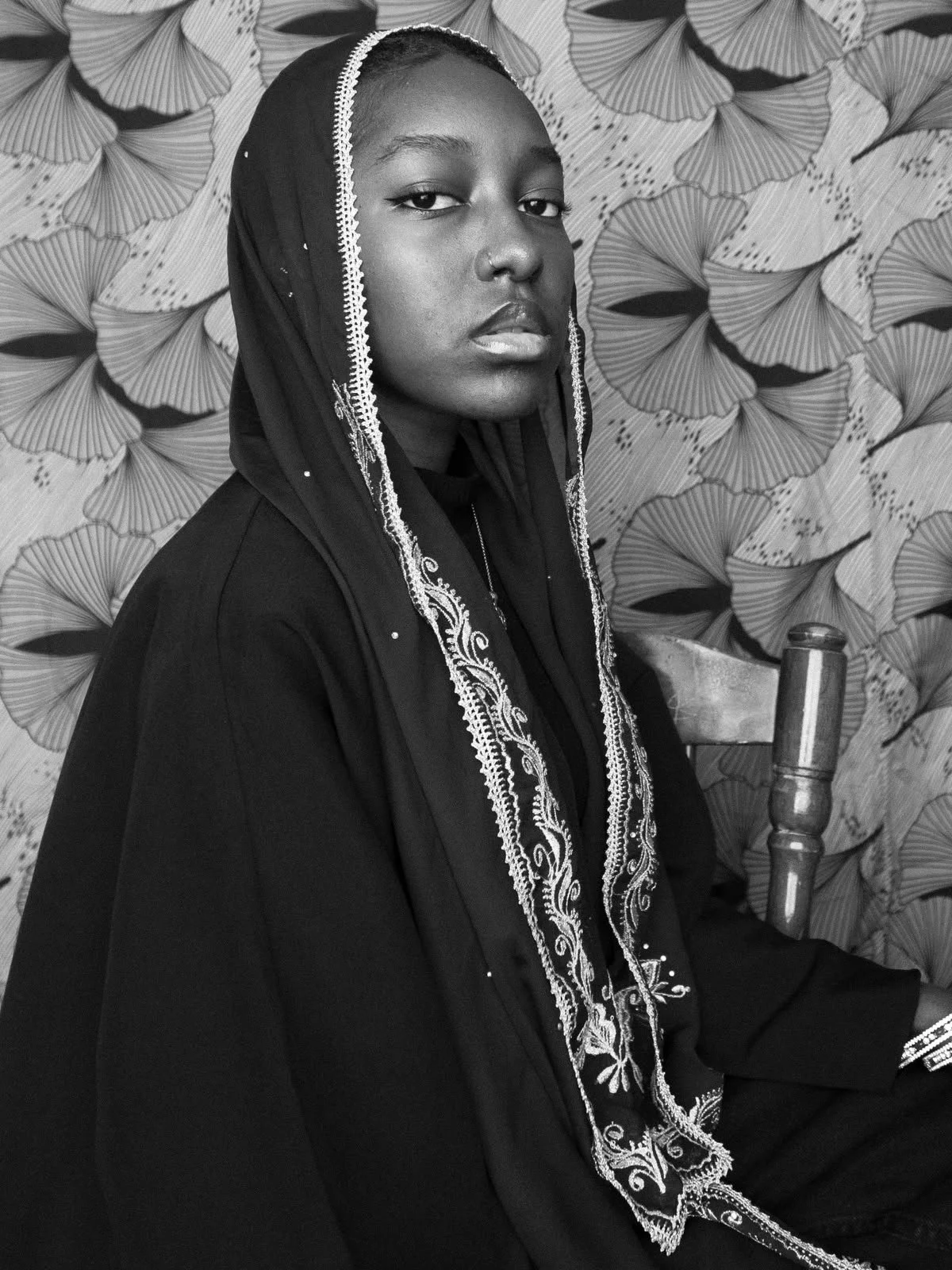
Sarah Aldihbashi: Your practice explores questions of cultural identity, migration, belonging and memory through an Afro-Arab diasporic lens. What initially drew you to exploring these subjects through art? I’m also interested in how you were drawn to textiles as a medium to approach these narratives.
Sumayah Fallatah: I have always been curious about my cultural background. My family migrated from Northern Nigeria to Sudan and then to Saudi Arabia, and because we are four generations deep, our culture, history and background have become fragmented. It naturally became something I explored through my art, as art felt like the only way I could begin to digest and understand it. My first project, sai mun dawo II, was the start of that journey.
As for textiles, I’m not sure I can pinpoint exactly what drew me to them because it happened very naturally. Perhaps it is because I had always seen textiles around me at home, and I grew up seeing my mum with piles of fabrics because she used to sew. At some point, I ended up collecting textiles myself. They started as a background element, then appeared on the body, and eventually became the physical material I use.
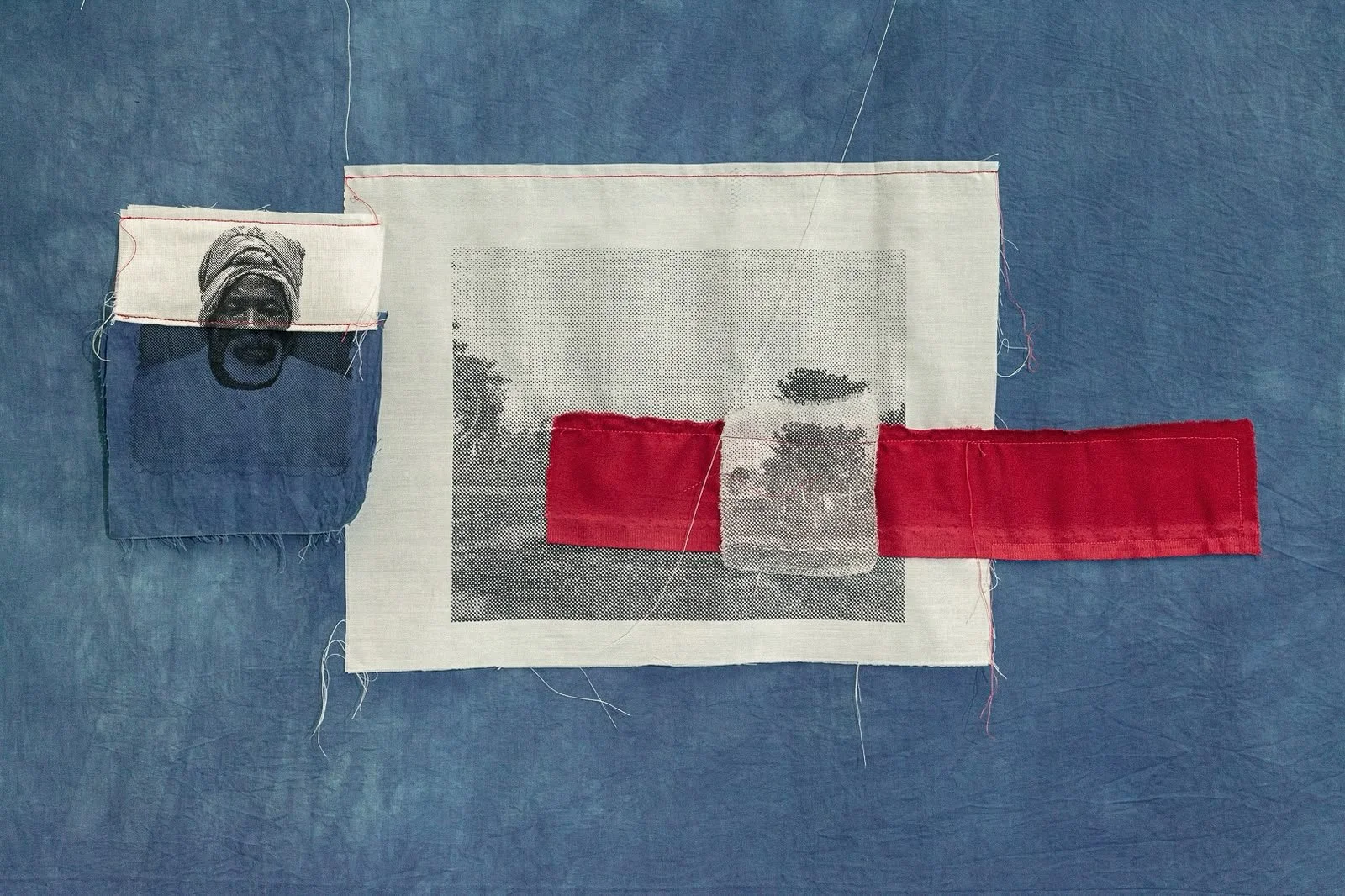
i became you, so i lost myself, 2024. © Sumayah Fallatah
SA: Your work often brings together personal and familial archives with broader histories of Nigerian migration to Saudi Arabia. How do you approach researching histories that are sometimes absent from official records, or have been preserved primarily through family memories and personal accounts?
SF: My research into these histories often began at home. I started by asking my family members questions about how we ended up where we are and who we are. To understand a history that they did not personally live through, I then turned to books and articles. There is not an abundance of material on these histories, but there is enough for me to begin understanding fragments of them.
I don’t feel like I know everything yet, but I am getting to a point where I understand things better from one perspective or another.
SA: Your parents are from Makkah, you grew up in Al Khobar and are now based in London. Each of these places has a different relationship with its Nigerian and Afro-Arab communities, particularly in terms of their visibility and representation. How have these different environments shaped your own understanding of identity, and how do these experiences find their way into your work?
SF: I was born in Al Khobar, then lived in the UK, in Newcastle for a few years at a very young age. At the time I did not necessarily have an experience of knowing that I was different. It was when I moved back to Saudi that I began to understand what it meant to be different and to have an identity that felt distinct from almost everyone in the room. That is another thing that first made me curious about identity and it is something that is visible in my work.
Being in London has given me much greater access to a visible and rich African diaspora and community, one that is able to express itself in ways that feel different from the communities I knew in Saudi Arabia. I am currently learning how to fully and openly embrace who I am, and how to better express that through my work. It has also been valuable to see artists and other people working with subjects similar to mine, because I am able to learn from them.
SA: Across your work, you incorporate family photographs, archival imagery, music and textiles. I’m interested in how you think about the relationship between these different forms of documentation. Do you see your practice as a way of building an archive of your own, particularly for histories that might otherwise remain within the family?
SF: I often describe my practice as a journey of trying to understand a history—or different histories—mostly within the region. Although I do use family imagery and archives, I am not sure I see what I am doing as building an archive. For me, it is more so a journey of storytelling, understanding, and unravelling histories that are not necessarily spoken about very much, while also trying to help other people to understand them with me.
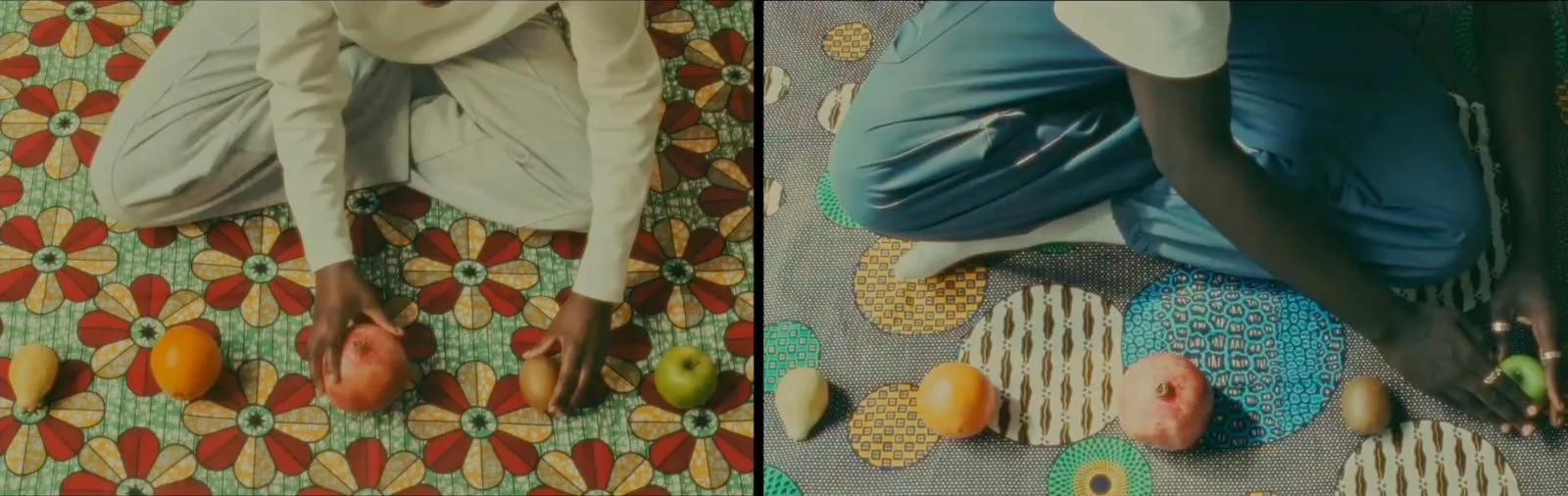
Fruits of Meditation, 2023. © Sumayah Fallatah
SA: In Fruits of Meditation, you revisit your father’s daily ritual of naming fruits, turning a very personal family memory into a two-channel video work. What drew you to documenting moments of rituals specifically, and how present are those rituals in your own everyday life?
SF: This specific meditative practice is not necessarily present in my everyday life now, but I think what my father taught us through these meditative practices is what remains: the importance of being present and mindful in life.
I decided to make an artwork about it because I remembered it one day and found it interesting that he was doing something that nobody else I knew was doing. It felt like a creative and fun way to be present in the moment, especially at a time when so much was happening in our lives.
SA: I think there is something extremely important about diasporic artists documenting their own experiences, rather than having their histories and identities interpreted exclusively through an external lens. In sai mun dawo II, your use of self-portraiture becomes a way of reclaiming that representation. At the same time, I think individual experiences are important in resisting the homogenisation that often happens when discussing diasporic identities. How do you balance representing your own specific experience while engaging with broader Afro-Arab histories?
SF: I have mostly focused on my own personal and familial experiences. As I explore them, they become broader because there are certain things that are shared experiences. That is simply how I approach it.
There can be a pressure to carry the weight of all Afro-Arab histories and experiences, and I try to lighten that weight by focusing on my own experiences while also reading and trying to understand these wider histories. I am also taking my time to feel comfortable expanding into these broader subjects. In that way, they inevitably appear in my work in one form or another.
SA: London has a considerably larger and more visible Nigerian community than much of the Arab world, where Nigerian communities and their histories are often less represented. Has living in London changed how you relate to or understand the Nigerian diaspora, especially in relation to your own Afro-Arab experience?
SF: It definitely has. Interacting with Nigerian and other African diasporic communities outside the Arab region has given me a completely different perspective, but it did not start in London. My relationship with Nigerians and people from the diaspora in the UAE was already different from what it had been in Saudi Arabia, which I had perhaps expected, because I understand how different diasporic experiences can be from one place to another. Being in London has given me another perspective.
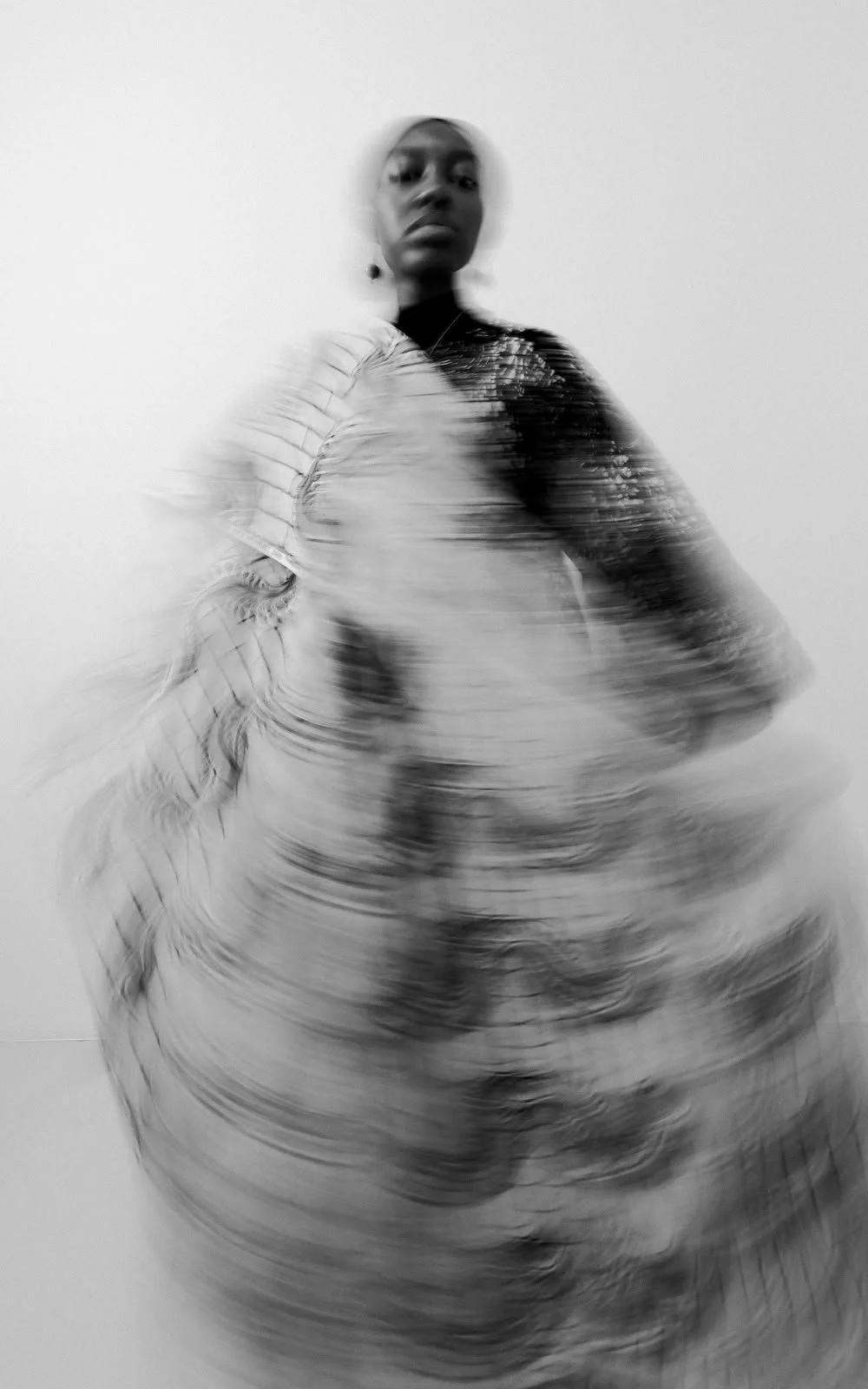
Say Mon Dawo II, 2023. © Sumayah Fallatah
SA: Your recent series, smile, you’re in al-misfala, seems to extend your exploration of memory beyond the family archive towards the loss of a shared physical space and the collective histories attached to it. I’m interested in this shift from personal histories towards a particular place and its community. Do you see this as a new direction in your practice, and are there other questions you find yourself wanting to explore next?
SF: smile, you’re in al-misfalah is an expansion of a personal history, exploring both my family and the immigrant communities who lived there. So yes, I do see it as a new direction. I have spent a good couple of years exploring more personal subjects, and while I will still explore personal themes, I now feel more comfortable leaning towards things that are less personal.
There are questions I have had for a while that feel more expansive, which I was not able to push myself to answer before because of the pressure of having to represent histories and experiences that are not often spoken about. I am trying to allow myself to explore them slowly. Recently, I have been thinking a lot about Black poets in the region, as well as the desirability of Black women in the region, alongside other topics.
Words copyright of Sarah Aldihbashi & Naso Art Journal
Images courtesy of and copyright of Sumayah Fallatah
