
Amman Design Week, Seven Years On
Co-directors Bisher Tabbaa and Sarah Hejazin on the return of Amman Design Week.
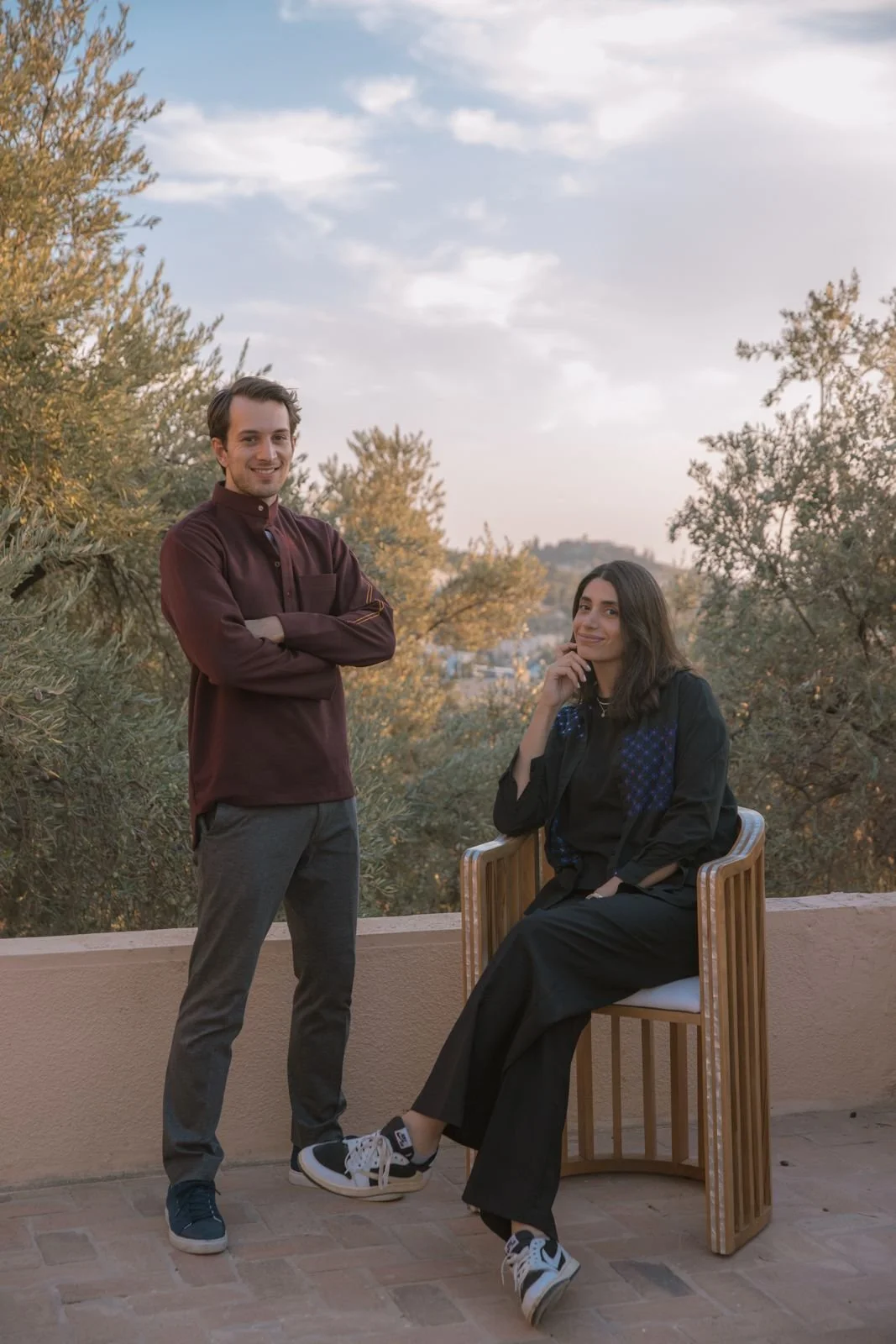
Bisher Tabbaa and Sarah Hejazin
The Return
Amman Design Week returns this October after seven years away, its fourth edition unfolding across five districts of the city and out to the coast in Aqaba under the theme Accumulations. Free and open to the public from October 2 to 17, the edition brings together more than 220 designers, makers and collectives, threading exhibitions, workshops, talks and public interventions through Ras El Ain, Jabal Al Lweibdeh, Jabal Amman, Iraq Al Amir and, for the first time, Aqaba.
Founded by Her Majesty Queen Rania Al Abdullah in 2016, the biennial has spent the years since its last edition in 2019 held together by the very community it was built to platform: designers, makers and educators who kept working without a public stage to gather around. That is the story its new co-directors, Bisher Tabbaa and Sarah Hejazin, architects and co-founders of the Amman-based studio FADAA, want this edition to tell. Ahead of the opening, the pair spoke with Naso, a media partner for this year’s edition, about bringing Amman Design Week back after seven years, the thinking behind Accumulations, and how this year’s programme has taken shape.
What has your journey with Amman Design Week looked like, and what brought you into directing this year's edition?
BT: Both of us experienced Amman Design Week in previous years but in different ways. I was exhibiting the Earth Chair in 2019 and Sarah was part of Arini's curating team for the Kabariti Village. Through our participation, it helped us shape our design and research interests and dig further into how design can play a role in cultural development. During ADW's dormant years, we were longing for reigniting it, so when we were appointed as directors, it felt like we were being given something we already cared about and asked, "okay, now what do you do with it?" That mix of excitement and responsibility is the most honest way to describe how we got here.
After a seven-year pause, what made this the right moment to bring Amman Design Week back?
SH: People kept working regardless, and that's really the story. In seven years without a public platform, designers kept testing ideas, makers kept pushing new techniques, and students kept showing up to learn. We saw it firsthand, someone's workshop, a studio experiment, or a class project that became something real. This edition is about sharing that work with the public and showing how much design shapes daily life in Jordan and beyond. The timing felt right because all this work had already built up. Our job was to give it a stage.
This year's theme is Accumulations. What does that theme mean to you, and how has it shaped the edition?
BT: We didn't want a theme that sounded like a slogan. For us, accumulations is a simple idea. It's about the things that quietly build up: learning, repair habits, materials, and relationships. It's not about abundance nor the idea that more is better. Accumulation means an everyday object can hold centuries of repair inside it, even if no one notices. We want people to see design as something they take part in, not just something they walk past. Our work is based on the idea that design is for everyone and shaped by its surroundings and available materials.
As you approached this new chapter of Amman Design Week, what felt important to carry forward from its earlier editions?
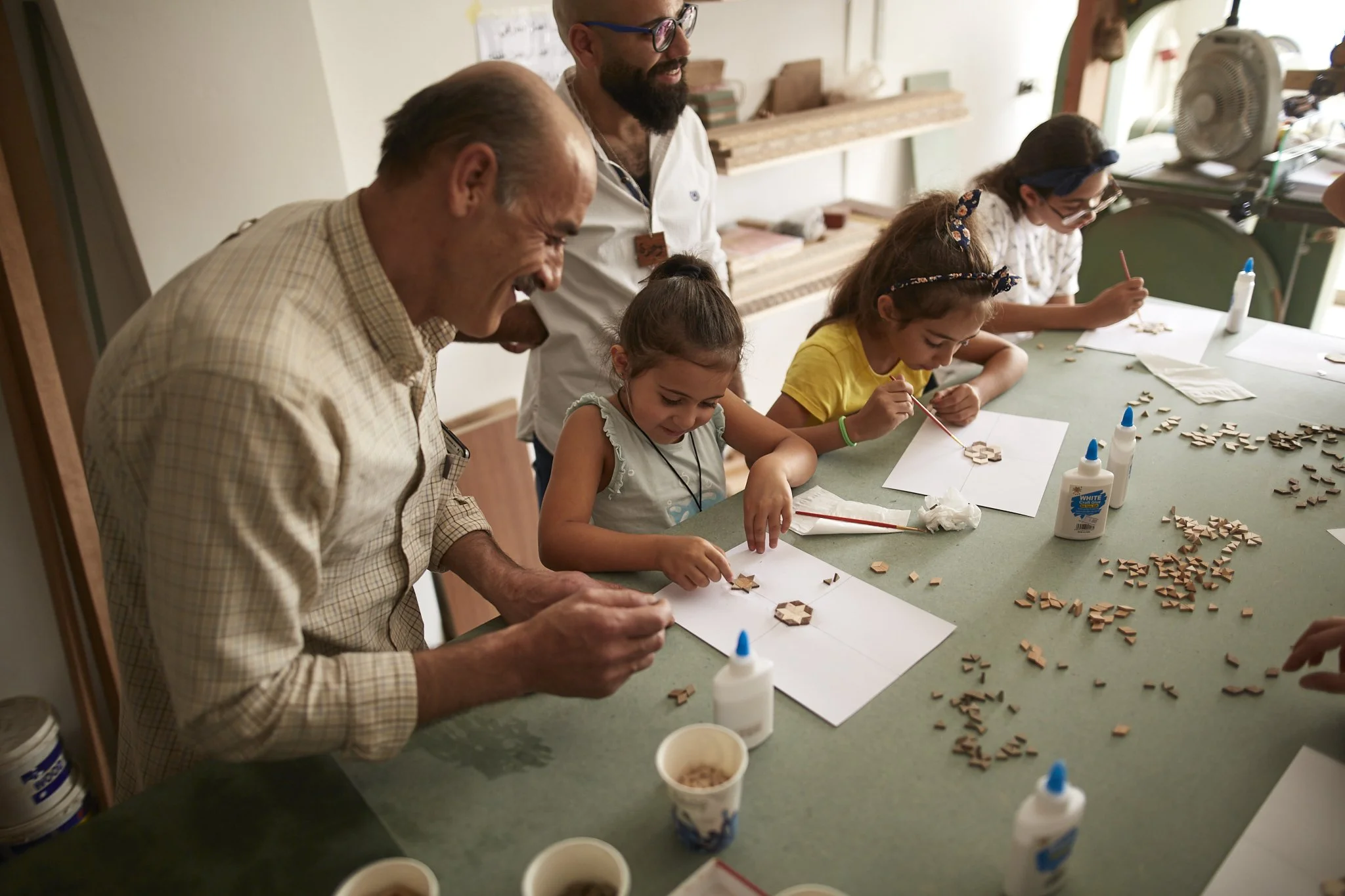
SH: We have always been committed to making design accessible to everyone, not just industry professionals. We also wanted to keep Amman Design Week as a learning platform, so in many of our programs, from talks to workshops, and tours to installations, the focus is on the process, not just the final product. We are also contributing four permanent urban interventions around Amman that are intended to remain well after the event ends.
How have you seen Amman's design community evolve since the last edition in 2019?
SH: The community has become more confident and connected. Without a public platform, people created their own spaces: studios became classrooms, informal critique groups formed, and small residencies started. You can see this in the wide range of participants this year: over 220 designers and collectives working in ceramics, architecture, weaving, sound, and food. Many have spent the last seven years continuing the work that shapes design in Jordan and the region.
Working With the Curators
This year’s programme was shaped in close collaboration with two curators: Faysal Tabbarah, who led the exhibitions, and Khaled Al-Bashir, who led the public programmes. For the directors, the process involved supporting both curators while allowing their respective areas to develop with a clear identity of their own.
Tabbaa describes the collaboration as a continuous conversation across very different scales, moving between broader questions around public space, neighbourhoods and education, and the practical decisions involved in bringing the programme together. What stood out most, he says, was “their genuine passion towards contributing to Amman Design Week, and their ability to think along different scales continuously.”
That range became part of the working process itself, with conversations shifting from how design programmes might enter school curriculums to the placement of a panel or the stitching used on a rug. In Tabbaa’s view, the two curators ultimately brought the exhibitions and public programmes together “in a way that is both complementary to each other while still holding their own ground.”
Are there any exhibitions, installations or parts of the programme that you are particularly excited for audiences to experience?
SH: Honestly, we're excited about all of them. Exhibitions and Programs compliment each other; they are designed to be in conversation with one another and the audiences that attend them. There is something for everyone, whether they're industry professionals, aspiring designers, creatives of all fields, and just those looking for something fun and entertaining to do around the city. We're also proud of the designers and makers who put so much effort into bringing the exhibition pieces to life. The programs are also deeply connected to the local creative community, which was intentional so people can engage with design in many ways. We also have a soft spot for the Student Mentorship Program, around 40 students chosen from over 200 applicants from 88 institutions across the country. Seeing so many young designers involved has shown us that there has always been a strong interest and need for nurturing design in the country.
Who do you hope Amman Design Week will reach this year?
BT: We planned this edition, in continuation of a core belief Amman Design Week has always had, for people who don't see themselves as "design people," and that's exactly who we hope to reach. There are family workshops, guided tours for those who have never been to a gallery, and installations in public parks and plazas where no ticket or prior interest is needed. We also want the design community to have a space to come together and talk. Additionally, this year, we're also inviting people to be closer to the exhibited pieces, interact with them, sit on them, and generally use them to understand their function.
What were some of the priorities you had when shaping the programme for this edition?
SH: Our top priority was to keep the event free and accessible. After that, we wanted to leave something lasting, which is why we created permanent works. We also made space for open-ended projects instead of only finished pieces, so people can see how the design process works.
What conversations did you want this year's programme to open up within Jordan's design community?
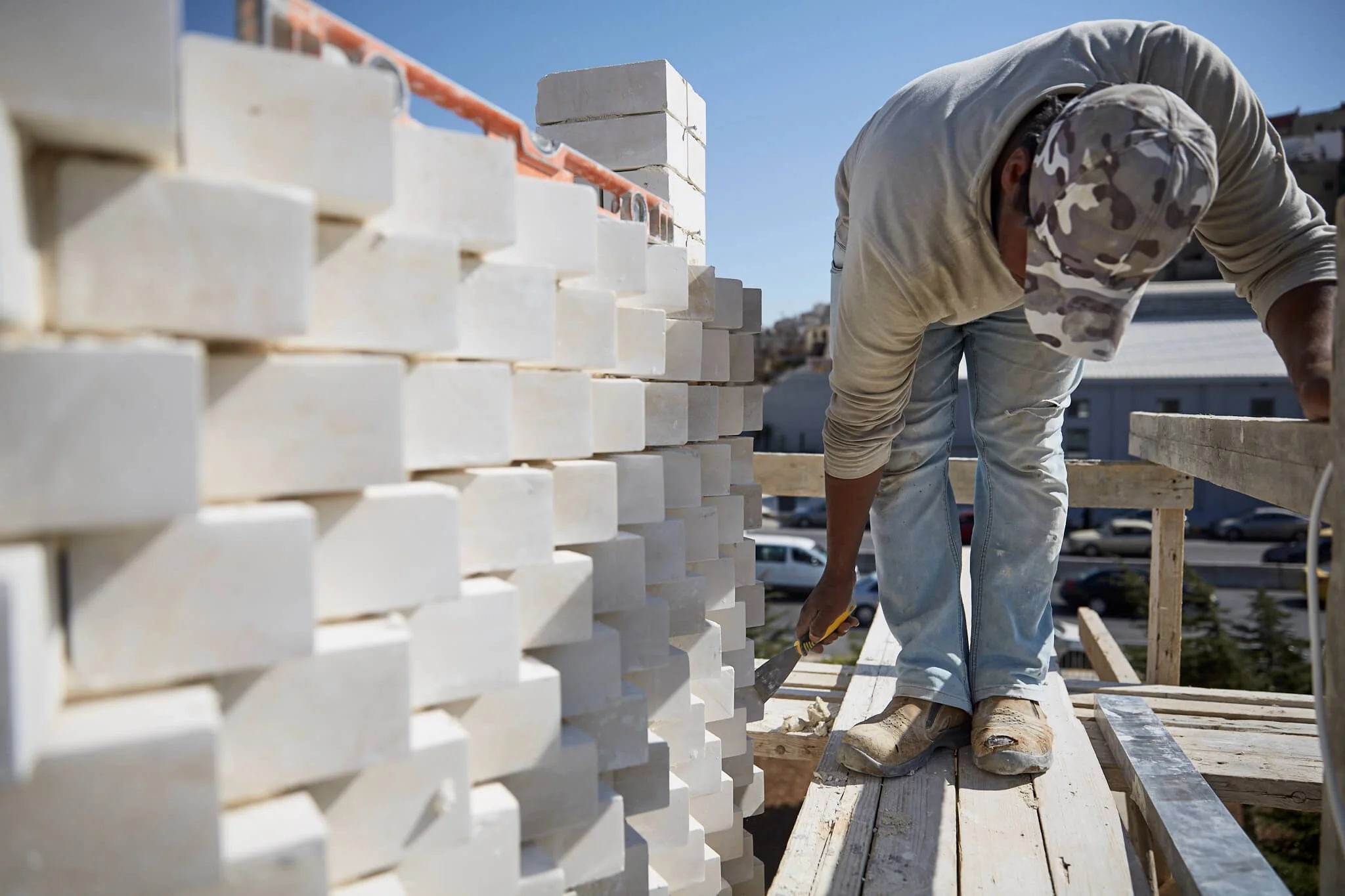
BT: Some fairly pointed ones. We are hosting talks that tackle questions like "How is architectural value constructed?" and "Does design education prepare us for the world we're in?" There's also a real thread throughout the program about the culture of making and inheritance and how artisanship finds its footing in a changing economy, how we work with what we've inherited rather than starting from zero every time. We also wanted to shed light on makers and the essential role they play in design and how design is in itself a collaborative effort.
Amman has always been central to the identity of the event. How does the city itself inform this year's edition?
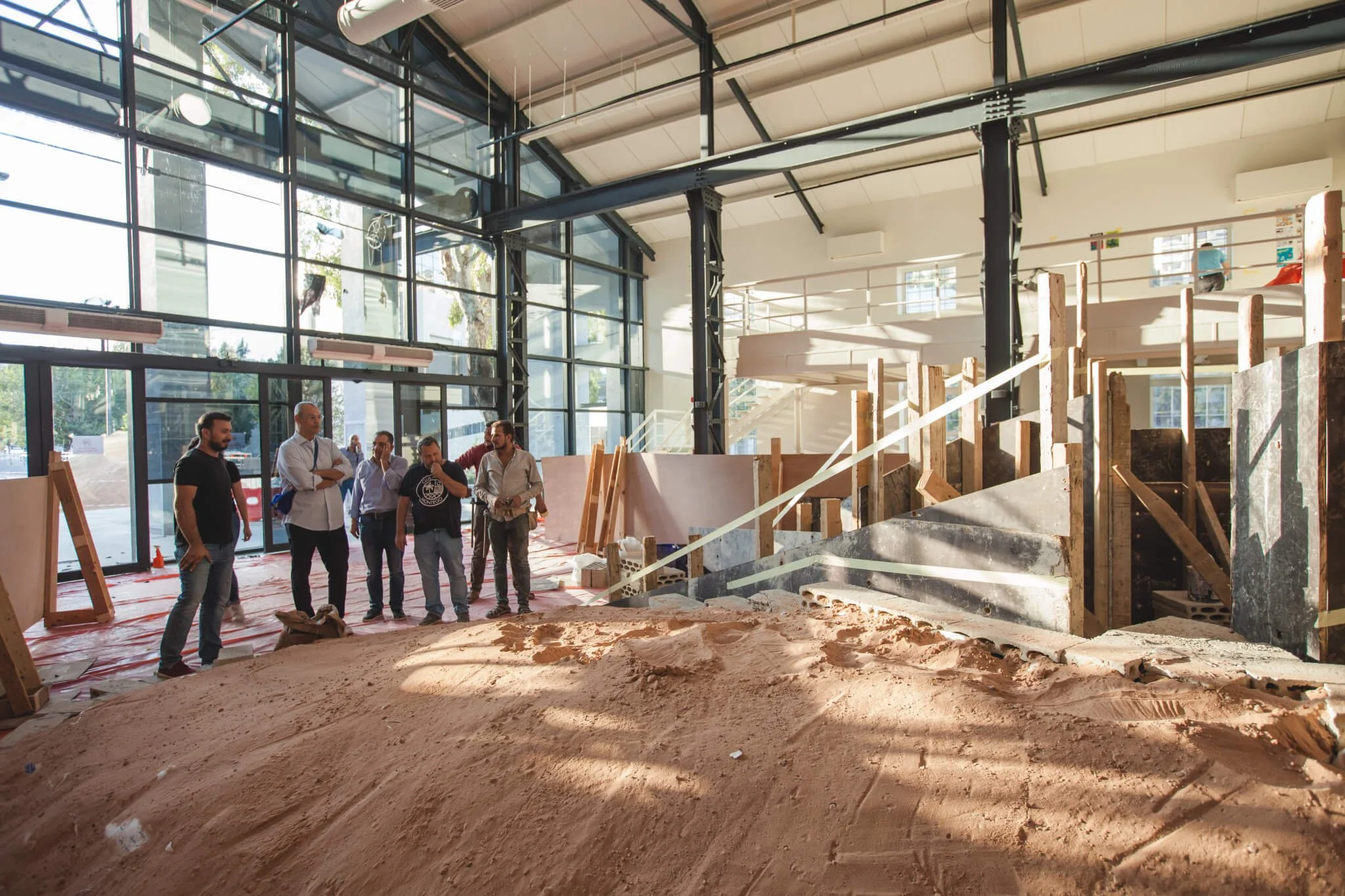
SH: Amman is already an accumulation. You can stand in one spot and see decades stacked on top of each other and civilizations that have lived in this city. Ras El Ain grew up around Seil Amman, the historic stream, through this constant overlap of industry, planning, and daily life. Our partnership with the Greater Amman Municipality is part of that. The Hangar, our main exhibition venue, was built in the 1930s to house Amman's electricity generators. GAM later rehabilitated it with TURATH Architecture into the cultural space it is today, so the building itself is a layered object: generator hall, then abandoned landmark, now where we are putting our exhibitions, and it has done so much more over the years. We wanted that same idea to play out across the whole city, not just in one venue. At Darat Abu Adnan, a 1950s house in Jabal Al Lweibdeh that was restored for this edition, the program actually uses the rooms themselves, including the kitchen, the salon, and the balcony, as a way to ask how a home carries the values and everyday decisions of the people who live in it. Its domesticity is an archive in its own right. And with Iraq Al Amir, out on the rural edge of Amman, the exhibition sits alongside Qasr Al Abd, a site with centuries of archaeology already accumulated, and we're one more layer passing through.
As Amman Design Week returns, how are you thinking about its place within the city and the wider region in the years ahead?
BT: Amman Design Week is more than just a two-week event. It's an ecosystem that peaks during those two weeks but continues all year. The Ithra Design Week x ADW Residency, which connects designers from Jordan and Saudi Arabia, is one example of ongoing relationships. In the long run, we want Amman Design Week to be a place the region looks to, just as people already look to Amman for film or food. We also run programs year-round, so it's not just about what happens during the event, but how we keep engaging and learning from practitioners. Our mission is to be a learning platform that empowers designers and makers across Jordan and the region, and to welcome collaboration across borders, as you'll see in many of this year's works.
What do you hope visitors will take away from this edition of Amman Design Week?
We hope people leave with a greater awareness that design is not something distant or done by others. It is something they already participate in every day, through the things they make, repair, use, adapt, inherit, and pass on. We hope the edition gives people a chance to see those everyday acts differently, and to recognise their own role in shaping the environments and communities around them.
Images courtesy of Bisher Tabbaa and Sarah Hejazin
Words copyright of Naso Art Journal
