
Bader AlSaad
The 52nd Bahrain Annual Fine Arts Exhibition
Written by Nayla
“What this edition does is tell the art scene in Bahrain that BACA is taking them seriously. Maybe it dipped for a while… but this year there is willingness to change.”
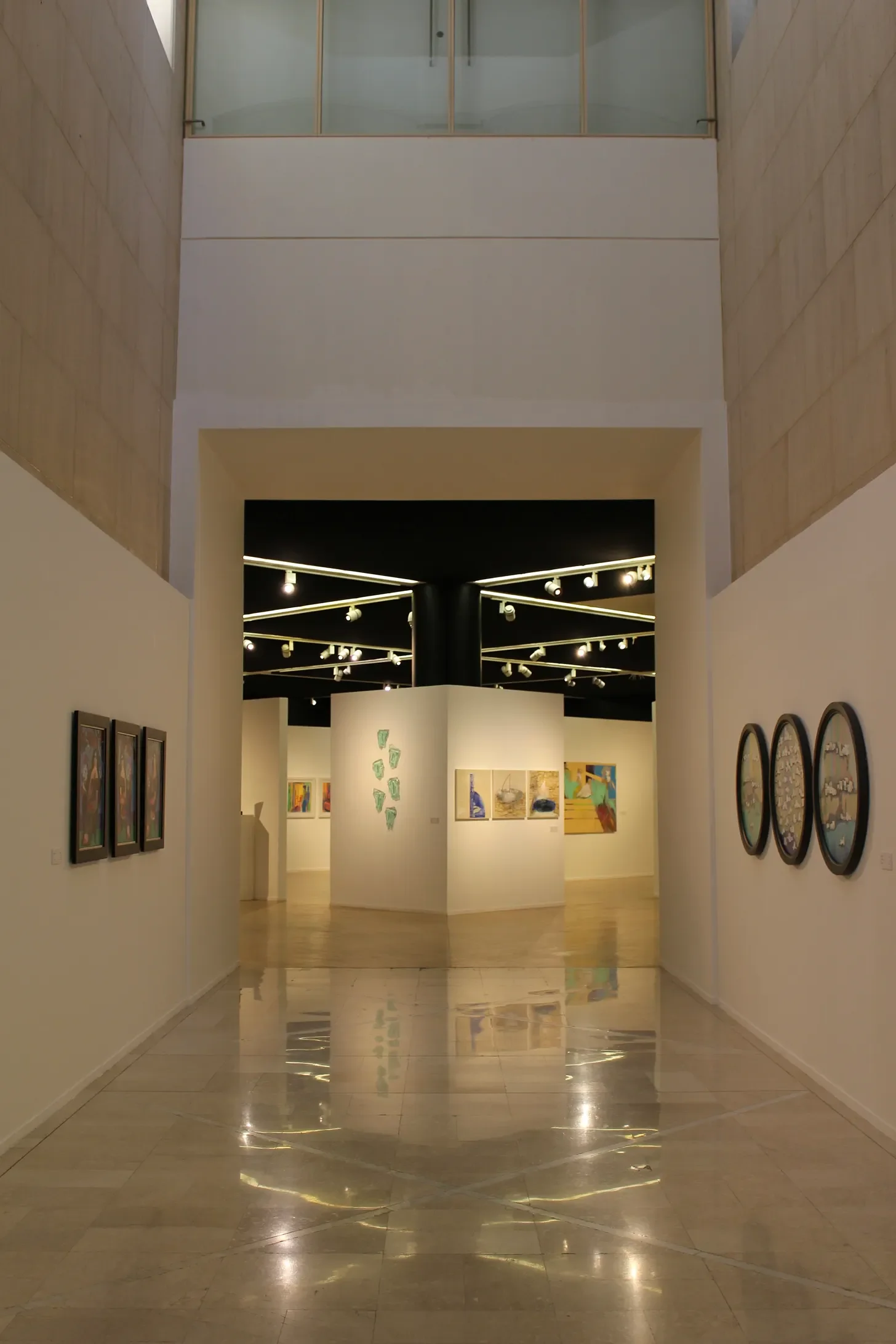
The 52nd edition of the Bahrain Annual Fine Arts Exhibition opened this week at the Bahrain National Museum, marking the first time the platform has been shaped by an independent curator. As one of the region’s longest-standing national art exhibitions, the Annual Fine Arts Exhibition occupies a particular position within Bahrain’s cultural life: it is both a moment of public recognition and a reflection of the country’s evolving artistic landscape. Any adjustment to its structure therefore carries weight, not because it overturns history, but because it reconsiders a format that has shaped generations of practitioners.
This year, the exhibition is curated by Bader AlSaad; a Bahraini curator deeply embedded within the local art ecosystem. His appointment introduces a new curatorial framework within an institution that carries more than five decades of history.
When Naso sat down with AlSaad following the exhibition’s opening, the conversation moved across the full spectrum of the platform: from its structural realities and generational shifts to questions of risk, representation, regional positioning, and long-term sustainability. Together, we delved into the nuances of the Annual Fine Arts Exhibition; not only as an annual showcase, but as a living framework still defining its future path.
On A Turning Point
In reflecting on this year’s edition, AlSaad emphasized the significance of the changes it introduces. What he identifies is a shift in institutional posture. “This is a turning point for the exhibition. For the first time, there is an external professional body working on it… from the curator to the selection committee to the jury. Announcing the jury and highlighting them does a lot.”
For AlSaad, the significance lies less in structural overhaul than in signaling seriousness, both internally and to the artists who continue to engage with the platform. “What this edition does is tell the art scene in Bahrain that BACA is taking them seriously. Maybe it dipped for a while — like everything in life, it goes through waves. But this year there is willingness to change.” He suggests that this willingness was reflected directly in the submissions themselves. “I think a lot of the artists saw that and brought themselves in a much better capacity this year.” The implications, in his view, extend beyond the exhibition as a single annual event. “It could solidify people’s careers. It could launch careers. When an artist submits and gets accepted by a professional selection committee, it gives that push. It tells them the practice you’re working towards is being recognized.”
On Curating Within an Established Framework
Stepping into the role came with its own pressures. “It was such an honor,” he reflects, “but there is a heavy weight of responsibility. To curate a show at a national museum, with this kind of history, is a lot to bear.” AlSaad has previously been vocal in his critique of past editions, yet he frames that criticism as constructive rather than dismissive. “My criticism comes from a place of love. I know what our art scene has. I know what they’re capable of.”
At the same time, AlSaad was conscious that meaningful change within an established institutional structure must be measured rather than abrupt. “Change is difficult. I had to pick my battles. Some things needed to change now. Some can wait another edition.” Beyond refining the selection framework, attention also turned to how artists were engaging with the open call itself. “I hosted a couple of info sessions to help artists understand and give a little guidance,” he explains.
These sessions were structured as practical interventions aimed at strengthening submissions. They clarified application requirements, strengthened artist statements, and outlined common grounds for rejection; areas that, in his view, often weakened otherwise promising submissions. “The talk or info session was really targeted towards how you can maximize your application for us as a selection committee to really view it properly.” While the intervention achieved what was necessary within the compressed timeframe, there was clear recognition that the framework could expand further in future editions — beginning earlier and opening deeper conversations around curation itself, not only how to apply, but what the exhibition could become.
On Identity, Repetition, and Expectation
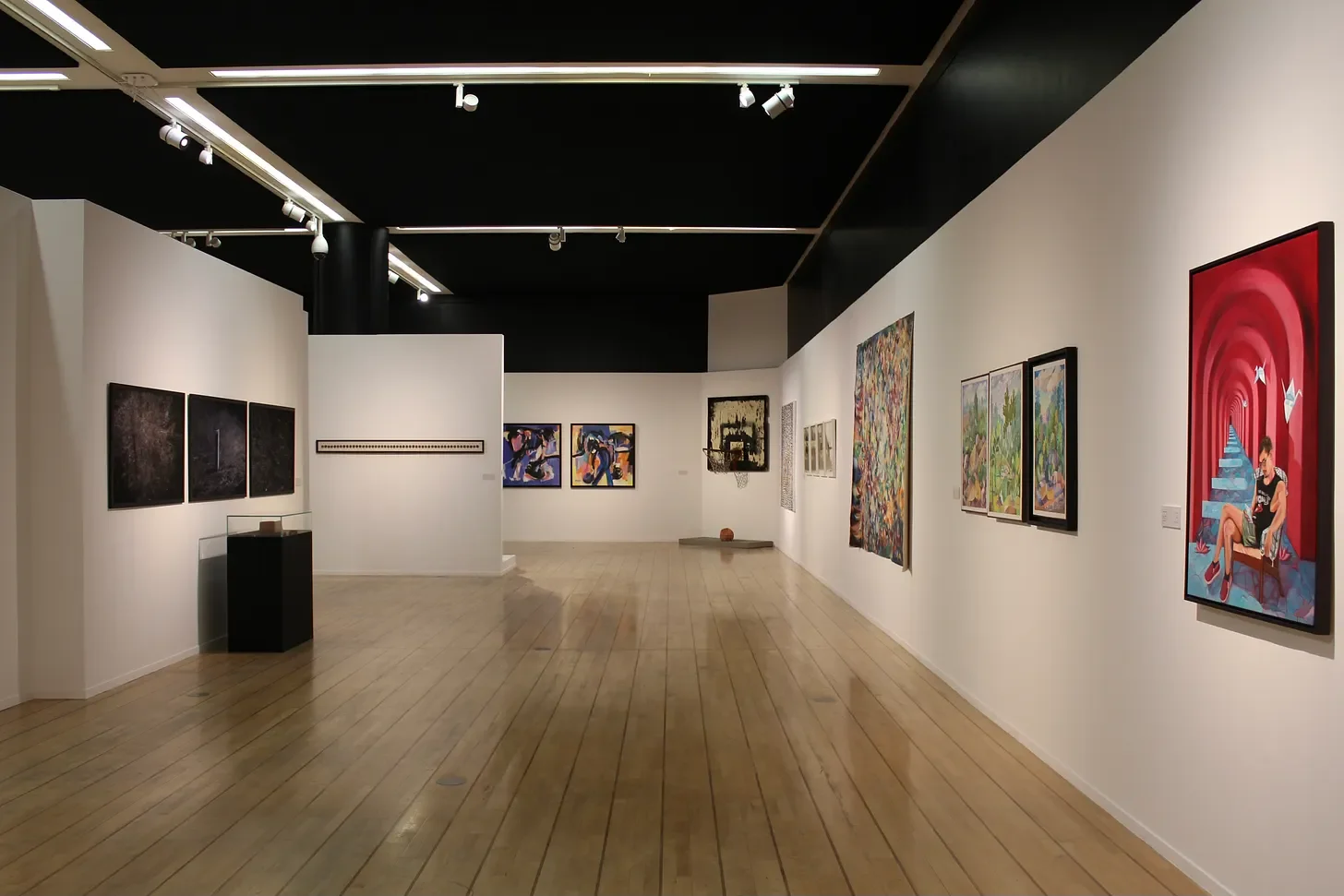
The exhibition remains thematically open, a format that inevitably raises questions of identity. “Art doesn’t have a passport,” AlSaad says. “It can be art from Bahrain, but labeling it as ‘Bahraini art’ is limiting.” Yet patterns emerged in this year’s submissions. “Most of the conversations are very focused on local context. There’s nostalgia. There’s a lot of blue inspired by the sea — even though our sea isn’t even blue.” He also observed how venue shapes perception. “Because it’s hosted at the National Museum, artists sometimes submit what they think should match the museum. Traditional references. Dilmun seals. That repetition came up.” Rather than dismissing these tendencies, he views them as areas for further dialogue. “If we host info sessions before the open call, during it, and after, and really discuss what this exhibition could be, there’s still a lot of room to grow.”
On Risk, Safety, and the Limits of Comfort
This year, the exhibition received nearly 300 applications, of which 74 artists were selected. When asked whether artists pushed themselves this year, AlSaad answers without hesitation. “A lot of artists played it very safe.”
He is careful, however, not to equate safety with weakness. “Safe is not necessarily bad,” he clarifies. “Some mature artists have honed their practice so well that it’s safe but extremely strong.” For AlSaad, safety only becomes limiting when it replaces growth. The concern is not consistency within a developed practice, but when that practice stops evolving.
Risk, in his view, should not be mistaken for novelty. “Risk is not about introducing new mediums. It’s about evolution. It’s about daring thoughts. Daring concepts.”
The museum context, he suggests, can create invisible constraints. “Sometimes artists submit what they think should belong in a national museum,” he observes — rather than work that genuinely advances their practice. The challenge moving forward, then, is not to demand experimentation for its own sake, but to foster an environment where conceptual ambition feels supported and encouraged.
On Generational Presence and Structural Gaps
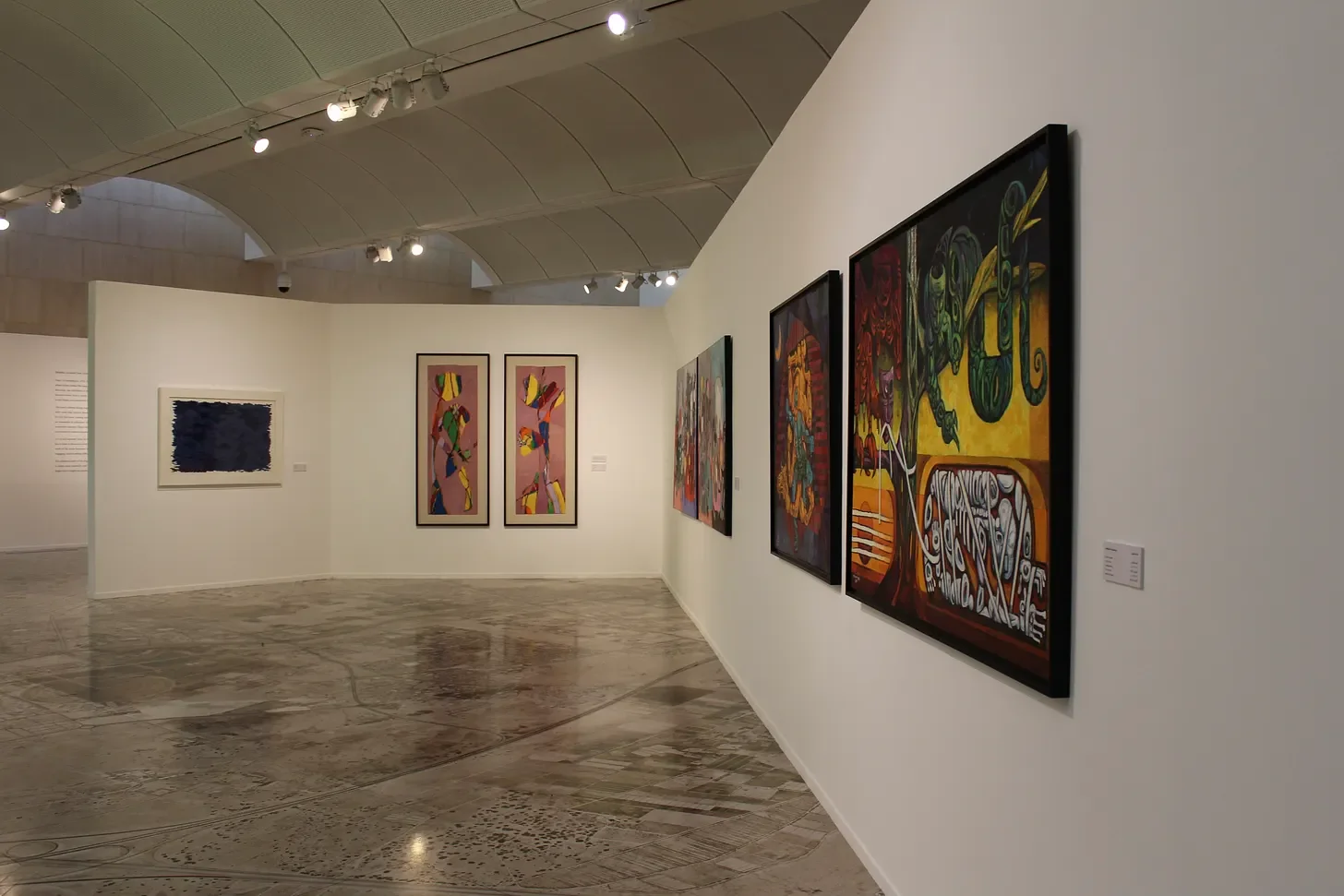
The numbers this year reveal another point. Only around 6% of selected artists are under 30. While 20% fall within the 30–39 range, the limited presence of younger voices raises questions about confidence and access. AlSaad reflects on this carefully. “I think there is some fear from the younger generation,” he says. “Because it’s at the museum. They think maybe their work is not ready.”
Rather than lowering standards, he proposes expanding structure. “I would love to see a small spin-off — something more experimental. More fun. Less refined. That can eventually feed into the Annual Fine Arts Exhibition.” Such a parallel platform could function as incubation rather than exclusion, allowing emerging artists to test ideas without the weight of institutional expectation.
On Regional Dialogue and Institutional Positioning
Although the exhibition is national in scope, this year’s jury brought together voices grounded both locally and regionally. Alongside Hayfa Al Jishi — curator and founder of Albareh Art Gallery, and a longstanding figure within Bahrain’s art landscape — the jury included Suheyla Takesh and Dr. Effat Fadaq, both deeply embedded within regional institutions. For AlSaad, this composition was intentional. “We’re an island, but we’re very connected,” he says. “Why jump to the global level? I care about my backyard first.”
Bringing together these perspectives, he believes, enriched the way the work was encountered. “To have professionals deeply rooted in this world come and admire the diversity of the work — that was emotional.” Their presence did not shift the exhibition away from its national grounding; rather, it expanded the conversation outward; into neighboring contexts and parallel art scenes that share similar histories, institutional rhythms, and cultural references. In that sense, regional and local eyes alike deepened the way the work was seen and understood.
Beyond Recognition: Toward Continuity
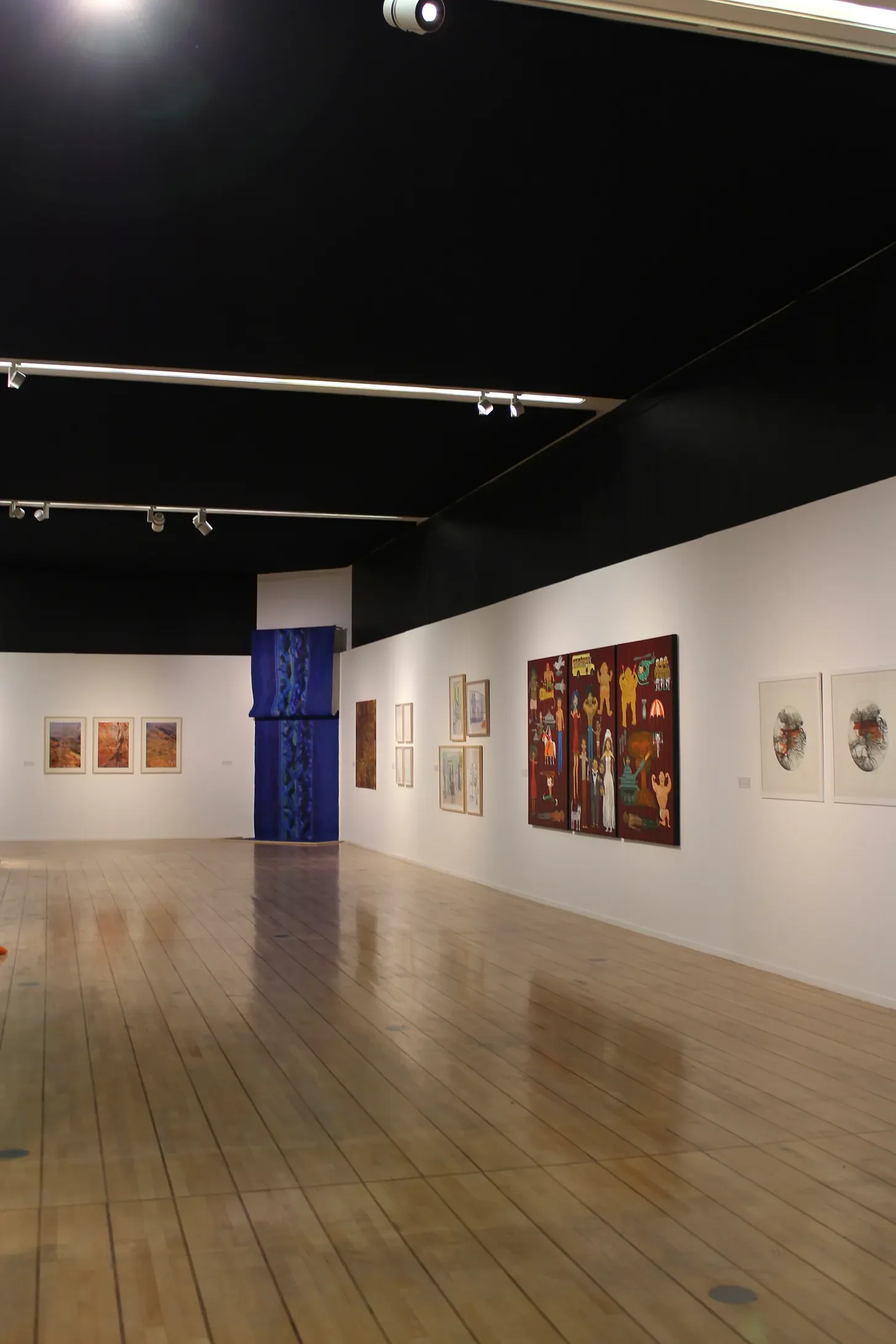
The Annual Fine Arts Exhibition has long included the Al Dana Prize and residency opportunities. This year also introduced deeper collaboration with commercial galleries selecting artists for solo exhibitions. For AlSaad, this signals an important evolution in how the platform supports artists beyond the exhibition moment. “There needs to be constant dialogue between public and private sectors,” he says. “This can be a platform for discovery. For career launches.”
He imagines a future where regional galleries look toward Bahrain not only for participation but for representation. “Maybe one day a regional gallery will say, I want to pick an artist from Bahrain and add them to my roster. That’s the hope.”
On Learning From the Inside
Perhaps the most significant shift for AlSaad has been personal. Having once questioned whether the exhibition should continue beyond its fiftieth year, his perspective has shifted. “I completely changed my mind,” he admits. “There is so much potential for this to reach 100 years.”
Seeing the level of submissions, the response from artists, and the willingness within the institution to refine the process reshaped his outlook. Growth, he believes, depends on consistency rather than annual reinvention. “Maybe the team should work across two or three editions instead of changing yearly. That allows growth.”
At the same time, he emphasizes collective responsibility. “BACA is not solely responsible for growing the art scene. They can facilitate. But artists must show up for each other.” He describes what he sees as a missing triangle within the ecosystem: artist, curator, and gallerist. “Artists produce. Curators present. Gallerists think about the business. We can’t work in silos.”
Looking Forward
For AlSaad, the Annual Fine Arts Exhibition carries a weight that extends beyond its annual cycle. It sits within a longer cultural continuum; shaped by decades of artists who have passed through its halls, and by the institution that houses it. “This is the first exhibition of its kind in the Gulf, hosted in the first museum in the Gulf,” he says. “There is so much to celebrate.” That awareness of history sharpens the responsibility of the present. Greater experimentation, stronger participation from younger artists, and deeper collaboration across sectors remain part of an ongoing effort to strengthen what already exists.
Ultimately, his closing reflection returns to tone rather than structure. “Approach it with love,” he says. “See it as a platform that challenges you to present yourself better.”
In that sense, the 52nd edition moves the exhibition forward with renewed care, reinforcing its place within Bahrain’s cultural fabric while leaving space for the next generation to define what it can become.
Cover image courtesy of Hady Elcott.
Images and text copyright of Naso Art Journal unless otherwise stated.
