
Alia Al-Senussi
On the Inaugural Edition of Art Basel Qatar
Written by Soraya
Princess Alia Al-Senussi, PhD, is a globally recognised cultural strategist, art world advisor, academic and patron of the arts with nearly two decades of international experience. She works at the intersection of culture, politics and art, focusing on cultural diplomacy, creative ecosystems and cross-cultural collaboration. As an art world professional, she connects diverse creative communities, facilitates global partnerships, and supports cultural programming, education and patronage.
Al-Senussi holds a PhD in Politics from the School of Oriental and African Studies (SOAS), University of London, and advanced degrees from Brown University and the London School of Economics. Within the contemporary art world, she has served in senior roles for Art Basel, including as UK and MENA Representative and International Outreach Senior Advisor, and has played an integral part in the founding of Art Dubai. In 2019, she was appointed Senior Advisor to the Ministry of Culture, Saudi Arabia.
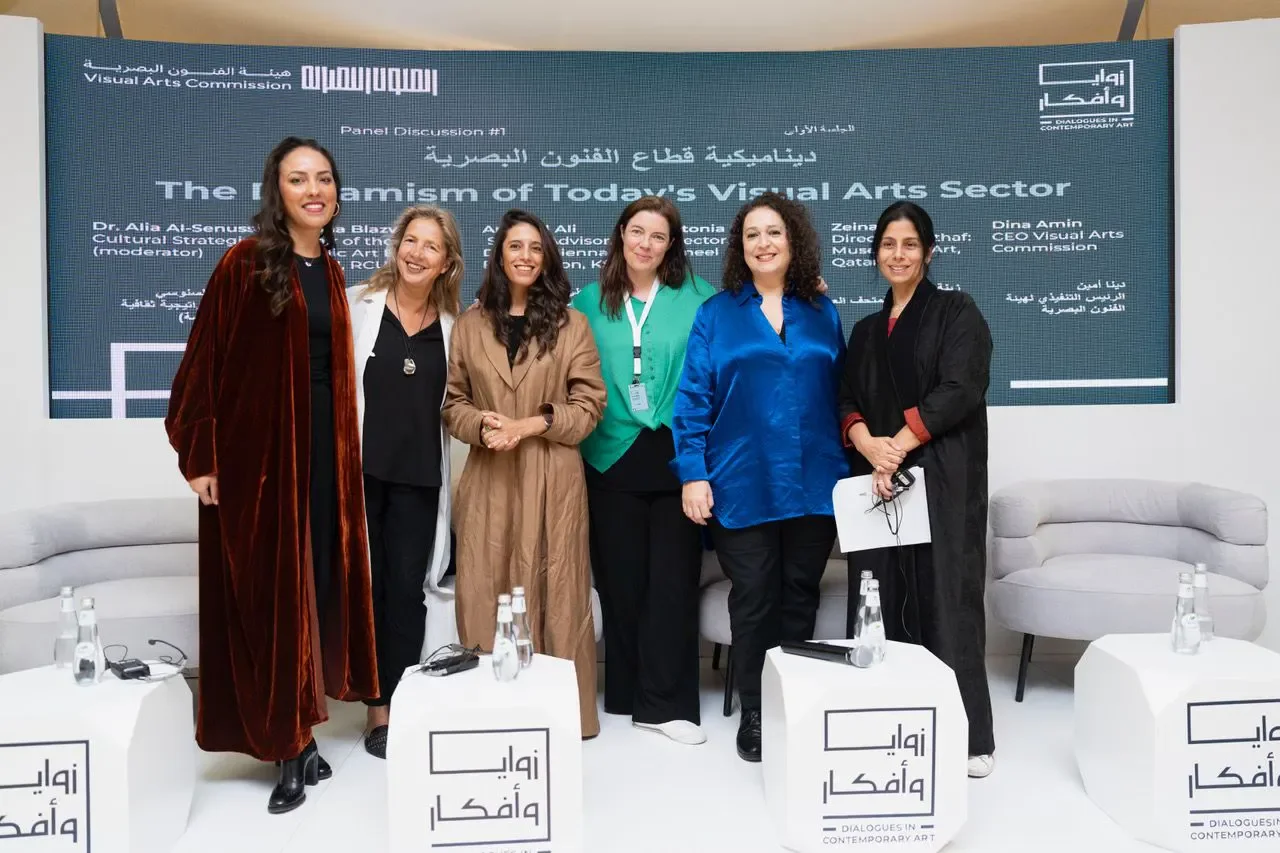
Riyadh Art Week, Visual Arts Commission of Saudi Arabia Ministry of Culture
A Geography of Encounters
Alia Al-Senussi speaks about the inaugural Art Basel Qatar not as a market expansion but as a change in tempo. She does not rush the idea. She circles it - historically, socially, personally - until it becomes less a fair and more a meeting point between intellectual climates.
She tells Naso Art Journal that her work in the Gulf “was never about importing a format, but about allowing a place, and an entire region, to articulate itself through art.” The distinction matters to her, considering her long history having been instrumental in the founding of Art Dubai, the Diriyah Biennale Foundation and serving on countless advisory boards in the region. Qatar, she explains, already possesses a dense institutional ecosystem - museums, research initiatives, archives - and therefore the fair had to operate differently from Basel, Miami Beach, or Hong Kong. Rather than a satellite of an existing constellation, it was intended as a gravitational center of its own.
In conversation, she repeatedly returns to the word context. The Gulf, she suggests, is not emergings: it is being newly listened to. “The Arab world, and wider MENASA and WANASA region, has long produced ideas,” she says, “but visibility and listening are different forms of attention.” The inaugural edition, in her view, should therefore be read less as a beginning than as a recognition.
Beyond the Market, Toward the Public
The Qatar edition, she explains, foregrounds programming - commissions, talks, cross-disciplinary forums - so that collecting emerges organically from dialogue rather than spectacle.
The Gulf’s rapid museum expansion has often been interpreted externally as acceleration; she interprets it as duration. “The institutions here are young in years but old in intention,” she says. “They were conceived with an idea that we should commemorate the generations that didn’t have these platforms, and instead we should imbue these memories inside them.”
The fair, then, becomes a mediator between private patronage and public imagination: a bridge she believes the region understands intuitively because cultural production there has historically moved through patronage networks before formal institutions existed.
A Cartography of the Global South
Throughout the conversation, she resists binary geographies - West versus East, center versus periphery - and instead speaks of overlapping narratives. She notes that artists from North Africa, South Asia, and Sub-Saharan Africa often share aesthetic genealogies through trade routes, migration, and language long before they share exhibition platforms.
“The fair can map conversations that history already wrote, for example look at the ancient ties between Bukhara and Arabia, and now just this year we have a Bukhara Biennial opening with a Saudi pavilion as part of its core offering, a deep collaboration not just in this moment of Saudi Arabia and Uzbekistan but of peoples that have been collaborating for centuries. While these Biennials are new, the ties are ancient, and trade routes such as the storied Silk Road are coming back to life,” she remarks.
For her, Art Basel Qatar offers an opportunity to redraw contemporary art’s mental atlas. Not to replace existing centers but to reposition relationships. She explains that a collector encountering a Moroccan conceptualist beside a Filipino installation artist is not witnessing diversity programming but continuity: “These dialogues existed before the category of global contemporary art existed. I completely reject the idea that this is “woke”, instead this is absolutely about opening up the context by which we understand artists, art history and what art means in a global narrative.”
Time, Memory, and Responsibility
Al-Senussi frequently returns to stewardship. She frames cultural infrastructure as a long-term promise rather than a cultural event cycle. “A fair lasts days,” she tells Naso Art Journal, “but it inherits decades and those ripples last a lifetime.”
In Qatar, she notes, institutional leadership emphasizes research, archives, and education as strongly as exhibition. The fair therefore operates within a broader national cultural philosophy - one she interprets as a commitment to future historians as much as present audiences.
She considers the responsibility both intellectual and ethical. Artists from the region should not be asked to represent geography but to expand thought.
The aim, she suggests, is normalcy - a word she uses deliberately. “The moment success arrives,” she says, “is when participation here feels ordinary in the global calendar.”
A Beginning That Is Not a Beginning
As the interview closes, she reiterates that inaugural editions are often misunderstood: they are treated as origins rather than acknowledgments.
“The fair,” she concludes, “didn’t create a scene - it recognized a continuum.”
In the pages of Naso Art Journal, the conversation reads almost as a manifesto for a slower globalization of art: one based on adjacency rather than hierarchy, listening rather than discovery. Art Basel Qatar, through her perspective, becomes less an event and more a recalibration - a moment when the global art world adjusts its sense of orientation and realizes that some centers were always present, simply viewed from the wrong map.
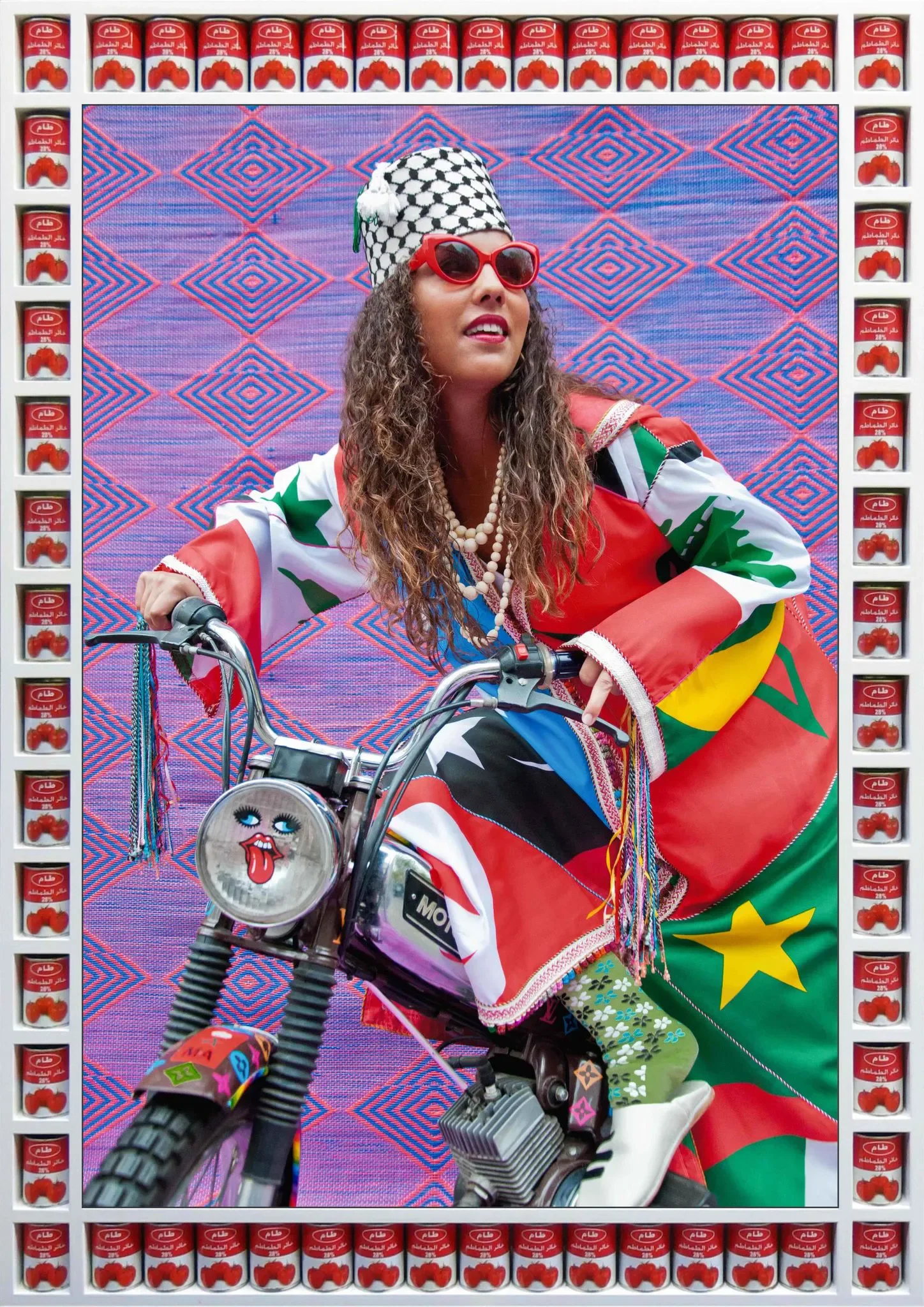
H.R.H Alia by Hassan Hajjaj. Photo courtesy Alia Al-Senussi.
Images and text copyright of Naso Art Journal unless otherwise stated.
