
Chabah Yelmani
How YFAC Builds Bridges Between Markets, Museums and Meaning
Written by Soraya
The art world has long celebrated artists, collectors and institutions, while the figures operating between them remain largely unseen. Yet behind every consequential collection, museum acquisition or landmark exhibition lies an ecosystem of advisors, historians, negotiators and cultural strategists whose influence quietly determines what ultimately enters history. For this edition of ‘Behind the Shows’, Naso speaks with Yelmani Fine Art Consultancy founder Chabah Yelmani, whose career has unfolded behind some of the world’s most significant artistic stages—from blue-chip galleries in Paris to advising collectors across Europe, the Middle East and North Africa. His reflections reveal that the unseen architecture of the art world may be as significant as the artworks themselves.
At the intersection of scholarship, connoisseurship and strategic collecting sits Yelmani Fine Art Consultancy (YFAC), a consultancy dedicated to shaping collections with lasting cultural relevance. Offering bespoke advisory services across collection management, market intelligence, curatorial strategy, appraisals and acquisitions, YFAC works closely with both emerging and established collectors to navigate the complexities of the international art market. Spanning Modern, Post-War and Contemporary Art, the consultancy approaches collecting not simply as the acquisition of objects, but as the careful construction of meaningful cultural legacies.
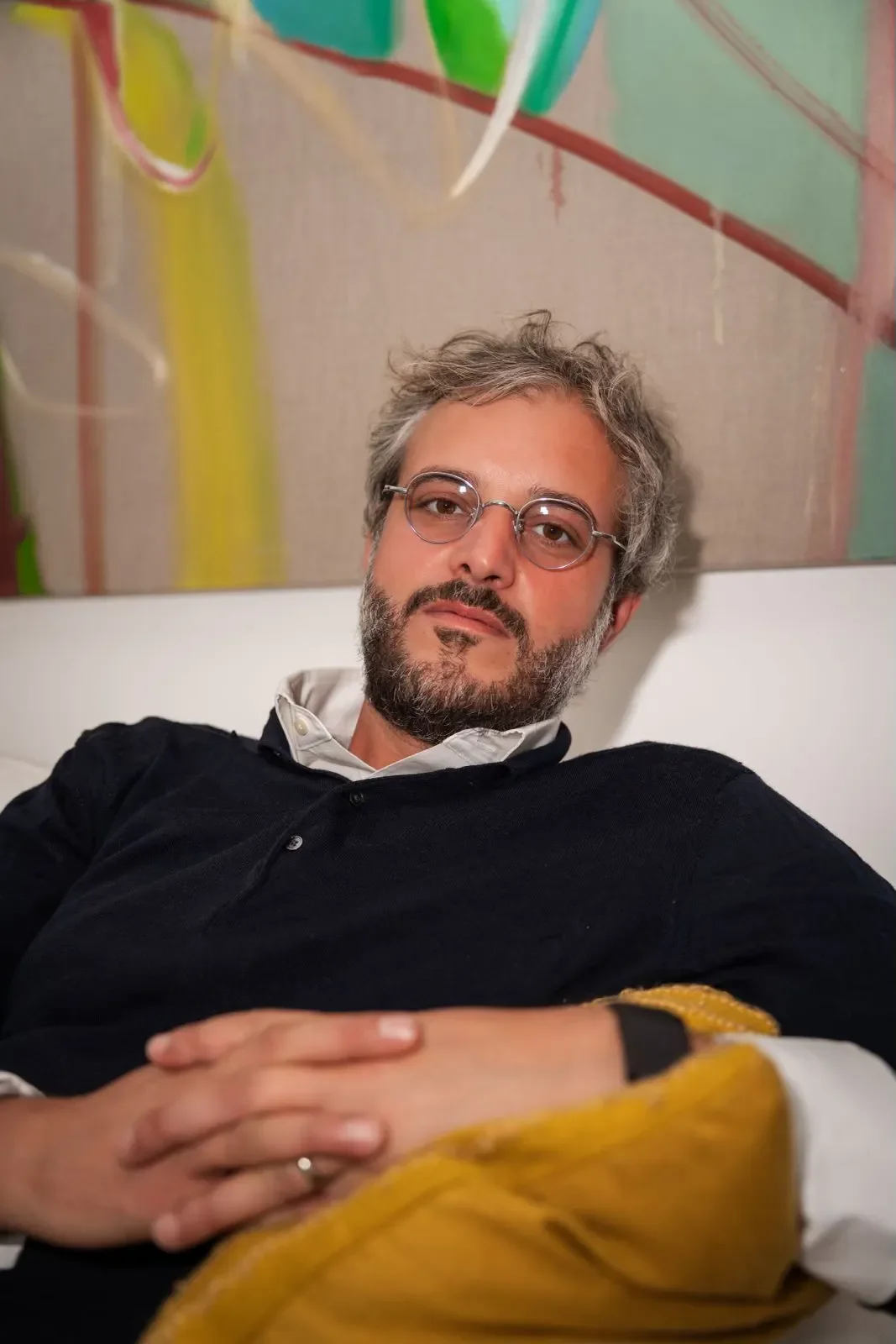
Chabah Yelmani, Founder of YFAC
The Invisible Architecture of Art
While artists produce the work, it is often those operating behind the scenes who ensure that the work enters history. Acting as custodians of artistic narratives, they negotiate, authenticate, advise and build relationships that stretch across institutions, galleries and collectors. It is a profession that demands scholarship as much as diplomacy.
For Yelmani, this role has never been about facilitating transactions alone. Reflecting on nearly two decades inside the international art market, he describes working “at the absolute machine room of the international art market,” where his conviction has remained unchanged: “art is far more than just an asset. It is a language, a legacy, and one of the most profound ways we have of understanding the world.”Rather than positioning himself as an intermediary between buyers and sellers, he emerges as a custodian of cultural continuity, illustrating how the invisible labour behind exhibitions often determines which artists become part of history and which quietly disappear from it.
A New Cultural Cartography: Working Between Europe and the Middle East
Few regions have reshaped the contemporary art landscape as rapidly as the Gulf. What was once perceived as an emerging market has become one of the most dynamic sites of institutional investment, collecting and cultural production. For YFAC, establishing its headquarters in Dubai was never simply a logistical decision but a reflection of a broader conviction that the geography of contemporary art is fundamentally changing. Yelmani describes Dubai as “one of the most dynamic cultural crossroads in the world right now,” explaining that its position allows the consultancy to operate fluidly across Europe, the Middle East, North Africa and South Asia. More significantly, he insists that “it’s not a base of convenience; it is a strategic, deeply personal choice.”
Rather than viewing the Middle East as a peripheral market, Yelmani argues that it has become one of the principal architects of tomorrow’s cultural landscape. “What took Europe decades to build,” he observes, “the Gulf is constructing in years—and building it with genuine seriousness of purpose.” The rapid emergence of museums (Louvre, Guggenheim, Duma) , biennials (Sharjah), foundations (Barjeel) and international art fairs (Frieze, Art Dubai) represents more than cultural infrastructure; it signals an ambitious investment in intellectual capital and long-term artistic dialogue. For YFAC, these developments are not simply evidence of economic growth but of a region redefining its place within global art history.
What excites him most, however, is not the scale of institutional development but the evolution of collecting itself. He notes that Middle Eastern collectors are increasingly moving beyond regional frameworks, creating collections in which Arab artists exist in dialogue with leading international figures. “We aren’t interested in provincial tastes,” he explains. “We build global dialogues on the same wall.” By introducing Middle Eastern artists into European collections while simultaneously bringing Western artists into Gulf collections, YFAC positions itself as a cultural bridge rather than a market intermediary. As Chabah Yelmani concludes, “for the first time in modern art history, cultural influence is becoming genuinely multipolar.” The conversation, he suggests, no longer belongs exclusively to historical capitals such as Paris, London or New York.
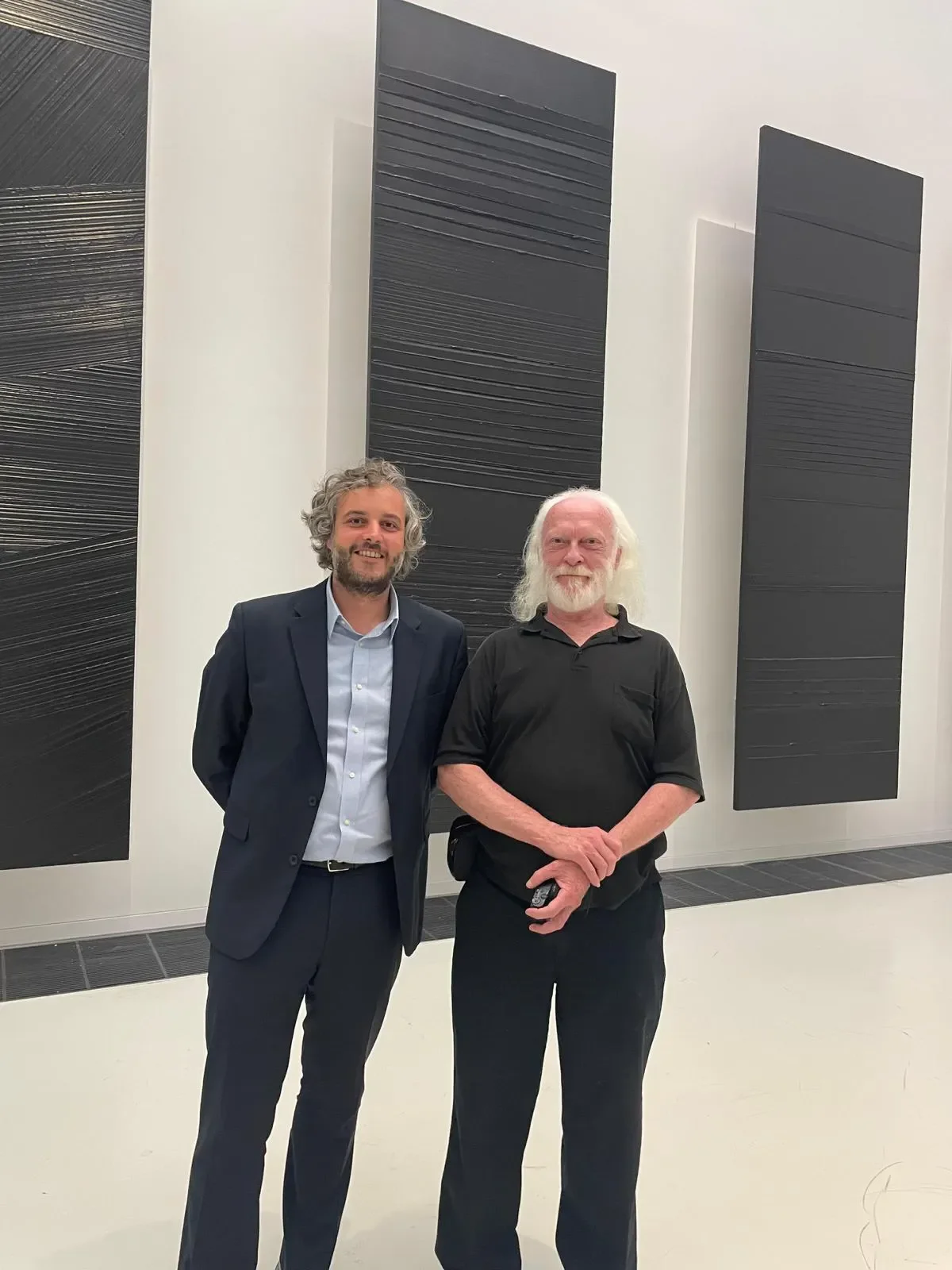
Chabah Yelmani with Dan McEnroe ( the former assistant of Pierre Soulages)
The Middle Eastern Market Beyond the Headlines
Discussions surrounding the Middle Eastern art market frequently gravitate towards record-breaking acquisitions, museum openings or international investment. Yet Yelmani suggests that the region’s most significant transformation is occurring beneath these headlines. Comparing collectors across Europe, North Africa and the Gulf, he notes that younger Middle Eastern collectors approach art with “a massive hunger, pure curiosity, ambition, and a refreshing absence of the creative bias that sometimes stiffens European taste.” Rather than inheriting established collecting traditions, many are, as he puts it, “collecting to build one.” They are investing not only in artworks but in museums, foundations, residency programmes and educational initiatives that strengthen the wider cultural ecosystem.
For Yelmani, this distinction is fundamental. He points to the work of the Barjeel Art Foundation as evidence of a collecting philosophy rooted in public engagement rather than private ownership. He praises its scholarly approach, describing it as “a living masterclass in how a private passion can become a public, intellectual legacy.” Such examples illustrate a broader shift in which collections increasingly function as educational and cultural resources, challenging conventional assumptions that collecting is solely an expression of wealth or prestige.
Looking ahead, Yelmani believes the next generation of collectors will be defined less by financial capacity than by intellectual curiosity. “Curiosity. Above everything else, curiosity,” he says, arguing that while expertise can be acquired and market data outsourced, “what you cannot outsource is cultural intelligence.” The collectors who will shape tomorrow’s museums and institutions, he suggests, will be those who seek first to understand rather than simply to own. In many ways, this observation encapsulates YFAC’s wider philosophy: that the future of the art market lies not in speculation, but in scholarship, dialogue and the long-term cultivation of cultural legacy.
Words copyright of Naso Art Journal.
Images courtesy of YFAC.
The full feature is exclusively in Issue 4 of Naso Art Journal.
