
Amman Design Week 2026: Notes from the Opening
At the press opening of Amman Design Week, held at the Ras El Ain Hangar on the morning before its doors opened to the public, there was a warmth and sense of community that felt very much like Amman. Designers and makers had gathered from Jordan and across the region, and that same spirit of exchange carried through into the exhibition itself.
This year’s theme, Accumulations, led by exhibition curator Faysal Tabbarah and programme curator Khaled Al-Bashir, looks at how ideas, materials and knowledge build over time. Walking through the Hangar, it took different forms across the works, both in the ideas behind them and in how they had been made: through casting, layering, stacking, gathering, weaving and collecting.
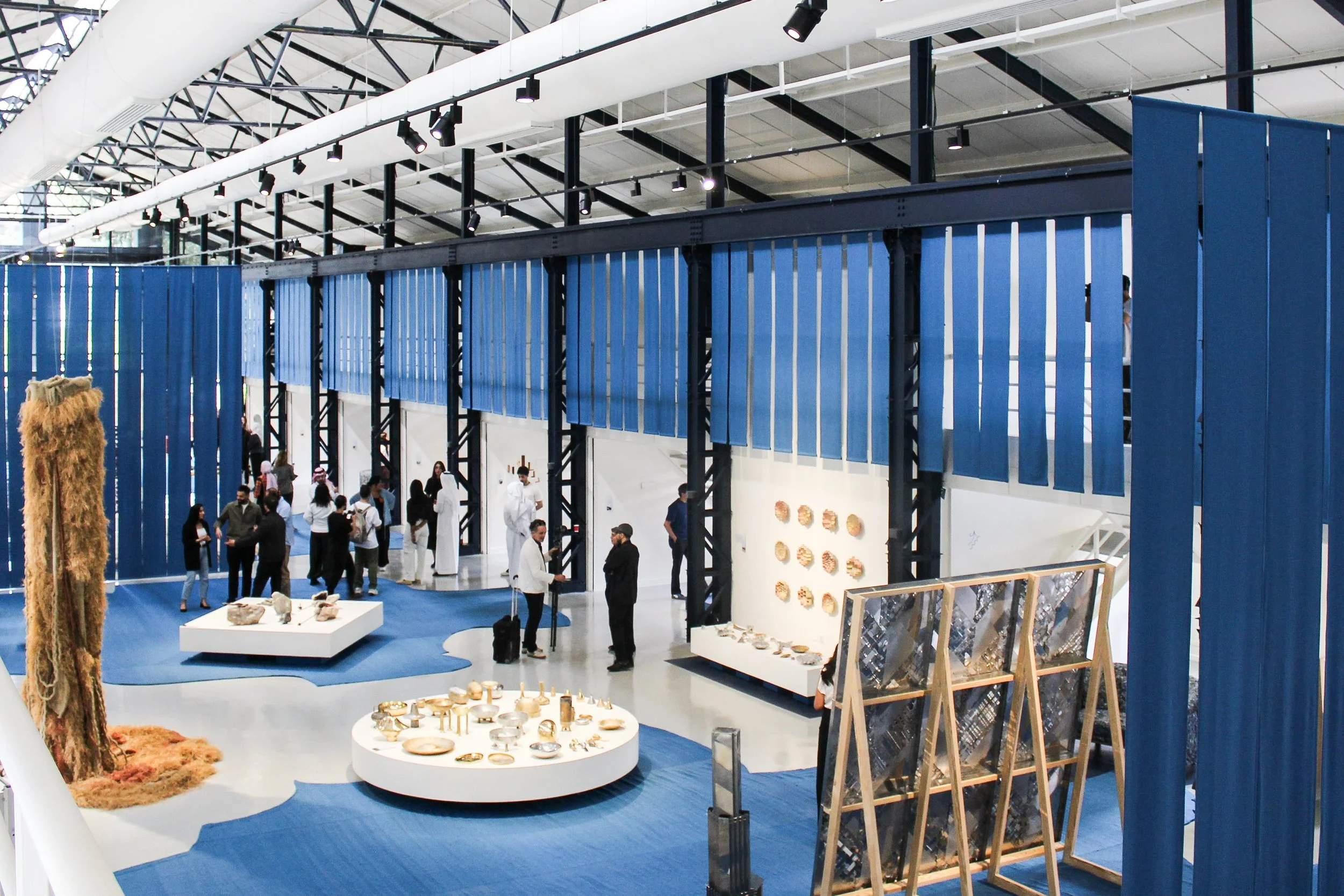
At the Hangar
In Concave, Kawther Alsaffar’s dual casting meets Baraa Altoubaji’s digital work. The resulting pieces resemble renders pulled out of the screen and into sand and molten metal. In physical form, they are grittier than any render: rough and metallic, their pixelated forms taking shape through successive layers of material.
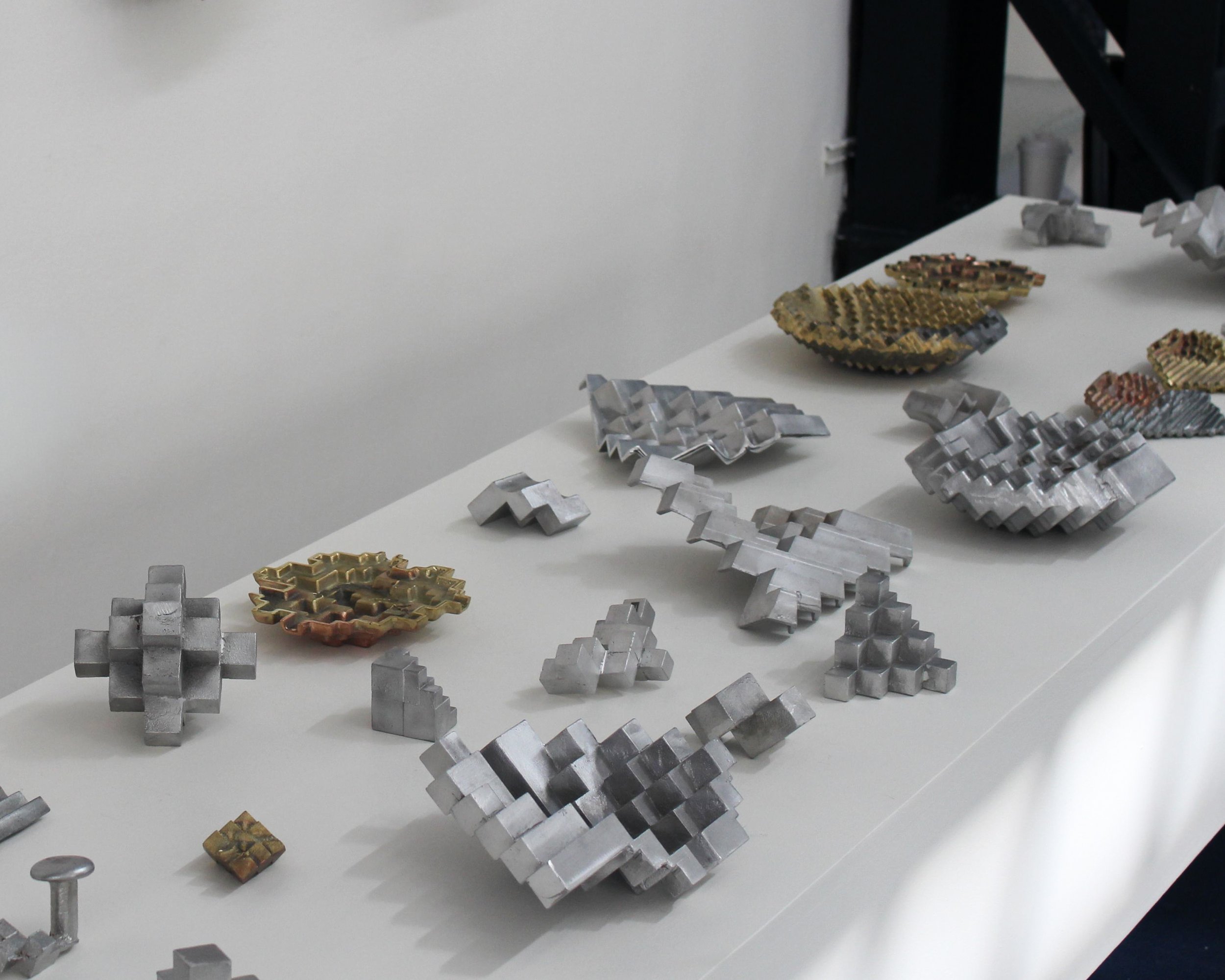
Concave, Kawther Alsaffar
Shaha Raphael’s Cabinet of Curiosities, manufactured by Ash Workshop, is described by the designer as “a study in self-archaeology,” drawing on archives of material culture and bringing objects and fragments together within its many drawers and compartments. The cabinet itself adds another layer to Accumulations, recalling an earlier history of collecting, before the modern museum, when objects were gathered together in cabinets of curiosities.
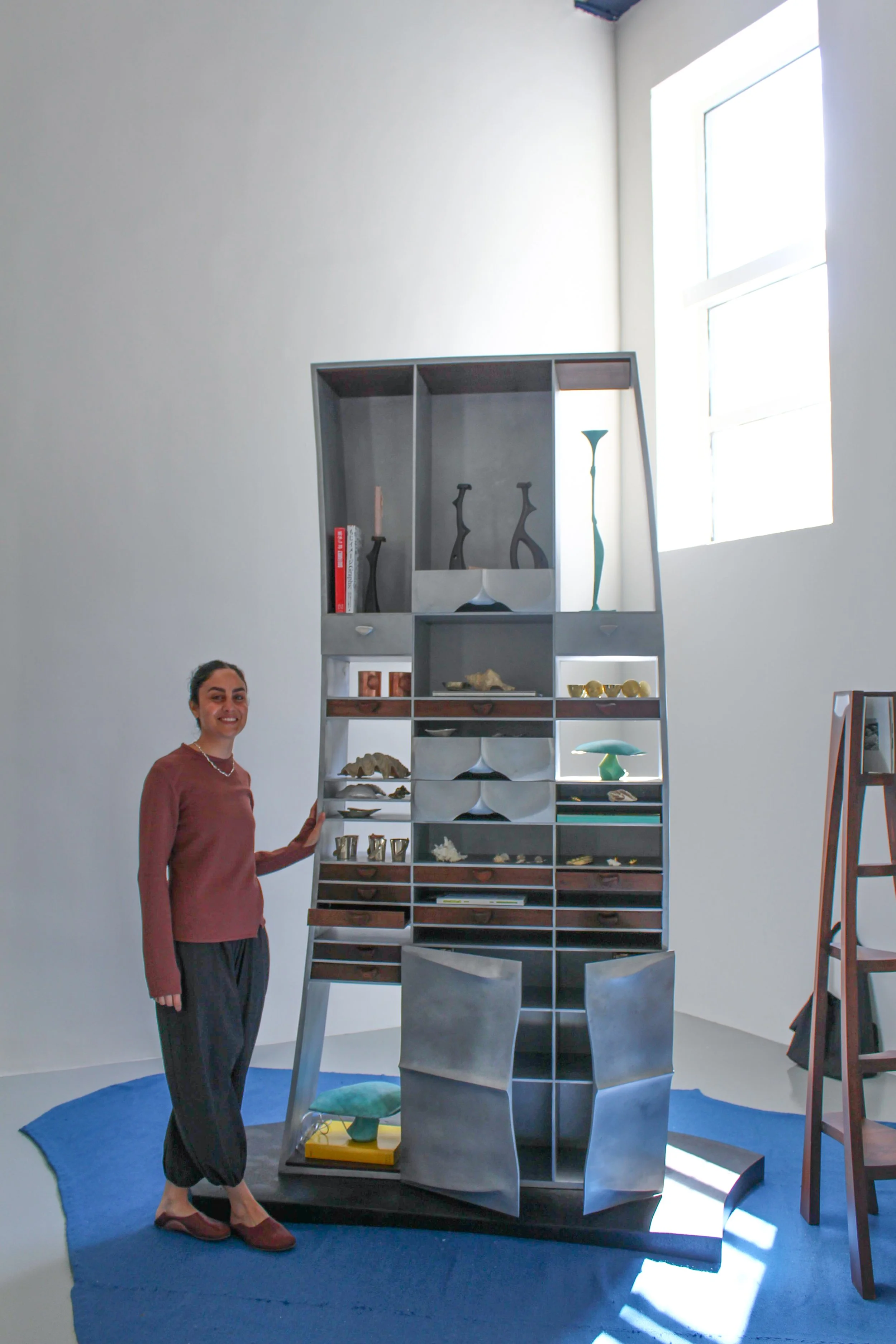
Cabinet of Curiosities, Shaha Raphael
Hadeel Ayed Mohammad’s work brings together 1,300 reflective fragments in a composition drawn from Amman’s landscape and urban fabric, gradually shifting from reflection to transparency as it rises. The piece was produced with a local factory whose history lies in stained glass, a craft it continues to maintain on a small scale even as its work has moved largely towards commercial production. The collaboration gives another dimension to the work, bringing a practice from the factory’s past into a new contemporary form.
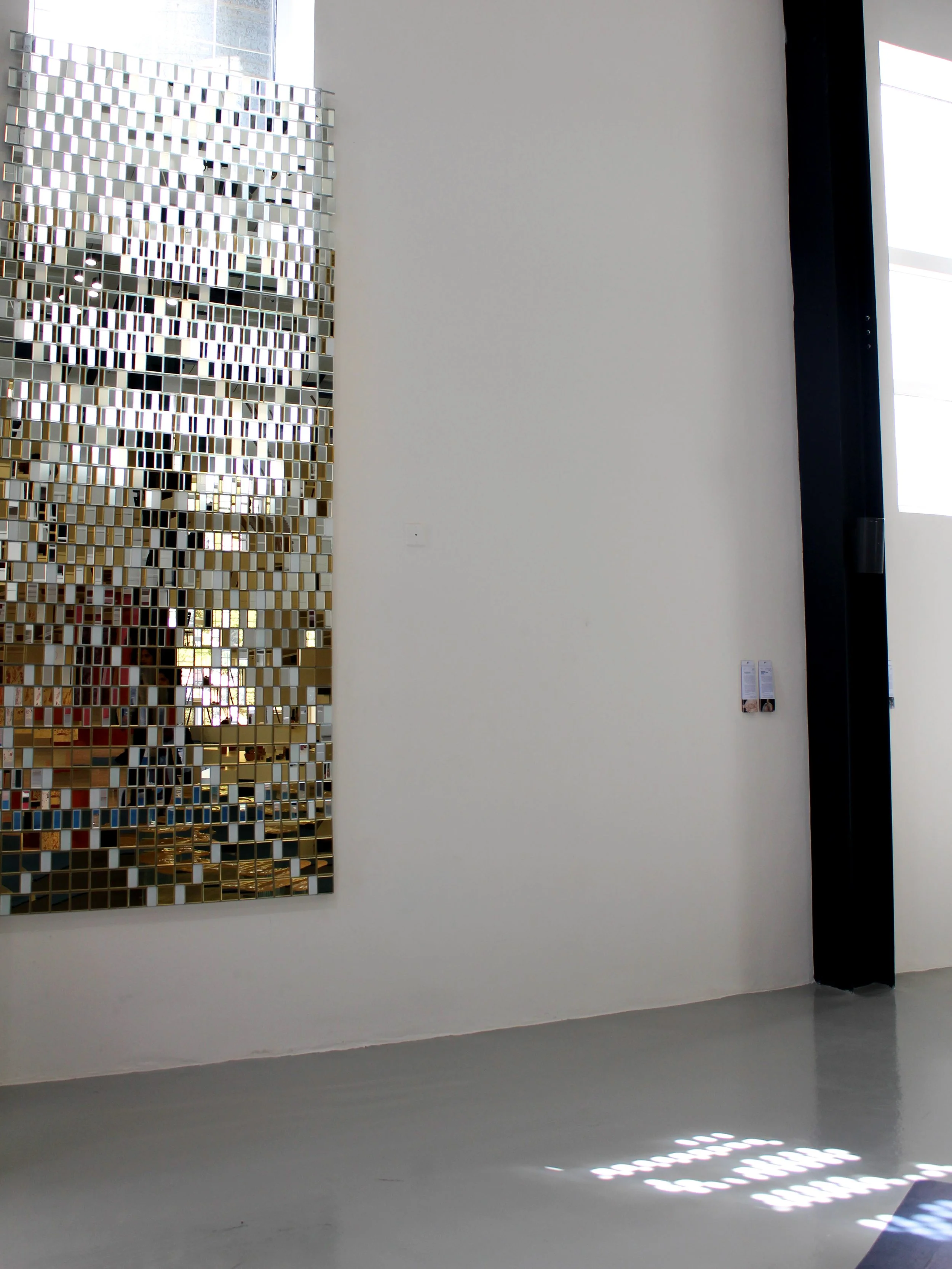
Hadeel Ayed Mohammad
From Lebanon, Éditions Levantine presented Archiving Emotions, a series of mirrored works in marquetry and reflective steel whose Levantine patterns draw from Mesopotamian tablets. Ancient forms and motifs are carried into the present through contemporary materials, layering different periods of the region’s visual and material history within the same objects. Nearby, Naqsh Collective’s chair of stacked stone and brass wheat stems drew on the Madaba Plains, while Sama El Saket’s Forming Minerals turned to limestone and salt naturally present in Jordan’s water and clay. Materials typically treated as impurities become part of the vessels themselves, shaping their colour, texture and final form.
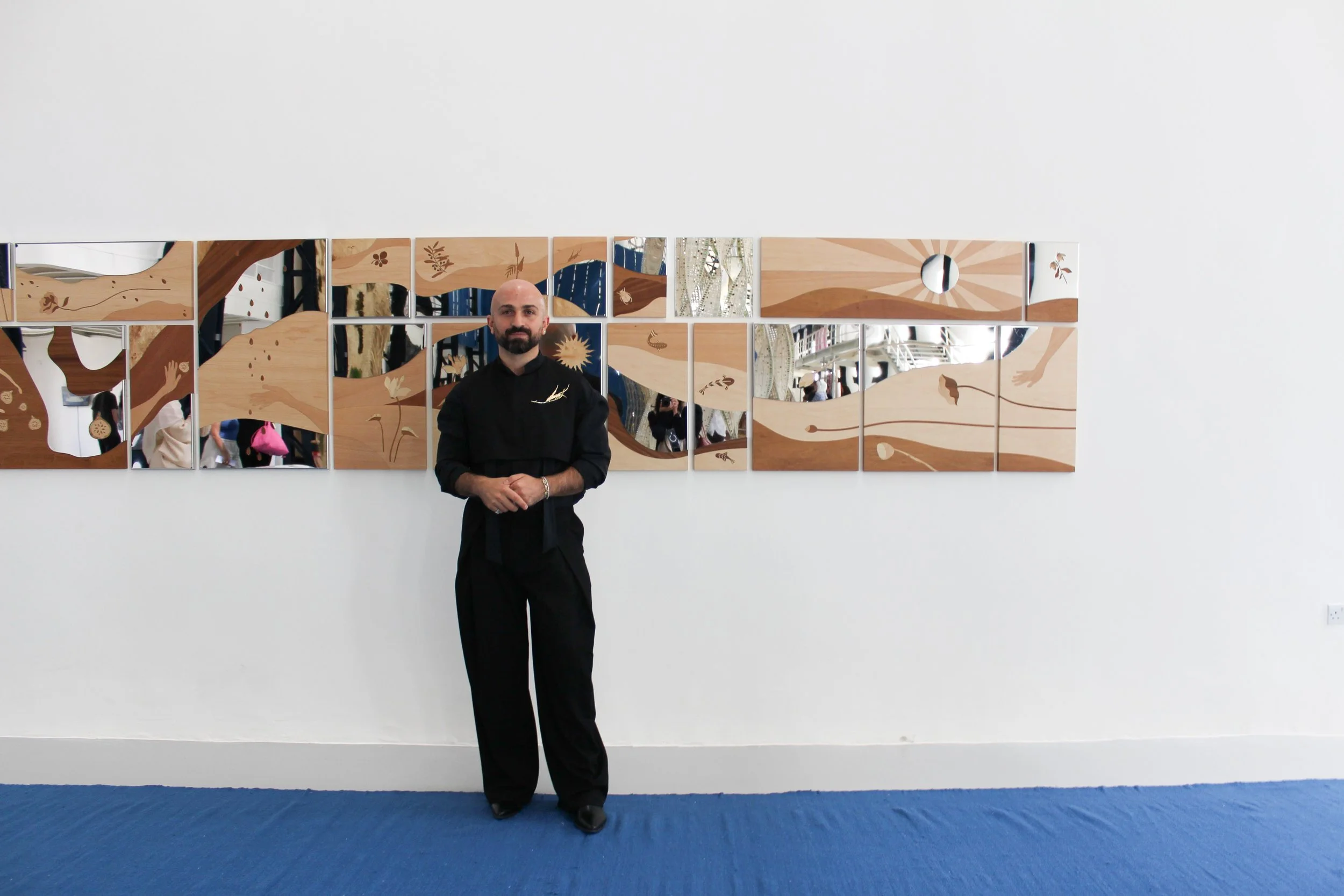
Archiving Emotions, Éditions Levantine
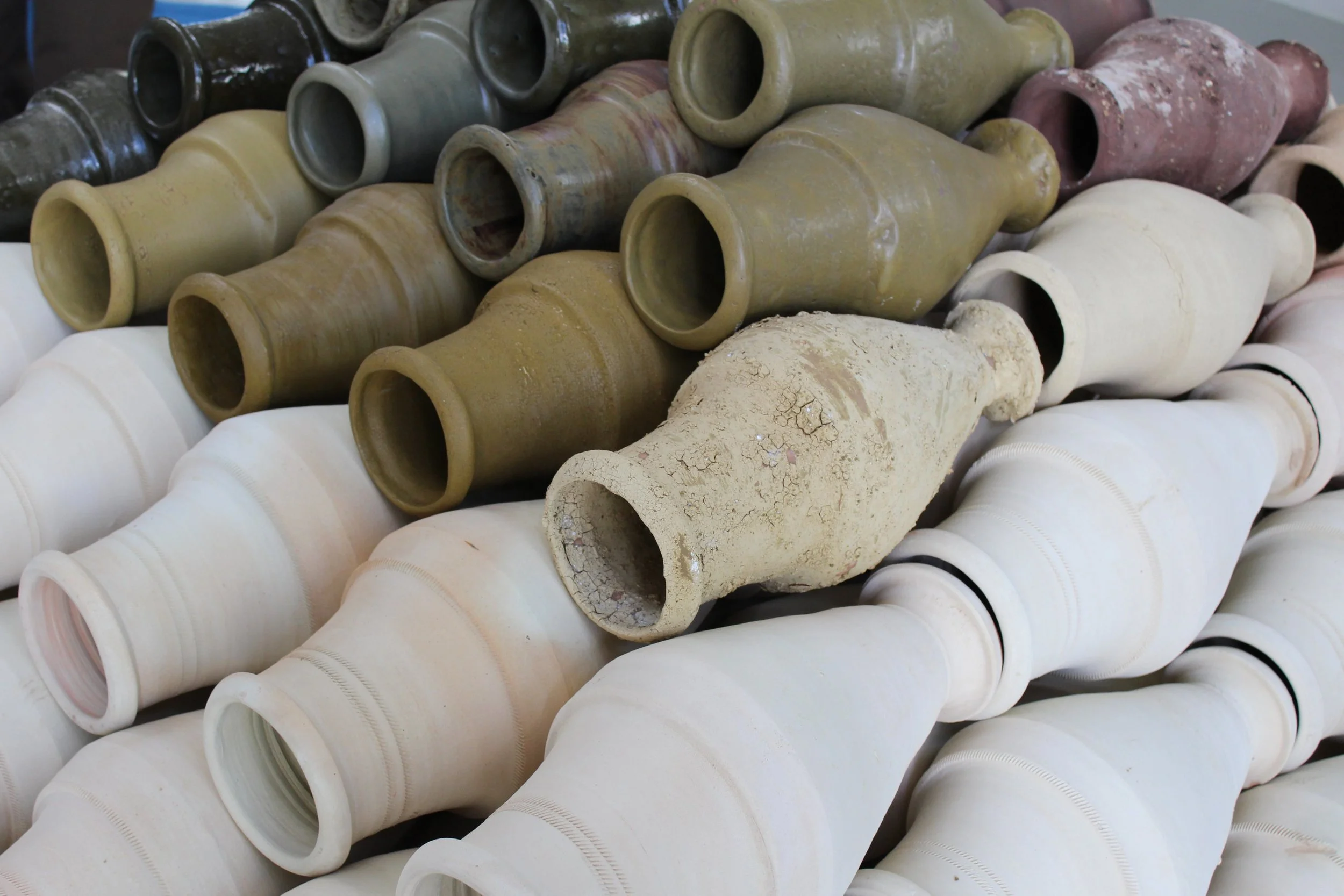
Forming Minerals, Sama El Saket
From Bahrain, House of ZKA brought Ground as Forum: Holding Ecological Knowledge, arranging fragments of reclaimed Bahraini stone on a locally woven rush mat. The installation follows the spatial logic of the kuttab, where Quran classes were once held on the ground. The reclaimed limestone, commonly referred to locally as armour stone, carries years of accumulated material and colour across its surface, with some pieces treated with vinegar to create orange tones through its reaction with the stone. Visitors are invited to interact directly with the work, walking across it, sitting on it and gathering around it, bringing histories of learning, material and place into the same space.
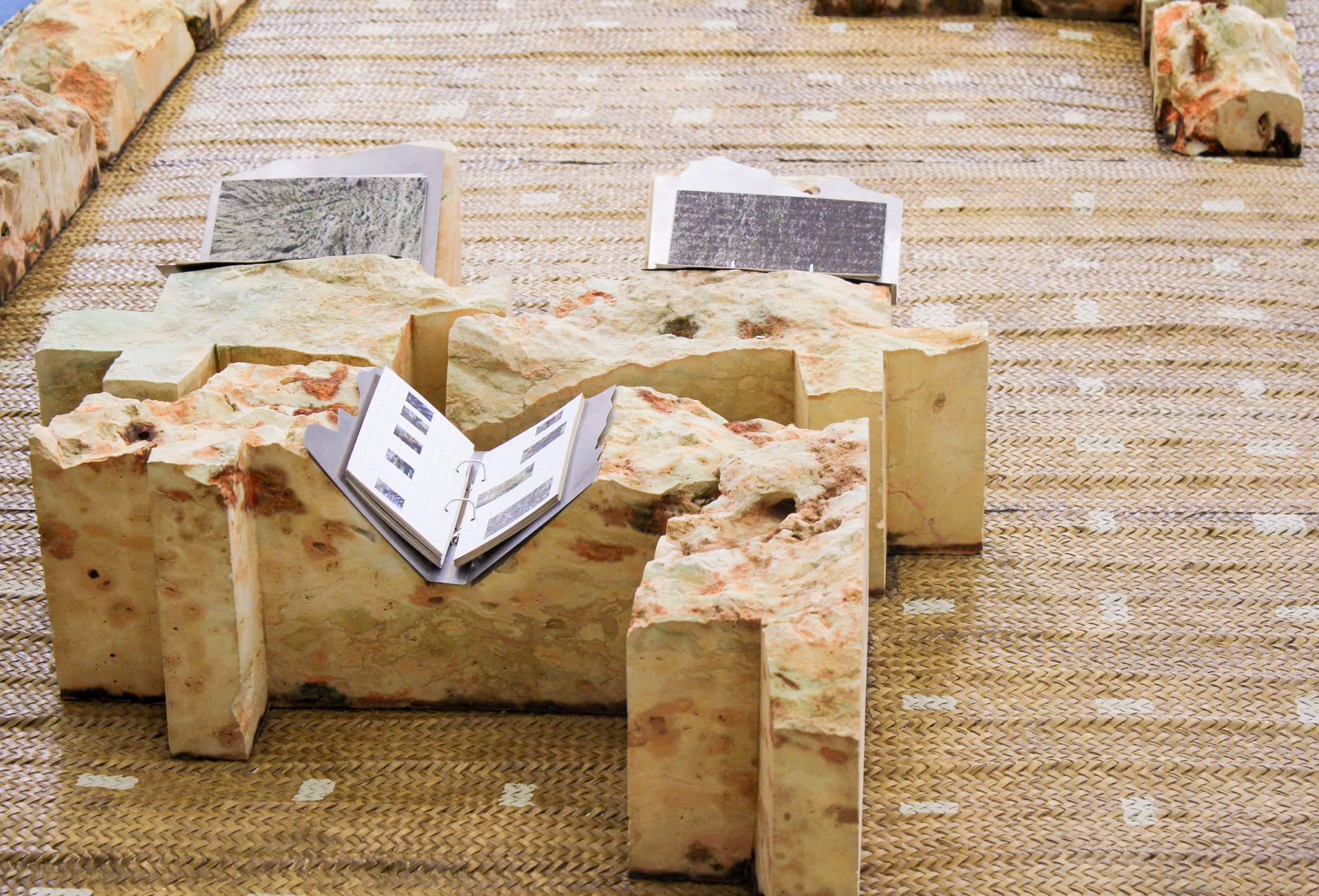
Ground as Forum: Holding Ecological Knowledge, House of ZKA
Aseel Al Amoudi’s What Objects Remember turns to the accumulation of use and memory within ordinary household objects. Built from found objects she has collected over many years, the work considers the traces left by every hand, warmth and weight they have carried, presenting familiar domestic forms altered by the lives they have passed through.
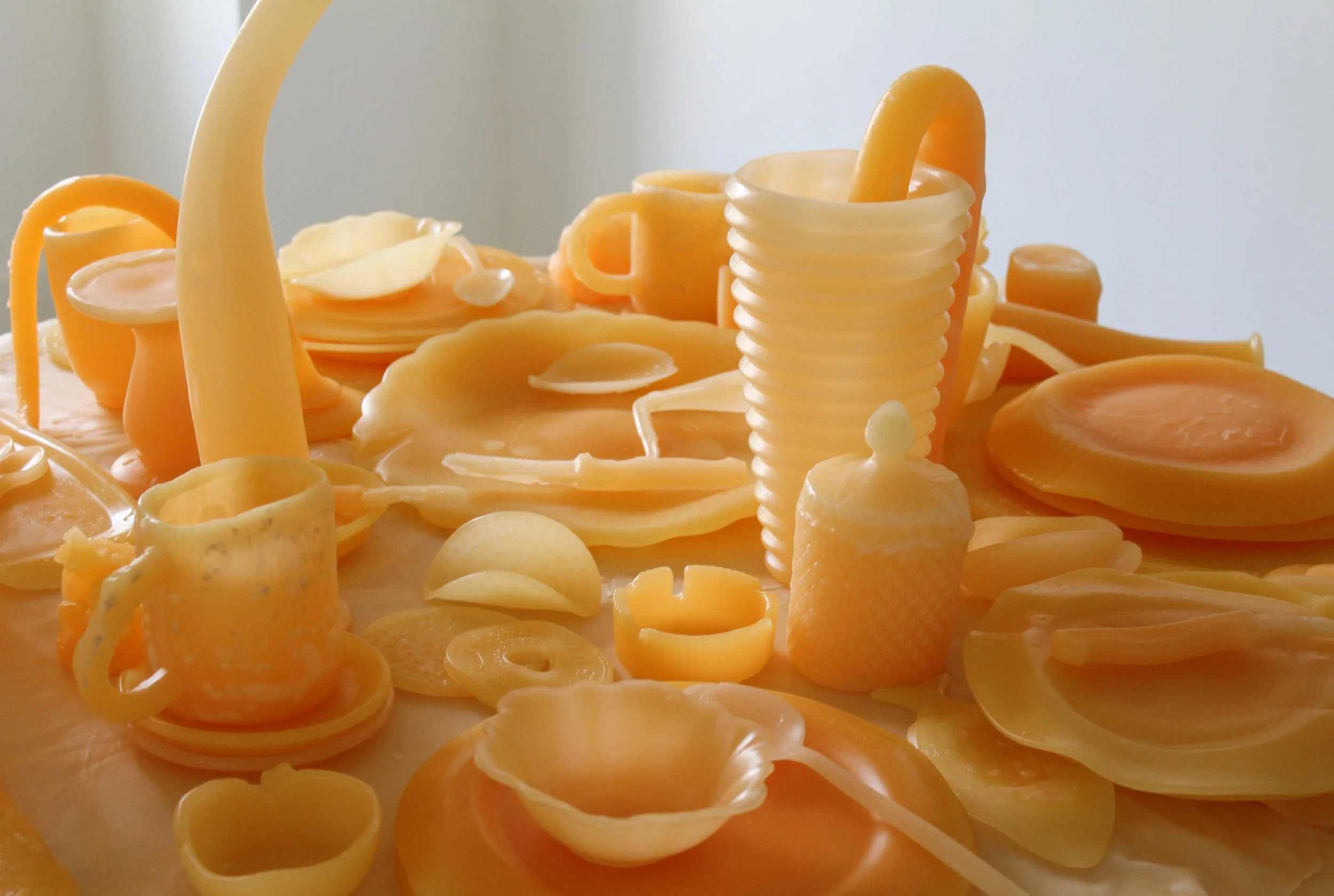
What Objects, Aseel Al Amoudi
A more serious reading of accumulation comes through in Farah Alkhoury and Tigran Kostandyan’s Occupied Ecologies: Inherited Toxicity. The research-based installation traces how toxicity moves through soil, water and air, and how environmental damage builds across landscapes over time. testimonies from communities confronting environmental violence, the work considers what remains long after the initial harm was done.
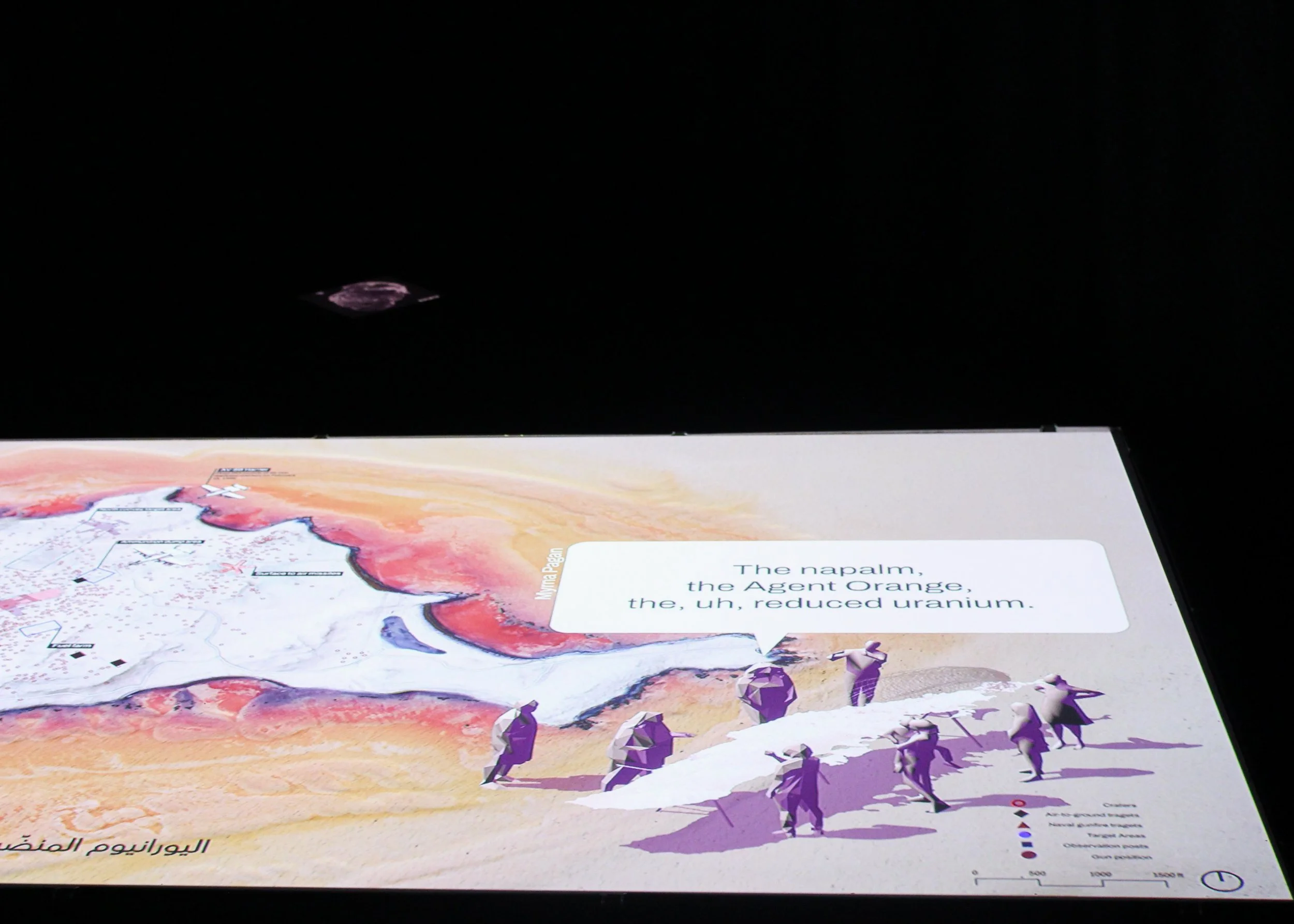
Occupied Ecologies: Inherited Toxicity, Farah Alkhoury and Tigran Kostandyan
In the Park and Across Amman
Outside the Hangar, the works continue through Ras El Ain Park. Abeer Anabtawi’s Nawwarat Amman takes over a basketball court, painted with plants, sayings and symbols drawn from Amman, while Civil Architecture’s Folly threads a ceramic-tiled roof between the existing trees. Designed around the gaps in their canopy, it creates another layer of shade beneath them, with small sculptures appearing along the roof like a frieze. The tiles themselves were developed and made in Jordan by Haswa.
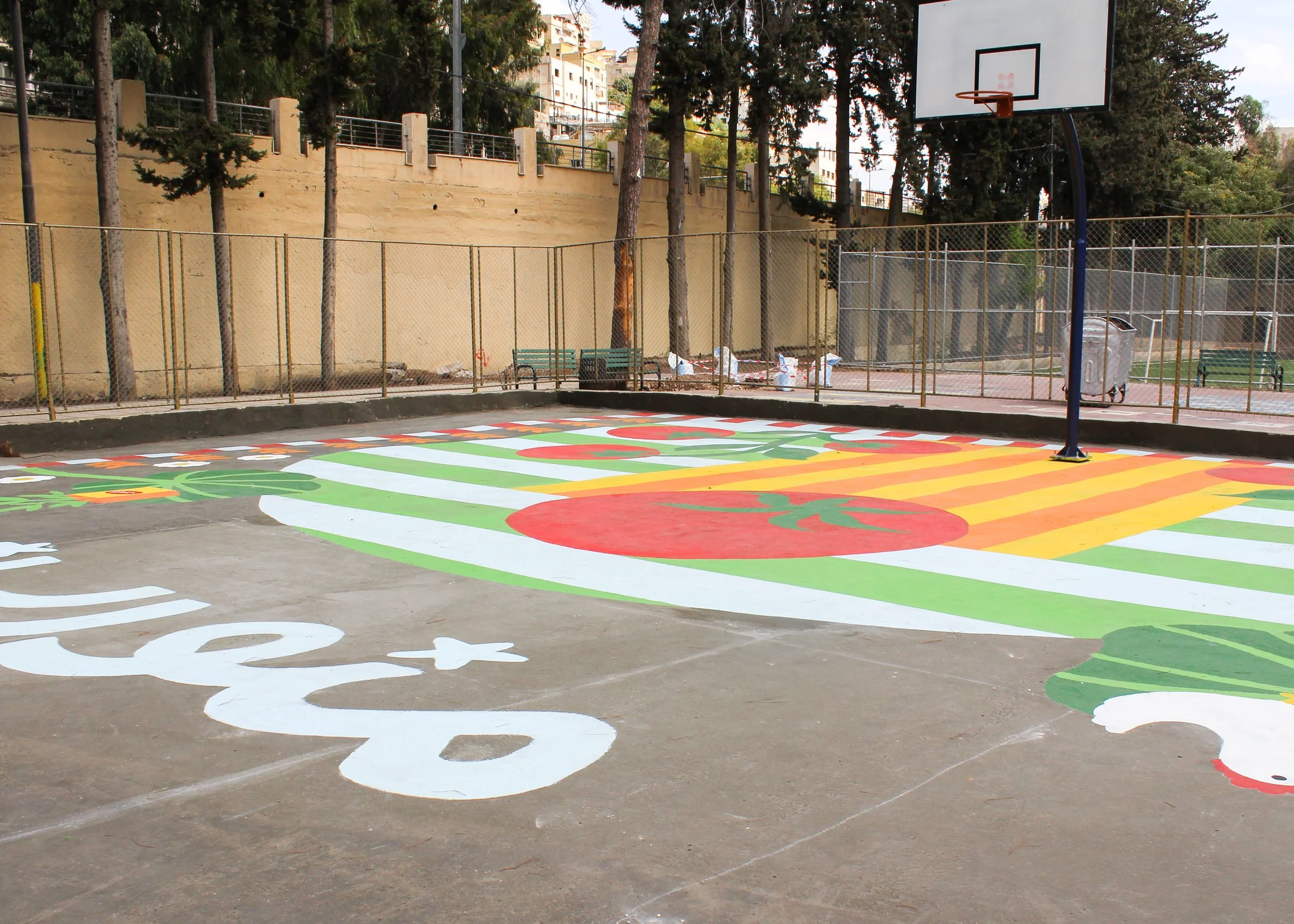
Nawwarat Amman, Abeer Anabtawi
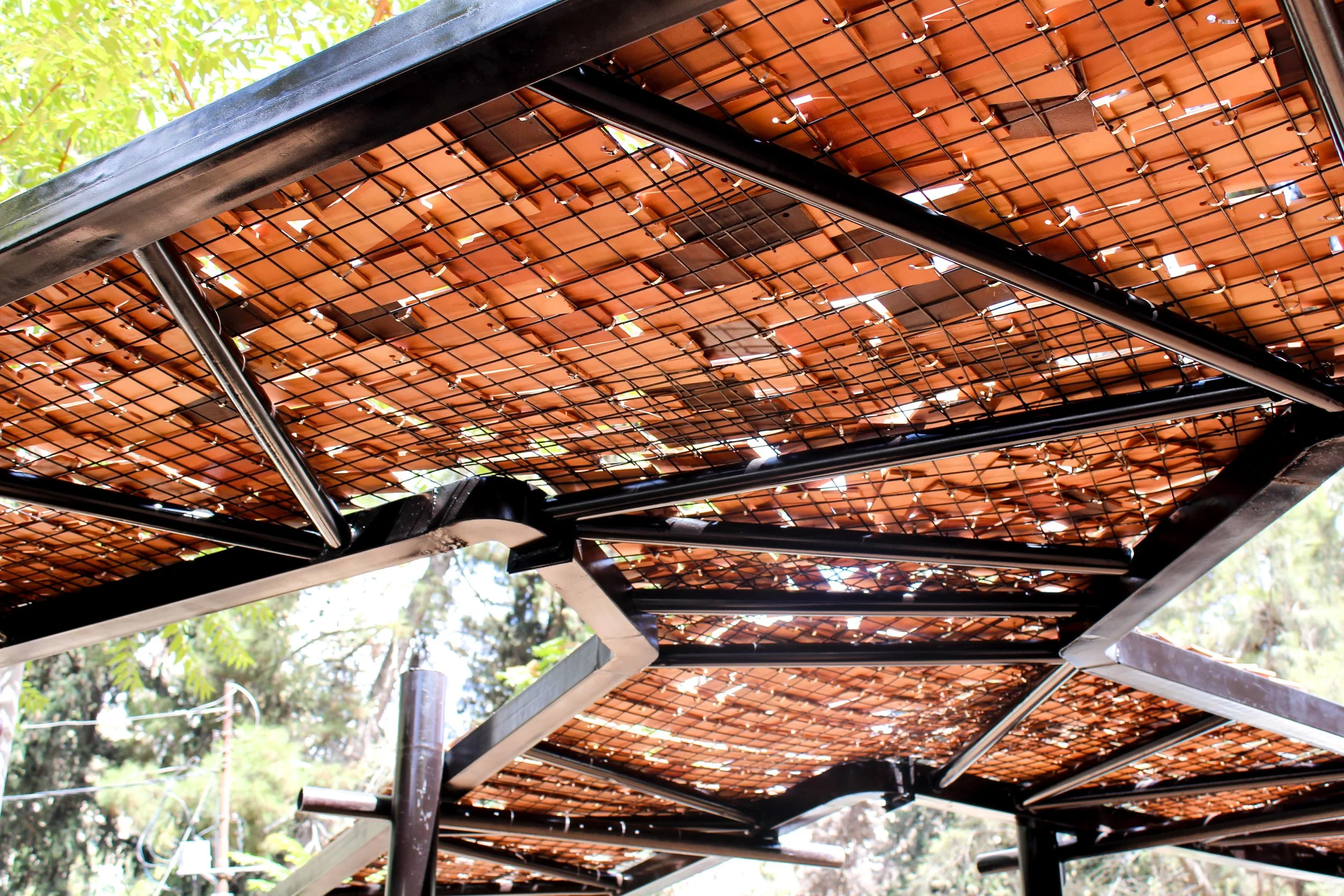
Folly, Civil Architecture
Samar Halloum’s Meet Me by El-Seil, developed with the Iraq Al-Amir Women’s Co-op and the Asayel Bader Association, returns to the stream that once ran through Ras El Ain. The work marks its historic flood levels at the point where the seil began, making a history of the site that is no longer visible present again within the park.
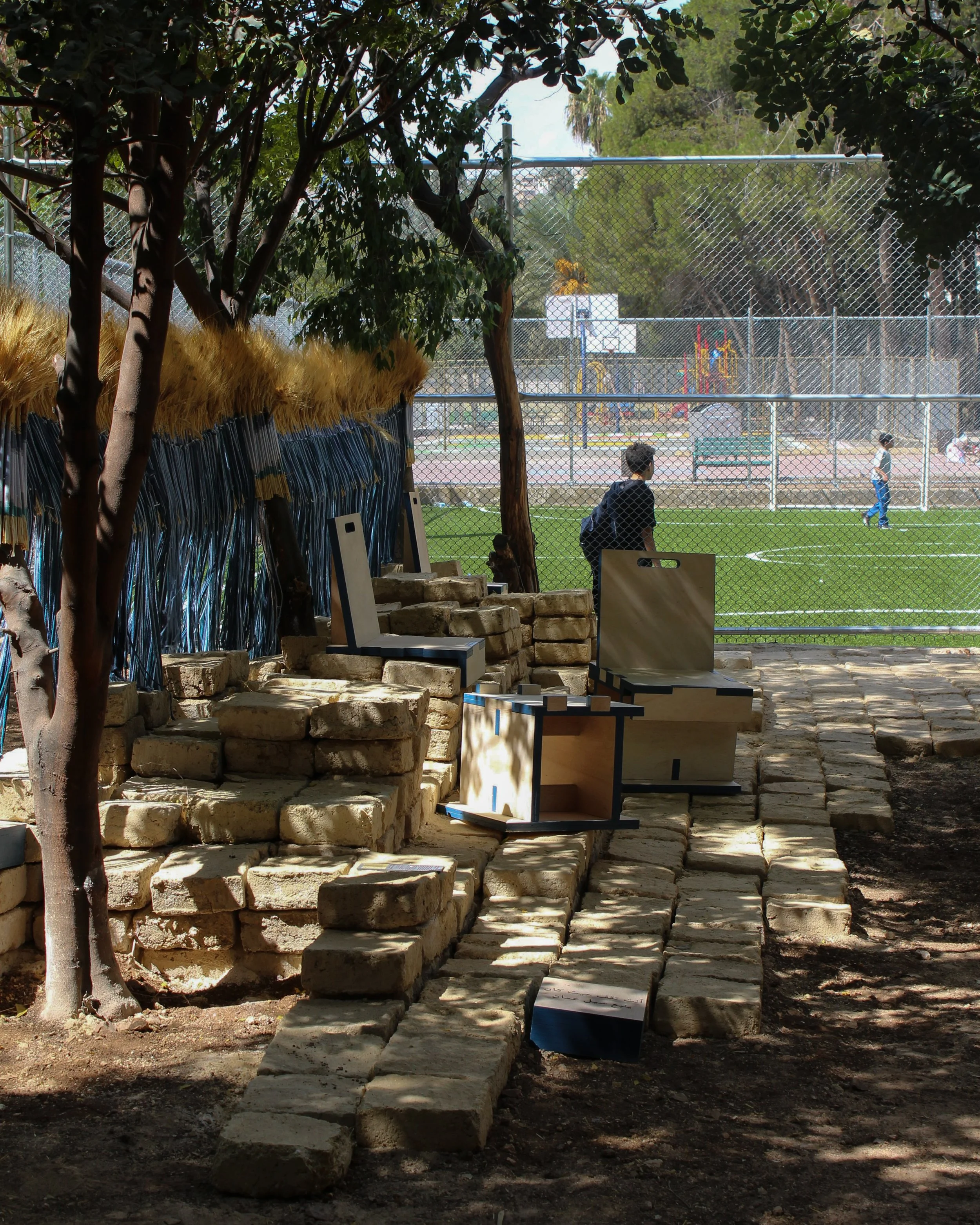
Meet Me by El-Seil, Samar Halloum
Elsewhere in Amman, Ard al-Sahn by Ziad Jamaleddine and Makram el Kadi of L.E.FT, with Iheb Guermazi and Beya Othmani, extends the grounds outside the Shariah Mosque into a stone plaza oriented towards the Qibla. The idea came in part from what already happens there each Friday, when prayer extends beyond the mosque and into the surrounding streets. What was particularly lovely to hear was that people have already begun using the new space in the same way, gathering there for Friday prayer.
Four works created for this edition will remain in the city after the Week ends. There is something especially nice about seeing some of them already settling into the places they were made for, becoming courts to play on, spaces to sit beneath and, in the case of Ard al-Sahn, somewhere to pray.
The Days Ahead
Amman Design Week opens to the public today, October 2nd, and runs until October 17th, with more than 220 designers, makers and collectives taking part. Across Ras El Ain, Jabal Al Lweibdeh, Jabal Amman and Iraq Al Amir, 95 programmes will unfold over the sixteen days, including workshops, talks, tours and performances, all free to attend.
If the press opening is any indication, the programmes will carry the same warmth as the exhibitions. Across the coming days, studios, galleries and cafés throughout the city will join the Week, extending it well beyond the main exhibition spaces and into Amman itself.
There was a real excitement around the edition throughout the morning, and plenty of reason for it. With sixteen days of the Week still ahead, there is a great deal to look forward to.
Words and images by Nayla, in collaboration with Amman Design Week.
