
Inside the Eye of the Storm: A Conversation with Saher
Presented alongside Chronicles From the Storm, Zawyeh Gallery Dubai, 17 January — 18 March, 2026.
On Title, Metaphor, and Psychological Atmosphere
For the artist, Chronicles from the Storm is not merely a poetic gesture but a conceptual anchor. The “storm” functions as both a personal and collective condition - an immersive state of disorientation that shapes perception itself. He describes it as “a precise way to describe this overwhelming and erratic situation,” explaining that “all of a sudden, your life is turned upside down, and the storm has not yet subsided.”
This sense of prolonged instability is not confined to biography; it is embedded into the formal and narrative structure of the work. “I can even sense it in the body of work I have produced,” he reflects, noting “a level of disturbance, both in perspective and in narrative.” The exhibition becomes, in this sense, a spatial and visual translation of cognitive and emotional turbulence.
On Temporal Origins
The exhibition spans an extended and uneven timeline, beginning in mid-2023 and unfolding in response to events that resisted linear processing. The artist describes the works as having been “realized sporadically,” shaped by both “personal and collective experience.”
During the period of the war in Gaza, he recalls a rupture in his rhythm: “It took me a while to return to my rhythm… but I was frequently drawing visual diaries.” These fragmented acts of recording eventually coalesced into a unified presentation. “After awhile I decided to finalize the works and put them all together for a show,” he says, framing the exhibition as an act of gathering rather than a singular conceptual breakthrough.
On the Ethics of Representation
Rather than positioning the work as overt resistance or healing, the artist speaks in terms of limitation and exhaustion. “When you reach a state of moral fatigue, you don’t have much to offer yourself or others,” he admits.
What emerges instead is an aesthetic of testimony: “Whatever I have created is merely witnessed stories, visually reimagined.” The phrasing resists heroism, situating the work within the quieter, more ambiguous territory of observation and reinterpretation.
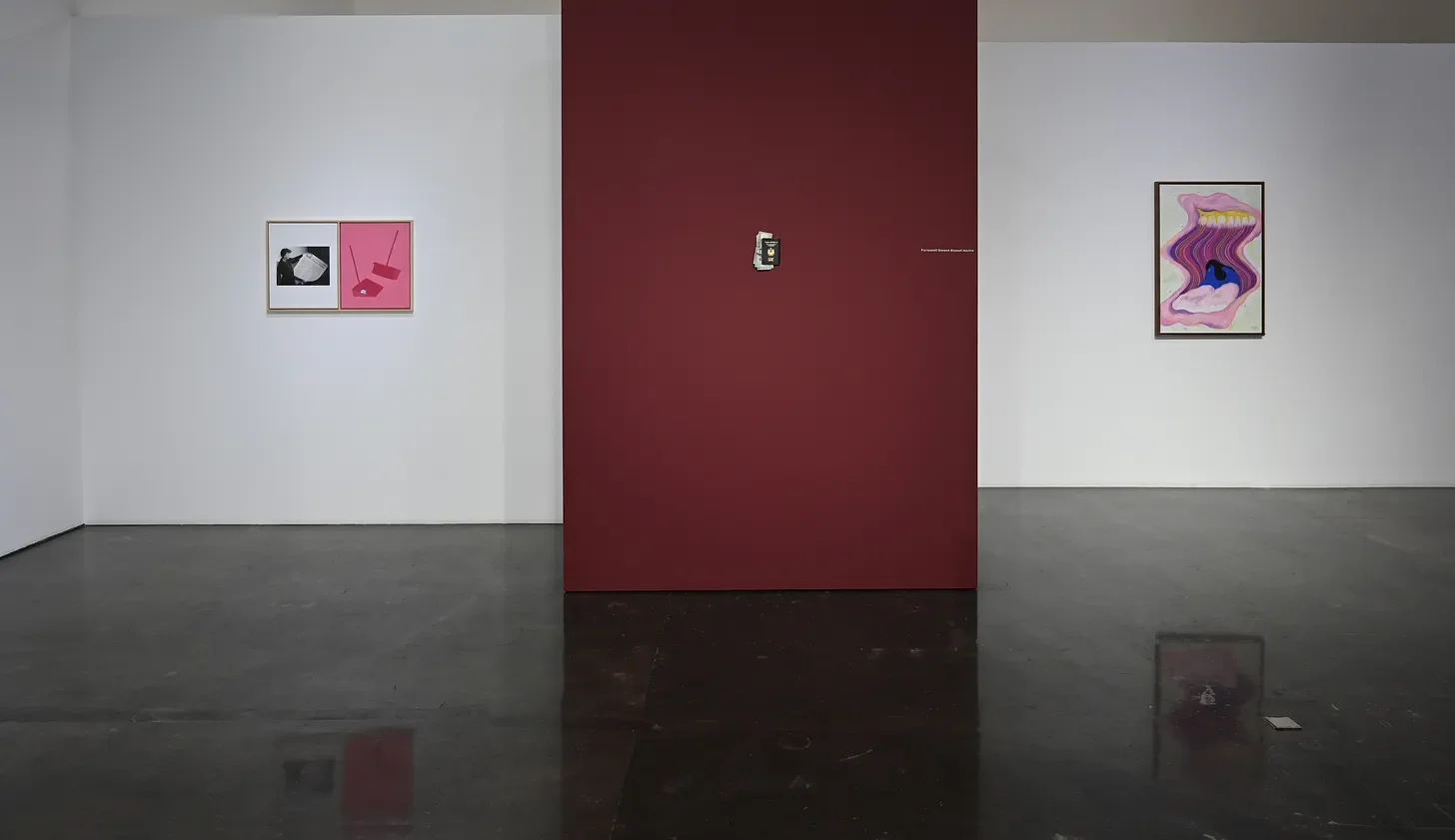
On Choosing Form to Carry Meaning
The artist approaches medium not as a stylistic preference but as a conceptual necessity. “Most of the time a specific idea demands a specific medium,” he explains.
Yet this relationship is not fixed. At times, he deliberately reworks the same concept across formats, using repetition as a form of critique. “I reiterate the same concept through a different medium and make the decision of which would deliver a stronger message,” positioning material choice as part of the work’s rhetorical structure.
On Process and Visual Refinement
The journey from idea to finished work is deliberately slow and uncertain. “It usually takes time to move from a rough sketch to a clear visual,” he says, cautioning against romanticizing inspiration. “However exciting an idea feels, that does not guarantee that it can be well visualized.”
Refinement becomes a form of testing. Only once the concept has proven itself visually does the medium fully reveal itself: “By then I would have figured the medium for my concept.”
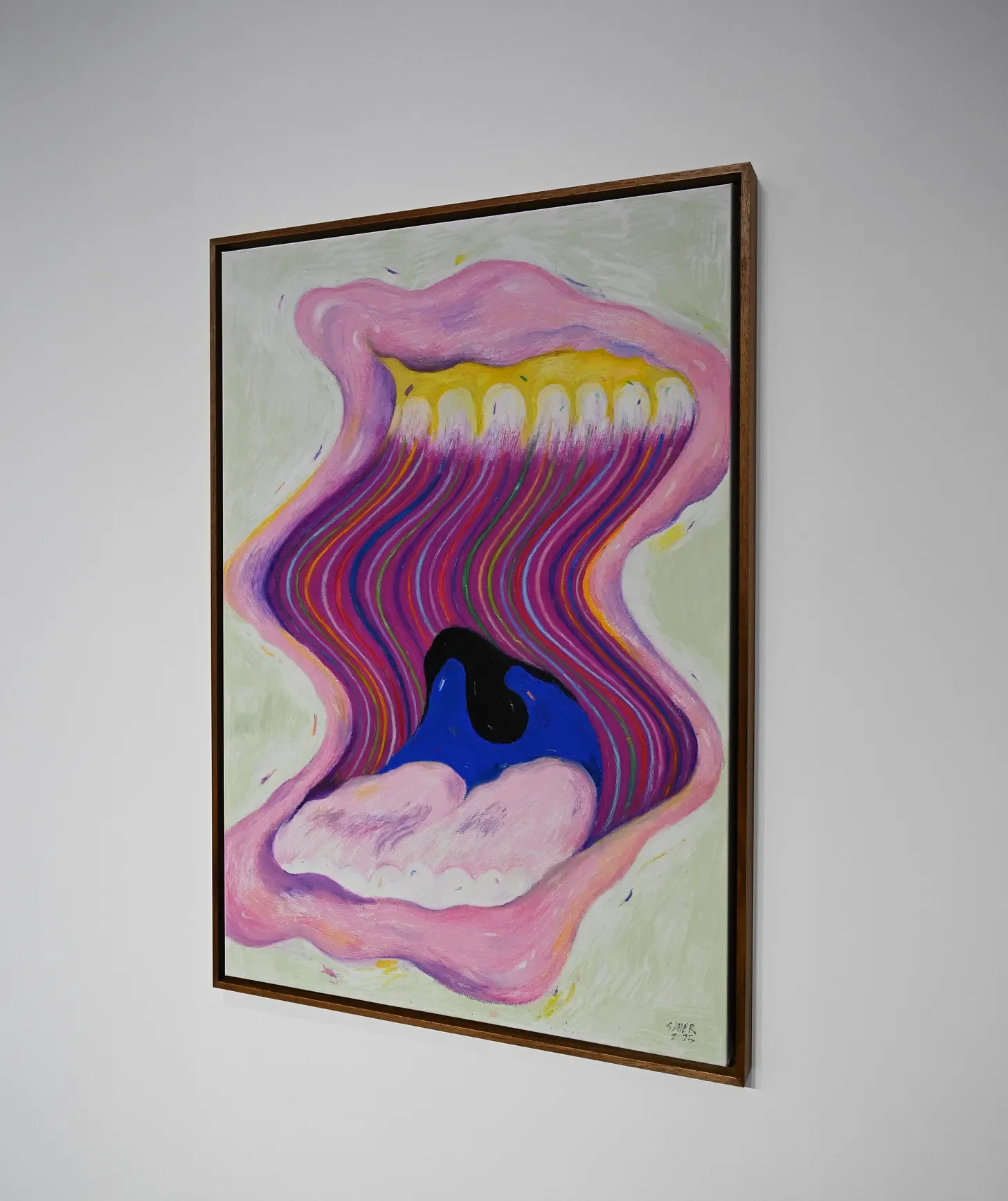
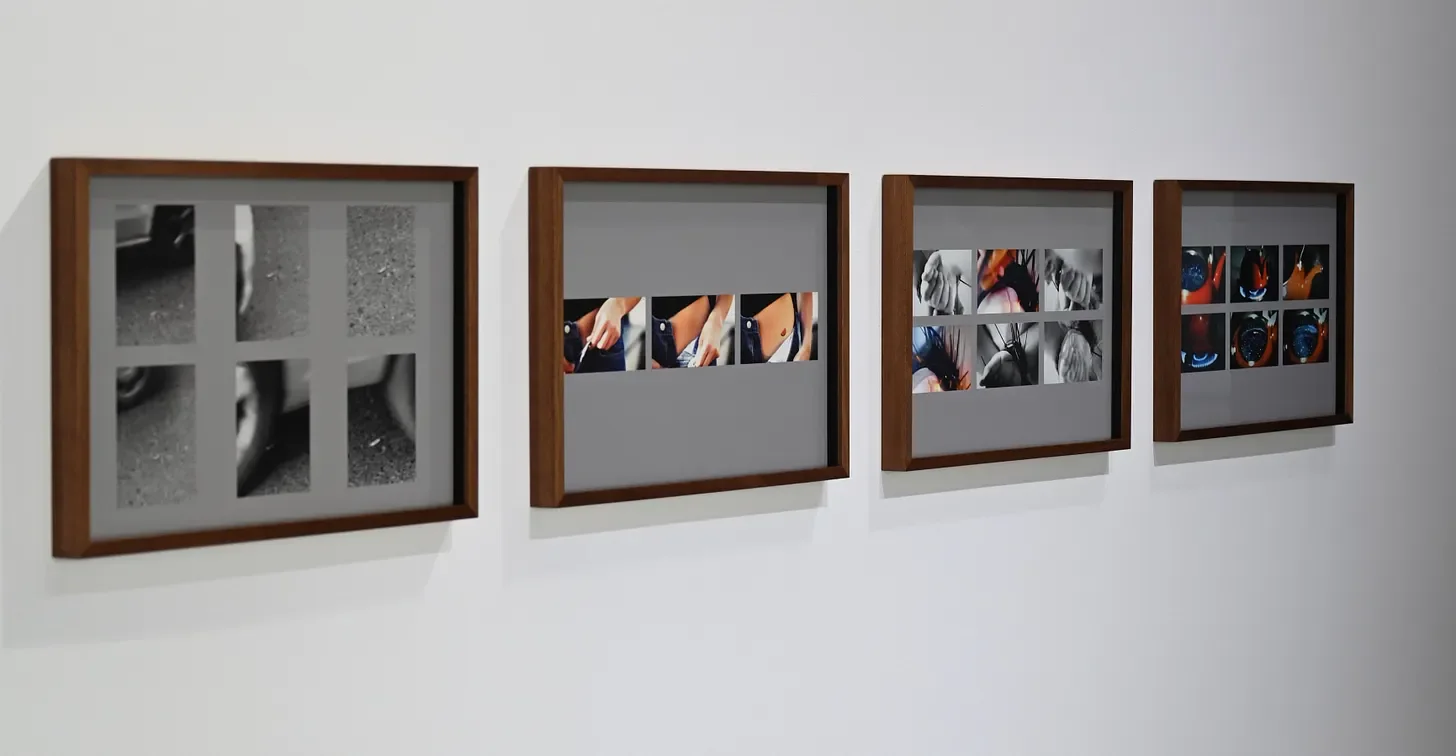
Chronicles NO1, 2025
On Personal Exposure and Creative Boundaries
While technical challenges accompany any project, this exhibition marked a departure in emotional proximity. “I typically avoid dealing intimately with subject matters in my work,” he notes, “but this time the project is deeply personal.”
The shift brought both intensity and vulnerability, situating the work closer to lived experience than to his usual research-based practice.
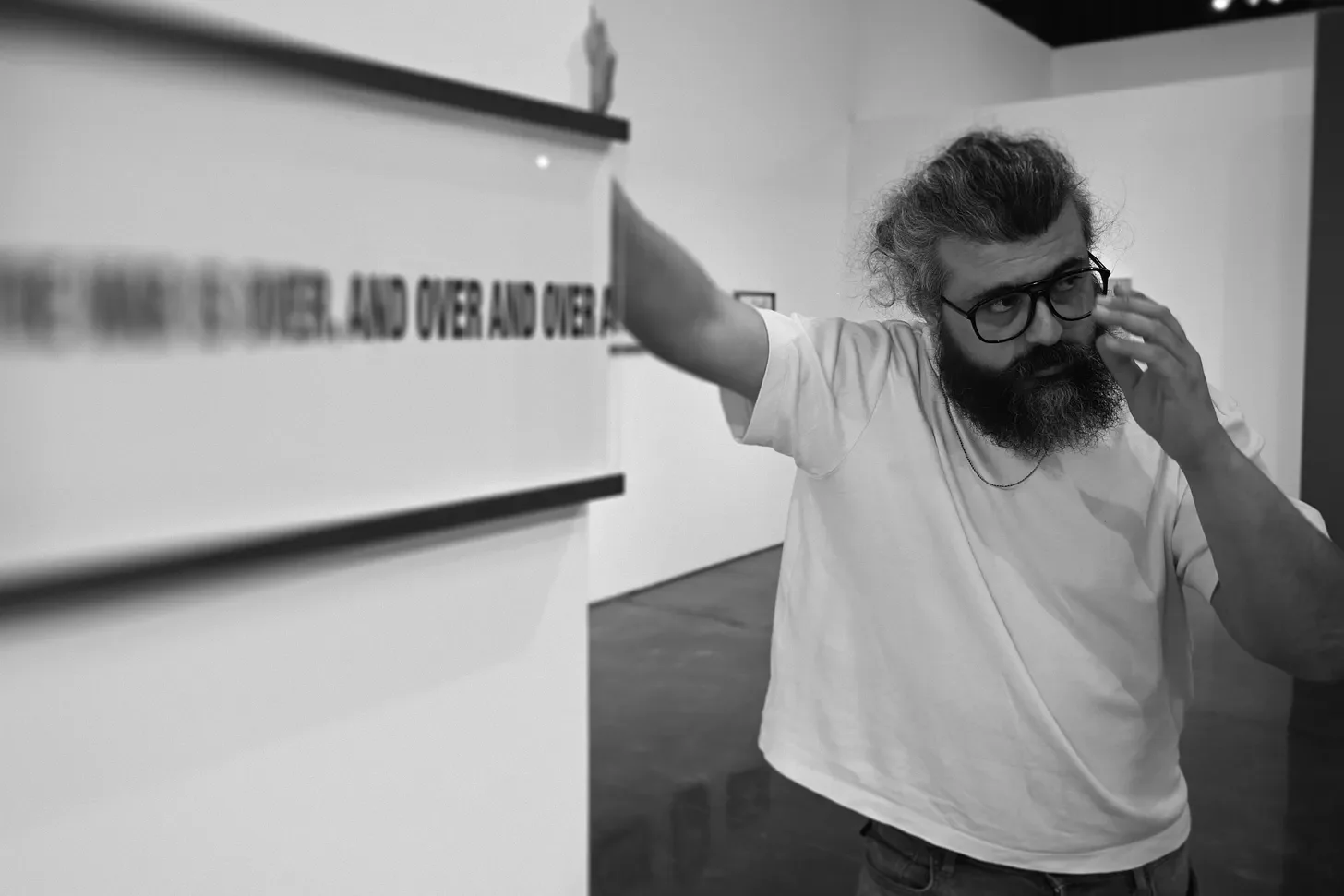
On Identity
As a Palestinian artist, he acknowledges the political and cultural gravity shaping the exhibition, but resists allowing identity to dictate meaning. His earlier work focused on “the origins of violence and cultural imperialism,” concerns that persist beneath the surface of the new pieces.
Yet recent events collapsed the distance he once maintained. “Overwhelming events made such distance impossible,” he says. At the same time, he insists on resisting prescriptive narratives: “I have long resisted nationalist narratives in my work, not as a denial but as a refusal to allow identity to predetermine my role as an artist.”
On Moral Reach and Local Histories
The artist hopes the work operates on an ethical plane that extends beyond geography. “For the most part the work morally merits consideration by anyone who sees it,” he says.
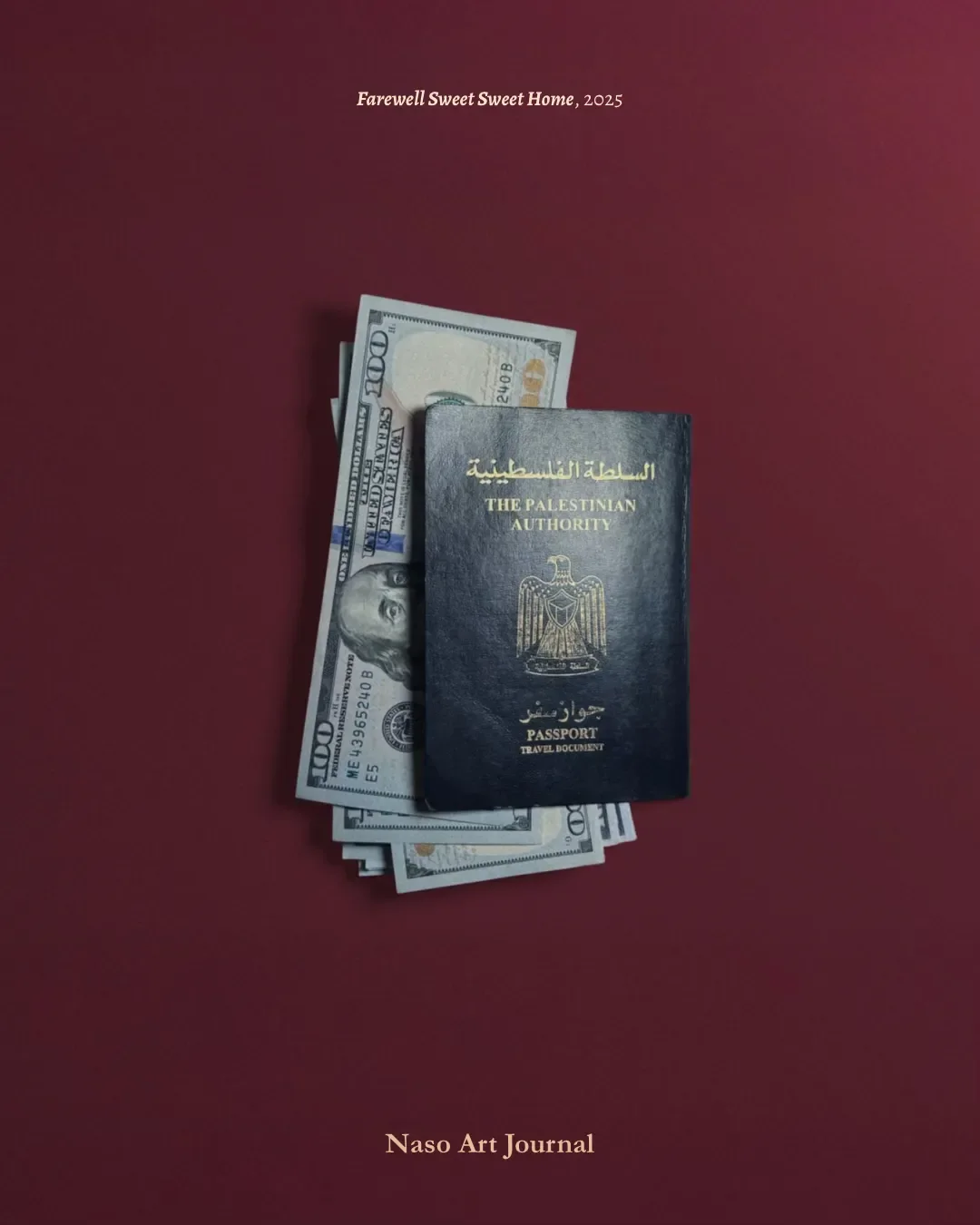
Still, certain pieces are anchored in precise realities. He cites Farewell Sweet Sweet Home as an example, describing how it addresses “people paying huge sums of cash money to profiteers on the other side of the border to escape.” The exhibition oscillates between shared moral inquiry and sharply localized experience.
On the Viewer’s Role
Rather than prescribing meaning, the artist invites multiplicity. “Once a piece of work leaves the studio, you’re no longer responsible for how it’s read,” he says, expressing fascination with unexpected interpretations.
He rejects singular readings outright: “I hate nothing more than single dimensional works, they’re boring.” For him, ambiguity is not a failure of communication but a sign of conceptual depth.
On Working with Zawyeh Gallery
The collaboration with Zawyeh Gallery is framed in terms of shared values. He describes the gallery as “forward thinking,” emphasizing their commitment to “progressive ideas” and sustained support for artists. “I’m very happy to be part of it,” he adds, situating the exhibition within a broader institutional dialogue.
On Transformation
Looking back, the artist speaks of internal rupture as much as creative development. “The work represents the collapse of symbols I once revered and the emergence of others,” he reflects.
The process altered his sense of self: “I believe I’m not the same person today as when I started working on it a couple of years ago.” The exhibition stands as both an archive of images and a record of shifting convictions.
On Future Questions
While the exhibition marks a personal turn, he sees it as an exception rather than a permanent shift. His practice, he explains, is “usually more research based and methodical,” though he admits uncertainty: “Until the storm subsides I’m uncertain where I’ll go next.”
What persists are philosophical inquiries into ethics and behavior. He remains “drawn to questions regarding human behavior… and historical and evolutionary origins of morality,” framing his future work as a continuation of long-standing investigations rather than a departure.
