
Art Basel Paris in the Wake of Protests
Written by Sarah
With Frieze London and Frieze Masters now concluded, the art world turns to Paris, where Art Basel Paris opens at the Grand Palais this week. London’s fairs recorded several high-value sales, including Michaël Borremans’s painting placed for $1.5 million and Jan Brueghel the Elder’s still life, which sold for around £5 million. Museums and foundations were also active, with acquisitions spanning both fairs. The results suggest that, despite continued caution in parts of the market, demand for significant works remains strong.
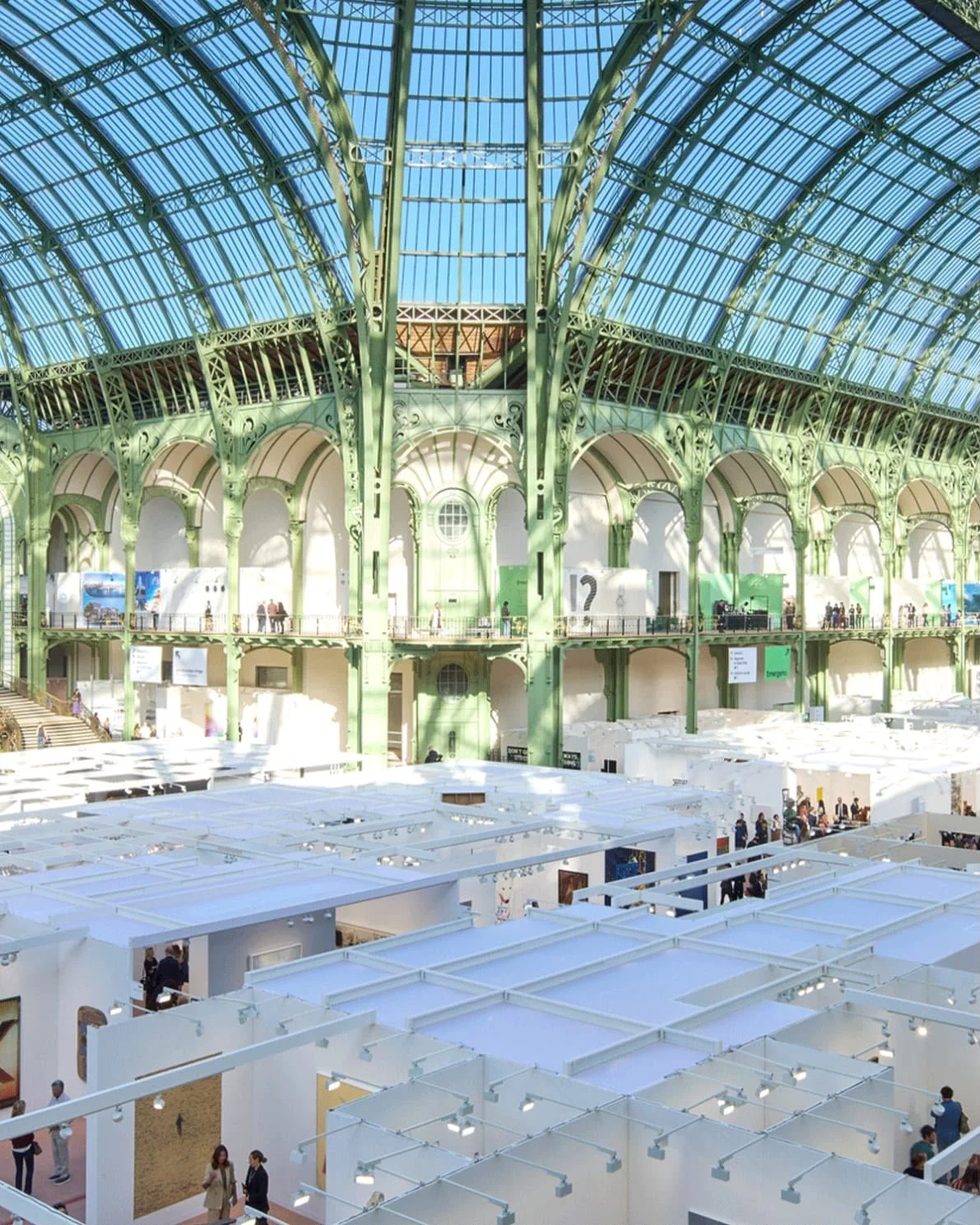
© Art Basel
Paris, however, has increasingly become a focal point for high-value collecting during the autumn art season. Over recent editions, the fair has attracted substantial sales to private collectors and institutions, reinforcing its position within the international calendar. Dealers have often treated Paris as an opportunity to present important works to a concentrated audience of collectors, curators and museum representatives. Although direct comparisons between the total spending at Art Basel Paris and Frieze London are difficult to establish, the perception that Paris has gained ground as a destination for major acquisitions has become increasingly prominent.
This year, the fair takes place against a less predictable backdrop. Ongoing protests in Paris, including student demonstrations, raise questions about whether the social climate could affect attendance, travel or collector confidence. There is not yet enough evidence to suggest that the protests will alter purchasing decisions, and the fair’s international audience and extensive programme of exhibitions across the city may sustain activity. Nevertheless, the timing introduces an uncertainty into a market event that depends on the movement of collectors, institutional representatives and galleries from around the world.
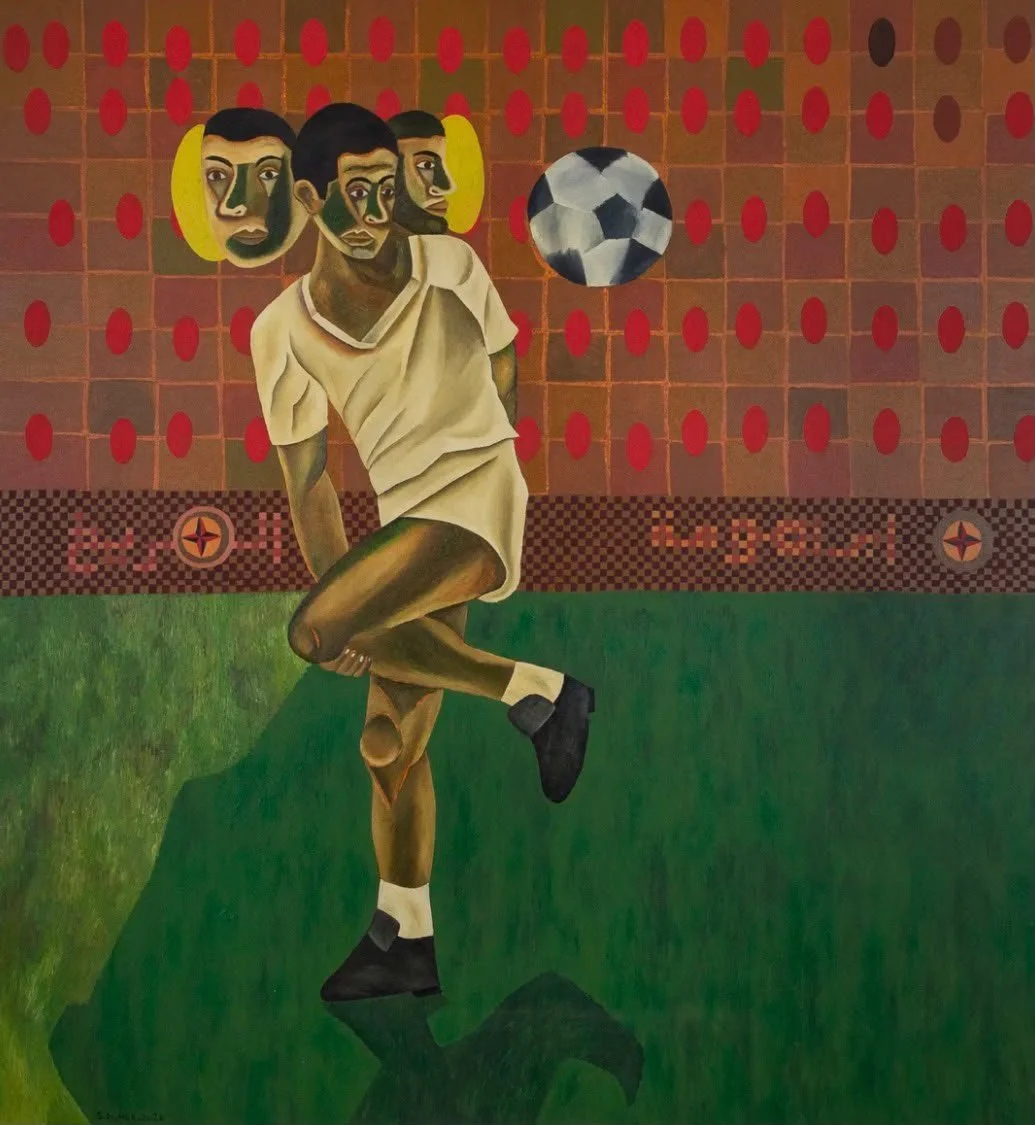
Salah Elmur
Abrahuma Almerrikh, 2026
Courtesy of the artist and Mariane Ibrahim
Returning to Art Basel Paris, Tunis- and London-based Selma Feriani Gallery presents a selection of paintings, photography, sculpture and mixed media. The presentation brings together Nadia Nejma Ayari, Elena Damiani, Baya, M’barek Bouhchichi, Jellel Gasteli, Monia Ben Hamouda, Jessica Boubetra, Sara Ouhaddou, Aymen Mbarki, Nidhal Chamekh, Sebastián Espejo and Yann Lacroix. Their work moves across different generations, geographies and material approaches, from questions of memory and cultural transmission to the relationships between identity and form. Rather than proposing a singular account of the region, the selection places distinct practices in dialogue, reflecting the breadth of the gallery’s programme and its engagement with artists from North Africa and beyond.
Chicago-, Paris- and Mexico City-based Mariane Ibrahim returns to the Grand Palais with a group presentation in the fair’s Galeries sector. Among the artists represented is Sudanese painter Salah Elmur, whose new works precede his forthcoming survey, Just as the Heart of a Mango Is a Stone, at Jameel Arts Centre in Dubai, opening on 1 November 2026. Curated by Zain Al Saie and Qutouf Elobaid, the exhibition will coincide with the publication of Salah Elmur: Ten Seasons, a monograph from Skira. The Paris presentation presents at a point when Elmur’s work is also receiving sustained institutional and editorial attention, connecting the fair with a wider programme around the artist’s practice.
In the Premise sector, Tunis-based Le Violon Bleu presents four rarely exhibited works by Moroccan artist Farid Belkahia (1934–2014), from 1962 to 1994. The selection traces a significant transition in his practice, from the figurative and political formalism associated with his training in Prague to an approach shaped by tactile materials and Moroccan visual traditions. His use of leather, pigments and other materials became central to a visual language that challenged the assumption that modernism must be understood primarily through European artistic developments. By bringing together works from different periods, the presentation offers a focused view of an artist whose contribution to Moroccan modern art extended beyond the adoption of international styles.
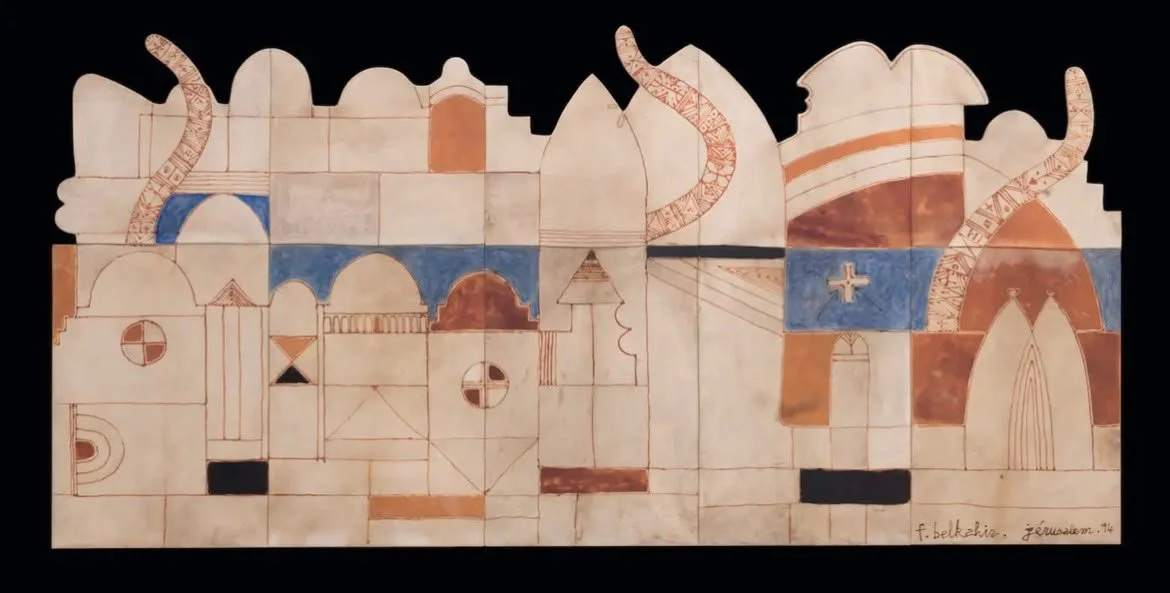
Farid Belkahia
Jerusalem 1994
Courtesy of Fondation Farid Belkahia
Goodman Gallery, with locations in Johannesburg, Cape Town, London and New York, presents Zineb Sedira through Art Basel Paris’s Oh La La! initiative, which invites a rehang of works shown by participating galleries. Born in Paris to Algerian parents and based in London, Sedira works across photography, film and installation, often drawing on archives, migration and the movement of people and ideas across borders. Her practice connects personal and family histories with wider questions of colonialism, displacement and cultural memory.
The protests add an uncertainty to this year’s edition, but their effect on the market remains unclear. The more immediate question is how the fair’s participating galleries and collectors navigate a moment in which commercial activity continues alongside wider social tensions.
Words copyright of Naso Art Journal
