
Written by Sarah
The Art Basel and UBS Survey of Global Collecting 2026 found that Gen Z collectors, aged 20 to 29, spent an average of $347,460 on fine art in 2025, more than twice the amount reported for any other generation surveyed. The report also points to changes in how younger collectors approach art, with 80 per cent conducting their own research before purchasing and 40 per cent identifying family influence as their entry point into collecting. These findings suggest a generation entering the art market with considerable purchasing power and increasingly independent ways of discovering artists.
But what does this look like in Southwest Asia and North Africa (SWANA)? The survey covered 3,100 high-net-worth individuals across ten major art-market economies: the United States, United Kingdom, Mainland China, Hong Kong, France, Australia, Germany, Japan, Brazil and Singapore. No countries from SWANA were included, leaving the spending habits and collecting practices of younger people in the region largely outside the report.
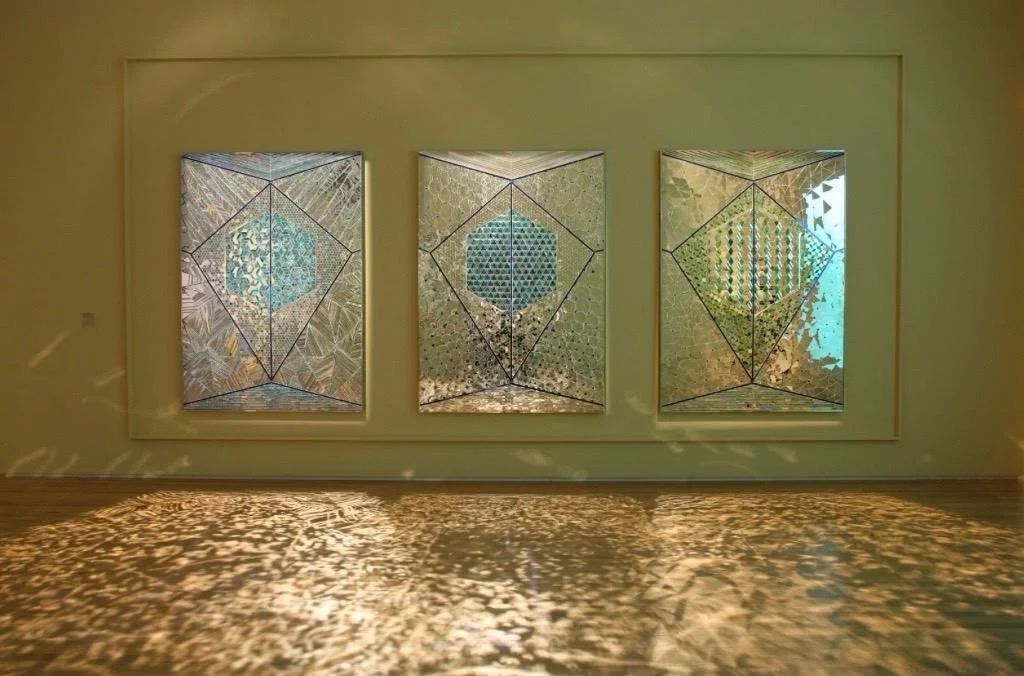
Monir Shahroudy Farmanfarmaian (1922–2019)
Variations on the Hexagon, 2006
© Christie’s
Across SWANA, the conditions for building a collection vary considerably. In Lebanon, private initiatives such as the Dalloul Collection and the Arab Image Foundation have played important roles in preserving and documenting modern and contemporary Arab art. In Jordan, the Khalid Shoman Collection and Darat al Funun have supported artists and artistic production through private patronage. In the Gulf, collecting has developed alongside substantial public investment in museums, cultural institutions and international art infrastructure. In Qatar and Saudi Arabia, institutional acquisitions have been particularly influential, with government-backed cultural projects playing a major role in shaping the market.
The pace of development in the Gulf has become increasingly visible. Art Basel opened its first Qatar edition in Doha in February 2026, while Sotheby’s has expanded its auction activity in Riyadh. In Abu Dhabi, Frieze is preparing to hold its inaugural edition from 19 to 22 November. Christie’s also marked a significant moment on 1 November with its first dedicated fine-art auction in Abu Dhabi. Titled MAWASIM: 20 Years of Modern and Contemporary Middle Eastern Art, the sale realised $8.94 million across 69 lots, with 60 works sold and nine artist records set. Monir Shahroudy Farmanfarmaian’s Variations on the Hexagon (2006) achieved the highest price at $844,800.
The auction also provided an indication of who is beginning to enter the market. Christie’s reported that more than 30 per cent of registrants were Millennials or Gen Z, while 37 per cent were new to the auction house. Works from the Dalloul Collection in Beirut and Sharjah’s Barjeel Art Foundation were among those offered. Although the identities of individual buyers have not been disclosed, the figures suggest growing interest among younger audiences. Being new to an auction house does not necessarily mean being new to collecting, but it is an encouraging sign for the market.
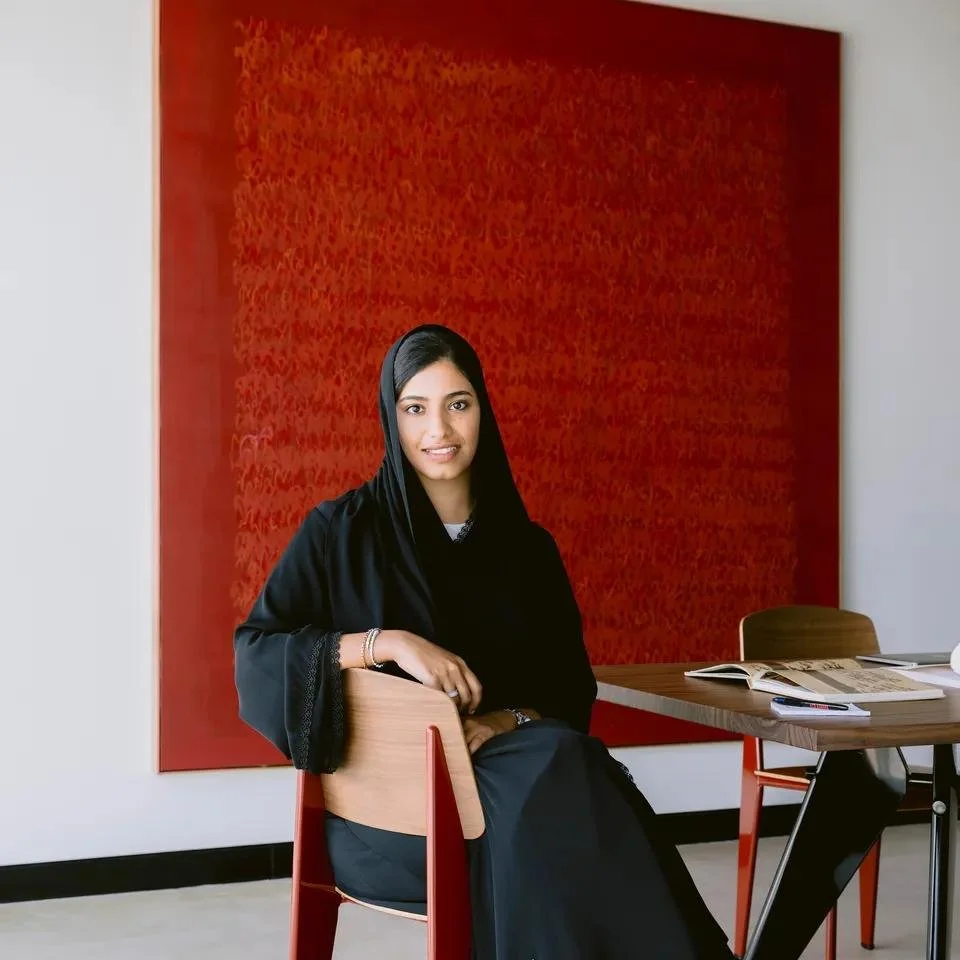
Maryam Al Falasi, Iris Projects
© Kristina Sergeeva of Seeing Things
Beyond these major developments, there are younger collectors building collections around their own interests in regional art. Abu Dhabi-based Maryam Al Falasi, 26, began collecting at 16 and has since developed a collection focused on Emirati and Gulf artists, including Mohammed Ahmed Ibrahim and Saudi artist Fahad Hajailan. In 2024, she founded Iris Projects, a gallery and arts agency supporting artists from the region through representation and mentorship. Her work brings together collecting and the development of opportunities for emerging artists.
Dubai-based Nour Moufarrej, 27, offers another perspective. Her first artwork was a painting by Paul Guiragossian inherited from her grandfather. She subsequently began acquiring works independently, including pieces by Lebanese artist Suzi Fadel Nassif and Indian artist Keerthana S Kumar. Her collection reflects the role that family histories can play in introducing younger generations to art, alongside the personal research and discovery that shape their subsequent acquisitions.
The conditions for collecting also differ considerably between countries in the region. In Egypt, collector Rasheed Kamel has described growing interest in contemporary and regional artists, with buyers increasingly renewing their collections. Gallerists at Art Cairo, however, have pointed to the continued preference among some collectors for established names and more traditional forms of painting. In Sulaymaniyah, Iraqi Kurdish collector Shad Abdulkarim established Miraz Art Space to encourage local collecting and create a stronger environment for artists. These initiatives highlight the importance of local galleries, exhibition spaces and opportunities to encounter art outside established institutional networks.
The Art Basel and UBS figures raise an interesting question about the relationship between wealth and collecting. In SWANA, the development of a younger collecting generation is tied to a different set of circumstances: the availability of galleries, the presence of independent art spaces, the strength of local markets and the relationships between artists and potential buyers. The growth of international fairs and auction houses has brought more attention to the region, but the longer-term question is whether this attention will translate into more people building collections of their own. Maryam Al Falasi and Nour Moufarrej are two examples of young women already doing so. Their approaches, alongside the initiatives emerging across the region, make it worth looking more closely at who will shape the next generation of SWANA collecting.
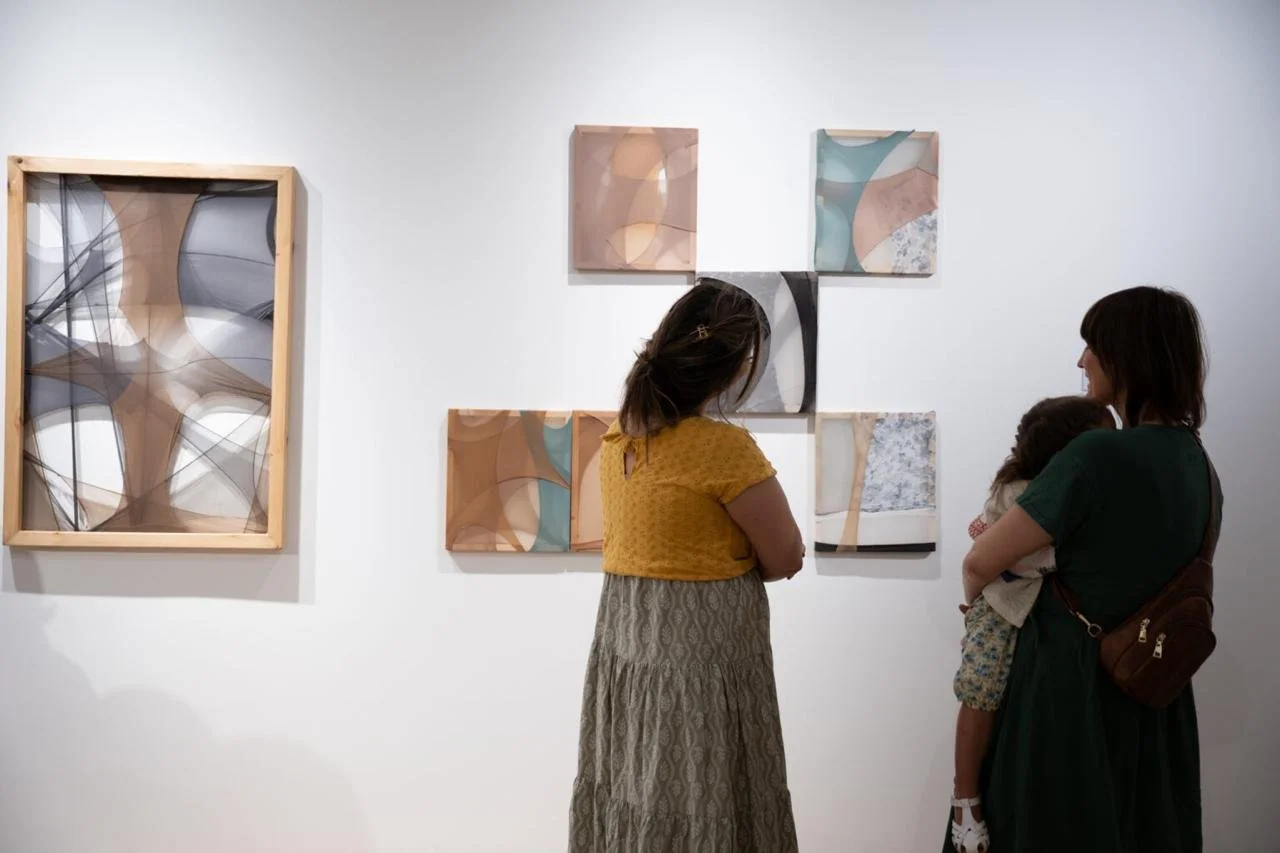
When/Where exhibition by Avan Sdiq at Miraz Art
© Caravel
References
1. Art Basel and UBS, “The Art Basel and UBS Survey of Global Collecting 2026”
3. Artsy, “10 Up-and-Coming U.A.E. Collectors on Why They Buy Art”
4. AD Middle East, “Meet Maryam Al Falasi, the Young Emirati Gallerist on the Rise”
5. SceneNow, “Whispers from Inside Egypt’s Art Buying Ecosystem”
6. The Art Newspaper, “As Iraq’s Economy Shows Signs of Recovery, a Thirst for New Art Is Emerging”
Words copyright of Naso Art Journal and the writer
