
Art Basel Doha 2026
A Fair That Felt Like a Biennale and Why That Matters
At its inaugural edition, Art Basel Doha did not fully perform as a market. It performed as a condition.
Rather than reproducing the accelerated tempo typical of global fairs, the event adopted a slower grammar of attention, one grounded in focus, duration, and interpretation. The most telling structural decision was the adoption of the one-artist-per-booth format. This was not merely an aesthetic preference but a curatorial argument: that before one evaluates an artwork, one must encounter the artist as a thinker.
By isolating practices rather than clustering them, the fair created conditions in which visitors could spend time with a single artistic position: its concerns, references, doubts, and continuities. A booth became less a display unit and more a conversation space. The viewer did not browse works; they learned a practice. The artist, consequently, emerged not as a producer of objects but as a subject of inquiry.
This approach quietly reintroduced a dimension often compressed by the fair format: the human presence behind production. As Sheikha Al Mayassa bint Hamad bin Khalifa Al Thani remarked during the opening, “this is a human art fair.” The fair was organized so that recognition preceded valuation - the artist encountered before the artwork was priced.
In this sense, the prominence of regional artists was not framed as representation but as proximity. Focus allowed complexity to appear. Instead of competing for visibility within crowded inventories, artists were given the temporal and spatial conditions necessary to articulate a position.
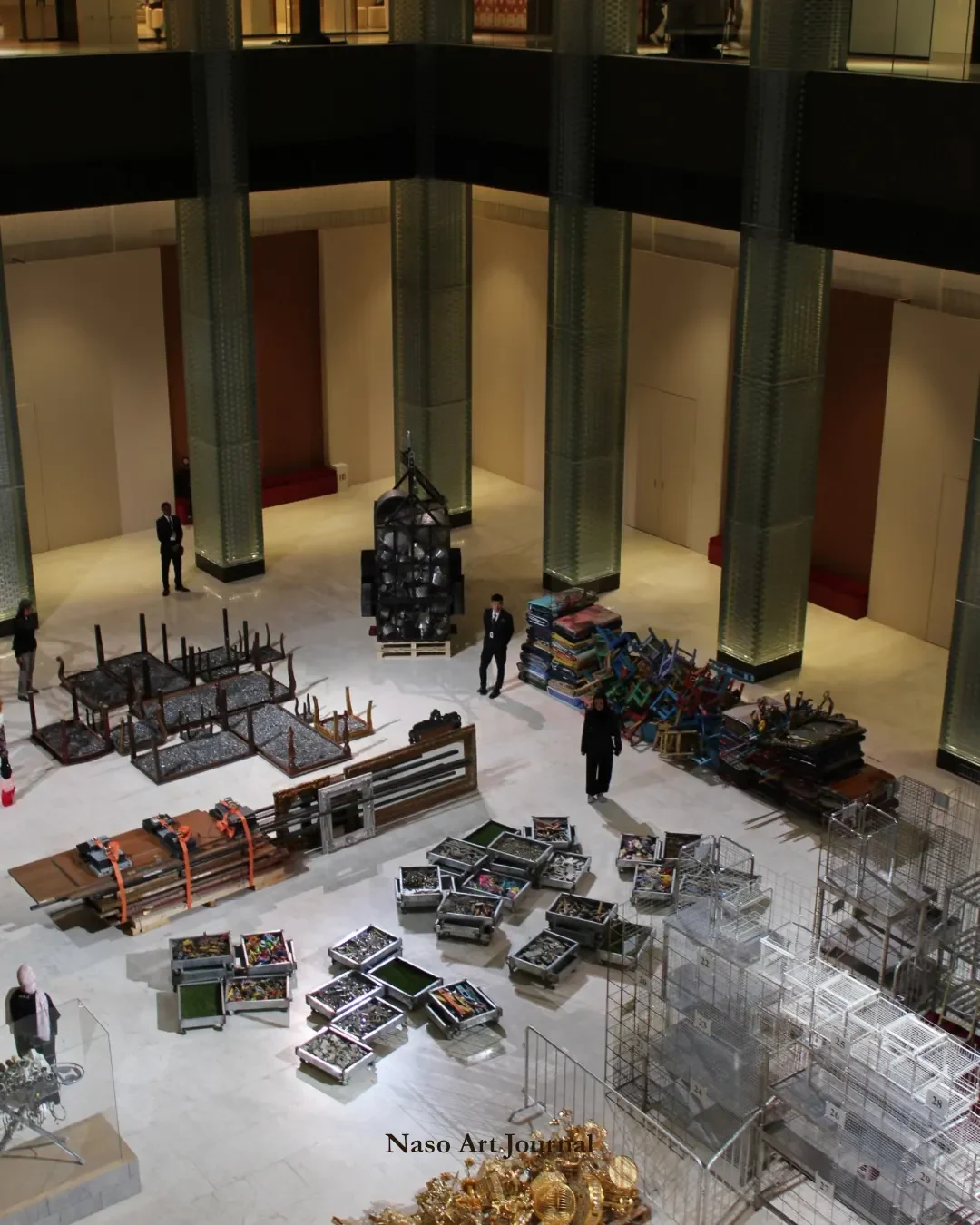
The Biennale Logic Inside the Commercial Format
From the first walkthrough, the spatial rhythm resisted the velocity typical of blue-chip fairs. Instead of a transactional choreography: booth, label, inquiry, reserve - the visitor encountered a pacing closer to exhibition-making. Installations demanded duration.
Even the physical posture of the gallerist shifted. The familiar fair furniture, the desk, the chair, the negotiation point, was largely absent. Without a seated position of waiting authority, dealers occupied the space differently: moving, accompanying, explaining. The architecture subtly displaced the expectation of immediate transaction and replaced it with presence. Gallerists, like visitors, had to stand with the work rather than behind it.
In other words: attention was requested before acquisition. The fair understood that value precedes price.
Rebalancing Authority: Power Given to Regional Artists
More than half of the booths presented artists from the region, a proportion that operated as a structural reorientation of attention. By allowing regional practices to constitute the majority, the fair shifted them from contextual presence to interpretive framework: they became the vantage point through which other works were read. This matters locally because it anchors artistic discourse in lived histories rather than imported narratives; it matters globally because it resists the persistent geography of validation in which recognition travels only one direction. Crucially, this was not an insular gesture. Western artists appeared in dialogue rather than contrast, their works operating relationally rather than hierarchically. The result was a conversation rather than a comparison, and its success lay in making proximity, not difference, the organizing principle of the fair.
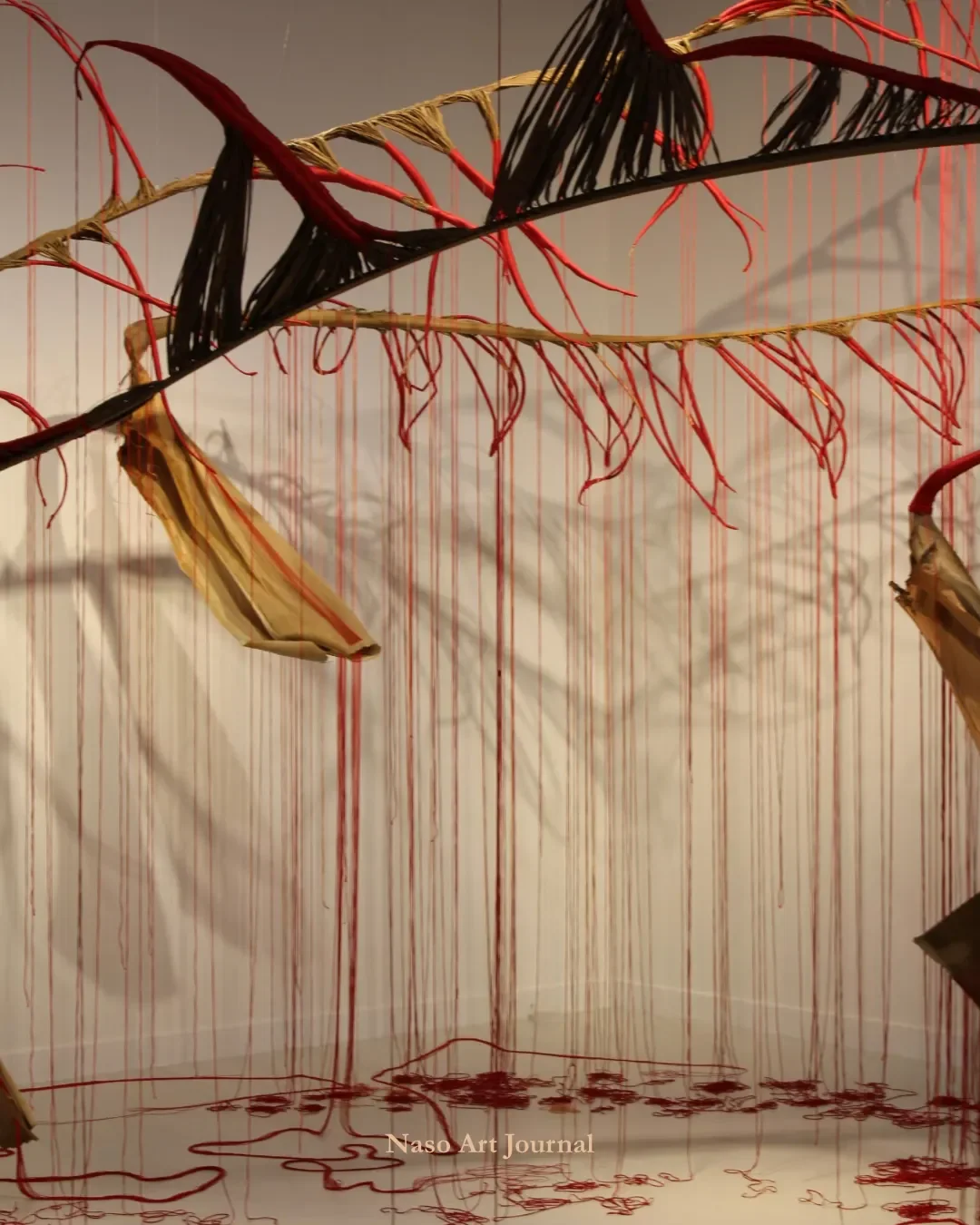
Faisal Samra, Immortal Moment III (Post Shock Creatures 02)
Why this model works
Had the fair pursued immediate commercial intensity, it might have felt structurally familiar but intellectually thin. Instead, by embracing a hybrid identity (part fair, part exhibition) it aligned with the tempo of cultural formation rather than overriding it.
Art Basel Doha did not dilute the fair model; it translated it. Sales may follow, but comprehension leads them.
The Market That is Still Learning Itself
The Gulf’s collector ecosystem remains in formation and in active development. Institutional engagement is strong, while private acquisition cultures are evolving toward research-based collecting. Art Basel Doha staged this evolution openly.
The visitor was not expected to already possess interpretive fluency; the fair provided the tools to build it. Markets, after all, are cultural habits before they are economic systems.
Nowhere was this clearer than in the talks program, which functioned less as supplementary content and more as a parallel architecture.
In mature markets, talks orbit the fair. In Doha, they completed it. The discussions addressed historiography, translation, pedagogy, and artistic research methodologies. The accessory became the foundation.
A Beginning Rather Than an Arrival
Many inaugural fairs attempt to demonstrate readiness. This one embraced orientation. Through focused presentations, distributed authority, and a discursive core, it proposed a long-term horizon: the formation of a reflective market rather than a reactive one.
If the conventional fair celebrates accumulation, this one cultivated understanding.
For an inaugural edition, that was not restraint. It was precision.
Written by Soraya. Text and images copyright of Naso Art Journal.
Full article is in print in Issue 3.
