
Reflections on Interludes and Transitions
At the Diriyah Contemporary Art Biennale 2026
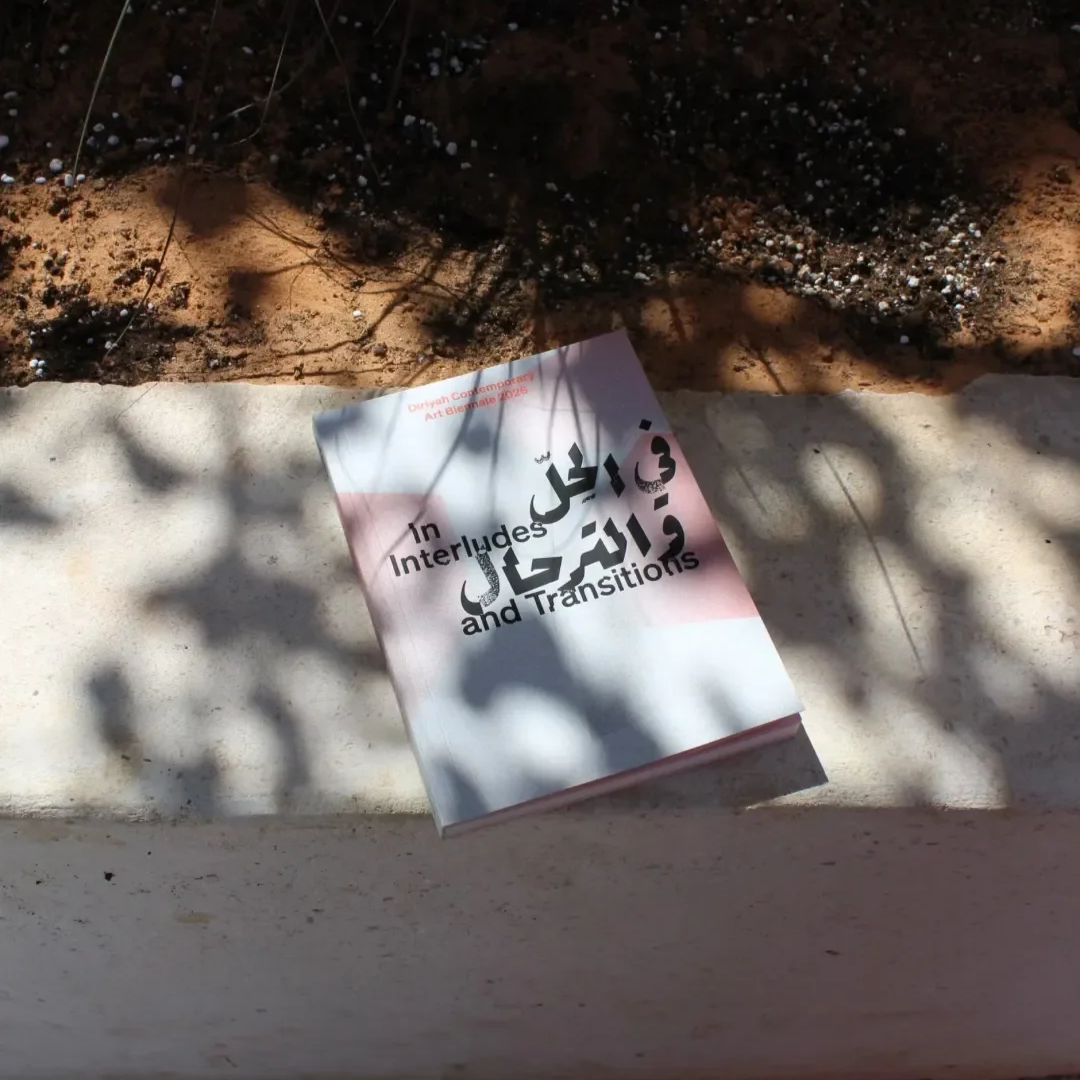
As the Diriyah Contemporary Art Biennale opens to the public today, Naso Art Journal reflects on the exhibition as a moment structured around movement and presence. Throughout the opening, the language of procession emerged as a central conceptual thread: the biennale was described not as something that unfolds in a straight line, nor as an experience that reveals itself all at once, but as a series of passages, rhythms, and temporal layers.
Procession, as articulated by the curatorial team, was framed less as metaphor than as a way of understanding how the present is constituted. “These are the processions we’re talking about,” artistic director Sabih Ahmed noted, referring to movements that range from planetary systems to biological cycles and global supply chains; “the processions that are above us in the sky, the processions that are passing through our digestive tracts every day… and the kinds of movements that we are part of.” The emphasis was not on observing these movements from a distance, but on recognising that “we are implicated in these as much as we are immersed in them.”
Within this framework, In Interludes and Transitions approaches movement as a cultural and historical process: a way in which memory circulates, knowledge is transmitted, and histories remain in motion. Artistic director Nora Razian reflected, what persists across these movements are “connections… that get cut through time, from place to place, from body to body, and they may appear as tradition, as ritual, as song, as poem, and as story.” Rather than leaving the past behind, these sediments “seep into the present, they seep through us, they creep into things around us.”
At the same time, this emphasis on procession situates the exhibition within a heightened awareness of historical time. Repeated reference was made to crossing the threshold of the first quarter of the twenty-first century; a moment framed as a condition to reflect upon. Razian asked directly, “what does it mean to create the ‘United Now’ as we cross the threshold of the first quarter of the 21st century?”, positioning the present as a dense temporal field shaped by inherited structures and ongoing transformations.
Courtesy of Alzueta Gallery, Madrid
This temporal density was further articulated through the language of the sonic and the echo. “The past is not the past,” Ahmed remarked. “The past is erupting into the present. The future is seeping into the present. The present therefore has a very wide jurisdiction of echoes.” Time, in this sense, is not linear but reverberant; composed of overlapping durations that coexist and interfere with one another. To experience the present is to be “in the presence of our own chorus of echoes,” inhabiting multiple temporal positions at once.
It is within this conceptual terrain that In Interludes and Transitions unfolds, as an ongoing condition of becoming. The exhibition invites attention to “processions that are not only shaping the world, but of which we are part,” reminding us that “we are implicated in the historical convulsions of our time, in step with the inhales and exhales of trillions of life forms.”
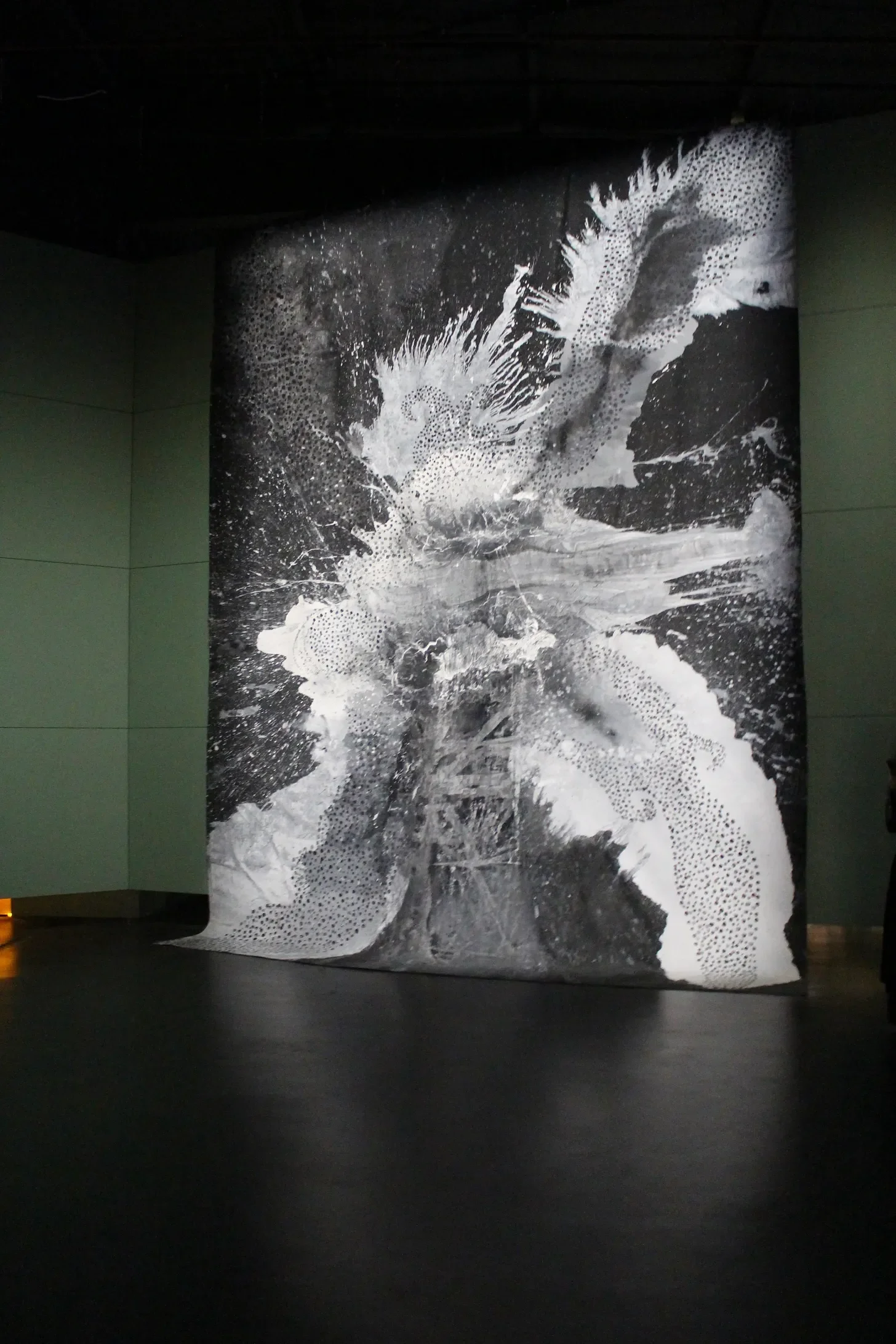
This sense of implication, of being embedded within movement rather than observing it, is articulated in Faisal Samra’s Immortal Moment III (Post Shock Creatures 02), where the artist reflects on his own life within cosmic time. Gestures first recorded on video are translated onto the canvas, situating the human figure within a temporal scale that exceeds it.
Faisal Samra, Immortal Moment III (Post Shock Creatures 02)
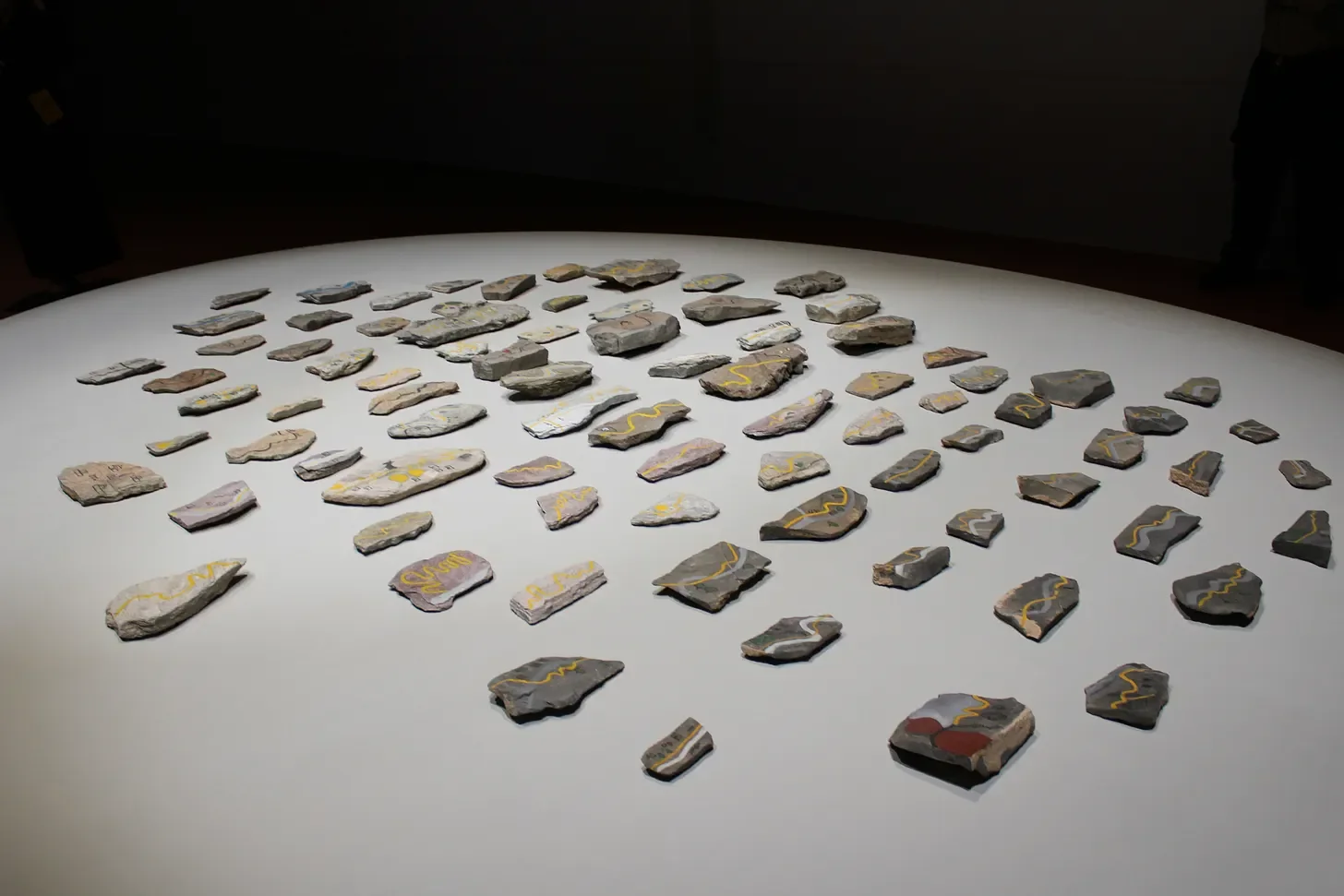
Abdullah Al Saadi’s The Slipper’s Journey moves at a different pace. The work is made up of stones collected during the artist’s walks through mountainous landscapes, each one marked and annotated over time. What appears at first as a collection of objects gradually reads as a record of lived movement; of walking, pausing, noticing, carrying. Movement here feels slow, cumulative, and intimate, shaped by the act of returning again and again to the same gestures of observation.
Abdullah Al Saadi, The Slipper’s Journey, 2014-15
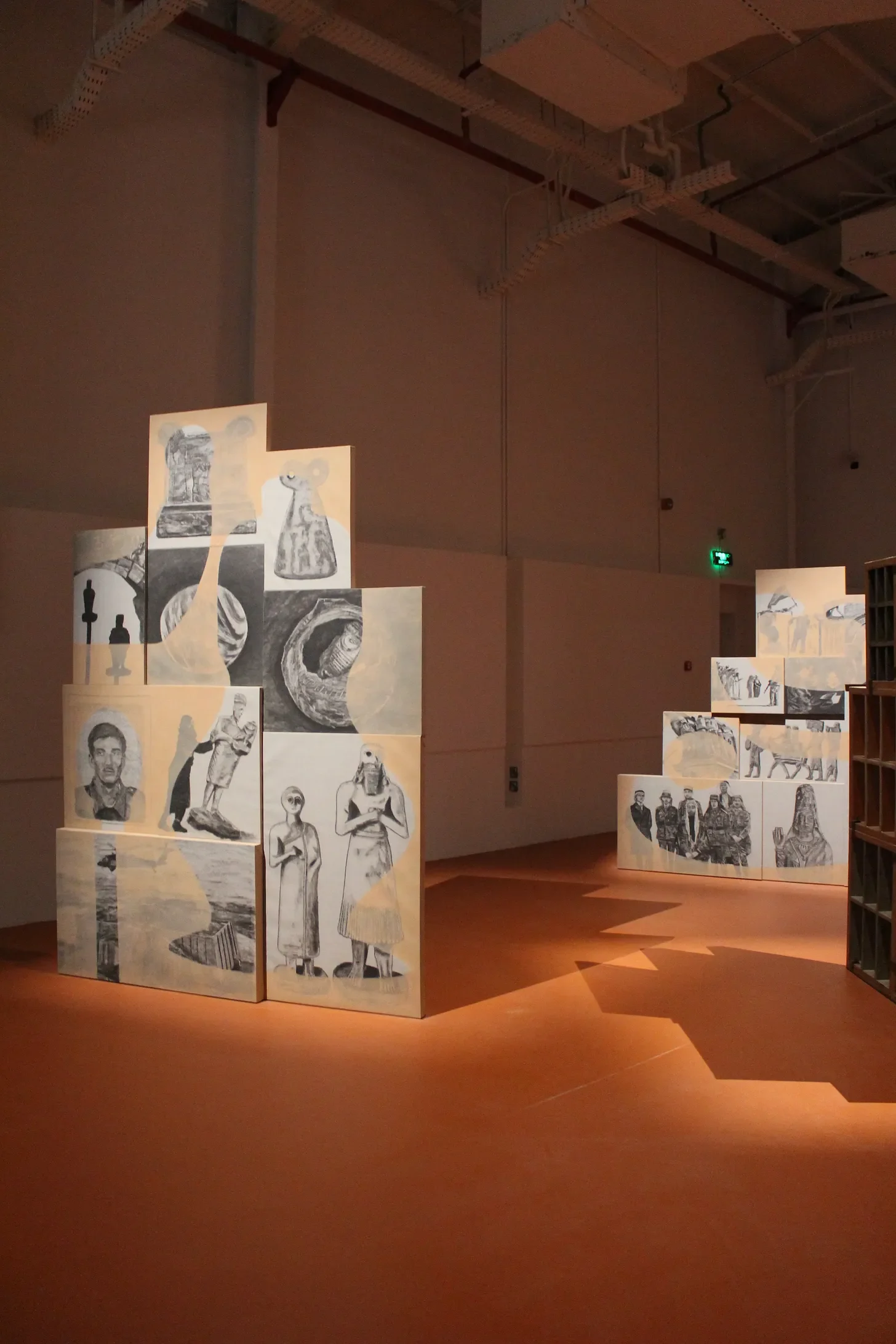
In A Tale Before the Deluge, Rand Abdul Jabbar draws on flood narratives from the Epic of Gilgamesh. The installation, composed of drawings stretched across wooden brick moulds, brings together ancient myth and everyday material forms, linking storytelling to processes of making and building. The work does not treat myth as something distant or symbolic, but as a structure that continues to organise how questions of loss, survival, and renewal are understood in the present.
Rand Abdul Jabbar, A Tale Before the Deluge, 2026
Kayfa ta’s How to Publish turns attention to the systems through which ideas circulate. The installation brings together printed matter, digital materials, and historical references to early Arabic publishing, situating knowledge within a field of formats, platforms, and technologies. Publishing is not treated as a neutral tool, but as a space of narrative-building, where visibility, access, and memory are shaped by institutional and technological conditions. Movement here is less about travel than about transmission, about how information is carried, reorganised, and made to persist.
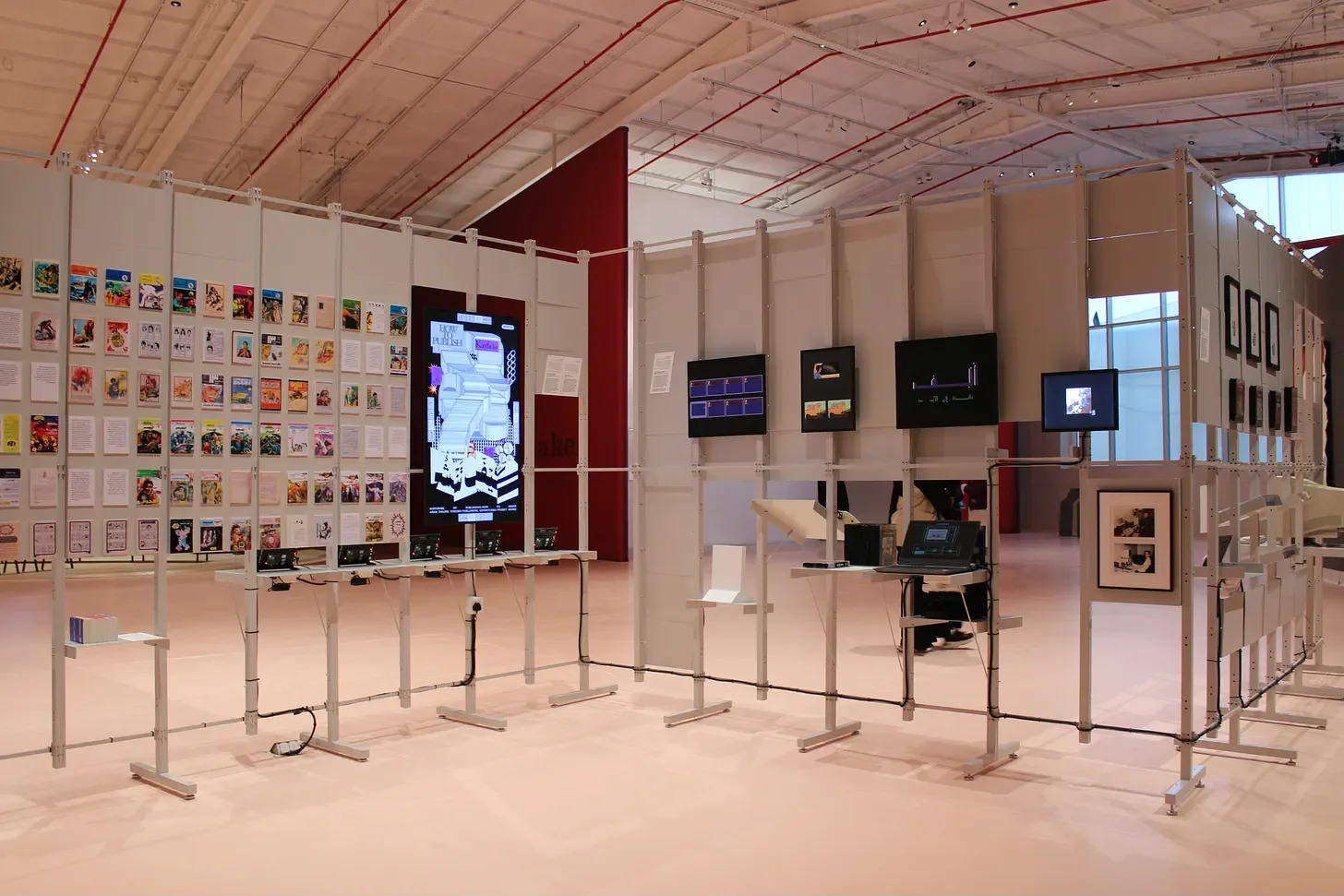
Kayfa ta, How to Publish, 2026
Ruba Al-Sweel’s Machine Tongues reflects the pace and saturation of contemporary digital life. Following the path of a stolen mobile phone, the work assembles fragments from surveillance footage, body cameras, online streams, and AI-generated images. These materials form a layered environment in which no single perspective holds, and images shift meaning as they pass through multiple systems. Movement appears as constant connectivity and digital presence, a condition in which language, vision, and agency are increasingly shaped by technologies that operate beyond individual control.
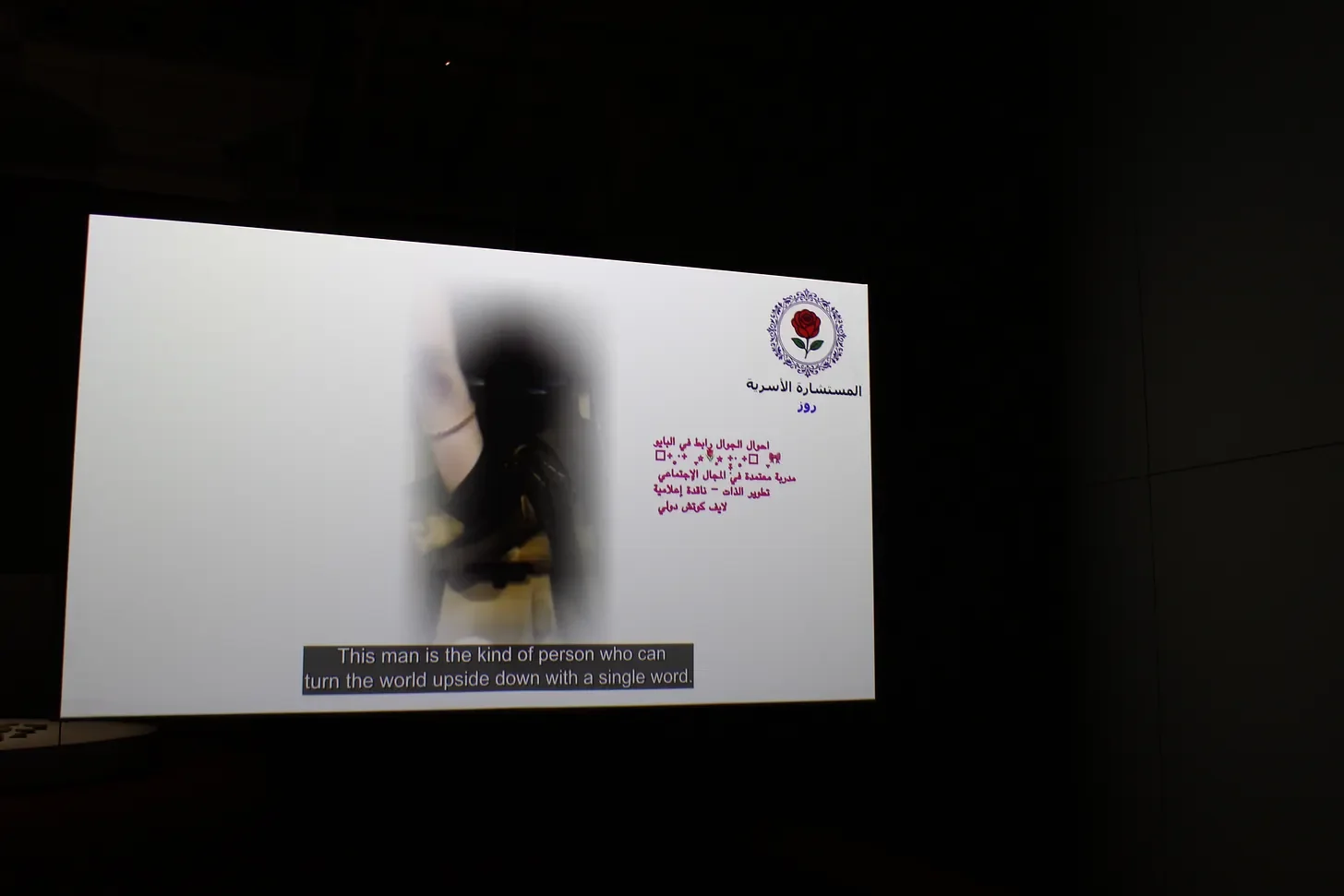
Ruba Al-Sweel, Machine Tongues (still), 2026
Seen altogether, the biennale constructs a field of temporal relations: long and short histories, macro and micro movements, human and planetary rhythms assembling within the same spatial and conceptual frame. Movement emerges as a condition through which history remains active, and through which the present opens onto what is still unfolding.
Written by Nayla. Text and images copyright of Naso Art Journal.
Full article is in print in Issue 3.
