
Hakim Al-Akel: Between Memory, Place and Global Contemporary Art
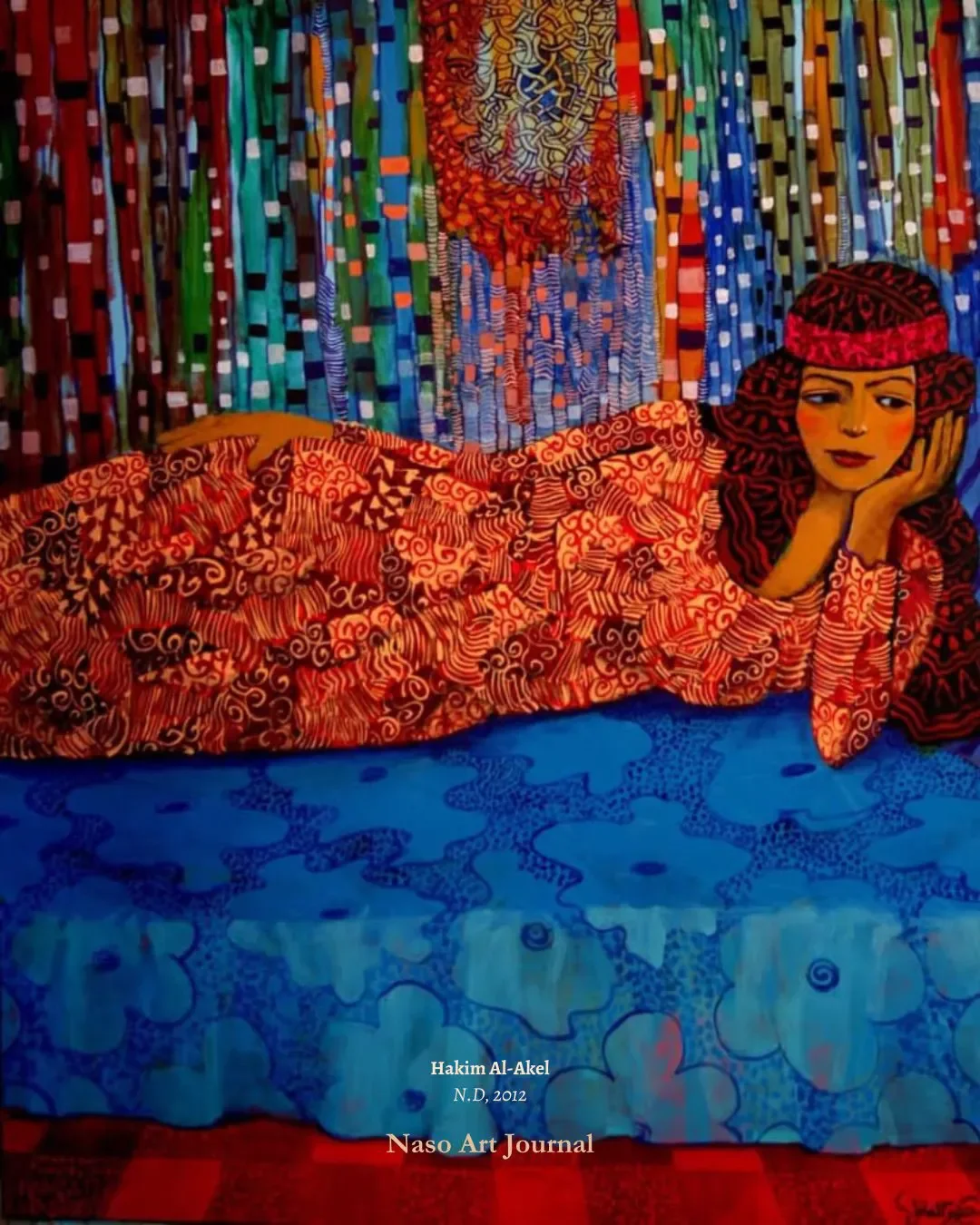
Hakim Al-Akel is a Yemeni artist whose career bridges the local and the global, combining deep cultural roots with a modern visual language that resonates well beyond his home region. Born in 1965 in Taiz, Yemen, Al-Akel has become one of the most internationally exhibited Yemeni artists of his generation, whose work reflects lived realities, personal memory, and cultural identity through painting and graphic practices.
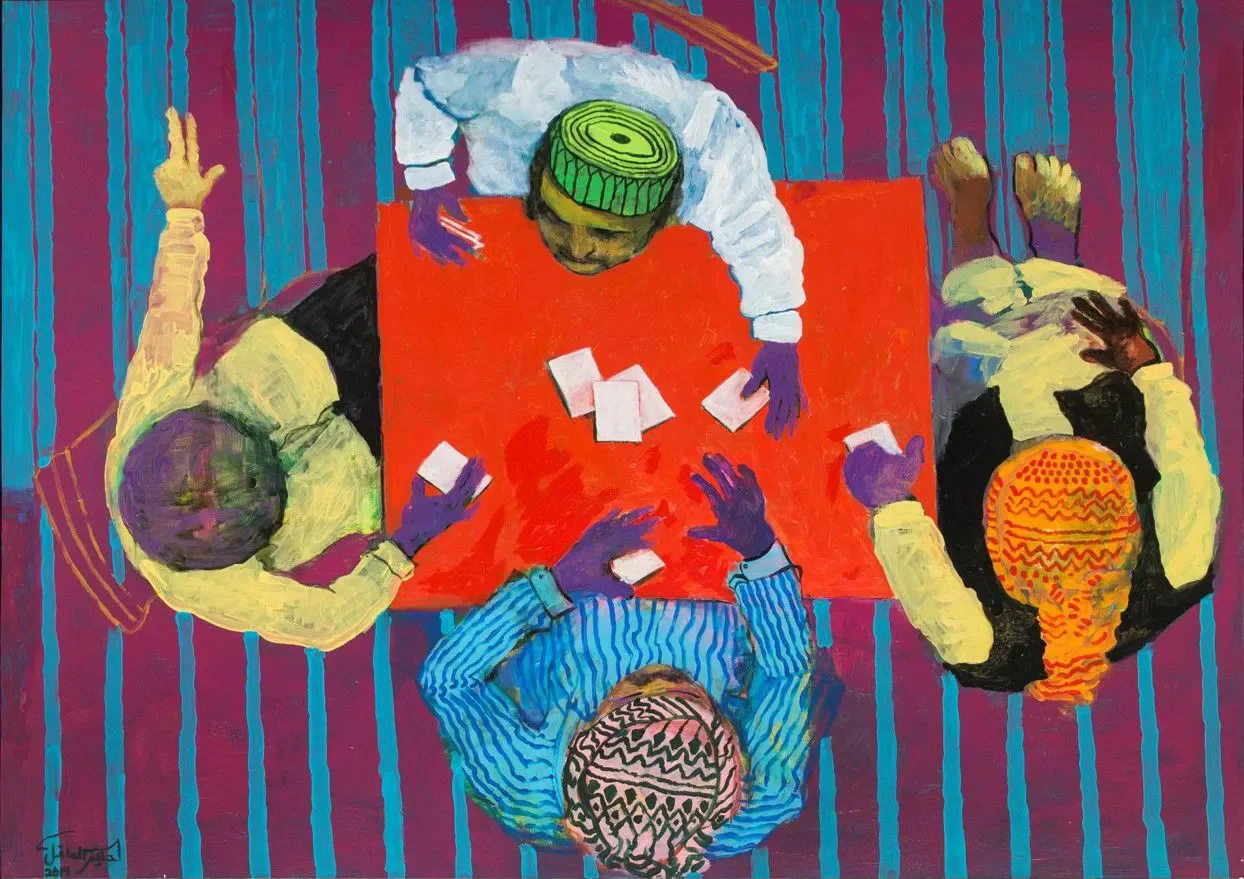
Hakim Al-Akel, Eye of the Bird, 2014
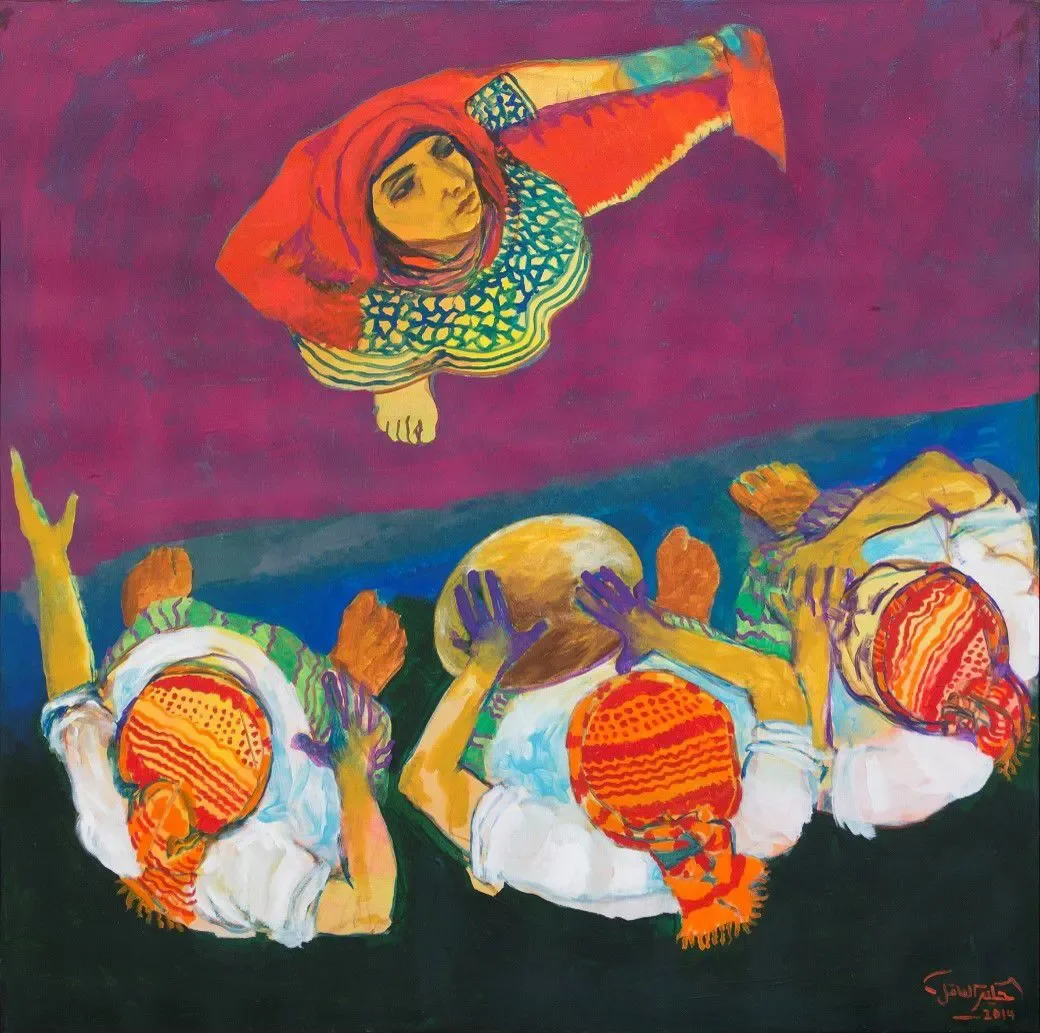
Hakim Al-Akel, Eye of the Bird, 2014
Artistic Style and Themes
Memory and Place:
His paintings often recall urban and rural Yemeni life, presenting scenes rooted in childhood recollection rather than objective reportage
Aerial Perspectives:
He frequently uses a bird’s-eye view in compositional structure — a key motif that transforms everyday life into a complex spatial and symbolic field.
Graphic and Contemporary Formality:
Alongside his paintings, Al-Akel makes use of graphic elements
Geometric forms, stylized calligraphy, and abstract patterns
Which give his work a visual economy that links traditional motifs with modernist abstraction.
Global Reception and Market
Though rooted in Yemeni experience, Al-Akel’s work has drawn attention in global art markets:
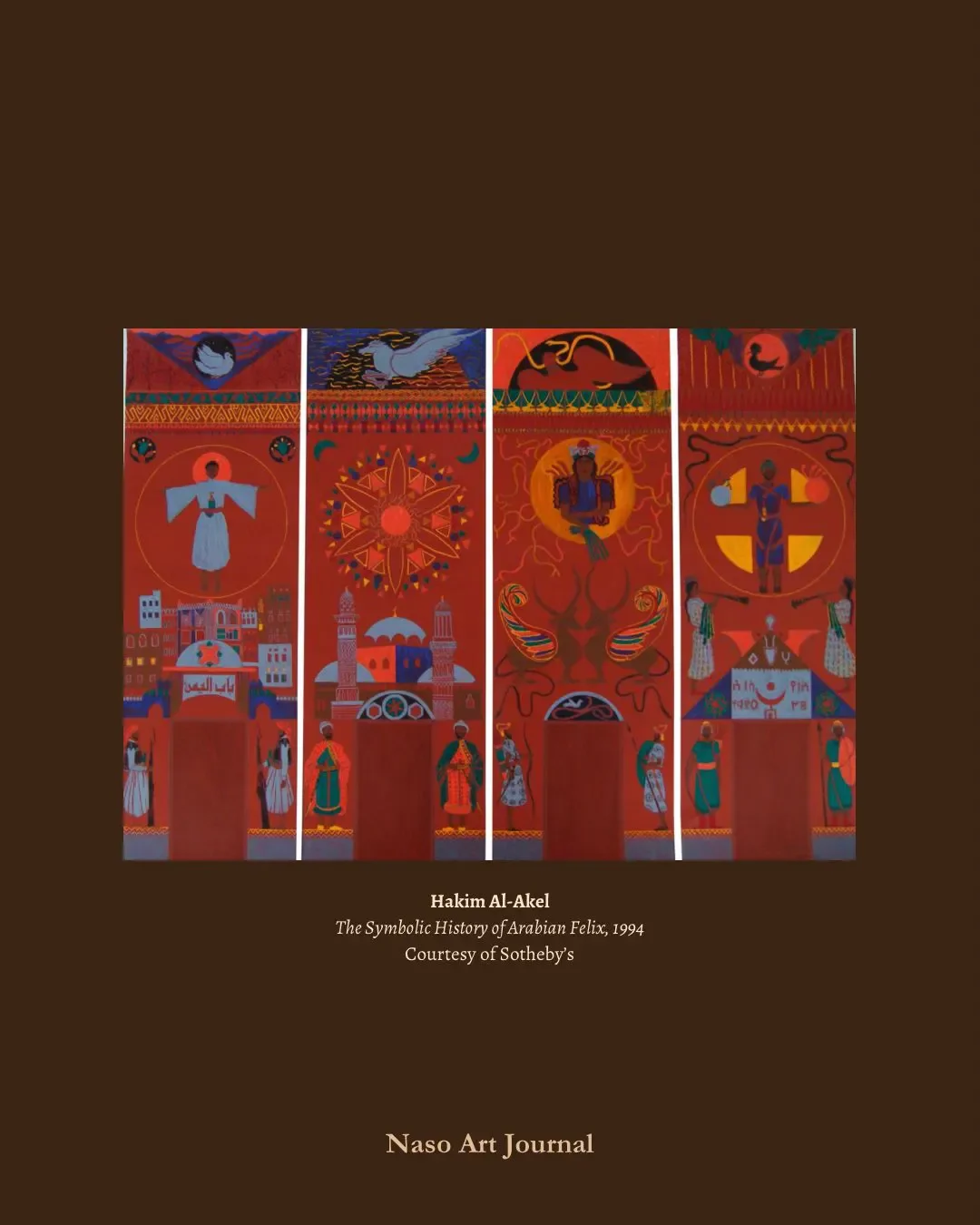
His work The Symbolic History of Arabia Felix has been auctioned at major houses like Sotheby’s London to solid collector interest.
Other pieces from series like Birds Eye View and varied graphic works have been sold in regional auctions, reflecting a rising demand for art intertwining identity, place, and history.
This international presence underscores the way his art speaks simultaneously to local histories and global audiences - a hallmark of contemporary practice that refuses simple categorisation.
Career and Cultural Engagement
Al-Akel is not just a solitary painter. Over decades, he has taken on multiple roles within the cultural sphere:
Founding member of the Yemeni Plastic Artists Association in the 1980s.
Exhibitor worldwide, with participation in over 80 international shows across Europe, the Middle East, and North America.
Educator and cultural leader, having taught free drawing and art history at Yemeni universities and coordinated major art forums.
His writings and
critical studies have appeared internationally, contributing to art discourse beyond his own oeuvre. These activities place him not only in the role of creator but also as a key cultural interlocutor - someone who shapes how art is talked about and taught within and beyond Yemen.
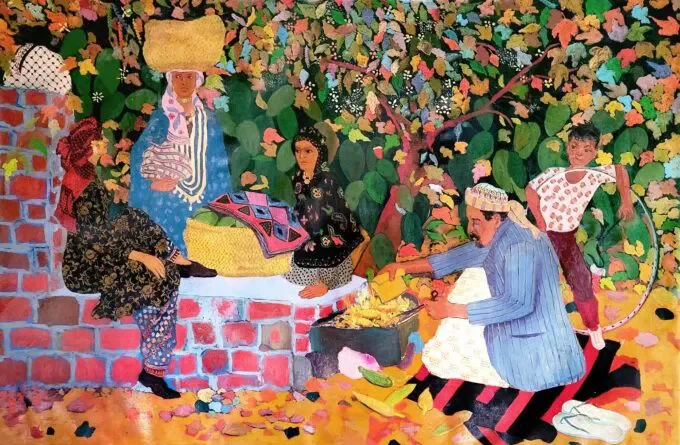
Hakim Al-Akel, Dialogue in the Market, 1991, Courtesy of Barjeel Art Foundation
Legacy and Contemporary Position
What makes Hakim Al-Akel compelling as a subject of art history is his dual commitment to cultural specificity and artistic universality. He neither retreats into nostalgic realism nor adopts abstraction for abstraction’s sake. Instead, he positions his work within a dialogue - between memory and place, tradition and innovation, personal vision and public discourse.
In doing so, Al-Akel occupies a unique place among postcolonial artists who negotiate cultural identity on the world stage, contributing to art history not only through his crafted images but through his role as teacher, critic and cultural advocate.
Words copyright of Naso Art Journal.
