
Lines of Language
Calligraphy as a Shared Modernism Between Asia and the Middle East
Writing as Image, Image as Thought
On the occasion of Art Basel Hong Kong, the convergence of Asian and Middle Eastern art histories can be most powerfully traced through a shared artistic movement: the transformation of calligraphy into modern and contemporary art. Far from being confined to tradition, calligraphy - whether Arabic, Persian, Chinese, or Japanese - has served as a critical site of experimentation across both regions, particularly in the twentieth century.
In this context, writing becomes more than language; it becomes gesture, abstraction, and form. At a moment when Art Basel Hong Kong gathers artists across geographies, this shared trajectory reveals a profound connection: artists in both Asia and the Middle East turned to script not to preserve the past, but to redefine modernity on their own terms.
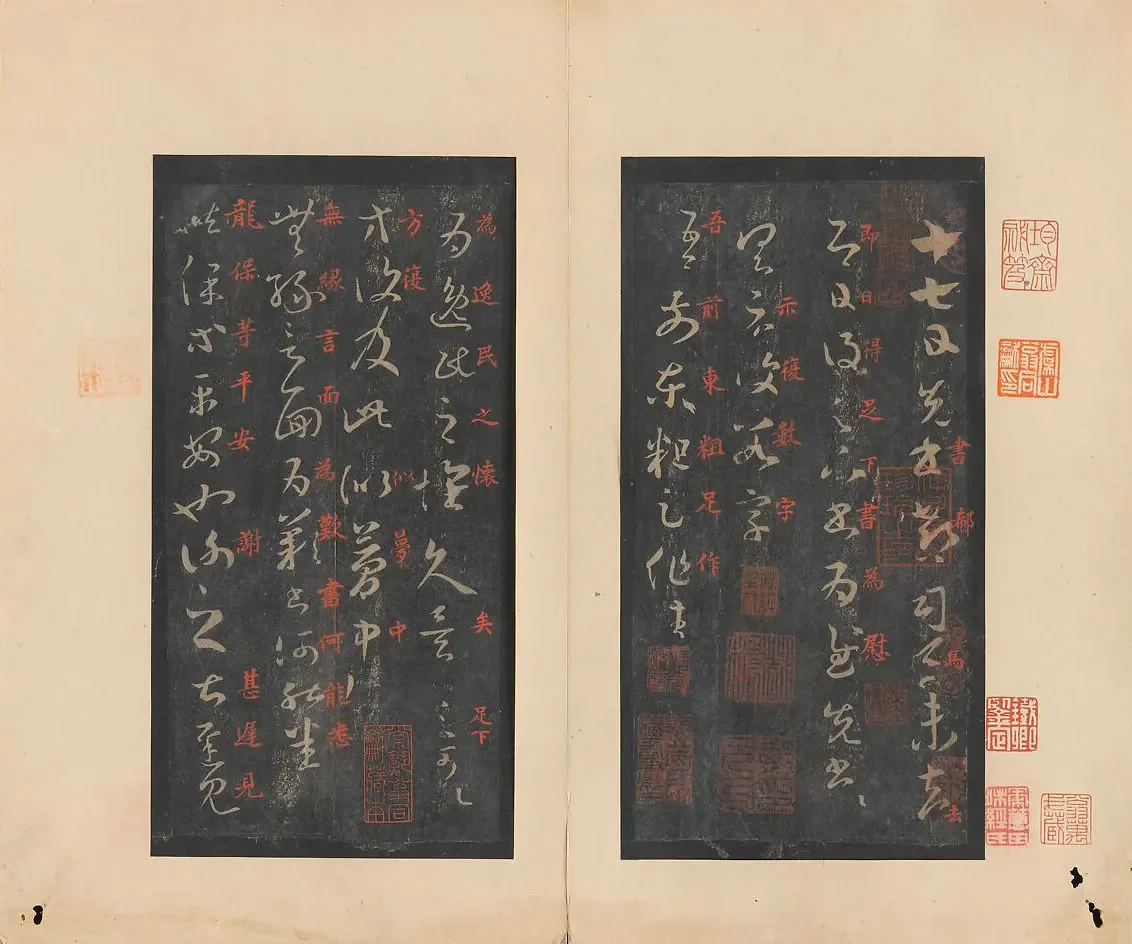
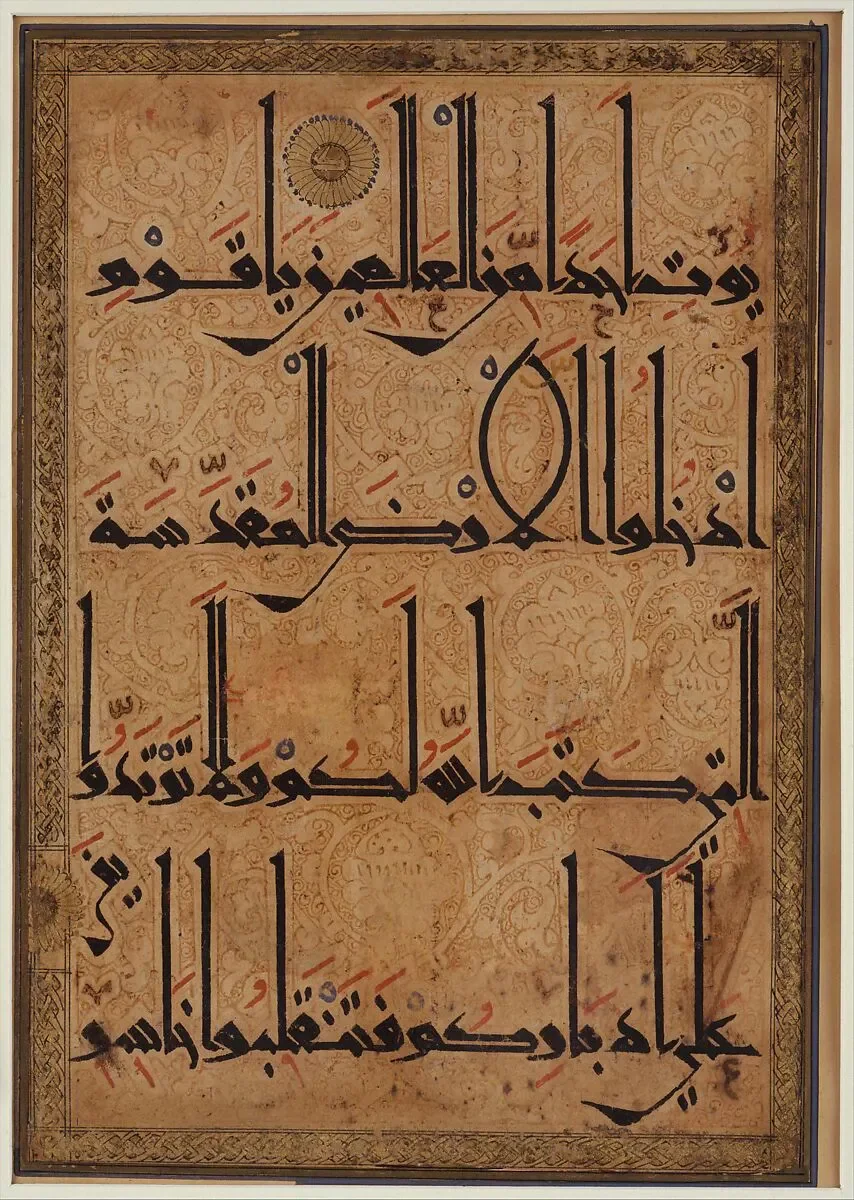
Before Modernism: Sacred Script and Aesthetic Systems
Across both regions, calligraphy historically occupied a privileged position, deeply embedded in spiritual, intellectual, and social life. In Islamic cultures, the written word - particularly Qur’anic text - was central to visual expression, giving rise to highly refined calligraphic traditions such as Kufic and Nasta‘liq. Similarly, in China and Japan, calligraphy was regarded as the highest form of artistic practice, embodying the moral and intellectual character of the writer.
Despite differing linguistic systems, striking parallels emerge:
The emphasis on gesture and movement
The fusion of writing and image
The belief in art as an extension of the self
These shared principles laid the groundwork for a later transformation: the shift from calligraphy as sacred or scholarly practice to calligraphy as a modern artistic language.
Calligraphic Modernism: Hurufiyya and Ink Abstraction
By the mid-twentieth century, artists across the Middle East and Asia began to reconfigure calligraphy within the framework of modern art.
In the Arab world, the Hurufiyya movement (from harf, meaning “letter”) emerged as a way to integrate Arabic script into modern painting. Artists transformed letters into abstract forms, liberating them from legibility while retaining their cultural resonance. This was not merely aesthetic experimentation - it was a response to colonial histories and a search for an authentic modern identity.
In parallel, East Asian artists pursued similar strategies. Chinese modernists and Japanese avant-garde groups such as Bokujinkai reimagined calligraphy as expressive abstraction, emphasizing gesture, spontaneity, and the materiality of ink.
These developments reveal a striking synchronicity:
A move away from representation toward abstraction rooted in tradition
The use of calligraphy as a bridge between past and present
A rejection of Western artistic dominance without rejecting modernism itself
Rather than imitation, this was a form of self-authored modernity, emerging simultaneously across regions.
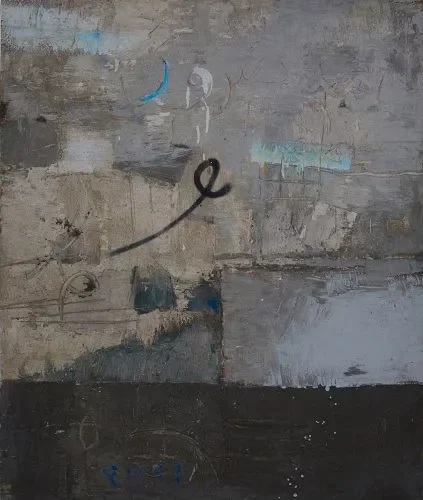
Courtesy of Barjeel Art Foundation
Contemporary Reconfigurations: Script in Motion
In contemporary practice, calligraphy continues to evolve beyond canvas and paper. Artists from both Asia and the Middle East now expand script into installation, video, sculpture, and digital media.
The letter becomes:
A spatial element
A performative gesture
A political signifier
Illegibility itself often becomes meaningful - suggesting loss, displacement, or the limits of language. In diasporic contexts, script can evoke fractured identity, functioning simultaneously as a marker of belonging and estrangement.
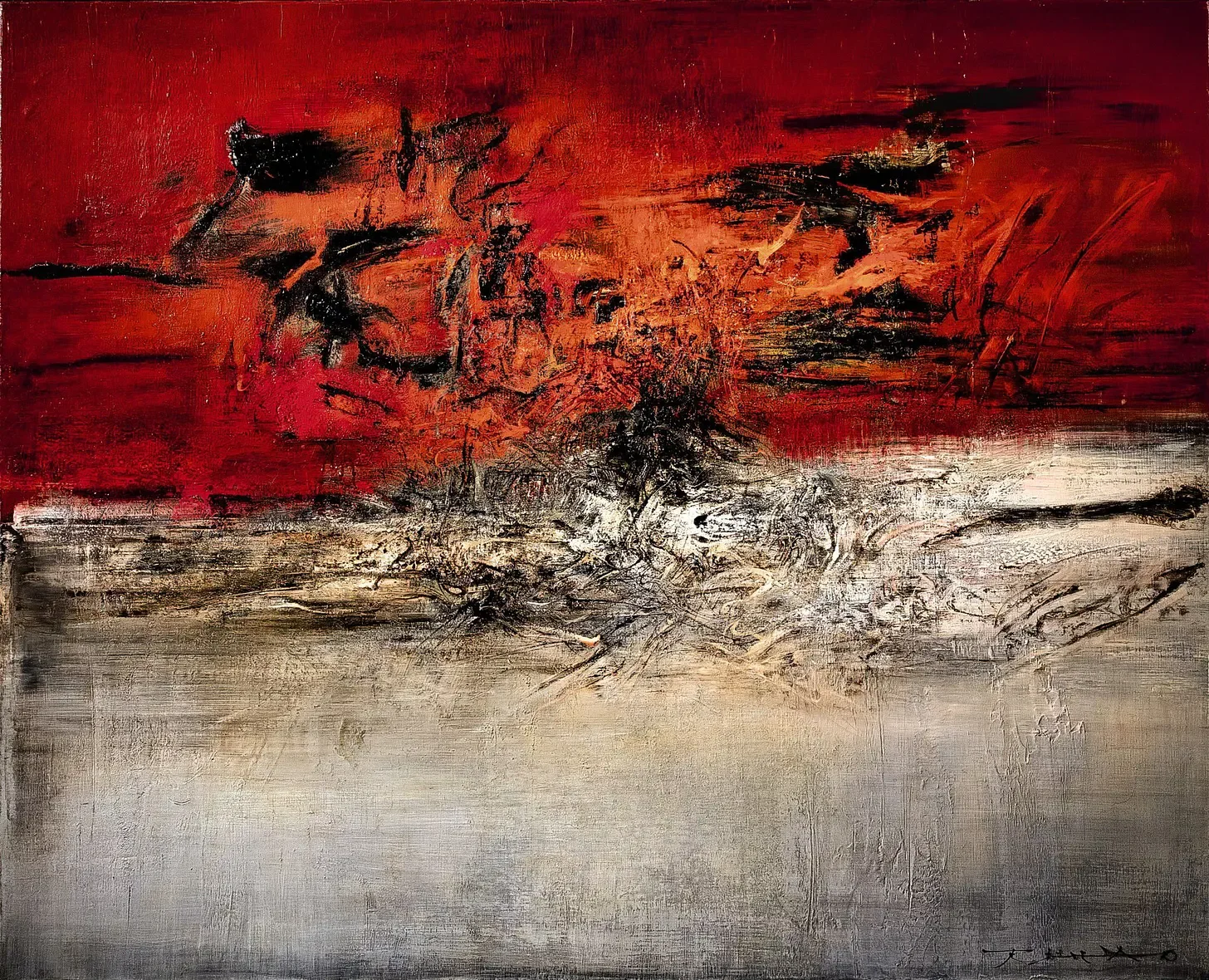
Courtesy of Sotheby’s
The Line as Continuum
The story of calligraphy across Asia and the Middle East is not one of origin and influence, but of continuum. The line - whether written, drawn, or gestured - connects centuries of artistic practice, linking manuscript to abstraction, tradition to experiment.
At Art Basel Hong Kong, this shared history becomes newly visible. It reveals that what unites these regions is not simply geography, but a common investment in the expressive potential of the line.
In following these lines across time and space, we encounter an art history that is neither linear nor bounded, but unfolding - written and rewritten, stroke by stroke.
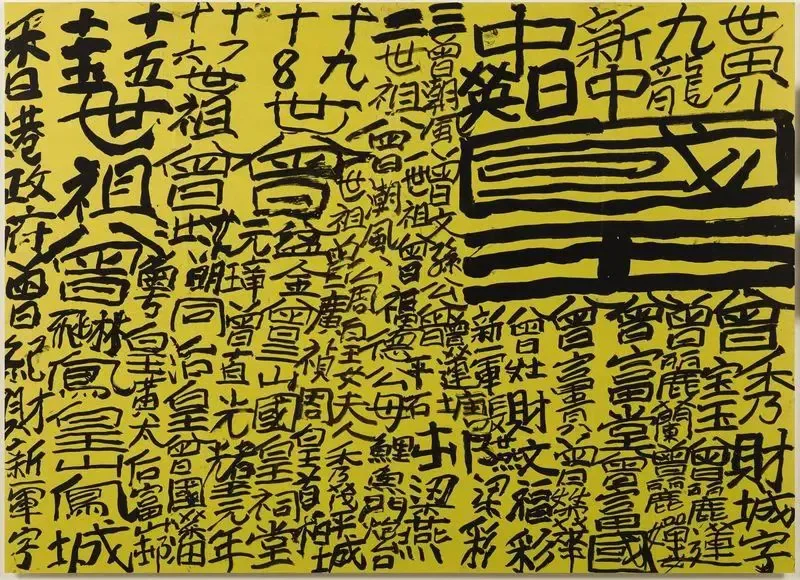
Hakim Al-Akel, Dialogue in the Market, 1991, Courtesy of Barjeel Art Foundation
Hong Kong: A History Written in Scripts
To understand the resonance of calligraphy at Art Basel Hong Kong, one must consider the city itself as a historical site of writing - of layered scripts, languages, and visual systems.
Hong Kong’s history is inseparable from its role as a port of exchange. Incorporated into the British Empire in the nineteenth century following the Opium Wars, the city became a key نقطة of contact between China, Europe, and the wider world. This colonial condition produced a unique visual environment in which Chinese characters and the Latin alphabet coexisted, often within the same urban space.
Unlike many colonial contexts where local languages were suppressed, Hong Kong developed a bilingual and bicultural visual identity:
Shop signs combined calligraphic Chinese scripts with English typography
Neon signage transformed written language into luminous, sculptural form
Public space became saturated with text as image
This environment positioned Hong Kong as a living laboratory for the transformation of writing into visual culture - echoing, in an urban register, the artistic developments seen in both Middle Eastern and Asian calligraphic modernisms.
In the twentieth century, waves of migration - from mainland China, Southeast Asia, and beyond - further intensified this hybridity. The city’s scriptscape became a reflection of diaspora and mobility, themes central to contemporary art practices today.
Thus, Hong Kong is not merely a neutral host for Art Basel. It is a city whose very fabric embodies the editorial’s central thesis: that writing, across cultures, is both a carrier of meaning and a site of transformation.
Words copyright of Naso Art Journal.
