
The Khartoum School
Constructing a Visual Language After Independence
The Khartoum School movement was marked as one of the most significant modernist art movements of Sudan. It surfaced during the 1960s, after Sudan gained its independence. The primary aim behind the movement was to construct a new visual language that represents the nation’s cultural identity. Among the dominant figures that enabled this movement are Ibrahim El-Salahi, Ahmed Shibrain, and Kamala Ishag. To cultivate a rightful representation of the newly independent Sudanese identity, Khartoum School sourced elements from Sudanese, African, and Islamic traditions, rather than directly adopting Western artistic models, and merged them with modern artistic practices.
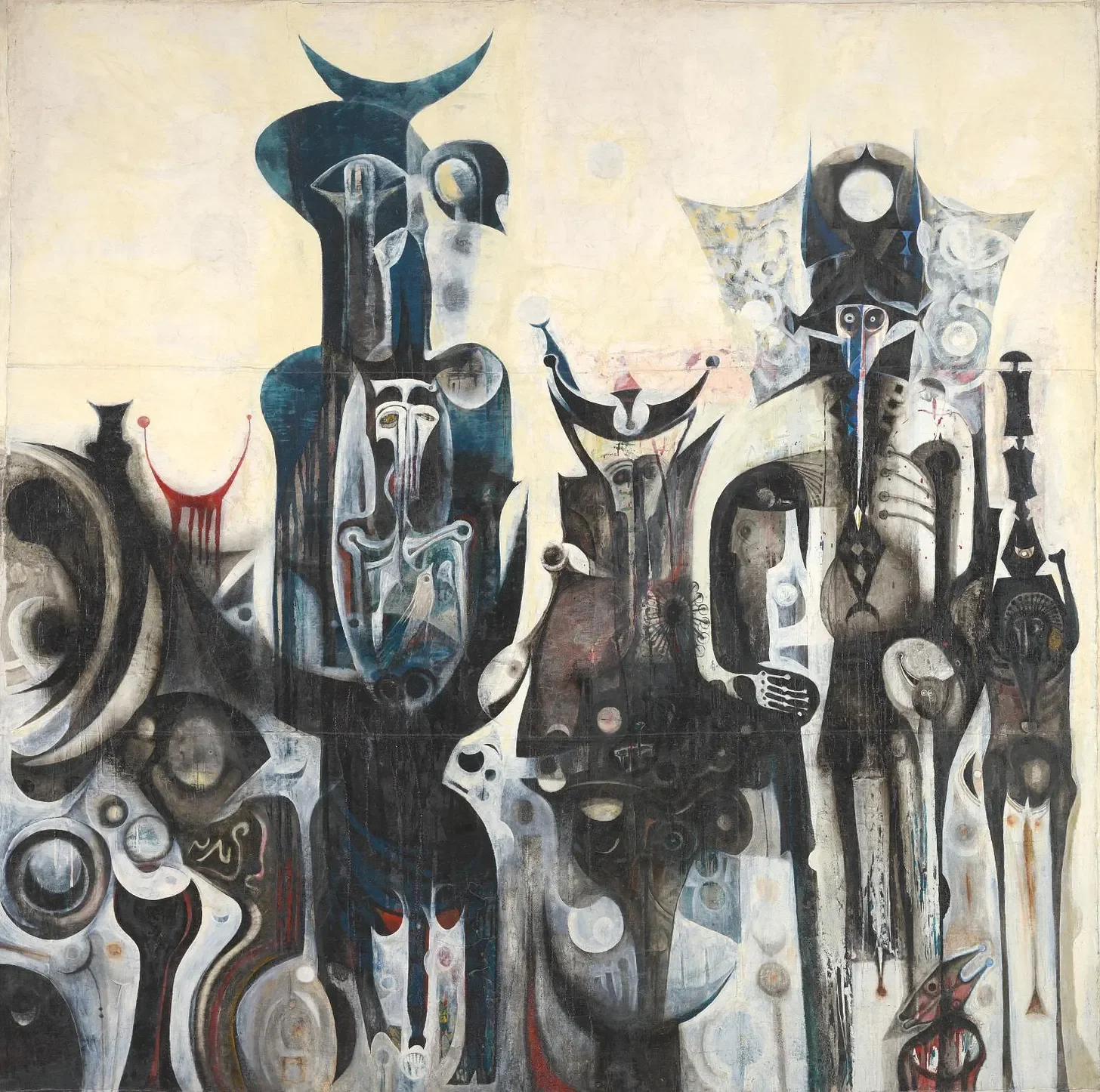
Ibrahim El-Salahi. Courtesy of the Tate.
The Khartoum School movement was not only a response to Sudan’s independence but also developed within the broader context of African modernism. Modern artistic practices in Africa surfaced as cultural and historical experiences true to the African continent merged with the concept of modernity in the global scene. Historical forces such as colonialism, slavery, and the struggle for independence shaped the themes explored by many African artists in the twentieth century. After colonial rule, artists aimed to redefine their identity and self-representation as a form of resistance.
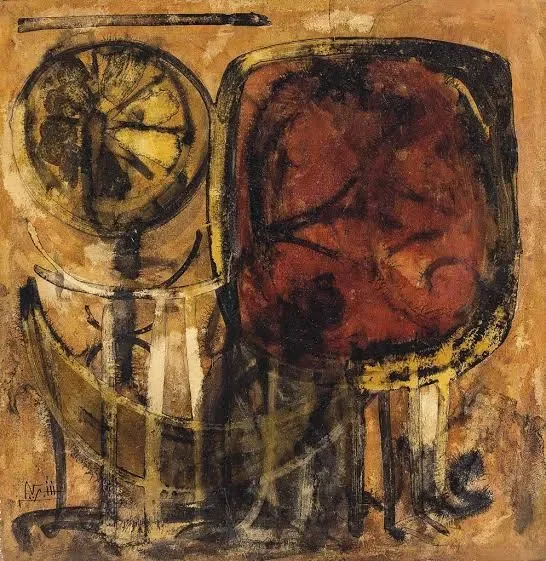
Ahmed Shibrain. Courtesy of the Barjeel Art Foundation.
The Khartoum School represents how artists in Sudan portrayed these global and local influences. Members of the movement strived to create a distinctive artistic style closely reflecting Sudan’s culture. A common visual feature of the movement was the incorporation of Arabic calligraphy that was portrayed in abstract form. This method was commonly associated with the Hurufiyya movement, where the written script was transformed into visual elements. Besides calligraphy, artists also incorporated Islamic motifs and shapes inspired by African traditions.
Writing copyright of Naso Art Journal.
