
Marrakech and Beyond: On the Moroccan Art Market
Marrakech often appears as the point through which the Moroccan art market is encountered. Over the past decade, the city has gathered a visible concentration of fairs, institutions, and collectors, producing a setting in which the market can be readily seen. The presence of 1-54 Contemporary African Art Fair, alongside institutions such as Museum of African Contemporary Art Al Maaden and the residency and exhibition programme at Jardin Rouge, has contributed to this visibility, drawing in both regional and international audiences. In this context, Marrakech does not simply host the market; it provides a point of entry through which Moroccan contemporary art is first encountered.
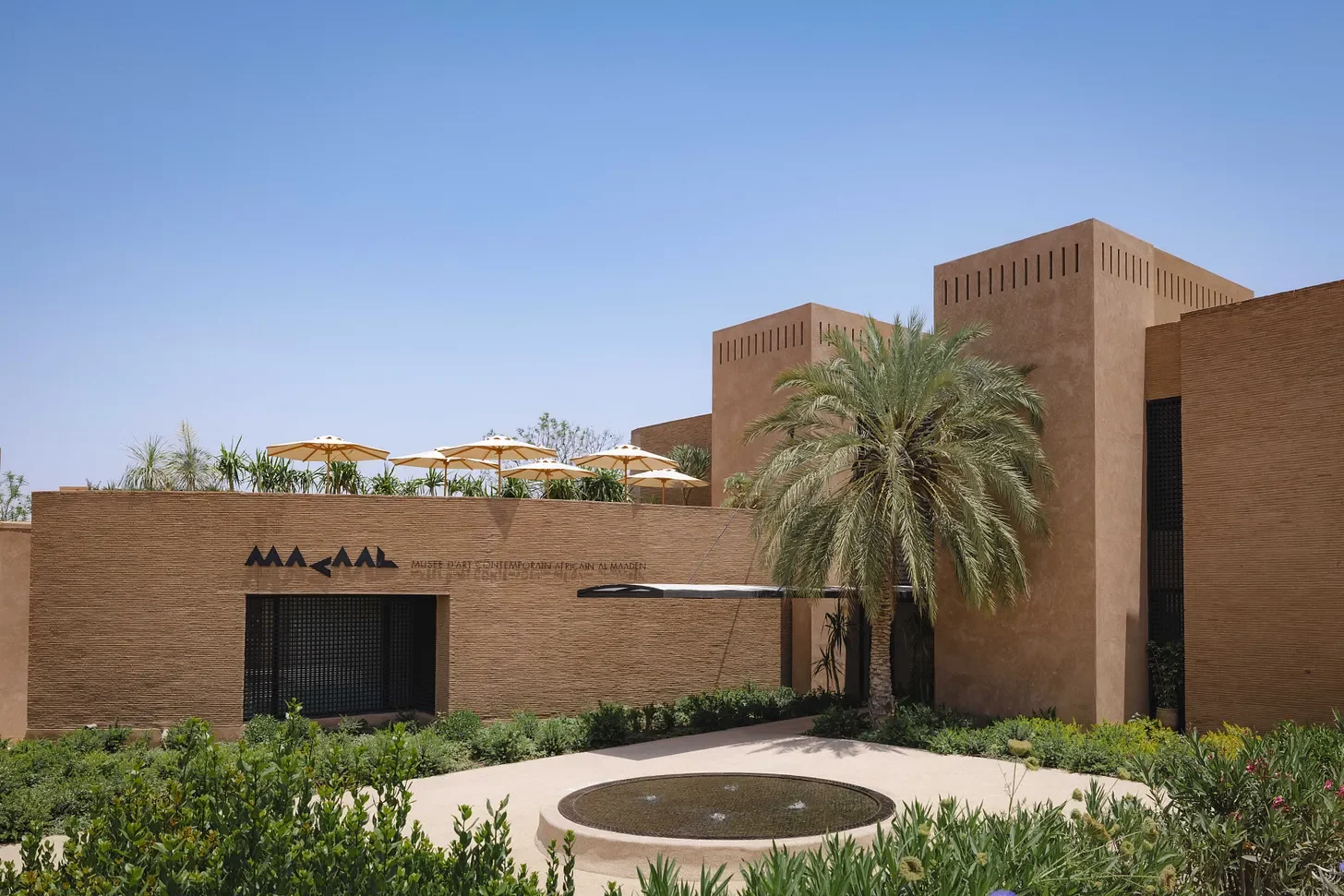
Courtesy of MACAAL
To look at Marrakech alone is to miss the wider set of conditions through which the Moroccan art market takes shape. While the city brings together moments of visibility, the market itself unfolds across a more complex and distributed landscape, shaped by networks that extend both within Morocco and beyond it. Its structure is not defined by a single site, but by the interaction between local infrastructures and forms of circulation that exceed them.
Within Morocco, this becomes legible through the relationship between cities that operate differently yet remain interconnected. Casablanca, less frequently foregrounded in international narratives, sustains a quieter but more continuous infrastructure, where galleries such as LOFT Art Gallery and L’Atelier 21 have maintained long-standing programmes that engage both emerging and established artists. Comptoir des Mines Galerie, founded in Marrakech and now active across both cities, reflects the role of each as a distinct art hub, with value produced differently in each context.
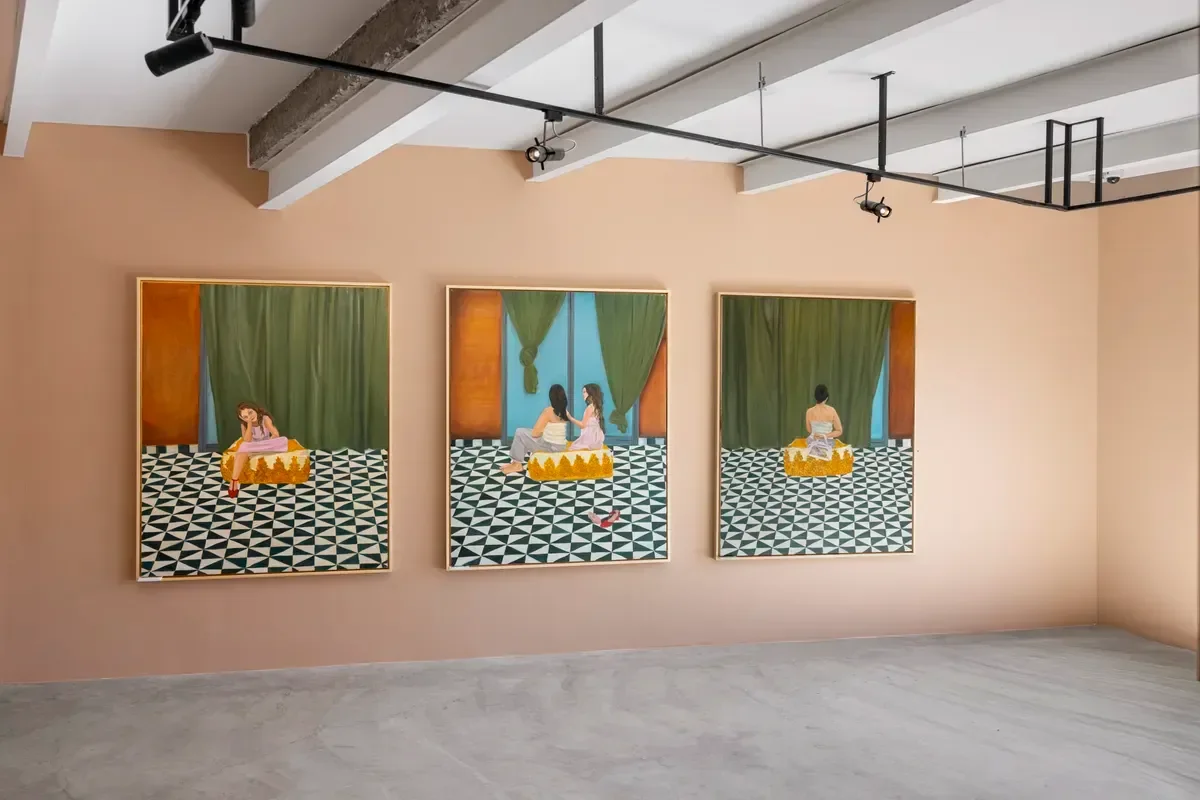
Amina Rezki at Loft Gallery. Courtesy of Loft Gallery.
At the same time, Moroccan art has long circulated through contexts beyond the country itself. Historical and diasporic ties have positioned cities such as Paris and Brussels as key sites of visibility and exchange, where galleries participate in fairs including Art Paris and AKAA – Also Known As Africa. Collectors move between these locations, acquiring works across multiple contexts, while artists operate within networks that are not confined to a national framework. The market, in this sense, extends outward, taking shape across transnational circuits in which value is negotiated through movement rather than anchored in a single location.
What begins to emerge through this is a market defined less by where it is located than by how it circulates. Works do not remain tied to one context, nor does their significance depend on a single point of validation. Instead, it is produced across a sequence of encounters—exhibited in Marrakech, acquired in Casablanca, and later positioned within a fair or collection in Paris—without any one of these sites fully containing it. The market is formed through these trajectories, held together by the relationships that connect them rather than by a centralised structure.
Auction houses introduce a different but related dynamic, structured through consolidation and the shaping of value. Sales held by Christie’s and Sotheby’s have contributed to the stabilisation of a canon centred on twentieth-century Moroccan modernists, whose works continue to perform strongly within the international market. In contrast to the dispersed circulation of contemporary practices, this layer of the market anchors value within an established historical framework, producing a point of reference against which other forms of exchange continue to unfold.
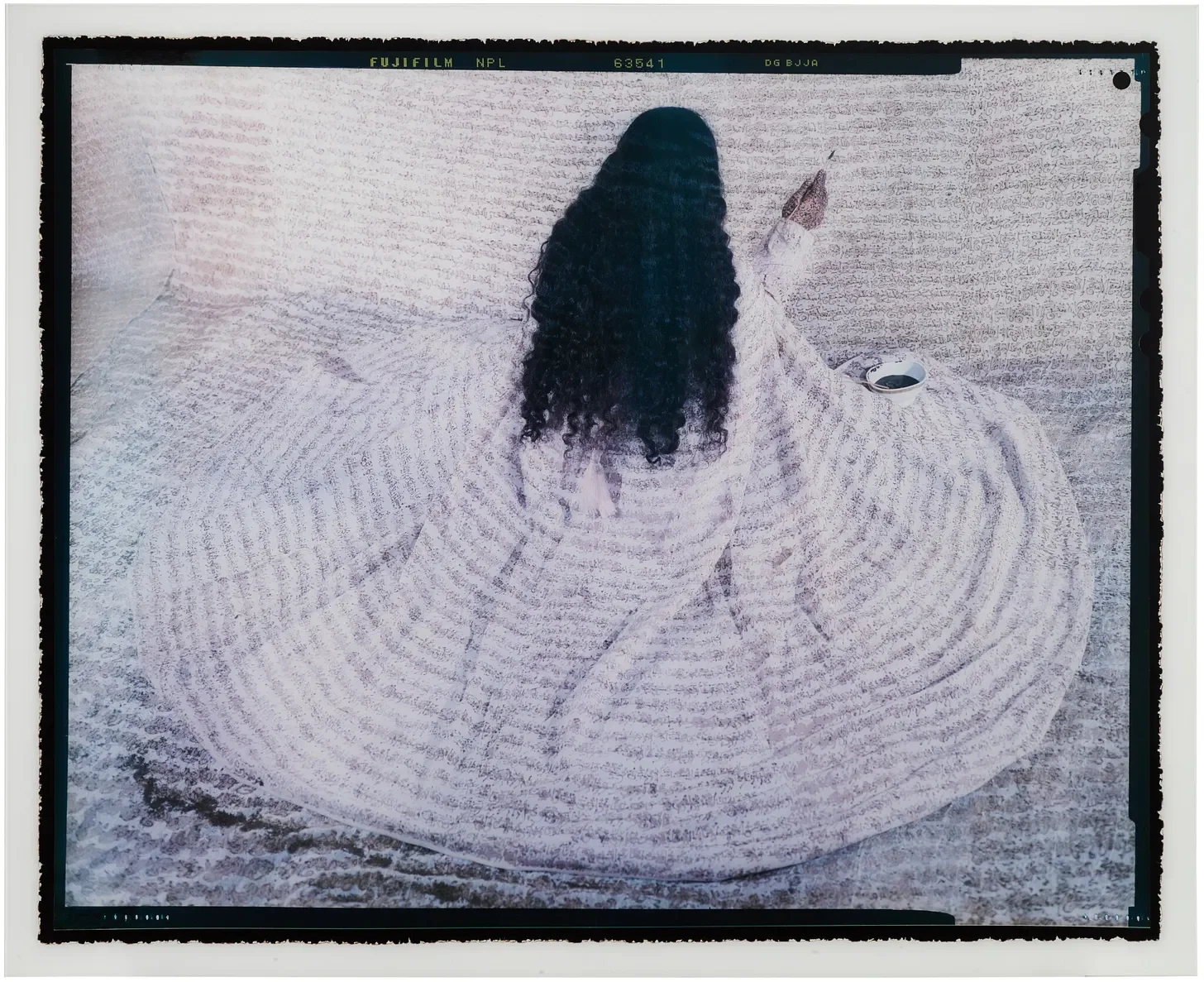
Converging Territories #8 by Moroccan artist Lalla Essaydi, sold by Sotheby’s. Courtesy of Sotheby’s.
What emerges is not a market defined by a single centre, nor by a linear trajectory of growth, but one shaped through the interplay between circulation and consolidation. Marrakech remains central to how this market is encountered; however, it does not fully reflect it. Value is produced across movement—between cities, institutions, and contexts—and at the same time anchored through historical frameworks that stabilise its recognition. The market, in this sense, continues to take form across the relations that connect these sites, defined less by where it is located than by how it moves between them.
Written by Nayla. Writing copyright of Naso Art Journal. Images copyright of all mentioned institutions. Cover image: MACAAL, Courtesy of MACAAL.
