
The Baghdad Modern Art Group
The Baghdad Modern Art Group was founded in 1951 in Iraq, at a moment when artists were actively defining how modern art could be produced from within their own context.
This involved a sustained engagement with earlier visual traditions as material that could inform structure, composition, and form.
The group approached modernism as a process built through continuity.
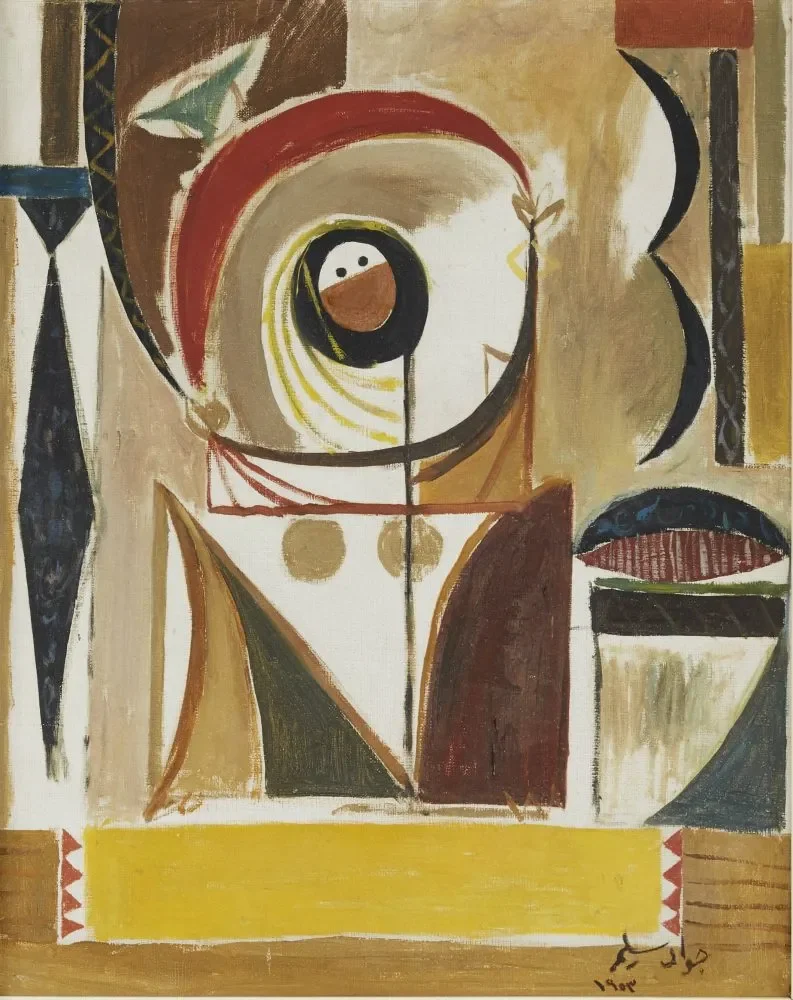
Jewad Selim, Woman Selling Material, 1953, Oil on board, Courtesy of the Barjeel Art Foundation
Formation
Led by Jewad Selim and later Shakir Hassan Al Said, the group brought together artists working across painting, sculpture, and writing.
Their work developed alongside a broader cultural project in Iraq that sought to reconnect with earlier artistic traditions, including Abbasid-era manuscript painting.
This included renewed attention to figures such as Yahya ibn Mahmud al-Wasiti, whose illustrated Maqamat of al-Hariri offered a model that shaped how artists constructed images, while also grounding their work in a longer history of Iraqi visual culture.
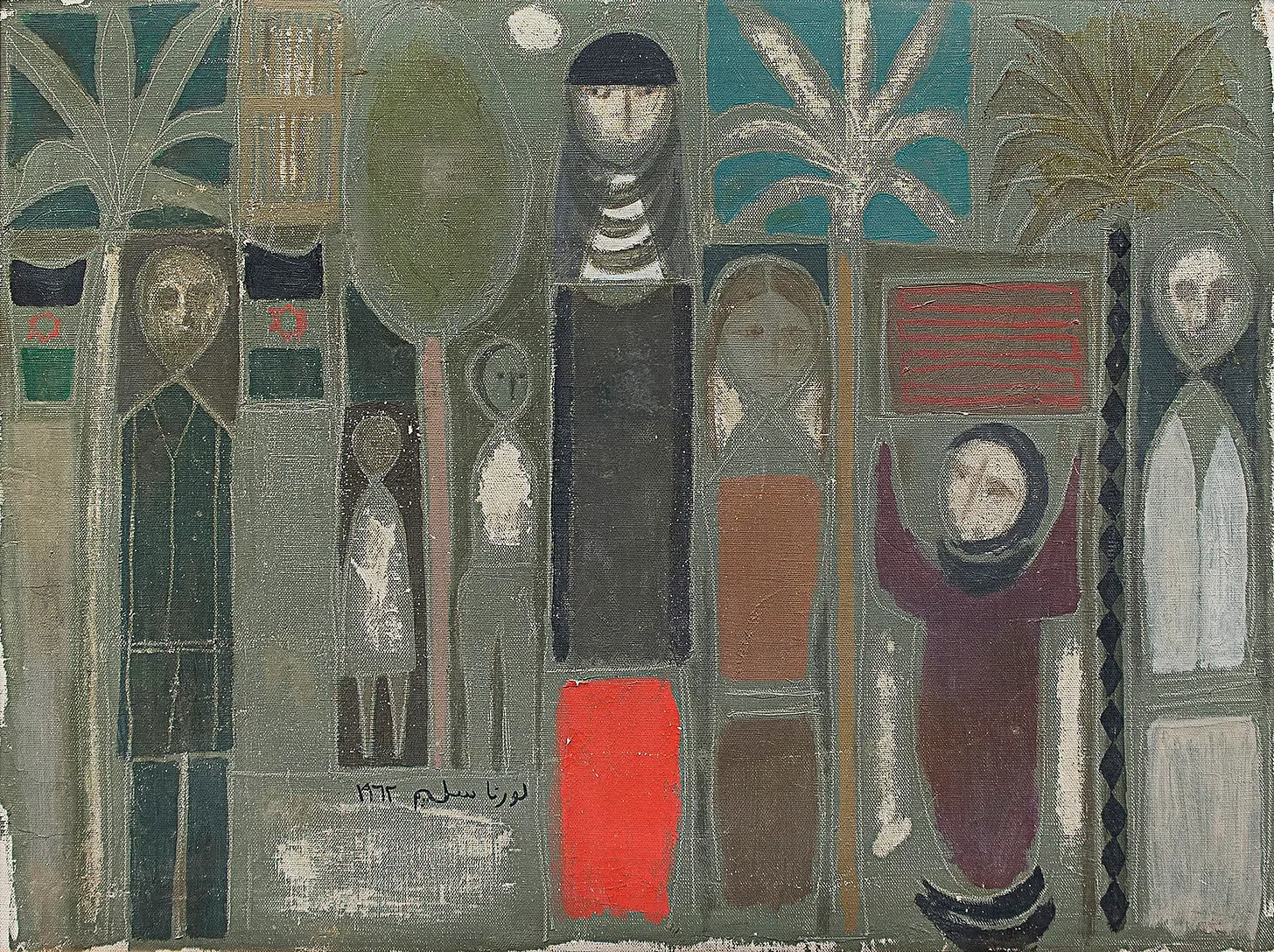
Lorna Selim, Baghdadiyat, 1962, Courtesy of the Ibrahimi Collection
Heritage as Method
Heritage operated as a structural source. Forms drawn from Mesopotamian reliefs, Islamic art, and manuscript traditions informed how images were organised.
This included:
flattened space
linear construction
geometric repetition
These elements shaped the internal logic of the work.
Form and Abstraction
Works by Jewad Selim retain the figure while restructuring it through line and geometry.
In paintings such as Woman Selling Material, the composition is built through a linear framework. Surface flatness is maintained through the absence of shading, while repeated forms establish rhythm across the image.
Geometric elements, including circular and angular motifs, organise the pictorial field.
Art as Thought
With Shakir Hassan Al Said, the group’s position is articulated through writing as well as practice.
The 1951 manifesto outlines a process of working through heritage as a source for contemporary form.
This approach involves:
engaging historical material
reconfiguring it within the work
allowing form to carry meaning
In his later practice, the letter becomes a central visual element, extending this method into calligraphic abstraction.
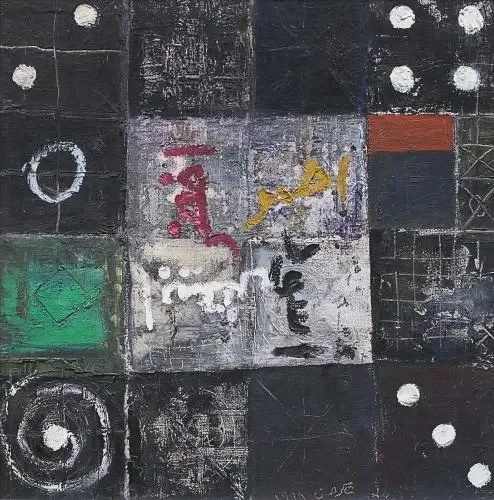
Shakir Hassan Al Said, Sufi Symbols, 1998, Acrylic on Canvas, Courtesy of the Ibrahimi Collection
Legacy and Influence
The Baghdad Modern Art Group established a framework for constructing modern art through historical continuity.
Its significance lies in how artists worked with:
manuscript traditions
relief-based visual structures
calligraphy and geometric organisation
These elements informed both composition and method.
This approach shaped later developments across the region, particularly in practices that treat calligraphy and abstraction as structural systems.
Words copyright of Naso Art Journal
