
Written by Sarah
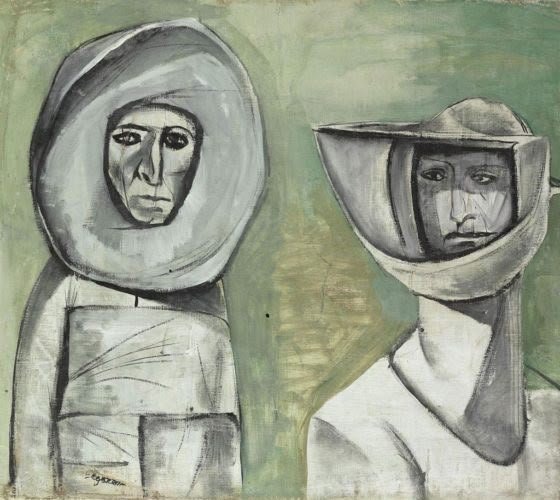
Abdul Hadi El Gazzar, Two People in Space Outfit, 1960
© Barjeel Art Foundation
In the 1940s, Egyptian artists were negotiating what it meant to produce a modern art that could speak to the country’s own social and cultural realities. European modernist movements, including Surrealism and Expressionism, had already begun to influence artistic circles in Cairo. However, a younger generation of artists was looking towards a different set of references, placing everyday Egyptian life, traditions and local histories at the centre of artistic practice.
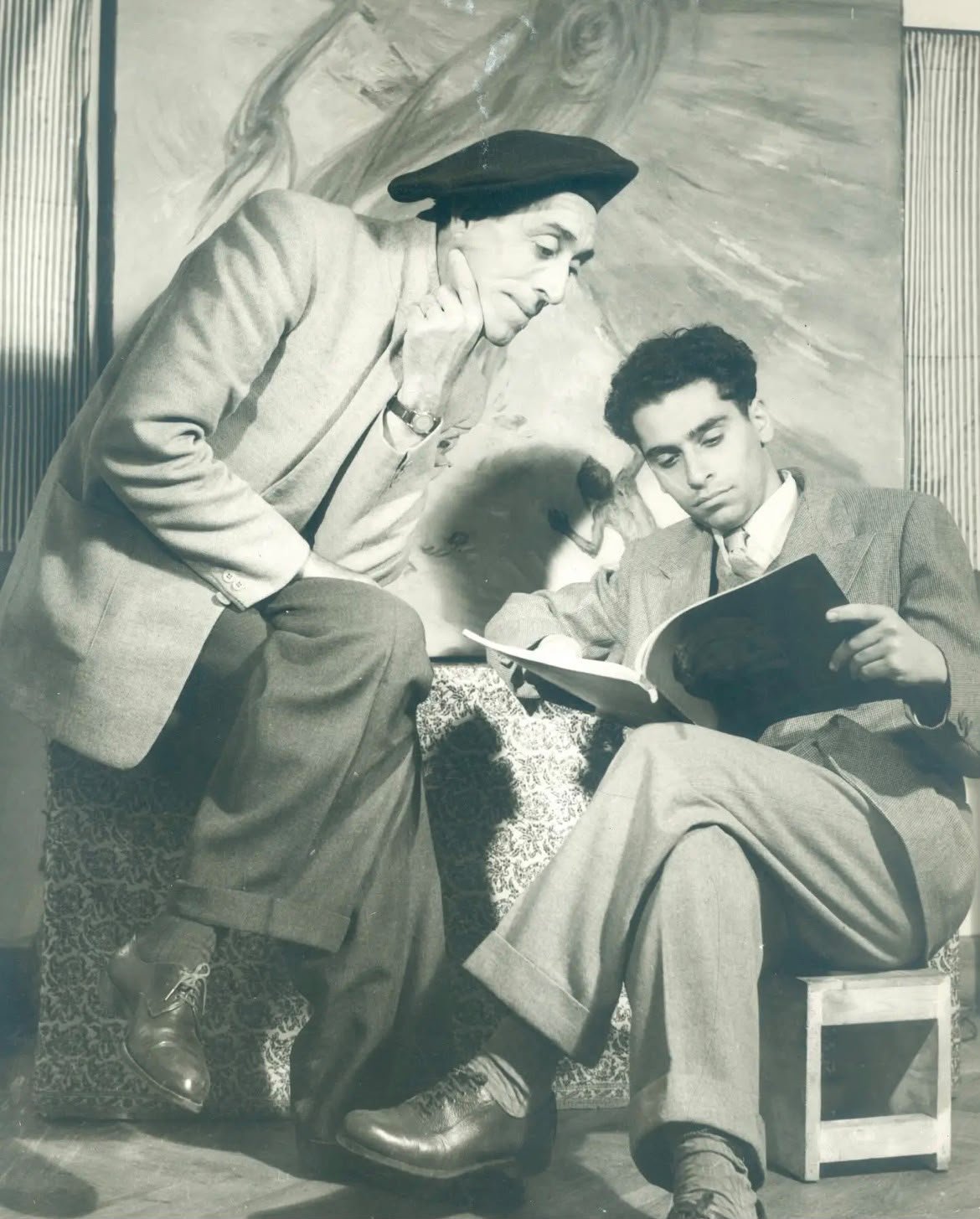
One of the figures who helped bring this generation together was Hussein Youssef Amin (1904–1984), an Egyptian painter and educator. In 1944, Amin began forming a circle of students whom he had encountered through his teaching, including Hamed Nada, Abdel Hadi El-Gazzar, Samir Rafi, Maher Raef, Kamal Youssef, Ibrahim Massouda, Mahmoud Khalil and Salem El-Habashi, also known as Mogli. By 1946, this circle had developed into the Contemporary Art Group (Jama’at al-Fann al-Mu’asir), establishing itself as an independent artistic collective. Its first declaration, published that year, outlined the group’s position on the relationship between artistic creation, intellectual thought and the society it was produced in.
The group’s activities extended well beyond formal art education. Amin’s home in Maryoutiya, near Giza, became a regular meeting place where the artists gathered each week to discuss art, exchange ideas and work together.
These meetings also involved painting murals on the walls of the house, making the domestic setting part of their artistic experimentation. Outside these gatherings, the artists turned their attention towards the streets, neighbourhoods and popular environments of Cairo, observing the people and customs that rarely appeared in the idealised representations of Egyptian life.
© ArtTalks, Egypt Archive
Their interest in these surroundings brought them into contact with popular religious practices, traditional festivals, folklore and everyday rituals. Rather than treating these subjects as picturesque cultural references, the artists explored the beliefs, anxieties and social conditions within them. This approach gradually shaped a shared visual language, drawing on folk symbolism, mythology and psychological imagery.
The Contemporary Art Group believed that artistic practice should involve more than the production of aesthetically pleasing images. Its first declaration placed an importance on the relationship between thought and feeling, arguing that an artist needed to engage intellectually with the world around them. Their work challenged the tendency to romanticise Egyptian society or reproduce established Western academic conventions, instead addressing poverty, social inequality and the experiences of people living outside privileged circles.
© ArtTalks, Egypt Archive
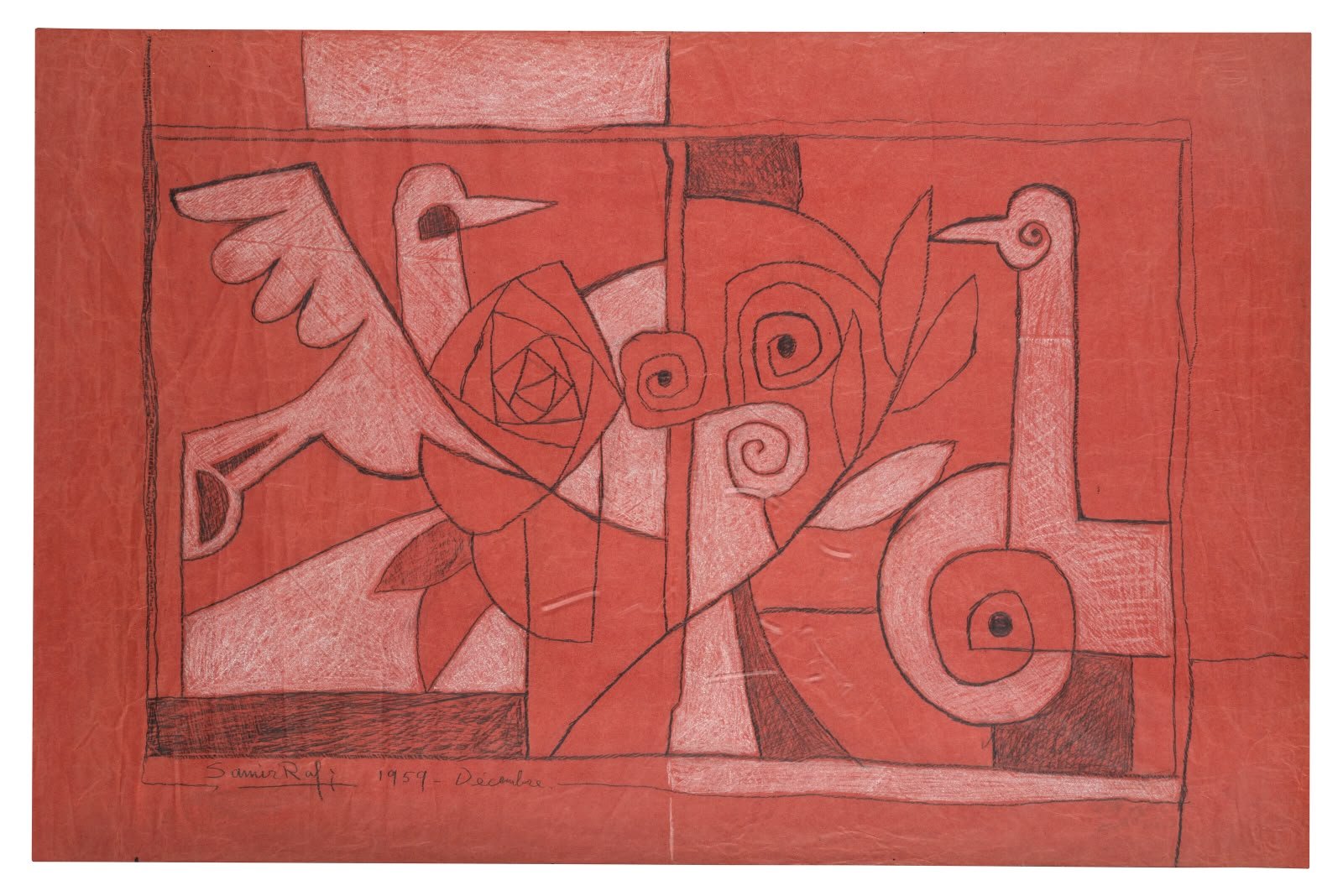
Although their work carried traces of Surrealism and Expressionism, the group sought to move beyond direct imitation of European movements. Abdel Hadi El-Gazzar’s paintings frequently incorporated figures and symbols drawn from popular religious ceremonies, while Hamed Nada developed compositions populated by animals, human figures and references to Egyptian folklore. Samir Rafi, meanwhile, explored everyday life through distorted figures and psychologically charged scenes. Their individual practices differed, but shared an interest in uncovering the social and symbolic worlds beneath the surface of ordinary life.
The group held its first exhibition at the Foyer d’Art of the Lycée Français in Cairo in 1946, followed by further exhibitions, including one at the YMCA in 1948. These presentations introduced an approach to Egyptian modern art that challenged conventional expectations of subject matter and artistic representation.
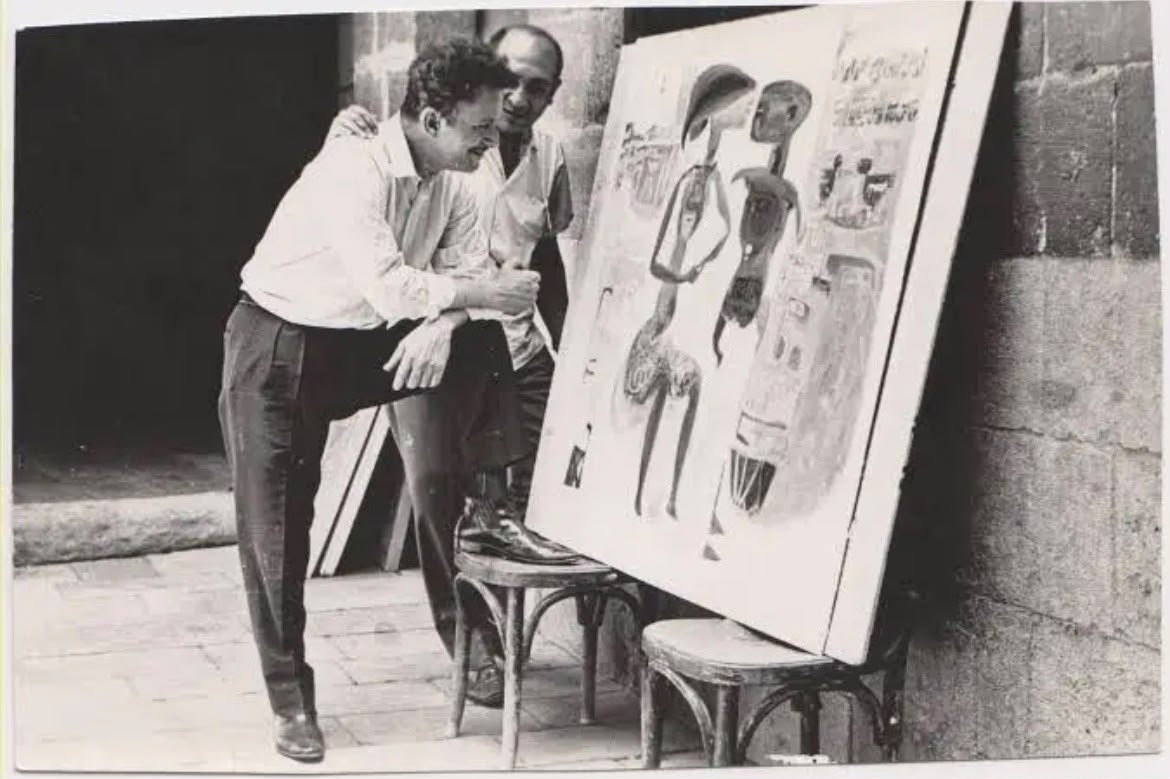
By the mid-1950s, the collective had gradually dispersed as its members pursued independent artistic careers. Its influence, however, continued through the work of artists who became central figures in Egyptian modernism. The Contemporary Art Group helped establish the possibility of a modern Egyptian visual language that could draw on international artistic developments without separating itself from local experience. Rather than looking outside Egypt for a ready-made definition of modernity, its members sought to find one in the streets, rituals, beliefs and contradictions of the society around them.
© ArtTalks, Egypt Archive
Words copyright of Sarah and Naso Art Journal
