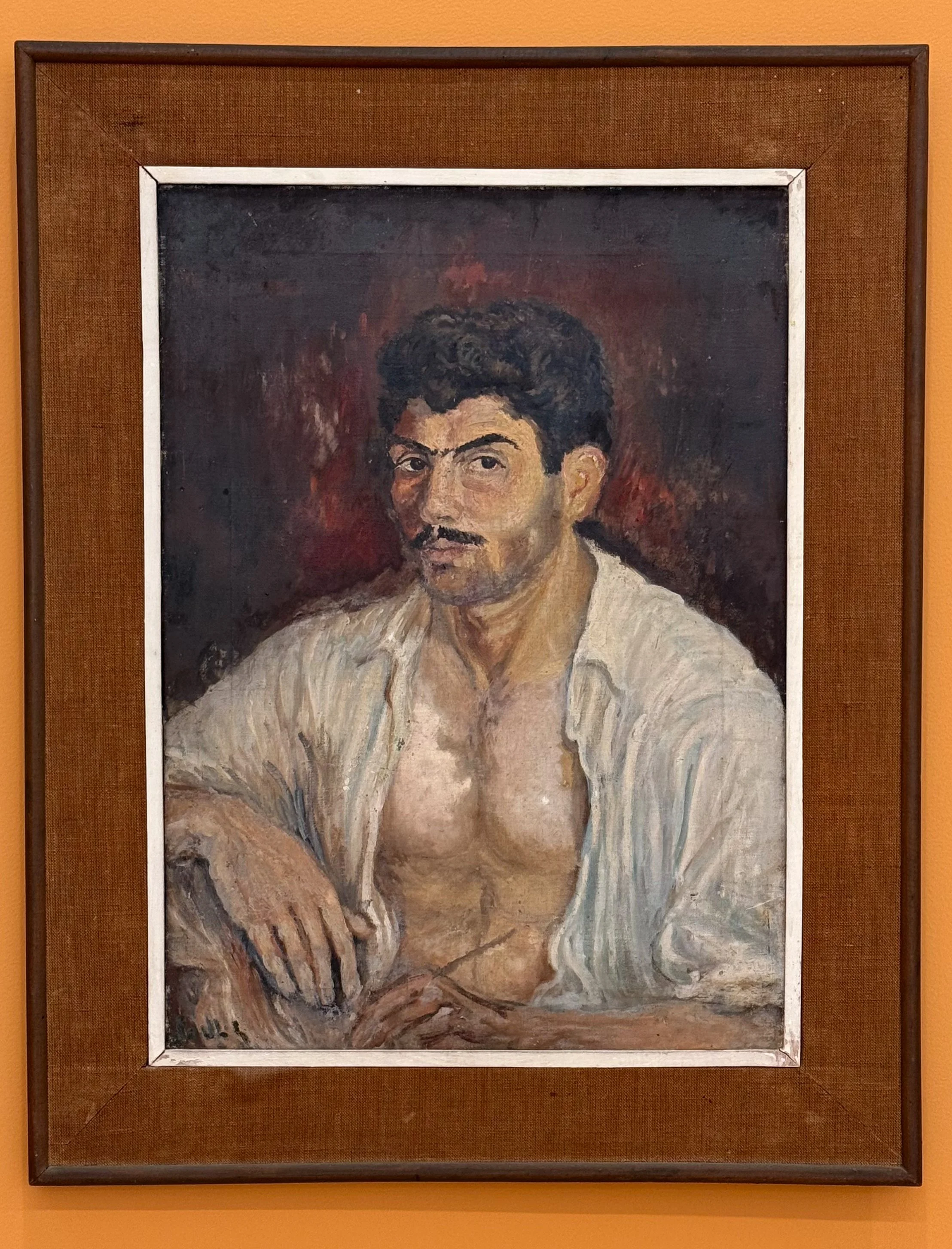
A First Language
“I understood that my first language is painting and I should only talk through painting and nothing else.” Paul Guiragossian
Paul Guiragossian remained true to those words throughout a career spanning more than four decades, developing an artistic language that was unmistakably his own. Born in Jerusalem in 1926, he settled in Beirut in the late 1940s, where the human figure became central to his practice. Over the following decades, his exploration of the figure moved between figuration and abstraction, establishing him by the mid-1960s as one of the leading artists in Lebanon and the wider Arab world. Now, a century after his birth, his work is brought into focus once again in Abu Dhabi.
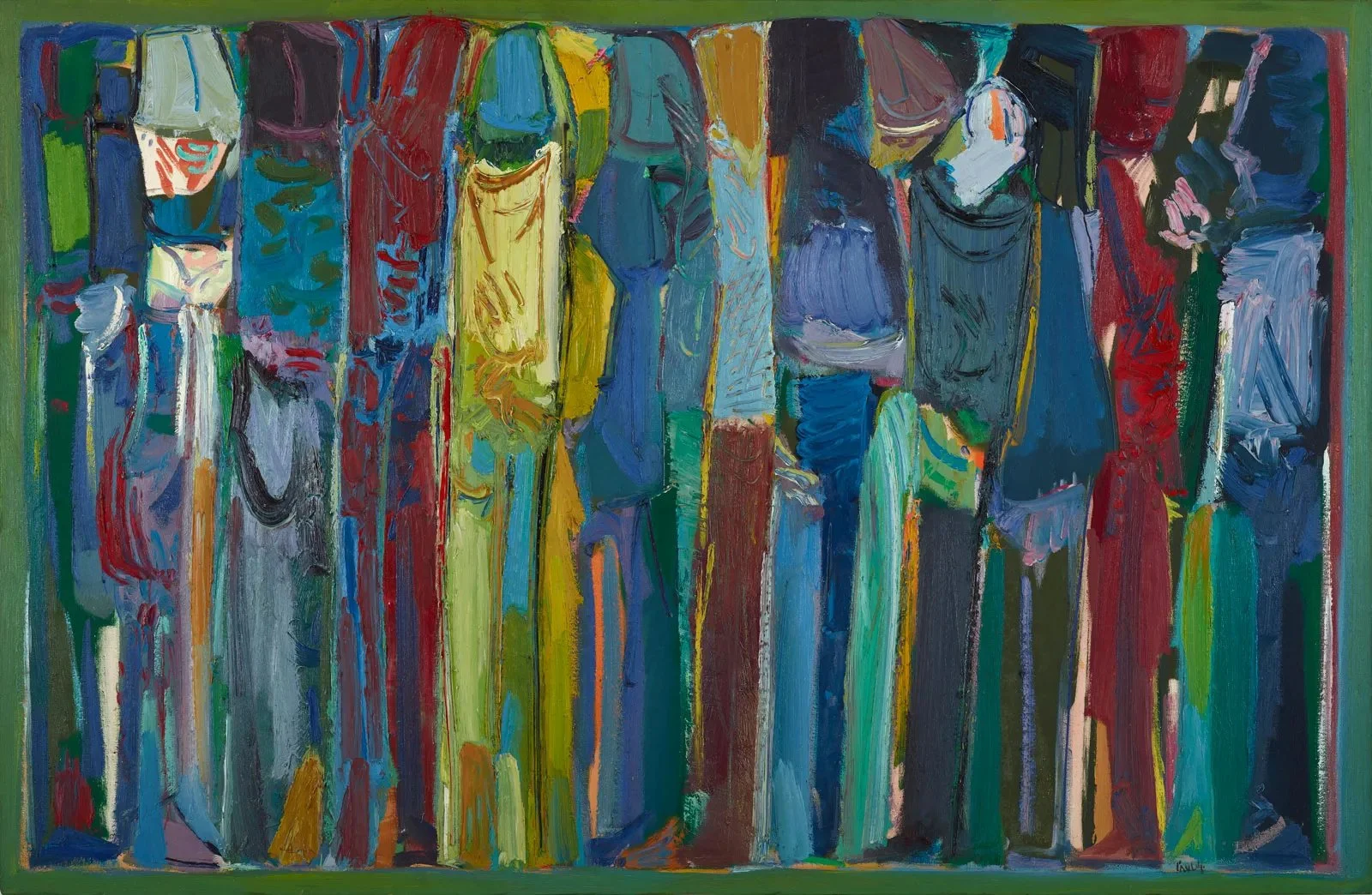
La Lutte de l'Existence, 1988, oil on canvas, Courtesy of Dalloul Art Foundation.
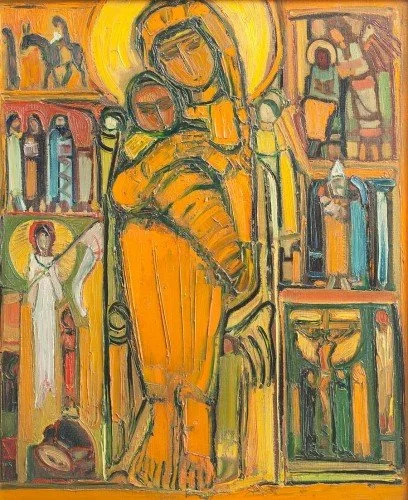
Madonna and Child, 1957, oil on canvas, Courtesy of Barjeel Art Foundation.
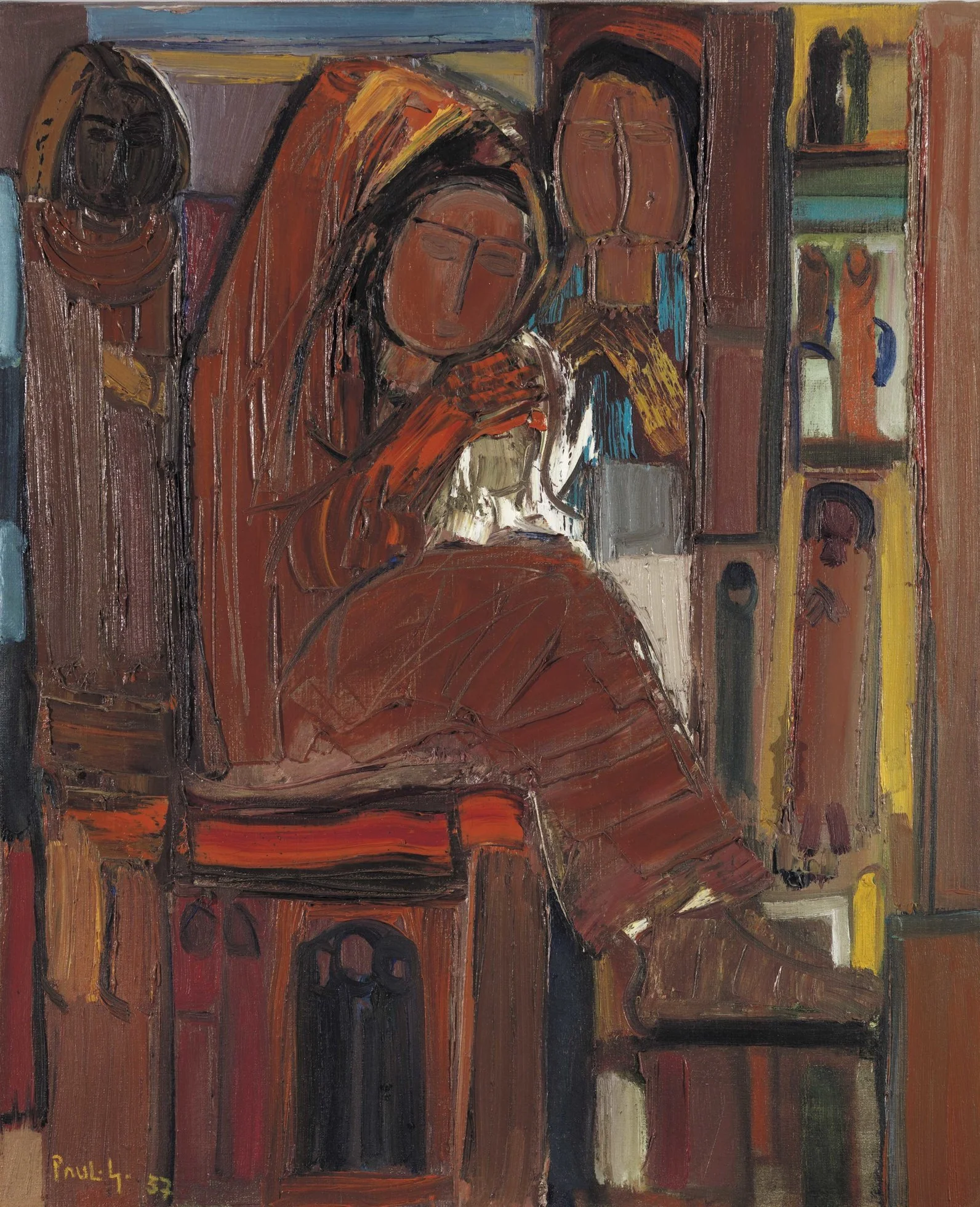
Seated Woman, 1957, oil on linen, Courtesy of Mathaf: Arab Museum of Modern Art, Doha.
From Jerusalem to Beirut
Guiragossian was born in Jerusalem to Armenian parents who had survived the Armenian Genocide of 1915. He developed an interest in drawing from an early age and went on to study painting at Yarkon Studio in Jaffa. In the late 1940s, his family moved to Beirut, a city whose streets and people would become enduring subjects of his paintings.
In Beirut, Guiragossian taught art in schools and privately, worked as an illustrator, and established a business with his brother Antoine, producing cinema banners, designing posters and illustrating books. In 1952, he married Juliette Hindian, a young painter who had previously studied with him. Together, they had six children: Silva, Emmanuel, Araxie, Jean-Paul, Ara and Manuella. Ara died from an illness shortly after his birth, a loss that Guiragossian would later revisit through several paintings made in his memory.
Florence, Paris and a Name in the Arab World
In 1956 Guiragossian won first prize in a painting competition, and with it a scholarship from the Italian government to study at the Academy of Fine Arts in Florence. During his time in Italy he exhibited his work, including a solo show at Galleria d’Arte Moderna La Permanente in 1958. A French scholarship followed in 1962, allowing him to continue his studies and artistic practice in Paris, where he held an exhibition at Galerie Mouffe later that year.
By the mid-1960s he had become one of the leading artists in Lebanon and the Arab world. He went on exhibiting internationally for the rest of his life, until his death in Beirut on 20 November 1993.
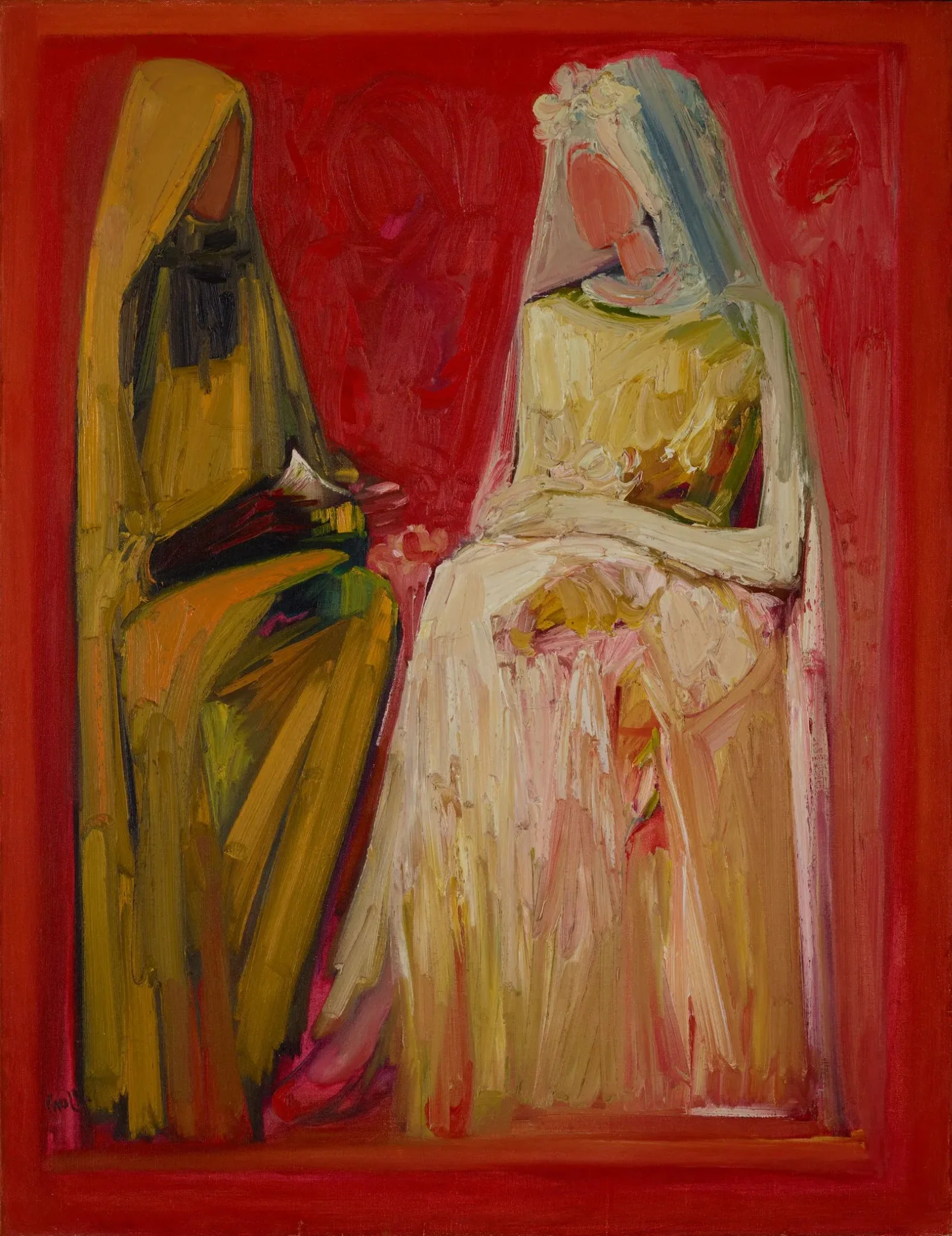
Al Risala (The Message), 1977, oil on canvas, Courtesy of Dalloul Art Foundation.
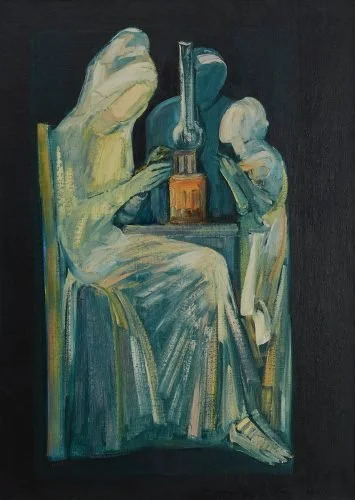
La Lampe, 1979, oil on canvas, Courtesy of Barjeel Art Foundation.
A Language of Figures
Guiragossian’s early paintings drew closely on the streets of Beirut and the working-class communities that inhabited them. He painted workers, porters, women and children, finding his subjects among the familiar faces of his neighbourhood and bringing their everyday lives to the canvas.
From the 1960s onwards, his treatment of the human figure began to evolve. Bodies became elongated and increasingly simplified, while thick layers of paint and expressive vertical brushstrokes introduced a greater sense of movement. In some compositions, figures dissolved into passages of colour, with areas of exposed canvas creating depth and rhythm. Despite these developments and his movement between figuration and abstraction, the human figure remained central to his practice.
Family, Faith and Belonging
Across his career Guiragossian kept returning to family and motherhood, to faith and despair, to exile and the longing to belong. Women hold a particular place among these subjects, appearing often as maternal or spiritual presences. His compositions often bring figures together in close groups, pressed against one another within the frame.
Highlights: Paul Guiragossian, 100 Years of Art
The centenary of Guiragossian’s birth is being marked at the Bassam Freiha Art Foundation in Abu Dhabi with Paul Guiragossian: 100 Years of Art, on view until 17 January 2027. Presented in collaboration with the Paul Guiragossian Foundation, the exhibition draws its paintings from the artist’s estate and hangs them beside archival photographs. Visitors move through it chronologically, following his visual language as it evolves alongside the life from which it grew.
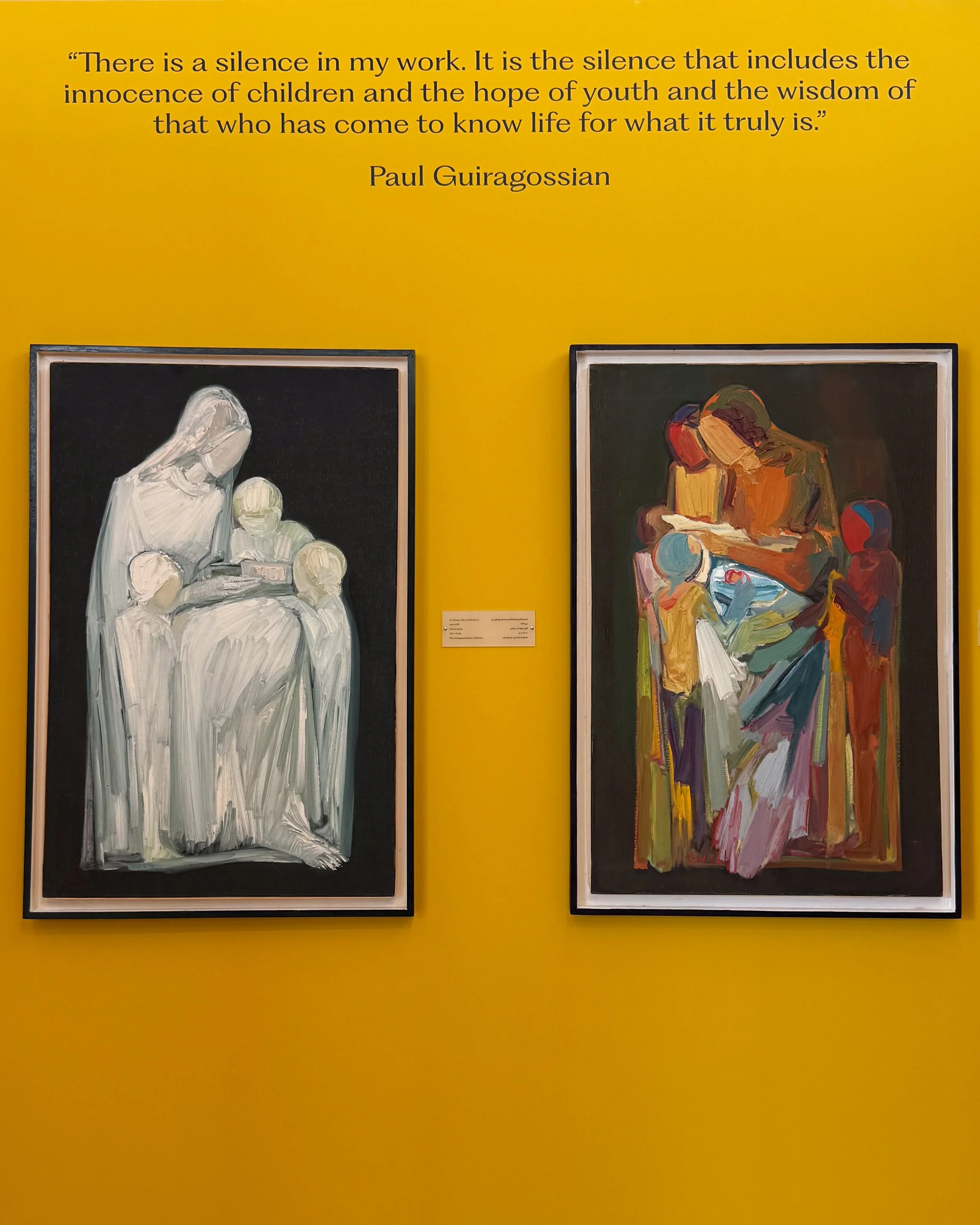
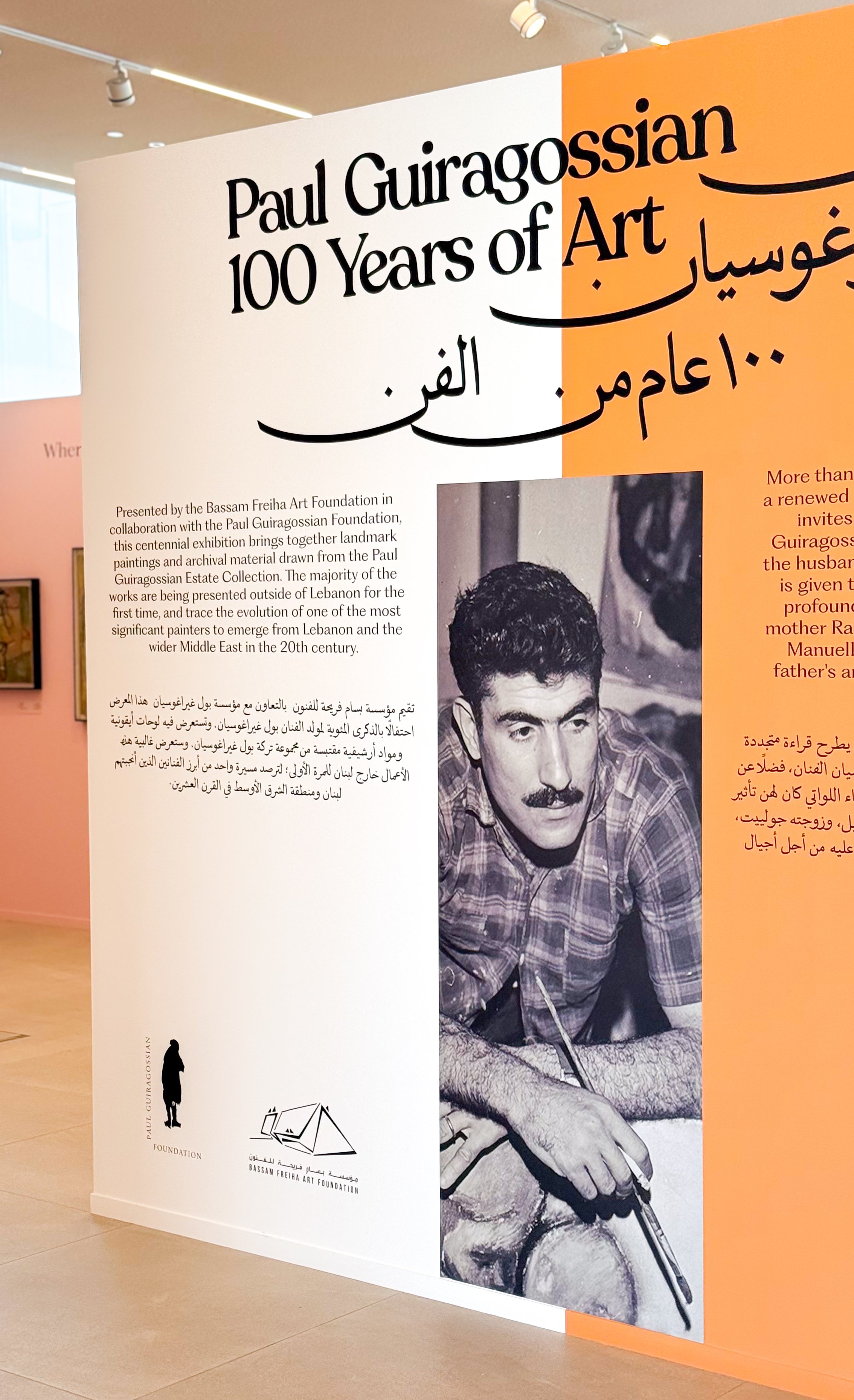
Image credit: Mareta Dashkueva