
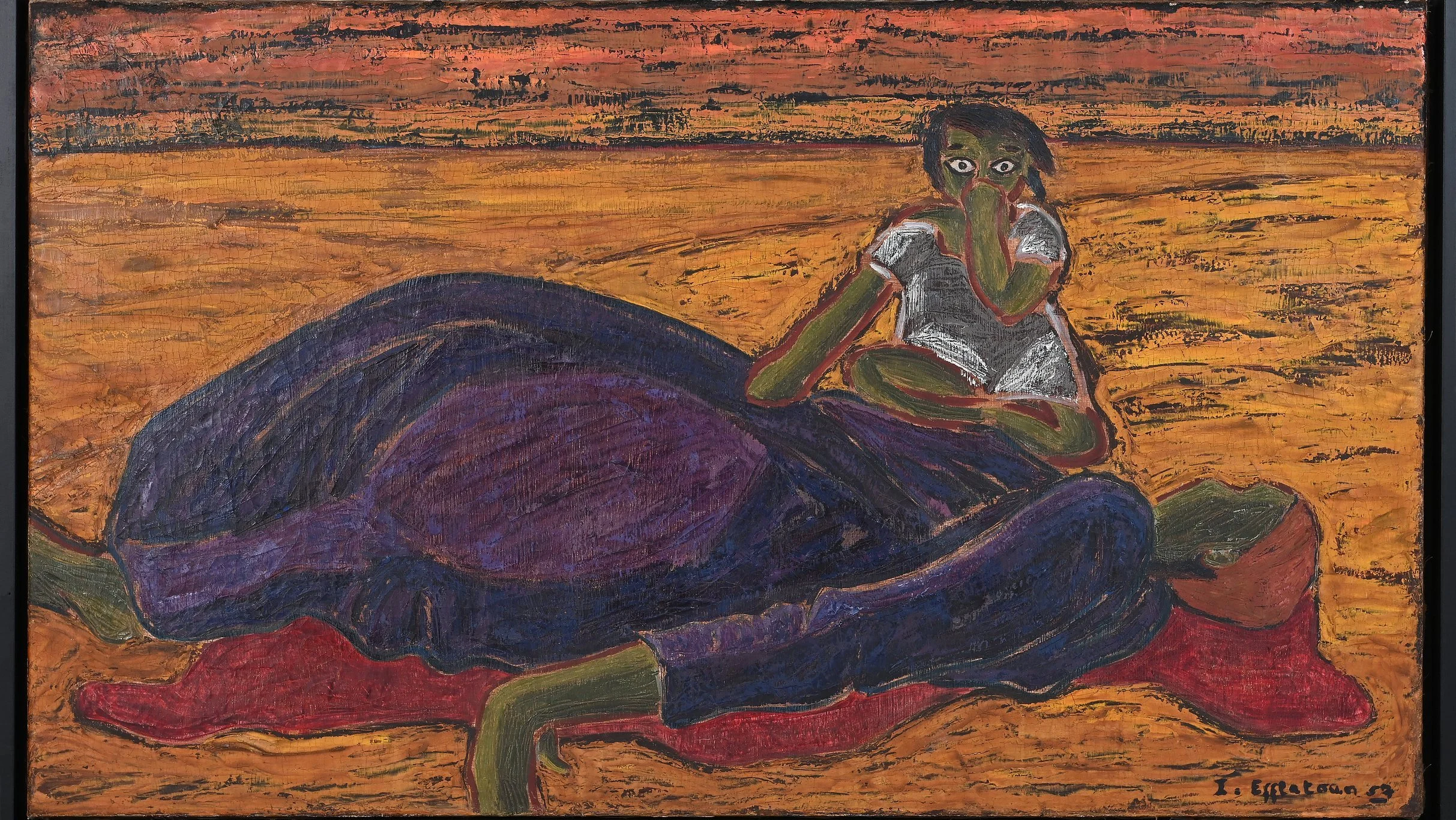
Inji Efflatoun, The Girl of Port Said, 1957, oil on canvas, Courtesy Mathaf: Arab Museum of Modern Art, Doha.
Before turning her attention to the fields and villages that would come to define much of her artistic practice, Inji Efflatoun painted scenes drawn from her imagination. Born in Cairo in 1924 and educated at the Collège du Sacré-Cœur and then the Lycée Français, she began private lessons in her teens with Kamel el-Telmissany, a painter and filmmaker associated with Art and Liberty, the Cairo Surrealist group formed in the late 1930s around Georges Henein, Ramses Younan and Fouad Kamel, and through him she encountered Surrealism, Cubism and the possibility of painting from inner experience.
In 1942, at eighteen, she was the youngest artist in Art and Liberty’s third exhibition. There is a pervasive unease to paintings from this period, including Girl and Monster (1942), in which women appear vulnerable to the worlds they inhabit, their surroundings heightening a sense of fear and uncertainty. Read in light of her later life, these early explorations of psychological confinement acquire a particular importance.
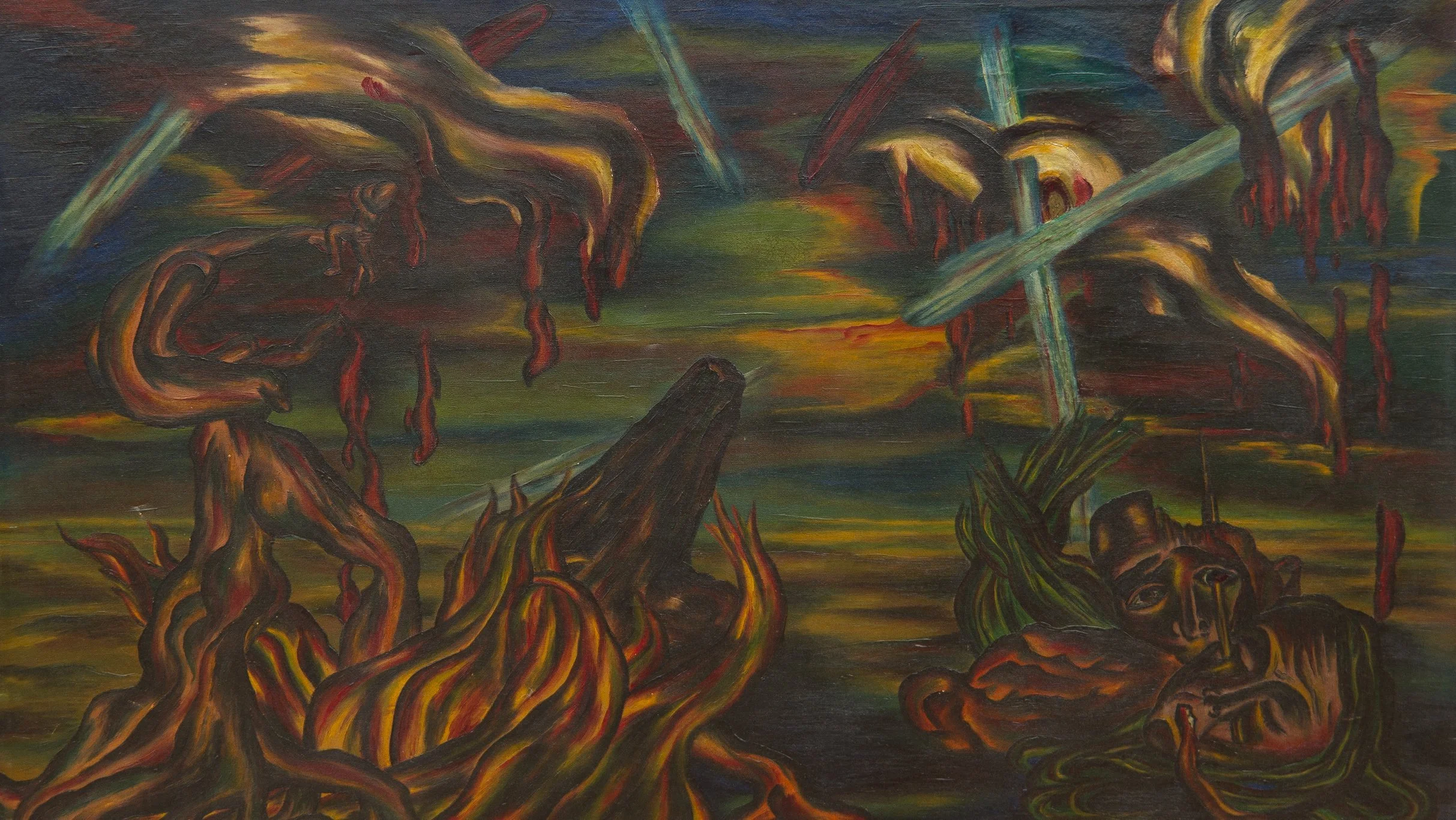
Inji Efflatoun, Girl and Monster, 1942, oil on canvas, Courtesy Mathaf: Arab Museum of Modern Art, Doha.
After several years away from painting in the mid-1940s, Efflatoun returned to it at the end of the decade, studying with the painter Margo Veillon and in the studio of Hamed Abdalla and Tahia Halim, and her work began to move outward, towards the people and places of the Egyptian countryside, often painted directly on her family’s farm at Kafr Shokr in the Nile Delta. Through the 1950s she painted peasants and their villages, labourers, and women at work in the fields, in a figurative language of strong contours and carefully structured colour, and alongside her painting she wrote about the lives of Egyptian women, a concern that runs through all of her work. Women remained at the centre of her canvases, now as figures of endurance within the landscape they worked. Her first solo exhibition was held at the A.D.A.M. Gallery in Cairo in 1952, and over the rest of the decade she exhibited almost every year in Cairo and Alexandria, and represented Egypt at the Venice Biennale in 1952 and the São Paulo Biennial in 1953.
In 1959, her political activism, which had long joined the fight against colonial rule with the emancipation of women, led to her imprisonment, and over the four years until her release in 1963, the painting she made turned towards the women she lived alongside. Her sister helped secure the materials she needed, although the prison authorities did not always permit her to paint. When she was able to work, Efflatoun drew her subjects from the life unfolding around her, documenting fellow inmates, their shared sleeping quarters and the ordinary routines of imprisonment in works such as Al-‘Anbar (The Dormitory) (1960) and Dreams of the Detainee (1961). The natural world beyond the prison also became an important subject. In paintings such as Flower Trees Behind the Bars (1962) and The Tree of Freedom (1963), Efflatoun turned her attention to the fragments of the outside world visible from within, finding in the trees and branches beyond the bars a subject she would explore throughout her imprisonment.
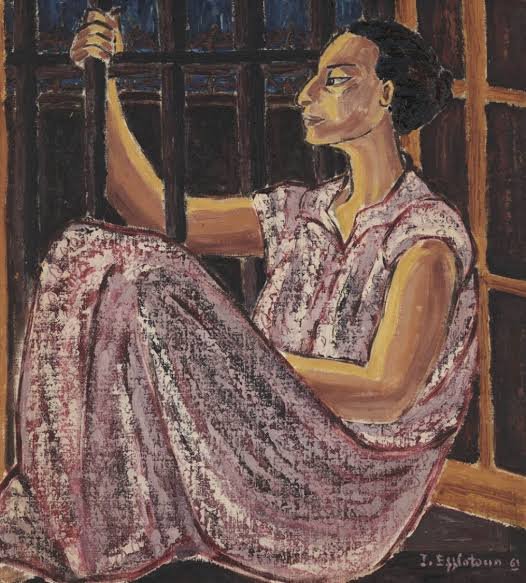
Dreams of the Detainee, 1961, Oil on canvas, Courtesy Barjeel Art Foundation
After her release, Efflatoun devoted herself to painting, and her attention returned to the land, to orchards, flowering trees, date harvests and the fields of the Delta countryside. Over the following decade, her treatment of light and colour continued to evolve, culminating in the style she called her White Light, which emerged in the mid-1970s. Here, the canvas itself becomes an essential part of the composition. Rather than filling the entire surface with paint, Efflatoun allowed its whiteness to remain visible between scattered touches of colour, giving her landscapes an extraordinary sense of luminosity. Figures working in the fields emerge from these marks alongside the trees and surrounding earth, their forms sharing the same rhythm and movement as the landscape.
Efflatoun's memoirs began as a series of spoken recollections preserved on cassette tapes, which she later transcribed into a written account. Edited by Said Khayal, they were published in Arabic in 1993, four years after her death in Cairo in 1989. Their first complete English translation appeared in The Life and Work of Inji Efflatoun, published by the Barjeel Art Foundation and Skira in 2025. Her work is held by Mathaf: Arab Museum of Modern Art in Doha, the Barjeel Art Foundation in Sharjah, the Museum of Egyptian Modern Art in Cairo and the Museum of Modern Art in Alexandria, and this autumn the Whitechapel Gallery in London presents Inji Efflatoun: The Poetics of Justice, organised with the Sharjah Art Museum and running until 14 February 2027, her first major exhibition in the UK.
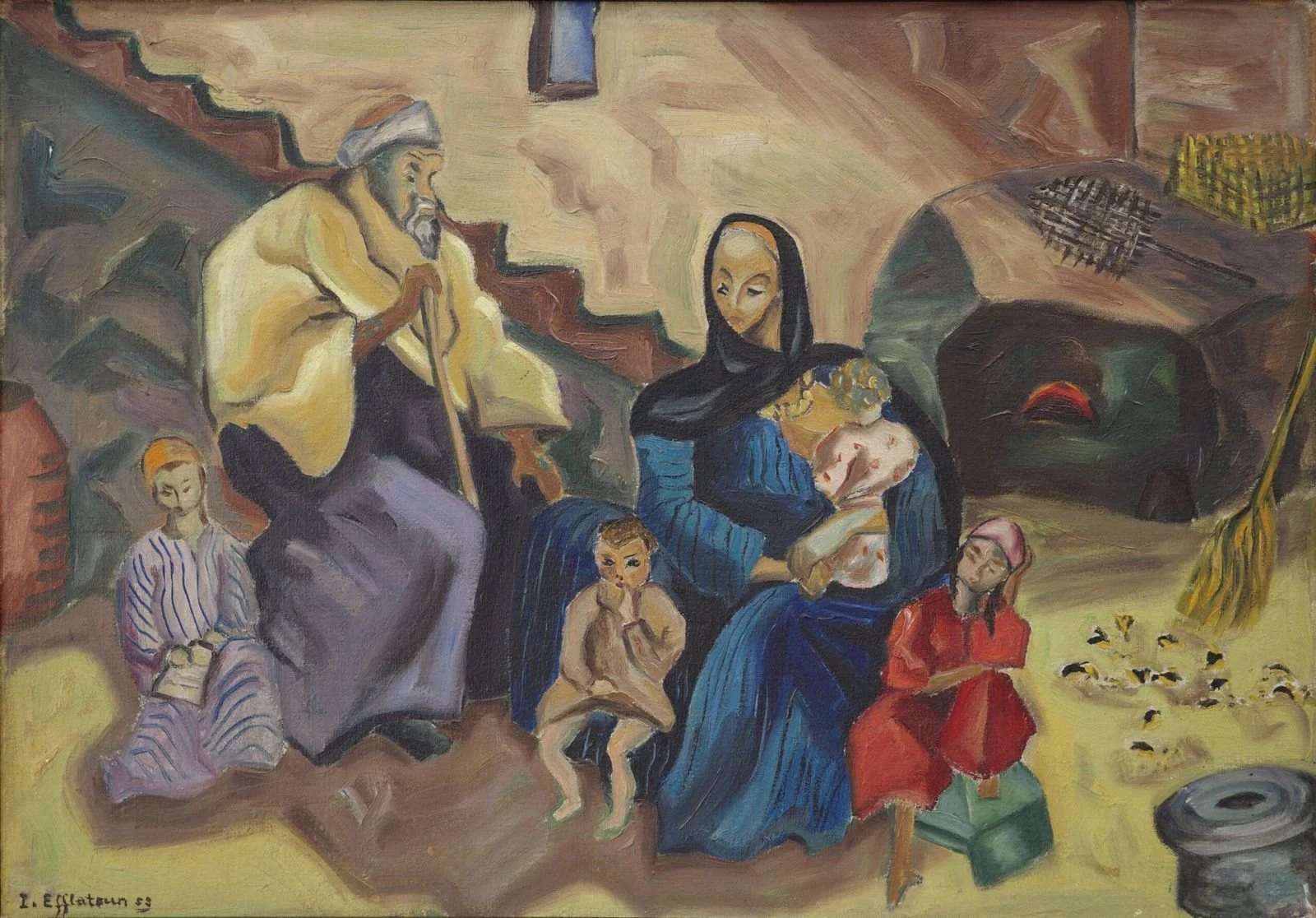
Fourth Wife, 1952, Oil on canvas, Courtesy Barjeel Art Foundation
Words copyright of Naso Art Journal
