
Frieze London 2026: A look into SWANA Galleries at this year’s fair
Written by Sarah
Courtesy of Frieze and Hugo Glendinning
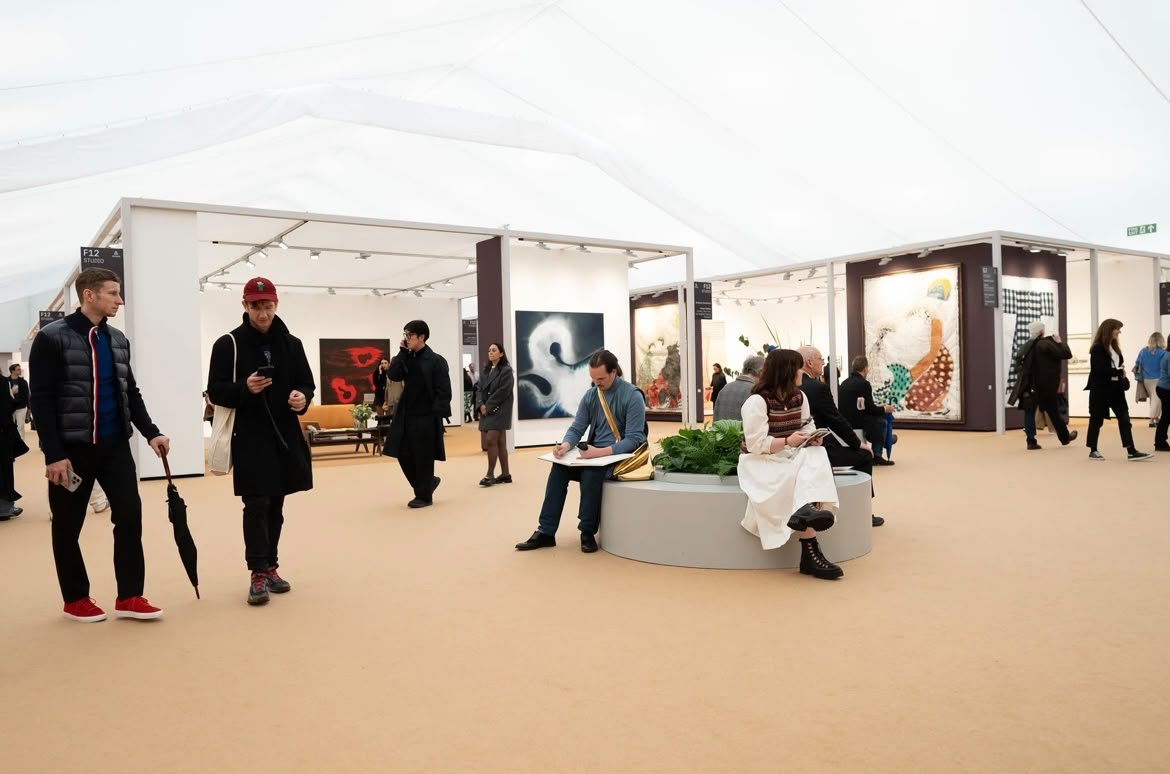
The past few years have brought considerable changes to the international gallery landscape, with established spaces closing or restructuring amid rising costs and shifting market conditions. Yet the picture is more complex than a simple narrative of decline. The Art Basel and UBS Art Market Report 2026 found that gallery openings outnumbered closures in 2025, suggesting a sector undergoing considerable change. Against this backdrop, the presence of galleries working with artists from Southwest Asia and North Africa (SWANA) at Frieze London and Frieze Masters offers a view of where new opportunities for visibility and collecting are emerging.
Among the first-time participants at Frieze London is Jeddah-based Hafez Gallery, presenting Egyptian artist Ahmed Nawar alongside Bahraini-Saudi artist Faisal Samra. Nawar’s geometric abstractions explore the relationship between humanity and civilisation, using sharp forms to reflect on the transformations of modern life. Samra approaches questions of identity and human existence through suspended mixed-media sculptures and other conceptual works. Bringing these two artists together places distinct generations of artistic experimentation in conversation, while introducing international audiences to practices that have helped shape modern and contemporary art in the Arab world.
Nada ElKalaawy
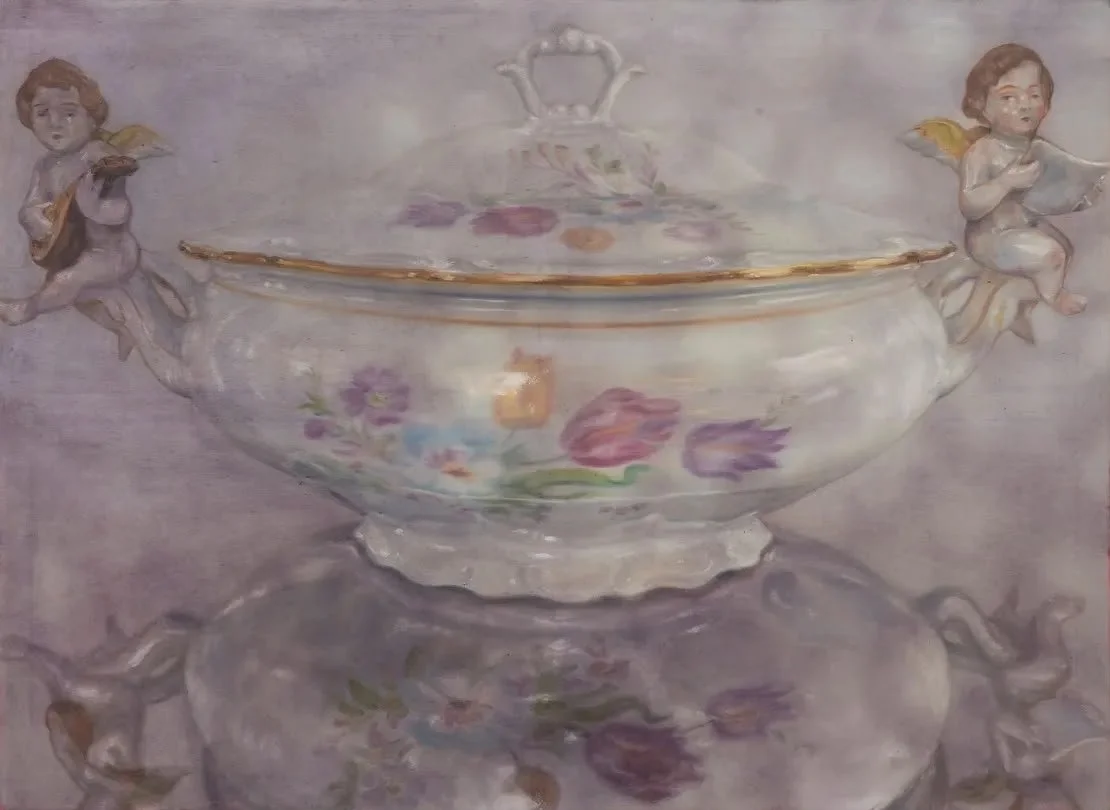
Porcelain Apparition, 2025 c the artist
Cairo-based Gypsum Gallery also makes its debut, presenting Huda Lutfi, Nada Elkalaawy, Hana El-Sagini and Yasmine El Meleegy. Elkalaawy draws on family photographs and personal archives, using fragments of lived experience to explore memory, displacement and belonging. Her work connects private histories to wider questions of home and identity, offering a perspective on contemporary Egyptian life that differs from the monumental narratives often associated with national art histories. The presentation also brings four women artists into an international fair context, each working through distinct approaches to image-making and material.
Iranian gallery Dastan brings together artists across generations in Letters from Iran, including Behjat Sadr, Parviz Tanavoli, Farideh Lashai and Maryam Hoseini. Sadr’s gestural abstractions, with her layered surfaces and dynamic marks, offer a starting point for considering the range of artistic languages represented. By placing modernist figures alongside contemporary practitioners, the presentation traces continuities and departures across Iranian art without reducing these practices to a single historical or political narrative.
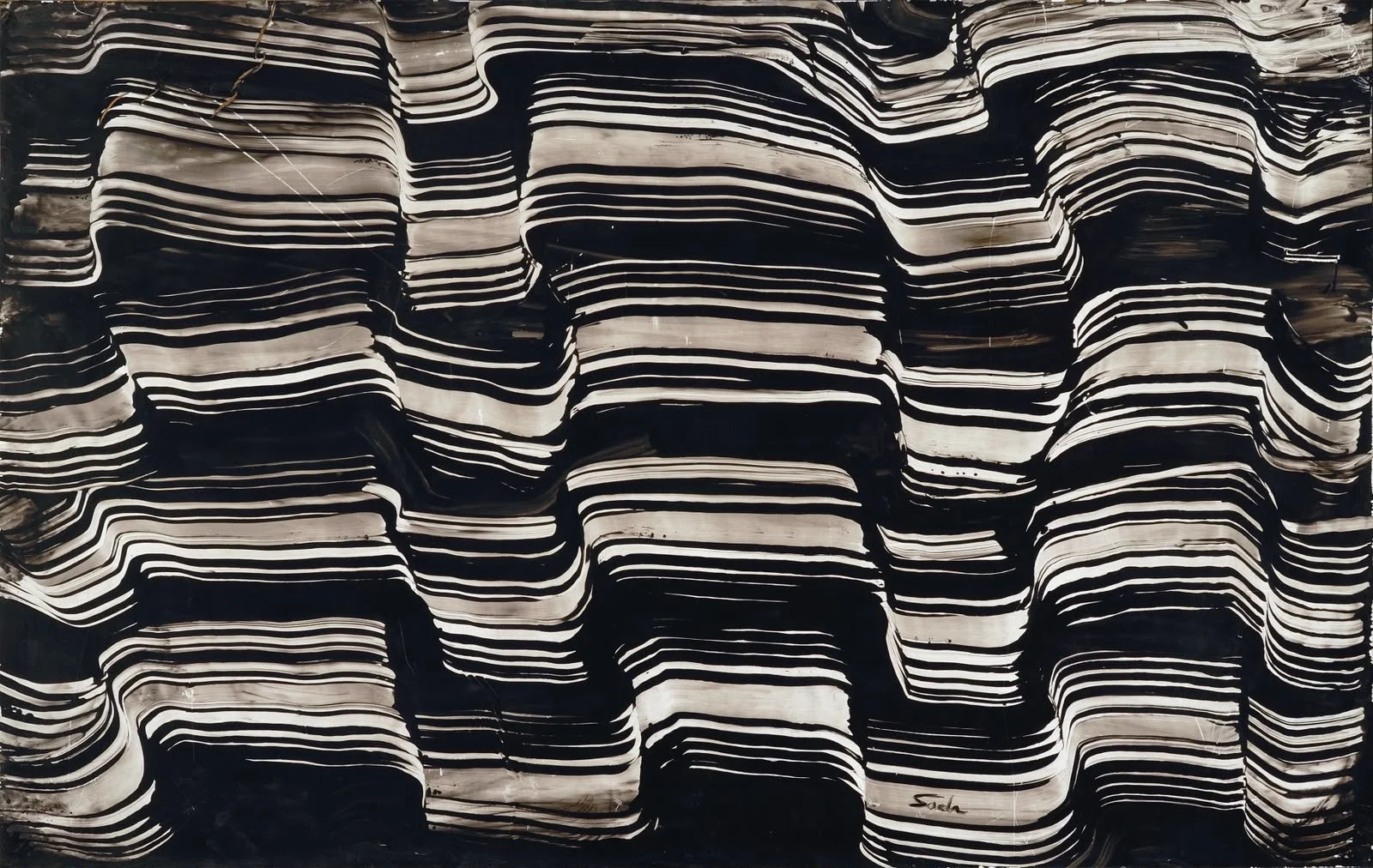
Behjat Sadr, Untitled, 1974. C Behjat Sadr Estate
At Frieze Masters, Casablanca’s Loft Art Gallery presents Wave Forms, a selection of paintings by Mohamed Melehi spanning the 1960s to the 1980s. His recurring wave motif, defined by rhythmic lines and bold colour, became a distinctive feature of Moroccan modernism and the wider Casablanca Art School movement. The presentation also raises a question of art-historical recognition: how artists who helped shape modernism outside its dominant European and American narratives are positioned within international collections. Saudi gallery ATHR brings together Mounirah Mosly and Abdulrahman Alsulaiman, two pioneers of Saudi modernism whose practices offer insight into the development of modern art in the Kingdom.
As galleries participate across these different contexts, they contribute to how artists from SWANA enter international collections, how their practices are situated within broader accounts of modern and contemporary art, how their work is presented to new audiences, and how their legacies are preserved over time. The relationship between regional and international fairs is therefore not simply a question of inclusion and visibility, but also of who shapes the narratives through which artists are collected, contextualised and remembered, which histories are given space within major institutions, and which works are preserved for future generations.
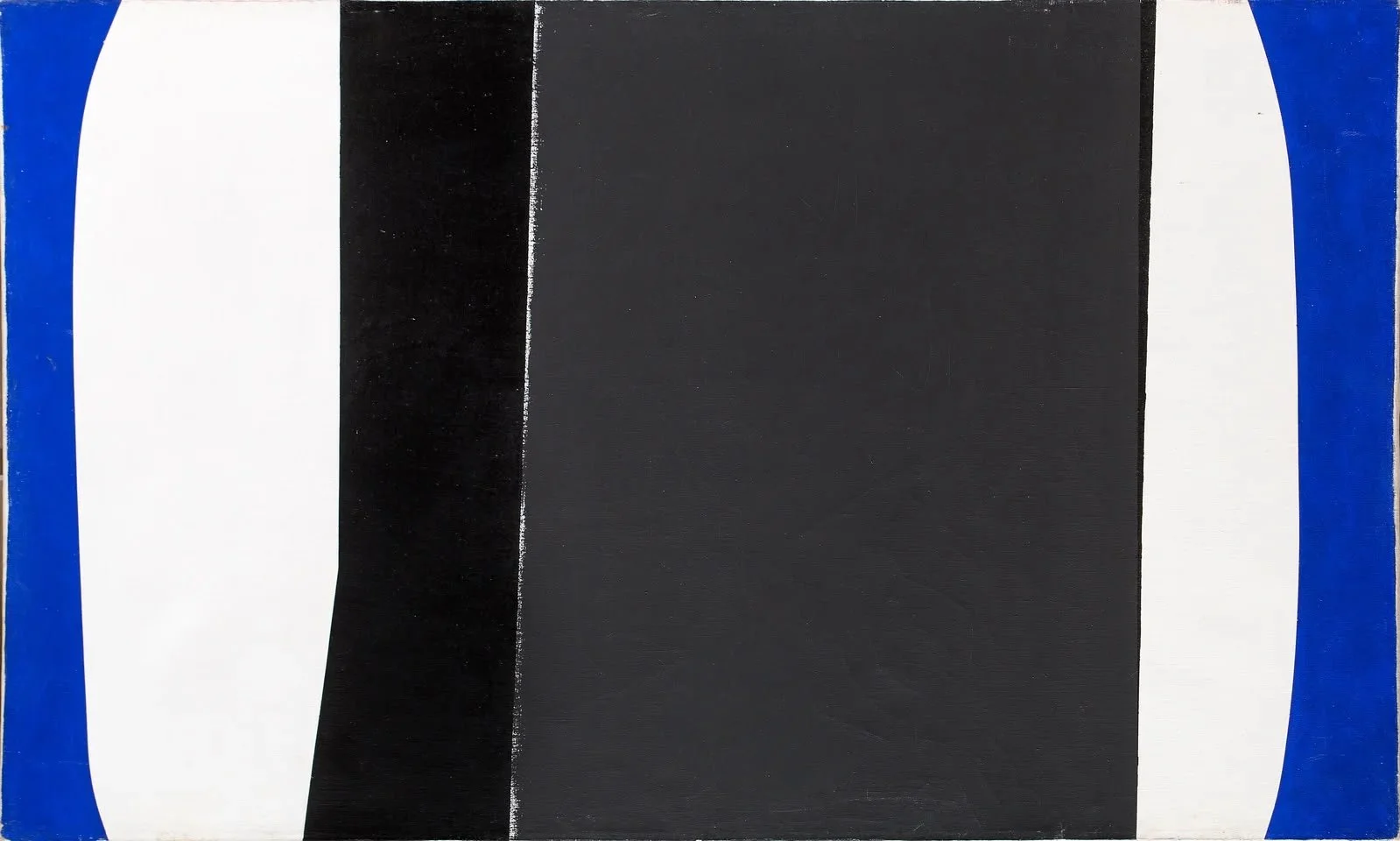
Mohamed Melehi Minneapolis, 1962 c Loft Art Gallery
Words copyright of Naso Art Journal
