
Why Artists Need Each Other More Than They Need Another Gallery
Throughout the year that Naso Art Journal has been active, first as a digital-only publication and now in print, my co-founder Nayla and I have heard one idea repeated time and again across our interviews: artists need community.
There is a persistent myth that artists produce their best work alone. We imagine the solitary genius in a studio, wrestling with ideas in silence until a masterpiece emerges. It is a glamorized, deeply romanticized image. But while writing this piece, I found myself turning back to art history, where a very different story emerges—one that echoes what we have heard throughout a year of conversations. The greatest artists have almost never worked in isolation. They have always found one another.
Picasso did not invent Cubism alone. His years-long exchange with Georges Braque became one of the most productive creative partnerships in modern art. They visited each other’s studios almost every evening, comparing paintings, challenging one another, borrowing ideas, disagreeing, and ultimately inventing an entirely new visual language together. Braque later described them as “mountain-climbers roped together.”
The Impressionists were a community before they became a movement. The Abstract Expressionists gathered nightly at the Cedar Tavern. The Bloomsbury Group blurred the boundaries between writers, painters and critics. Black Mountain College produced generations of artists because it understood something simple: proximity creates possibility.
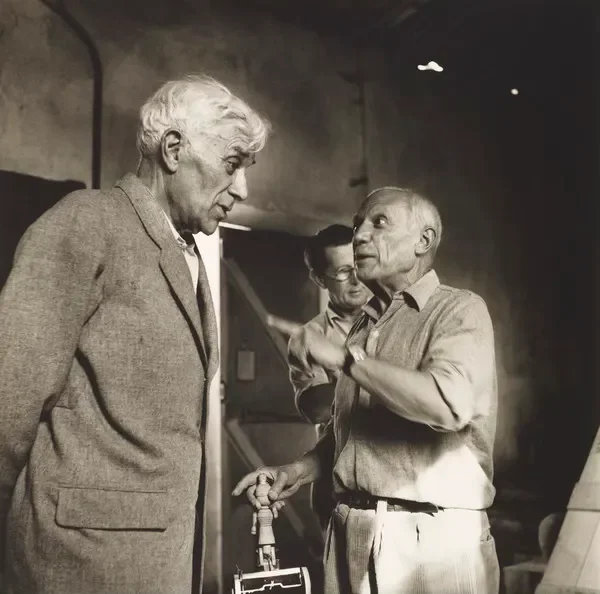
Copyright Lee Miller Archives, England 2016. All Rights Reserved.
Today, however, the structures surrounding artistic careers often encourage the opposite.
For emerging artists, success is frequently presented as a linear progression: graduate, secure gallery representation, produce exhibitions, enter collections. The gallery becomes the destination.
Yet increasingly, that destination feels less certain.
Commercial galleries continue to play an essential role in the ecosystem: they introduce artists to collectors, finance ambitious production, and build long-term careers. But the economics of the market have become increasingly difficult. Rising operating costs, global competition, art fair expenses, and a saturated exhibition calendar have forced many galleries to become more selective and commercially risk-averse. The question, then, is not whether galleries matter.
It is whether they can still provide everything an emerging artist needs. Increasingly, the answer seems to be no…
What galleries sell is visibility.
What they cannot manufacture is belonging. No sales strategy replaces watching another artist solve a problem you’ve been wrestling with for months.
No collector dinner replaces spending six weeks living alongside fifteen people from different countries, exchanging references over breakfast and arguing about painting until midnight.This is where residencies and artist-run spaces quietly become some of the most important institutions in contemporary art.
Unlike galleries, whose primary responsibility is necessarily tied to the circulation of artworks, residencies invest in the conditions from which artworks emerge. Their product is not an exhibition. It is time, experimentation, conversation and trust.
The Alliance of Artists Communities, which represents hundreds of residency programs worldwide, describes residencies as places centered on creative process rather than product, where the most meaningful outcomes are often personal transformation, experimentation and long-term artistic development rather than immediate public presentation. That distinction matters.
Because artistic growth is rarely measurable in sales
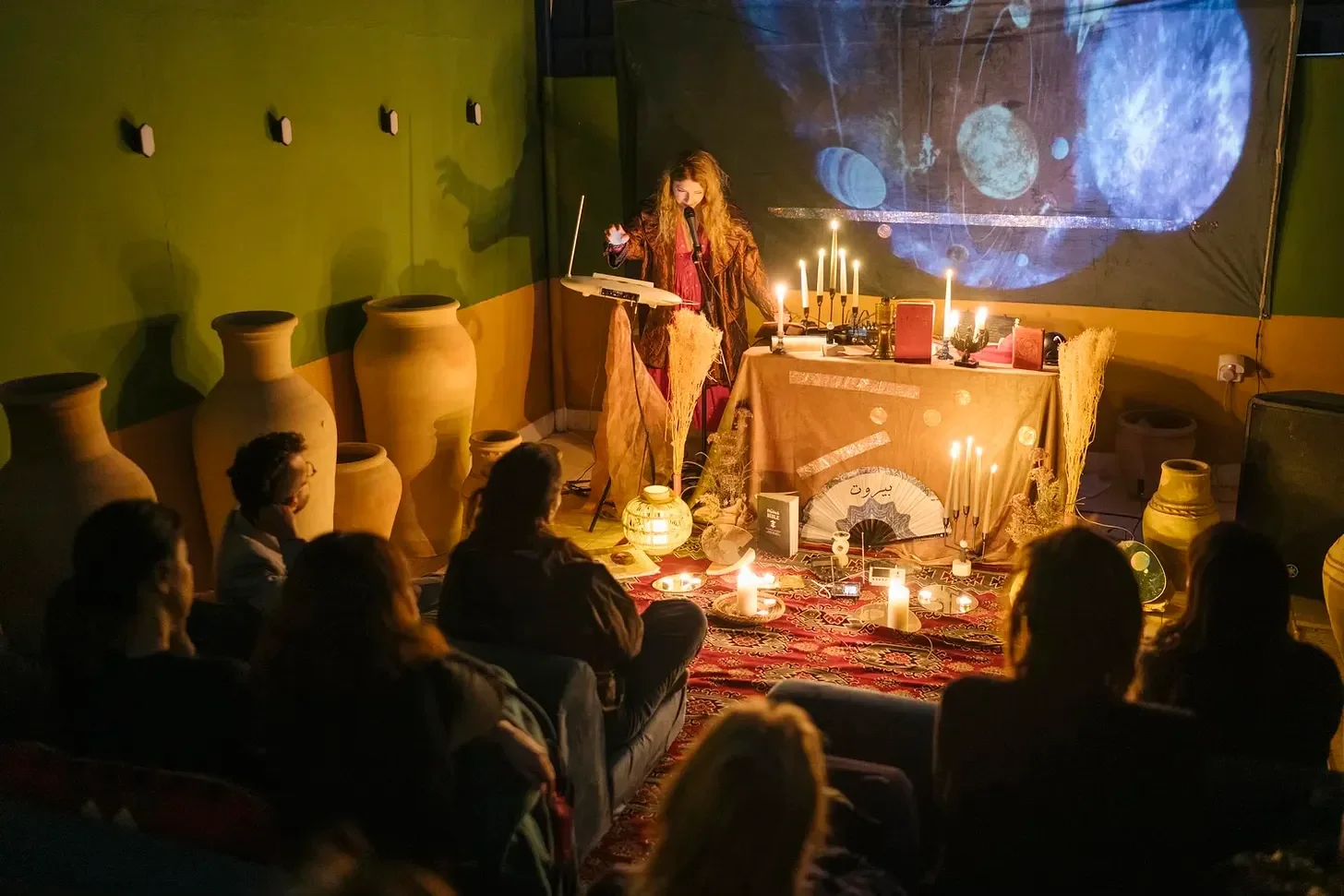
Courtesy of The NEST, AlUla
This is perhaps why younger artists increasingly describe residencies as career-defining moments.
Not because they lead directly to representation but because they change how artists think.
You leave with new collaborators. You discover a curator who understands your work. Someone recommends a book that shifts your entire practice. Someone introduces you to a future collector. Years later, you find yourselves exhibiting together in another city.
Careers rarely unfold through dramatic breakthroughs. They accumulate through relationships. Perhaps this also explains why so many of history’s artistic breakthroughs emerged from shared places rather than isolated studios.
Montmartre.
The Bauhaus.
Black Mountain College.
Downtown New York in the 1970s.
The Young British Artists sharing warehouse studios in East London.
Ideas spread socially before they become historically significant.
Modern art itself was built through exchange. Artists travelled, met in cafés, academies and studios, argued, copied, challenged and inspired one another across cities and countries.
Perhaps the future for emerging artists is less about asking, “How do I find a gallery?and more about asking, Where do I find my people?”
For decades, the art world has treated community as something secondary, a pleasant addition once careers are established. Representation may still come. But community cannot be outsourced.
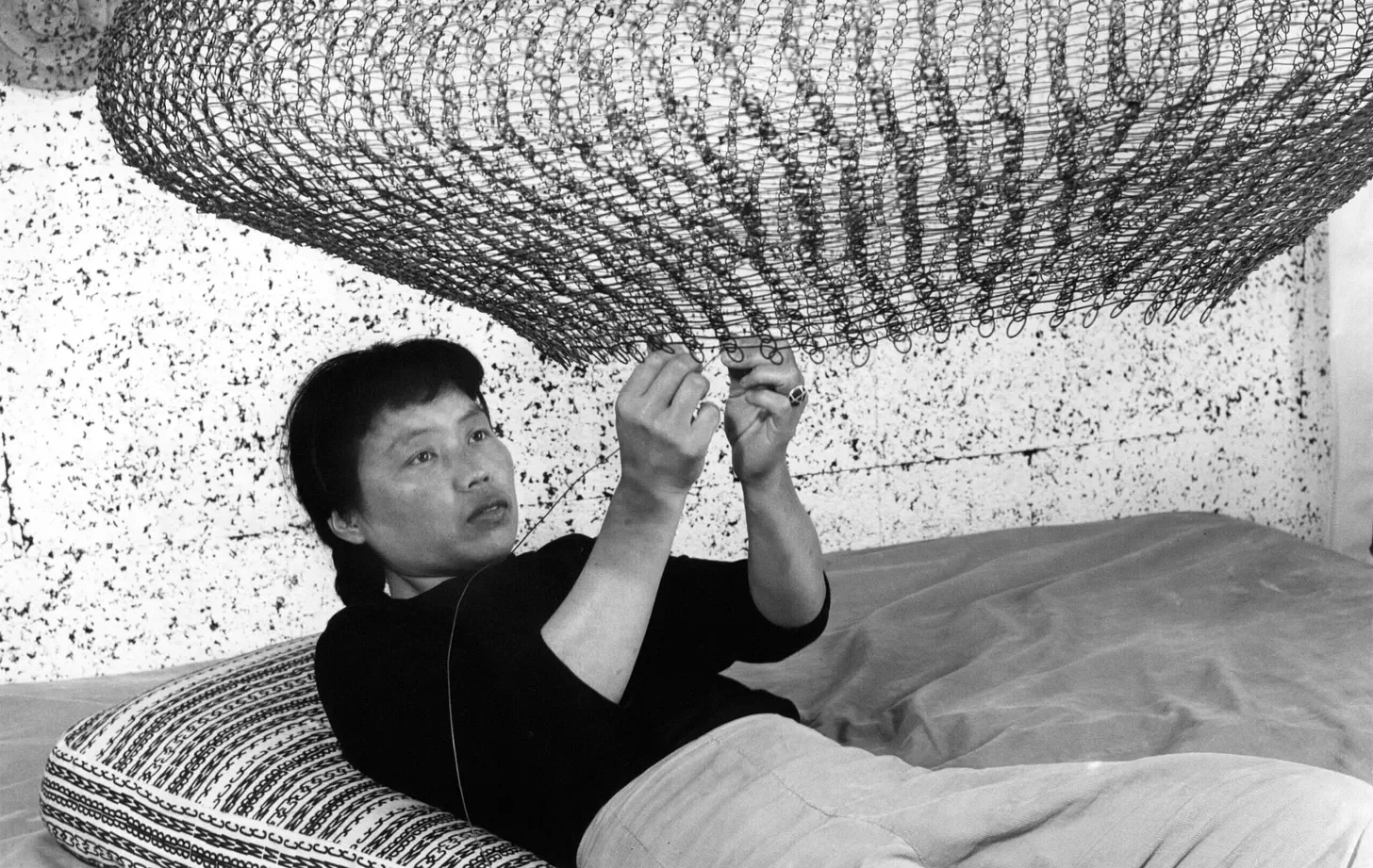
Ruth Asawa, Black Mountain College - Copyright: © Imogen Cunningham Trust
Words copyright of Naso Art Journal
