
The New Custodians: How Forat Haider Is Shaping a New Generation of Collecting in the Gulf
In every generation of the Gulf art world, certain figures emerge quietly, less interested in visibility than in stewardship. While much attention is often directed toward institutions, fairs, and auction results, the future of the region’s cultural ecosystem is equally being shaped by a younger generation of collectors and dealers whose influence is unfolding more subtly. Among them is Forat Haider.
Part collector, part dealer, and increasingly a cultural advocate, Haider represents a generation that has come of age alongside the Gulf’s extraordinary cultural transformation. Unlike earlier collectors who often built collections in relative isolation, his generation has grown up amid museums, biennials, art fairs, foundations, and an increasingly sophisticated ecosystem of cultural production. Yet what distinguishes Haider is not simply his proximity to this growth, but the sense of responsibility with which he approaches it.
When asked what first drew him to collecting, his answer reveals something deeper than market interest.
“Growing up in an artistic environment, I wanted to decorate my room with something different than football players. I ended up having both artworks and pictures of football players.”
The anecdote is disarmingly simple, but it speaks to a larger truth: collecting often begins not with strategy, but with affinity. What followed, however, evolved into a commitment to preservation.
“What motivates me is that I want to support the next generation of artists, and to prevent them from being forgotten like what almost happened to a lot of pioneering artists from the Gulf.”
That concern for historical continuity sits at the center of Haider’s practice. In a region where conversations frequently focus on what is new, he remains equally invested in what risks are being overlooked.
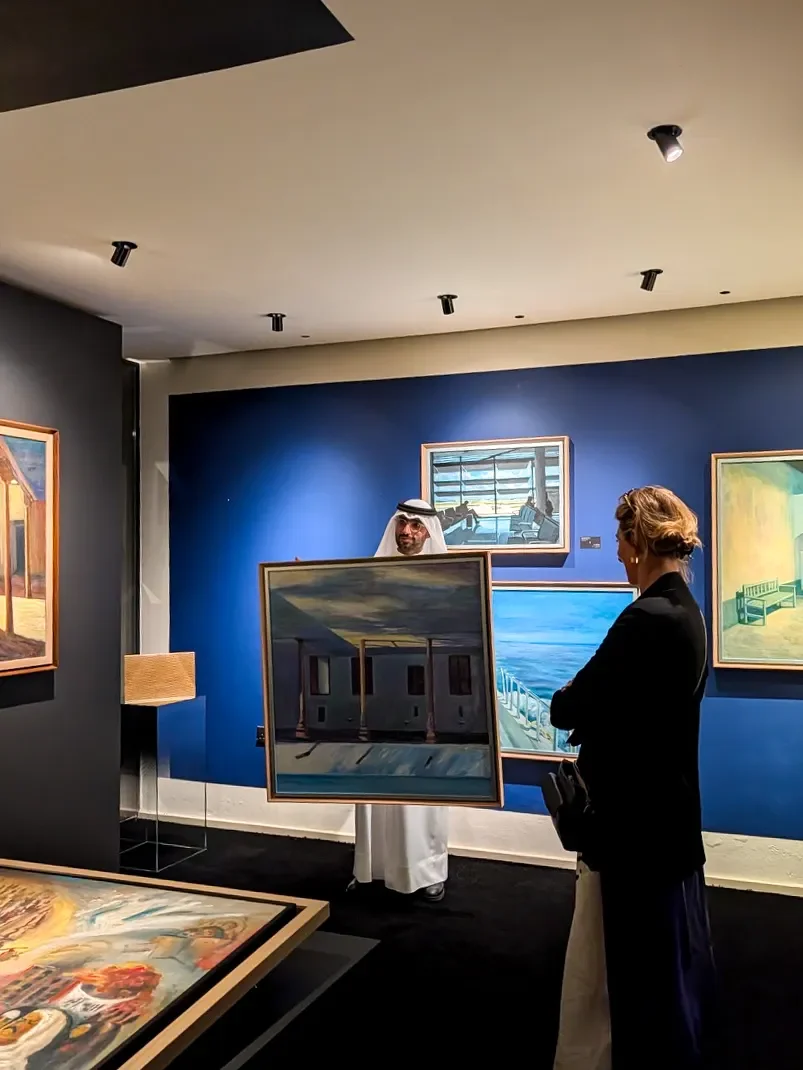
His understanding of collecting has also been shaped by witnessing the maturation of Gulf institutions. Rather than viewing collections as private holdings alone, he increasingly sees them as part of a larger cultural infrastructure.
“I understood the importance of placing artworks in institutional collections, and I also started to understand the regional mindset when it comes to collecting—whether it’s collecting with a purpose or based on an individual’s personal taste.”
His understanding of collecting has also been shaped by witnessing the maturation of Gulf institutions. Rather than viewing collections as private holdings alone, he increasingly sees them as part of a larger cultural infrastructure.
“I understood the importance of placing artworks in institutional collections, and I also started to understand the regional mindset when it comes to collecting—whether it’s collecting with a purpose or based on an individual’s personal taste.”
This awareness reflects a broader shift occurring across the GCC. The collector is no longer merely an owner of objects, but a participant in shaping cultural memory. Collections today increasingly intersect with museums, archives, educational initiatives, and public scholarship.
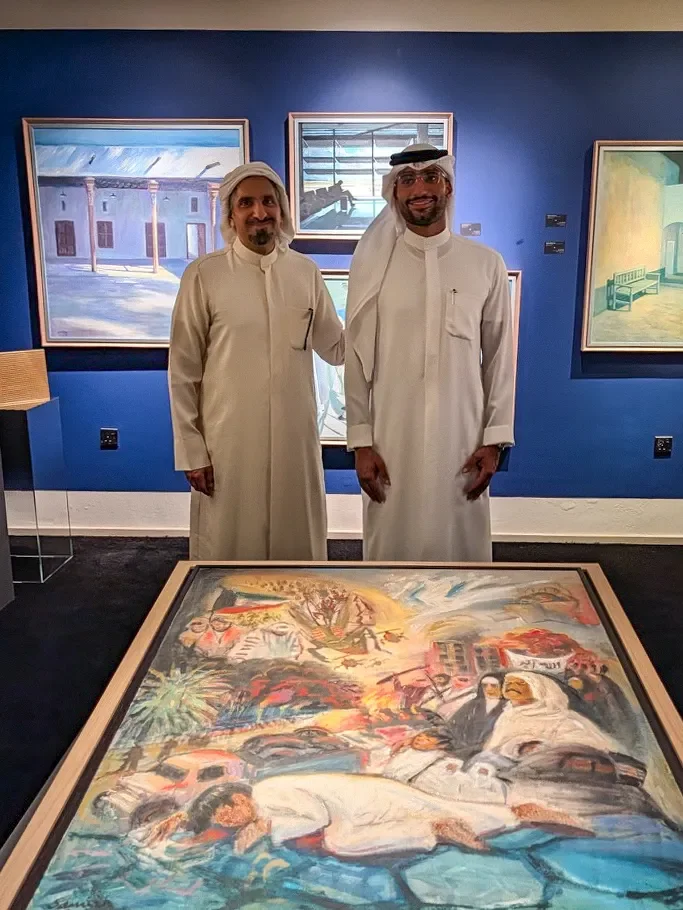
The full article is exclusively in print, Naso Art Journal Issue 3.
Words Copyright of Naso Art Journal
Images Courtesy of Forat Gallery
