
Abdullah Muharraqi: Expanding the Language of Gulf Painting
Abdullah Muharraqi (b. 1939) was one of the defining figures of Bahrain's modern art movement and among the earliest artists to broaden what painting in the Gulf could encompass. While many of his works draw on Bahrain's landscapes, maritime traditions, and architecture, his practice was never confined to documenting place. Over five decades, he developed a body of work that embraced multiple artistic languages, bringing together everyday life, folklore, mythology, and deeply personal reflections alongside responses to wider political and environmental events.
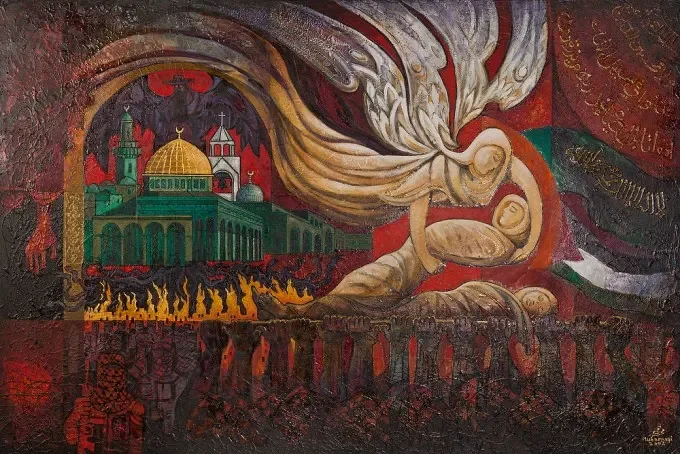
The Martyr’s Spirit, Oil and mixed media on canvas, 2002, Courtesy of Barjeel Art Foundation
Muharraqi refused to remain within a single style. Across his career, he worked through realism, cubism, abstraction, and surrealism, allowing each to serve a different way of thinking. Familiar subjects such as pearl divers, horses, fishing boats, villages, or palm groves often appear alongside fractured bodies, hybrid creatures, symbolic imagery, and dream-like compositions. His paintings shift between the recognisable and the imagined, revealing an artist interested as much in inner experience as in the visible world.
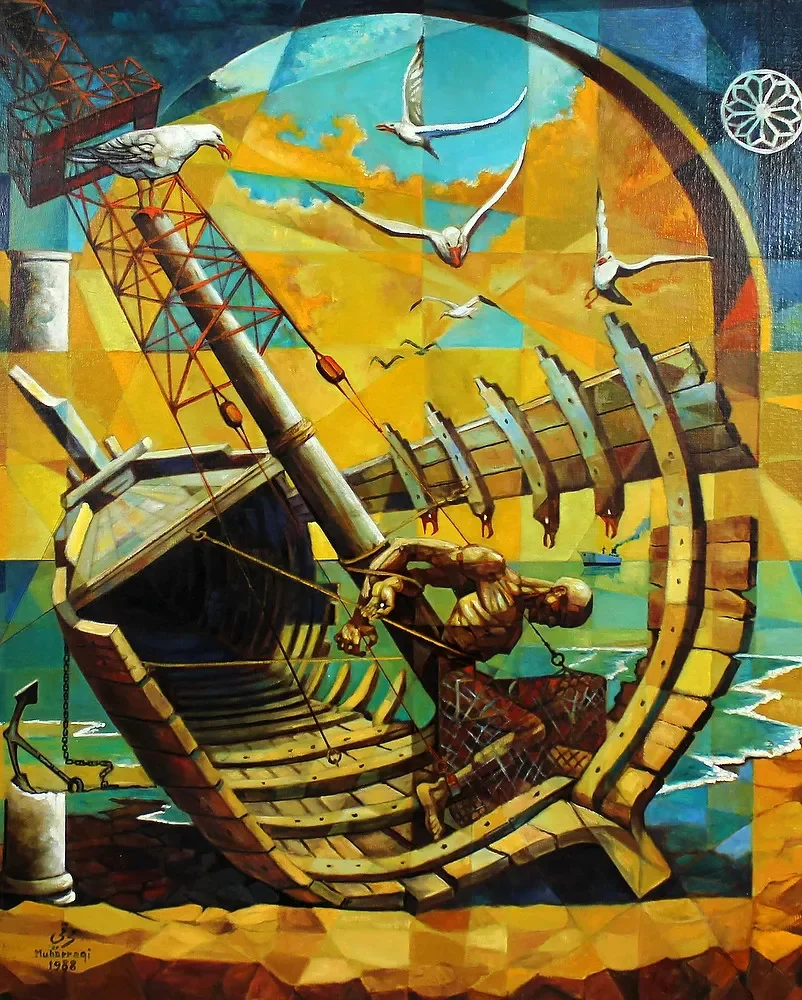
Eternal Torment, Oil on canvas mounted to board, 1988, Courtesy of Barjeel Art Foundation
Exhibiting throughout the Gulf, the Arab world, Europe, and Asia, Muharraqi belonged to a generation of artists who laid the foundations for modern art in the region while remaining in conversation with wider international movements. His work continues to demonstrate that modern Arab painting cannot be understood through a single aesthetic or narrative, but through practices that embraced experimentation, contradiction, and an openness to multiple ways of seeing.
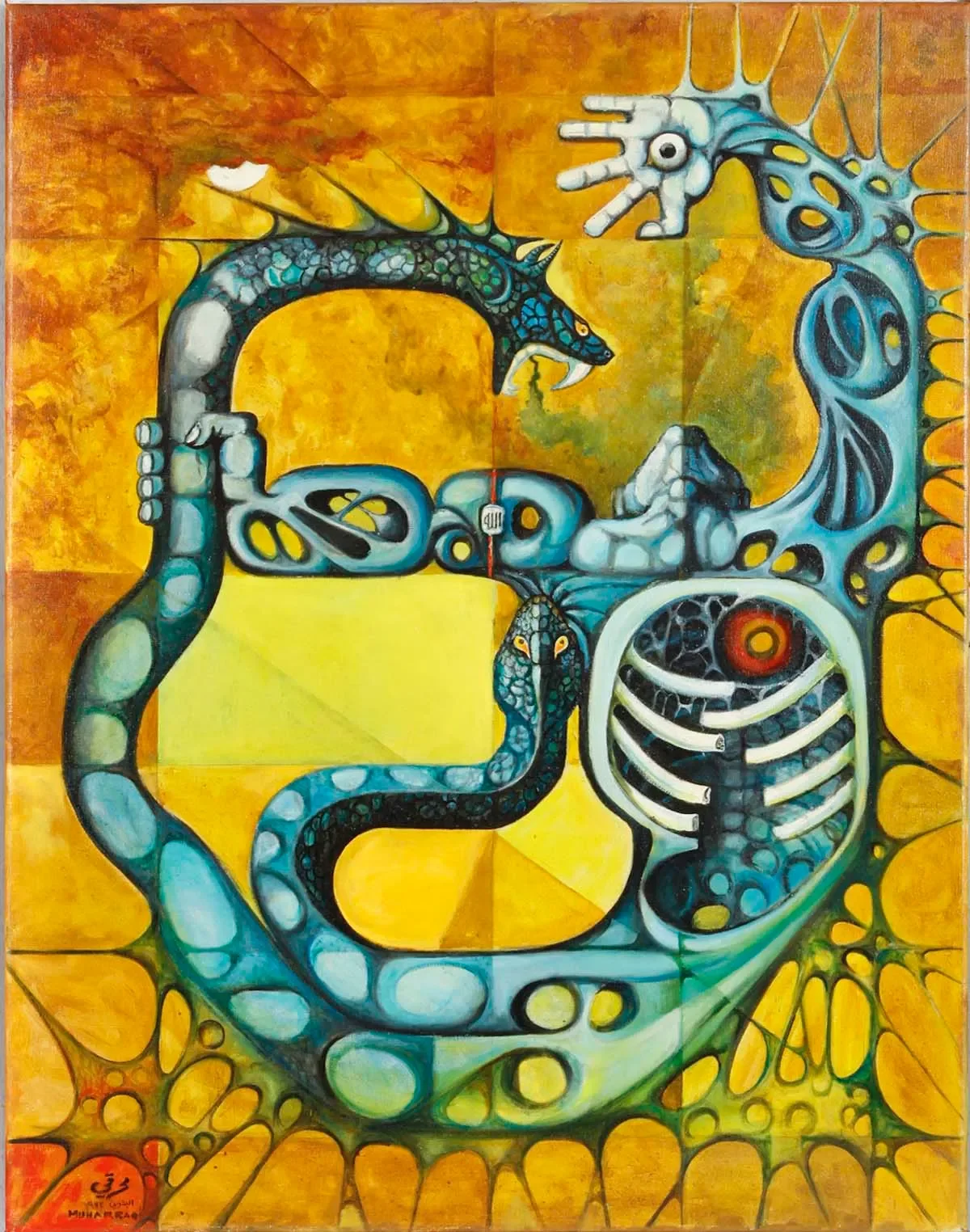
Self Suffering, Oil on canvas, 1972, Courtesy of Barjeel Art Foundation
Words copyright of Naso Art Journal
