
Context, Not Conclusion
Jino Murad on Gallery44, its residency, and the artists it makes room for.
Written by Soraya
Foreword
I first met Jino Murad briefly at Art Basel Qatar in February, a short introduction that turned out to be the start of a longer relationship. We stayed in touch, and over the months that followed I watched the residency she had built at Gallery44 in London take shape. What struck me most was how many of her residents were artists we had already featured in Naso. Without planning it, we had been part of the same ecosystem all along.
Now, with her new exhibition opening in London, I have had the chance to work with her formally for the first time. It felt like the right moment to hear the story behind Gallery44: where it came from, what it gives artists that larger institutions often can't, and why she believes a gallery can be a place where things are still allowed to happen.
Between London and the Middle East
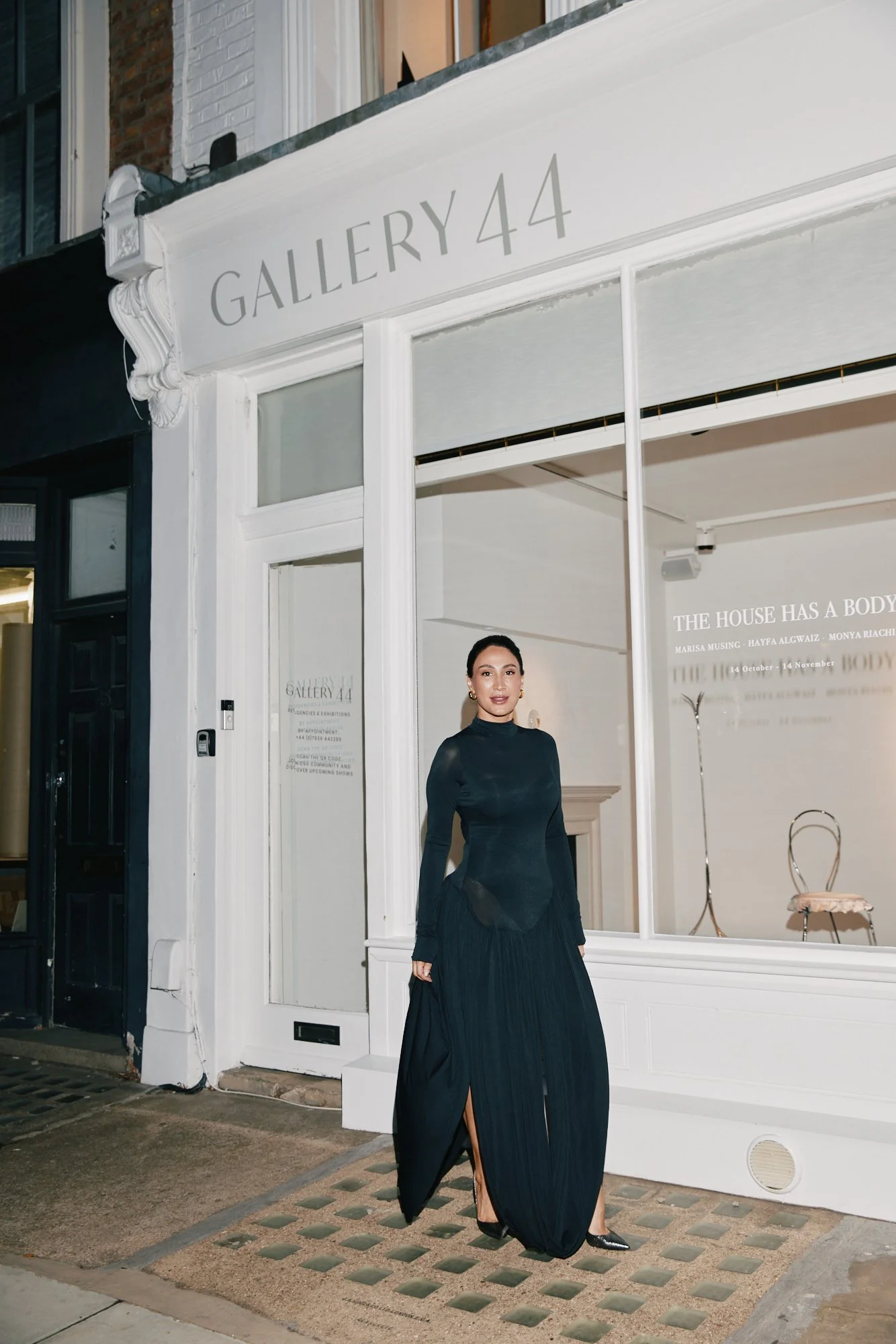
Jino Murad is the founder of Gallery44 and creative director of Jino Design. Her mother is Iranian, her father Iraqi, of Kurdish heritage, and she was raised in London. Her father was a diplomat, so her childhood was spent travelling across the Middle East, and much of her adult life was later spent in Dubai. That movement, she says, has given her "quite a layered sense of identity," one that shapes how she sees culture, space and the artists she is drawn to.
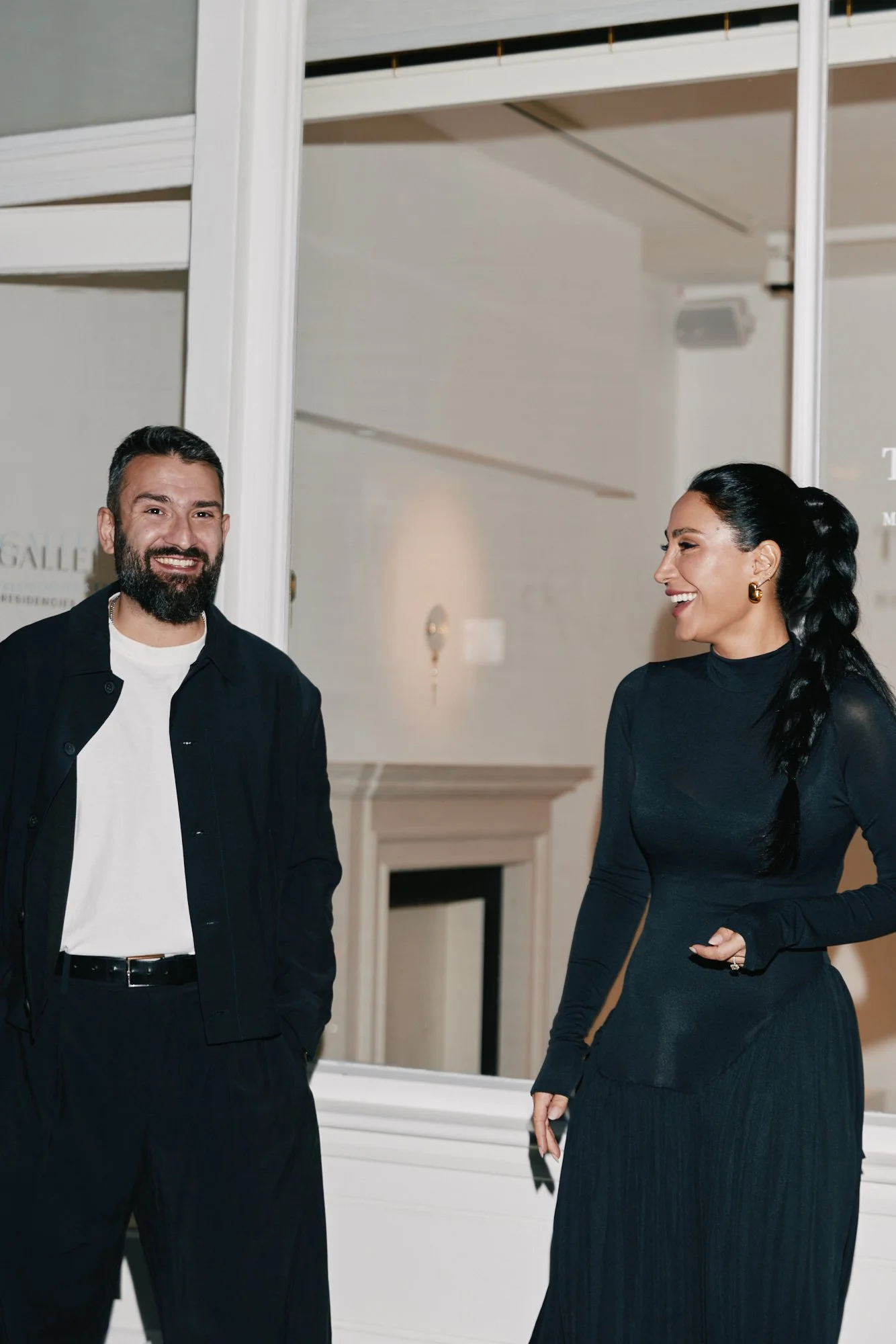
She runs Gallery44 with her brother, Ari Murad. She comes from interiors, design and collecting; he comes from film and storytelling. Between them, there is "a natural exchange," particularly in how they think about performance, space and the way an audience experiences a work.
Her own way into art was through space. She studied interior architecture in London and has spent more than two decades thinking about how people experience a room through material, light, objects and atmosphere. Art was always part of that language, both as a collector and in her design work. Over time, though, placing art inside finished interiors was no longer enough. "I wanted to be closer to artists and to the process of how work actually develops." Gallery44 grew out of that wish, and brought together the different parts of her life, London and the Middle East, design and collecting, "into something that feels very personal."
Why a residency
There was no single moment of crisis. Instead, there was an accumulation of conversations with artists whose practices were strong, but who were constantly being asked to fit into existing categories, timelines or market expectations. What stayed with Jino and Ari was "the gap between talent and access." The artists they met often needed something very practical: a room to work in, time in London, introductions, documentation, honest feedback, "rather than another abstract promise of exposure."
There are plenty of opportunities to exhibit, she points out, but far fewer places where an artist can arrive "without having to present a finished answer immediately." Because Gallery44 is a home as well as a gallery, a residency felt like the natural answer: somewhere slower and more intimate, a place to live, work, think and make mistakes before the work meets an audience. The turning point was a simple realisation. "Visibility on its own isn't enough. An artist can be seen and still not feel supported."
Running a small space has also shown her what institutions, for all their resources, can struggle to give. Scale creates distance. At Gallery44, they can respond to the artist in front of them rather than to a fixed programme, and the most useful conversation sometimes happens over coffee, or on the day an artist is stuck. Support, she has learned, looks different every time. "One person needs introductions, another needs privacy. One needs to be challenged, another needs the confidence to trust an instinct they already have. The real work is understanding the difference."
Where it began
The residency programme began with Raya Kassisieh, whose seven-week stay culminated in Stasis in October 2025. Her practice, moving between sculpture, textiles, writing and the body, responded naturally to the domestic character of the house. It showed Jino what the space could become "when an artist was allowed to inhabit it rather than simply install work inside it."
It was also with Raya that she witnessed what she calls a genuine breakthrough. During the residency, Raya began shredding her paintings and weaving the fragments back together. "It felt like something shifted in the way she was thinking about her own work." Nothing about it had been planned for an exhibition; it came from having the time and freedom to experiment. For Jino, that is the point of the whole programme. A breakthrough does not always mean making more work. "Sometimes it means allowing an artist to dismantle something, take a risk or move their practice somewhere unexpected."
Since then, the programme has grown through artists including Myriame Dachraoui, whose residency culminated in These Walls That Protect Us, and through more experimental, performance-led projects. Each one, she says, has helped define Gallery44 a little more clearly.
Time and proximity
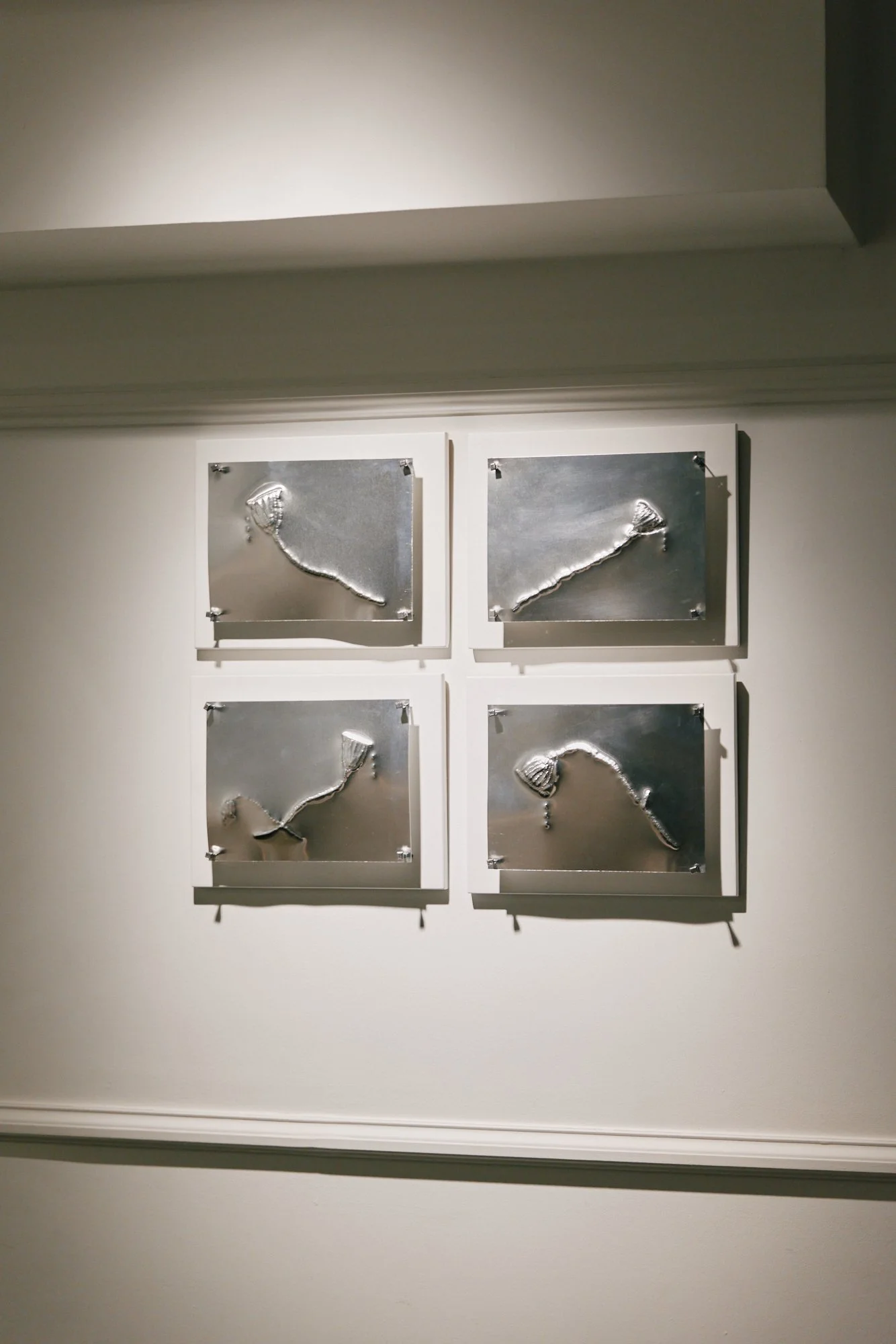
The residency places a deliberate emphasis on artists from the Middle East and its diaspora. Asked what obstacle it does most to remove, Jino resists a single answer, since so much depends on where an artist is based. But if she had to choose, it would be "access to time and proximity." London puts an artist close to curators, galleries, collectors and writers, but proximity only matters if there is time for real relationships to form. "A short visit can become a sequence of meetings. A residency allows someone to actually live within the ecosystem for a period."
Gallery44 offers accommodation, a studio, mentorship, an exhibition, documentation, press support and funding towards materials, and increasingly helps artists with visa applications and the practical side of getting to London at all. The list, she says, is never fixed.
Nor is the reading of an artist's work. Her answer to how she keeps "MENA" from becoming the whole story is short: "By treating geography as context, not conclusion." The focus is part of the residency, not a boundary around the gallery, which works with emerging artists from many backgrounds. An artist's origins may be deeply present in the work or almost invisible, and both are valid. "We never want an artist to feel they have to perform their identity in order to belong at Gallery44."
Artists based in the Middle East and those from the diaspora often need different things, she acknowledges. The first may need help arriving in London and navigating an unfamiliar market; the second may already know the Western art system but be working through questions of belonging, distance or inheritance. Even so, she refuses to make it a rule. "Two artists from the same city can need completely different things." The question is always the same: what would make this particular artist's time here genuinely useful?
What she promises
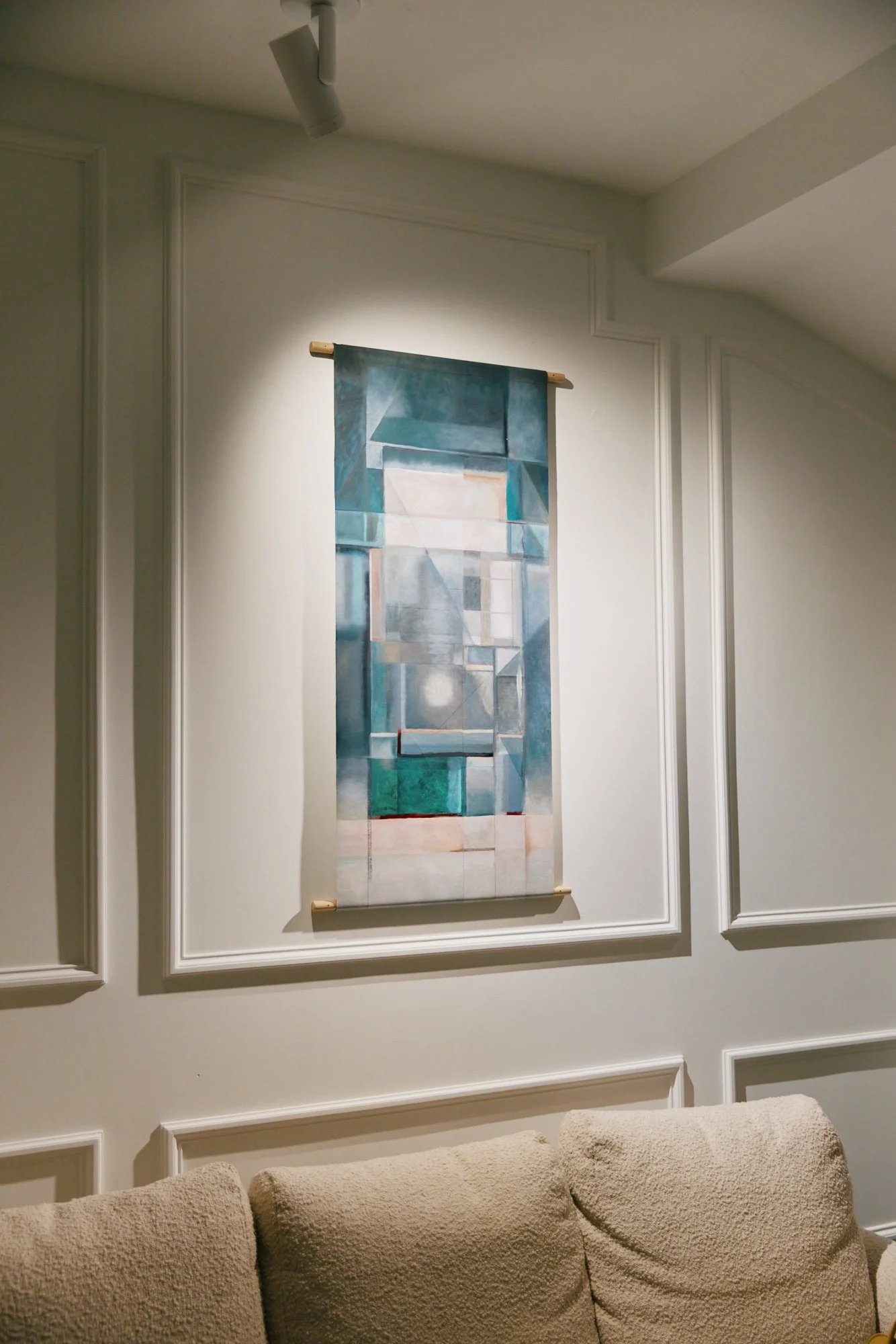
Selection is still hands-on, because Gallery44 is intentionally small. Jino looks at the work, the wider practice and how it has developed, and at whether the gallery can genuinely contribute something. She values commitment as much as polish: an artist who is curious, rigorous and willing to push the work somewhere new. And she is happy to say yes to work she would not personally live with. "Personal taste and curatorial judgement are not the same thing. We would be more worried if everything at Gallery44 simply reflected our own taste."
What she promises every artist is attention, honesty, care and real engagement, a presence that lasts beyond the opening night, including the difficult conversations and advocacy "in rooms they may not be in." What she refuses to promise is anything she cannot control: sales, representation, press, acquisitions, a particular career path. "Those promises can become transactional very quickly." The only promise she makes is that the opportunity will be taken seriously, and that the conditions for something meaningful will be there.
The house has a body
Among Gallery44's most recent projects was In The Living Room, a performance by Hannah Dowling and Betty C Fan, and a sign of the space Jino wants the gallery to be for experimental, performance-led work. The piece asked its audience simply to be present together. In a moment full of digital noise, constant information and continuing uncertainty and conflict, in the Middle East and elsewhere in the world, that felt "quietly meaningful." The work did not try to compete with the noise. "Instead, it created a moment of attention." A gallery, she believes, should not only present work once it is resolved: "it can also be a space where something is allowed to happen."
That conviction runs through Gallery44's Frieze Week presentation, which grew out of its open call, The House Has a Body. Close to 500 artists applied, a number Jino describes as extraordinary for a space of their size. The idea behind it was to think of the house not as a neutral place where art is displayed but as something with "its own body, memory and emotional presence." Artists at Gallery44 are not entering a white cube; they are responding to rooms that have already been lived in. From that process came the exhibition bringing together Marisa Müsing, Hayfa Algwaiz and Monya Riachi, three practices in dialogue, each answering the house in a different way.
As for the future, Jino wants Gallery44 to grow without losing the intimacy that makes it useful, through residencies, exhibitions, performance, publishing and, eventually, representation of emerging artists internationally. She describes it as a bridge in more than one sense: between London and the Middle East, between artists and collectors, between domestic and institutional space, and between experimentation and a long career. If it grows, she wants that growth to come from the artists and relationships it builds, not from scale for its own sake.
"Ultimately," she says, "we want Gallery44 to remain a place where an artist can be discovered, supported and challenged, and where that relationship can continue far beyond a single exhibition."
Words copyright of Naso Art Journal
Images courtesy of Gallery 44
