
Taymour Grahne
On Building Context Across Borders
Written by Nayla
There is a certain clarity with which Taymour Grahne recalls the beginning, not as a fixed origin point, but as a moment of recognition. It was in Boston, during his university years, that the seeds of his curatorial direction were first planted. A summer spent in Beirut had exposed him to what he describes as “a really dynamic gallery and artist ecosystem,” an encounter that would linger long after his return.
Back in the United States, the absence was striking. “There was so much compelling work being produced across the region, yet very little of it was being seen or discussed internationally, ” he reflects. It was this gap, not simply geographic, but discursive, that led to the creation of hisblog, Art of the Mid East. What began as an editorial platform soon became a point of entry into a wider network, one that extended across Dubai, Abu Dhabi, Doha, Manama, and Beirut, mapping a region through its artists, exhibitions, and conversations.
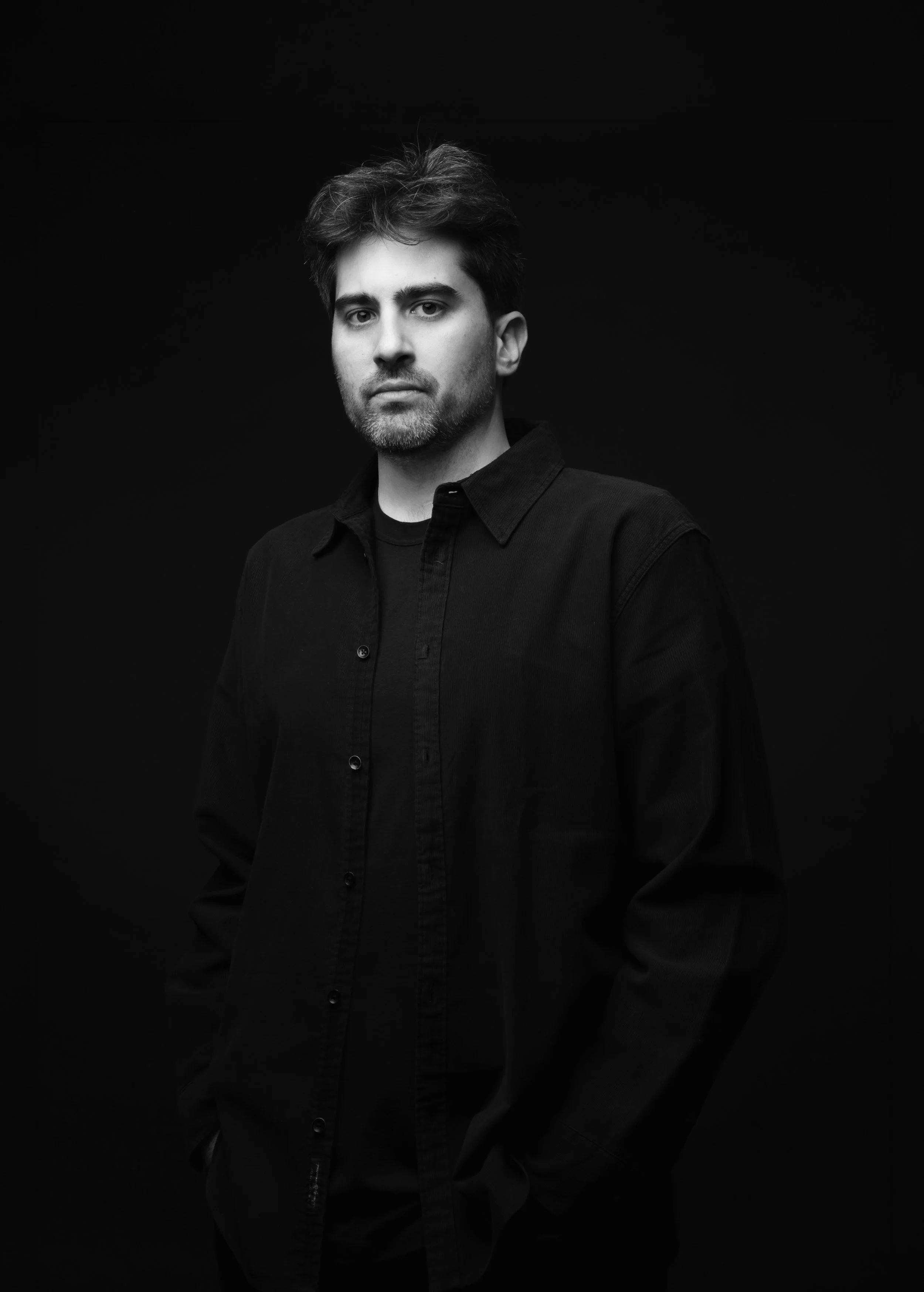
Portrait courtesy of Sara Al Mutlaq
From Blog to Gallery: Establishing a Platform
This early impulse to document, connect, and contextualize would later crystallize into a more formal structure. After moving to New York to pursue an MA at Sotheby’s Institute of Art, Grahne encountered what he describes as a persistent imbalance: “how little attention was being given to artists from the Middle East… within the broader international market.”
The response was direct. In 2013, he founded his first gallery in New York, creating a platform that sought not only to represent artists from the region and its diasporas, but to reposition them within a global framework. From the outset, the aim was clear: to “create a platform that amplifies these voices and situates them within a wider global conversation.”
Regional Commitment vs Global Circulation
Yet Grahne’s approach resists fixed categorization. Born in London to a Lebanese mother and Finnish father, and raised between London, New York, and Beirut, his perspective is inherently transnational. “I’ve naturally felt at home operating across multiple contexts,” he notes.
This sensibility informs a deliberate curatorial stance. “I didn’t want the artists I work with to be framed solely through the lens of nationality or region.” Instead, his program situates artists alongside international peers, allowing their work to engage with “globally resonant themes, memory, landscape, history, and migration.”
The emphasis, he suggests, lies in balance. It is about preserving specificity while enabling broader dialogue, often shaped through “curatorial framing, writing, and exhibition texts thatallow each artist’s voice and narrative to come through on its own terms.”
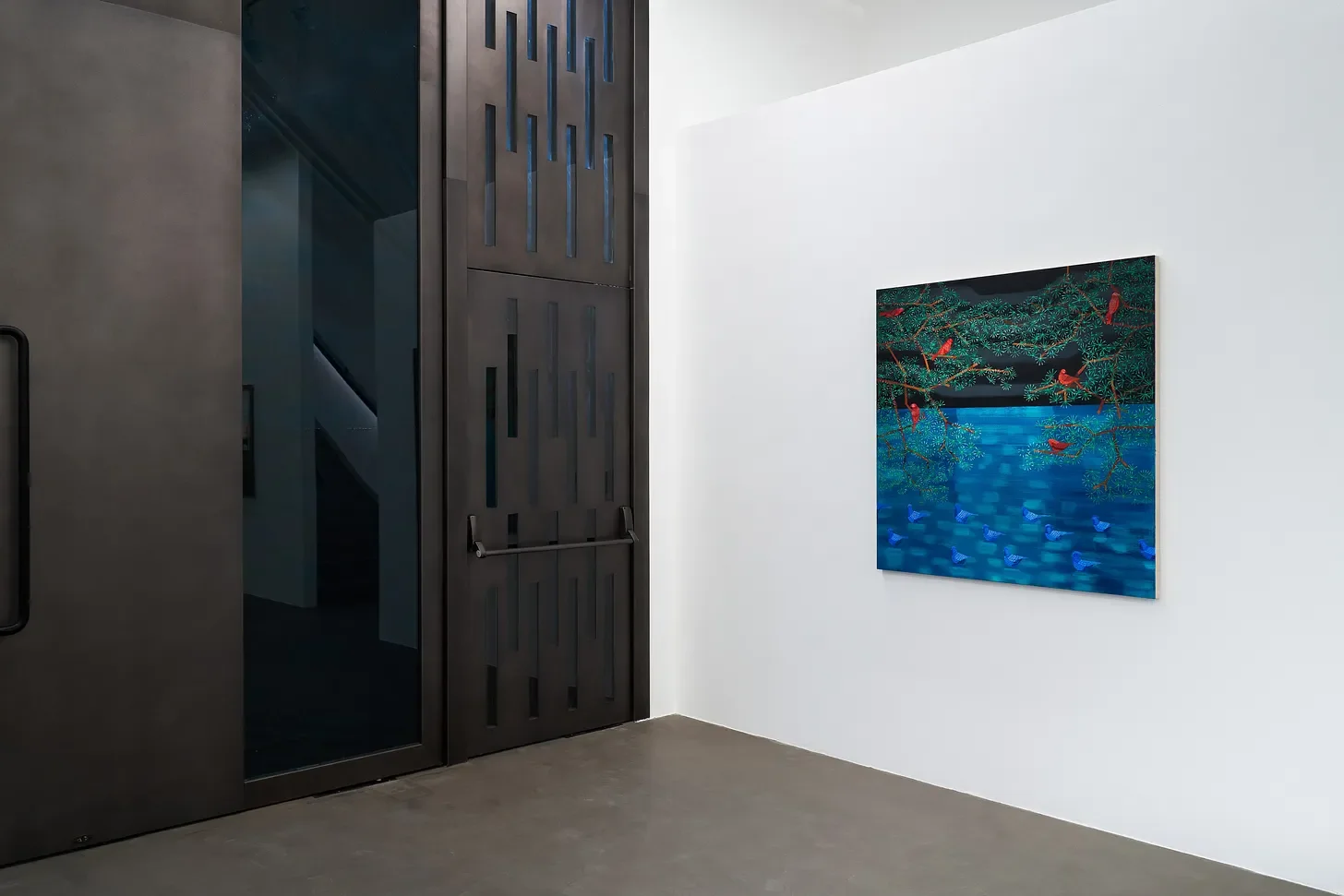
Gail Spaien - ‘Arranging Flowers’
The GCC as a Distinct Ecosystem
Nowhere is this layered positioning more visible than in the Gulf. For Grahne, the GCC represents a moment of acceleration. “Artists are working within a moment of rapid cultural and institutional transformation, ” he observes, referencing the expansion of museums, state initiatives, and international art fairs.
Simultaneously, a renewed engagement with art history is taking shape. “A fresh look at some of the incredible modernists from the Gulf” is unfolding, creating a dialogue between generations that enriches contemporary practice.
Conceptually, many artists are turning inward, engaging with “landscapes, architectures, social dynamics, and family structures,” while remaining in conversation with global discourses. What distinguishes this generation, Grahne suggests, is its ability to “navigate between the local and the global without feeling the need to resolve that tension.”
Exhibition Focus: Five Painters
This dynamic converges in Five Painters, opening May 16 at Alserkal Avenue. The exhibition brings together Latifa Alajlan, Hayfa AlGwaiz, Roudhah Al Mazrouei, Dalal Al Obaidi, and Hawazin Alotaibi, artists connected through shared experiences, dialogue, and proximity.
“I’ve always believed that art scenes are shaped through networks, friendships, and collective momentum,” Grahne explains. The exhibition reflects this ethos, not as a fixed definition of a generation, but as “an ongoing conversation.”
That sense of collectivity extends beyond the works themselves. The gallery has commissioned texts from six writers embedded within the same ecosystem, “friends, collaborators, participants in the same conversations. ” As he describes it, the result is “a show about a network, with that network woven into it.”
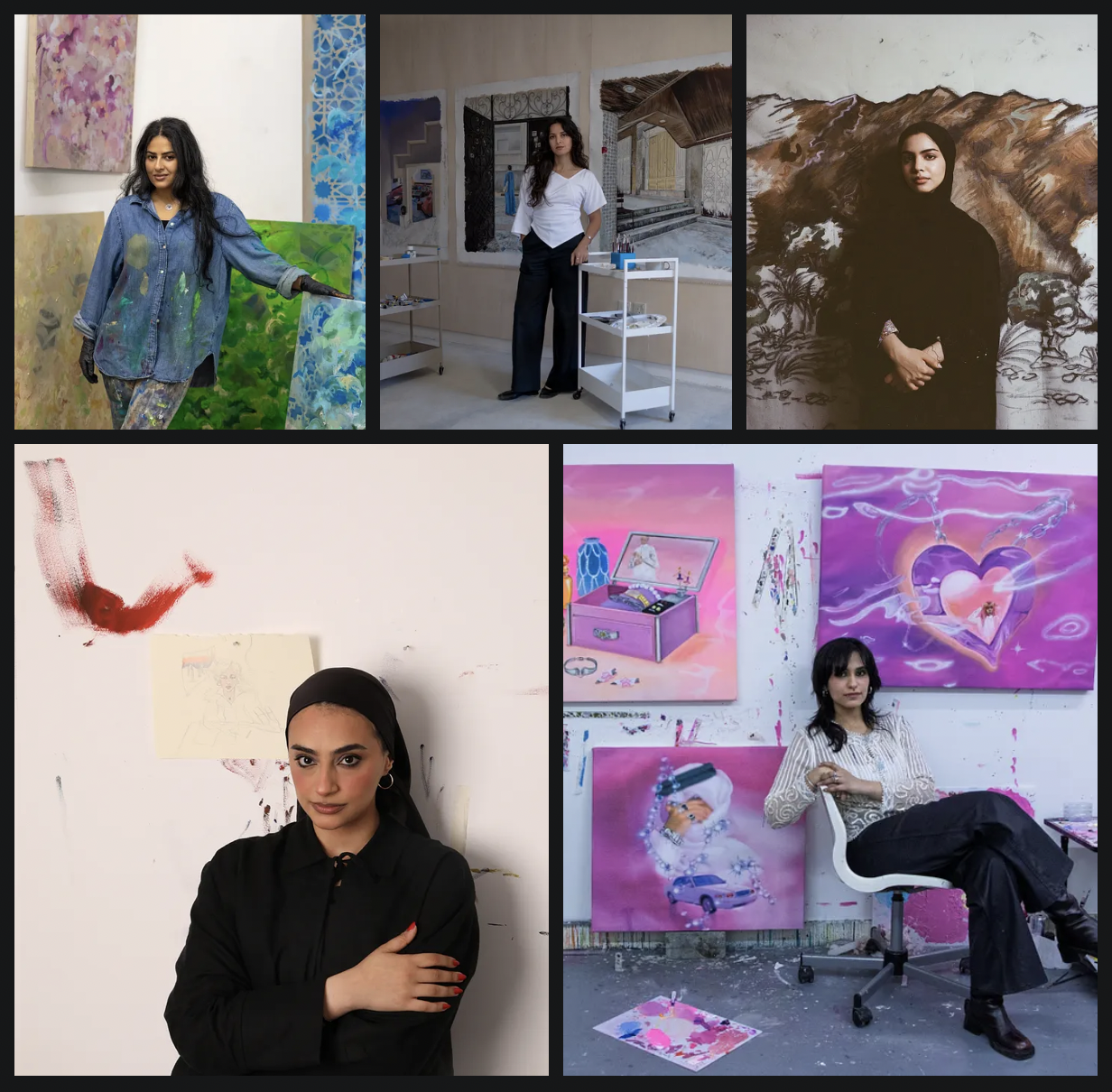
L-R: Latifa Alajlan, Hayfa AlGwaiz, Roudhah Al Mazrouei, Dalal Al Obaidi, and Hawazin Alotaibi
Artist Spotlight: Emerging Voices from the Gulf
Within this framework, several artists stand out as defining voices of this moment. Roudhah Al Mazrouei’s work is rooted in landscape, memory, and inherited knowledge, drawing from the mountainous terrain of the Northern Emirates. Her paintings, Grahne notes, are “intuitive, emotionally charged reconstructions, ” described by the artist herself as “almost ‘love letters’ to these environments.”
Dalal Al Obaidi, meanwhile, explores the psychological dimensions of domestic space. Her compositions occupy “the threshold between figuration and abstraction,” generating tension “between presence and absence, structure and collapse.” What distinguishes her practice is “her ability to translate regional visual languages into something that resonates globally, without losing specificity. ”
For Hayfa AlGwaiz, the focus shifts toward identity and the female figure. Her work moves beyond portraiture, with figures becoming “carriers of broader narratives around visibility, agency, and cultural expectation. ” Grahne highlights the way her practice “sits within an international discourse while remaining rooted in her own context.”
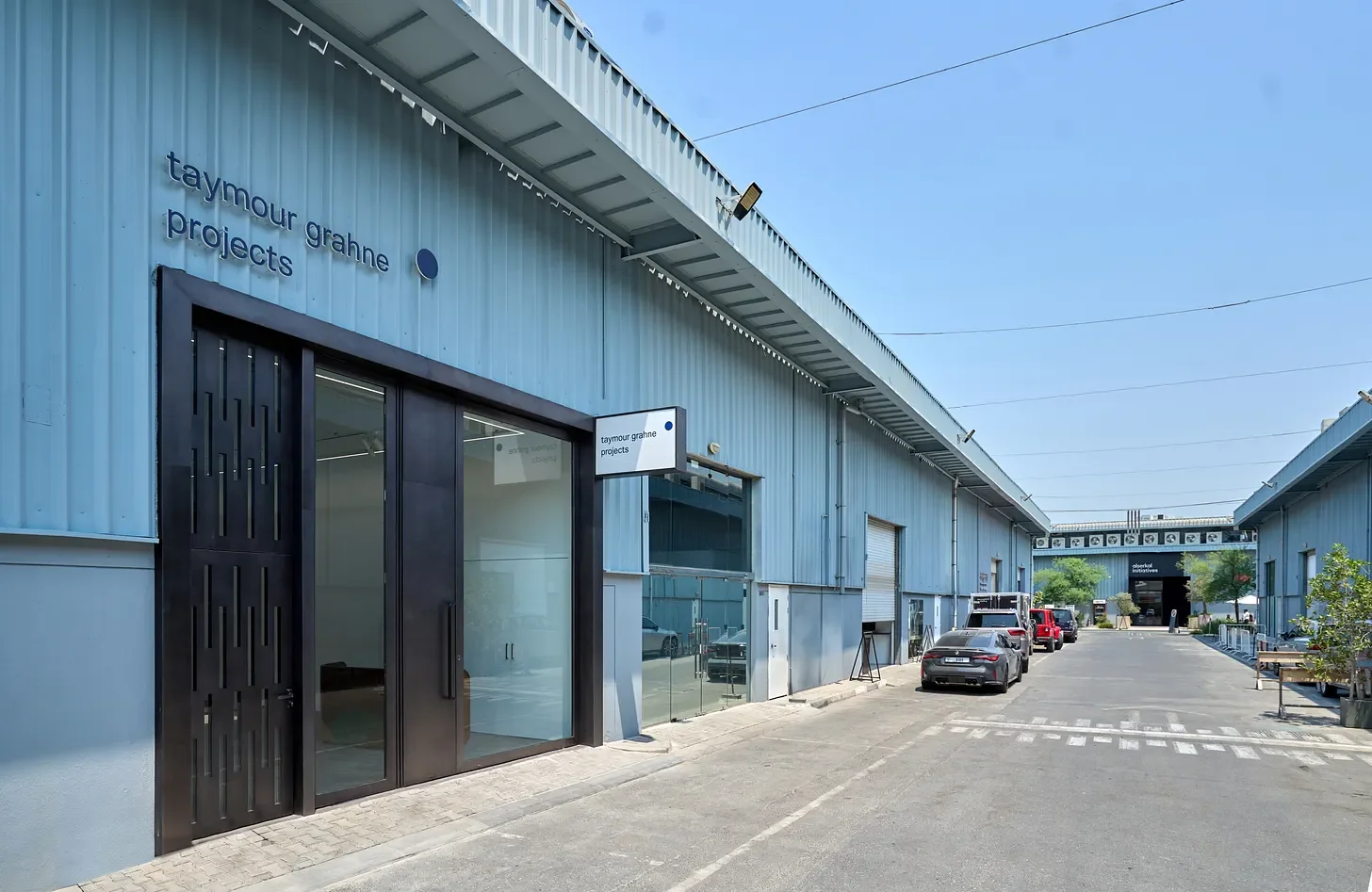
Looking Ahead: Program & Future Directions
Looking forward, Grahne’s program reflects both continuity and expansion. Exhibitions are planned through 2027, with Five Painters setting the tone for a broader engagement with the Gulf’s emerging generation.
Upcoming solo exhibitions by Al Mazrouei and Al Obaidi extend this dialogue, while future projects bring together artists across geographies, from Paris-based Daniele Genadry and Faycal Baghriche to major presentations by Ziad Dalloul and Lamia Joreige. A significant historical dimension also emerges in the planned exhibition on Stelio Scamanga, whose 1964 manifesto explored the distinctions between Western perspective and Eastern abstraction, an intellectual thread that continues to resonate today. Across all these initiatives, the curatorial aim remains consistent. It is about “creating a dialogue between generations, geographies, and practices while continuing to position the gallery as a platform that connects the Gulf to a wider international context.”
Words copyright of Naso Art Journal.
Images Courtesy of Taymour Grahne Projects
