
Hamzeh Alfarahneh
A Structure in Motion: Curating Between Worlds
Written by Soraya
The conversation with Hamzeh Alfarahneh does not begin with answers: it begins with a preference. A resistance, almost, to the rigidity of pre-written responses. What unfolds instead is something closer to thinking in motion, where ideas are not delivered but discovered. He describes this format as “more of a playground for ideas… a very raw format… to think about things”, and in that admission, the tone of his entire practice is set.
There is an insistence on presence - on the value of exchange as something unedited, unpolished, and human. The difference, for him, is not trivial. Written interviews flatten thought into certainty, whereas speaking allows for contradiction, hesitation, and emergence. It is in this space that his curatorial language becomes legible: not fixed, but responsive. Not predetermined, but unfolding. This approach mirrors the way he constructs exhibitions - never as static propositions, but as living structures shaped by dialogue, curiosity, and the friction between ideas.
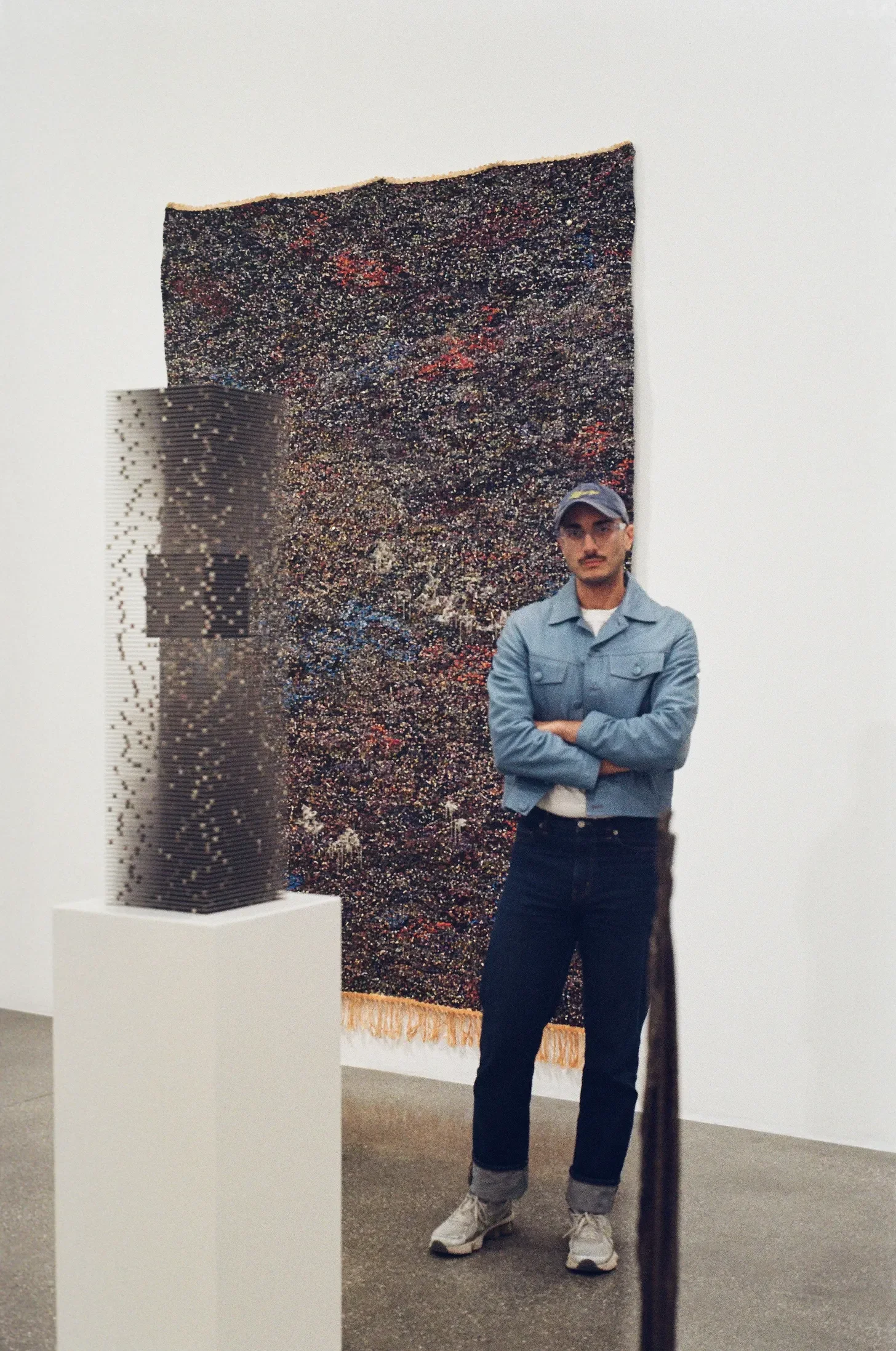
Portrait courtesy of Sara Al Mutlaq
Formative Geographies and the Making of a Curator
To understand Alfarahneh’s practice is to trace the geographies that shaped it. Born Jordanian of Palestinian background, raised across the Gulf, and now based in Cape Town, his identity is not singular but layered. His formative years were marked by movement - between Saudi Arabia, Jordan, UAE, Syria, and Lebanon - yet what emerges from this mobility is not dislocation, but continuity.
He recalls how these experiences fostered an early sense of cultural cohesion, where difference did not signal distance but variation within a shared framework: it “never felt like ‘they are different’… it felt like we are this hodgepodge of peoples with a lot of similarities”
Art, at this stage, was not institutional. It was ambient. It appeared in the public sculptures of Jeddah, in the design sensibilities embedded in everyday life, in the visual rhythms of cities that functioned as open-air galleries. These encounters were not formal lessons, but they left an imprint, quietly shaping his visual literacy long before he would name it as such.
His entry into the arts, however, was anything but linear. “I came into visual arts in the most arbitrary and spontaneous way… this is not by design” , he admits. What follows is a decisive shift to Cape Town and an immersion into fine arts that initially resists him. Without prior training, he is “thrown in the deep end”, forced to build his foundation from scratch. The struggle is formative. It is here, in the tension between unfamiliarity and persistence, that his curatorial instincts begin to take shape.
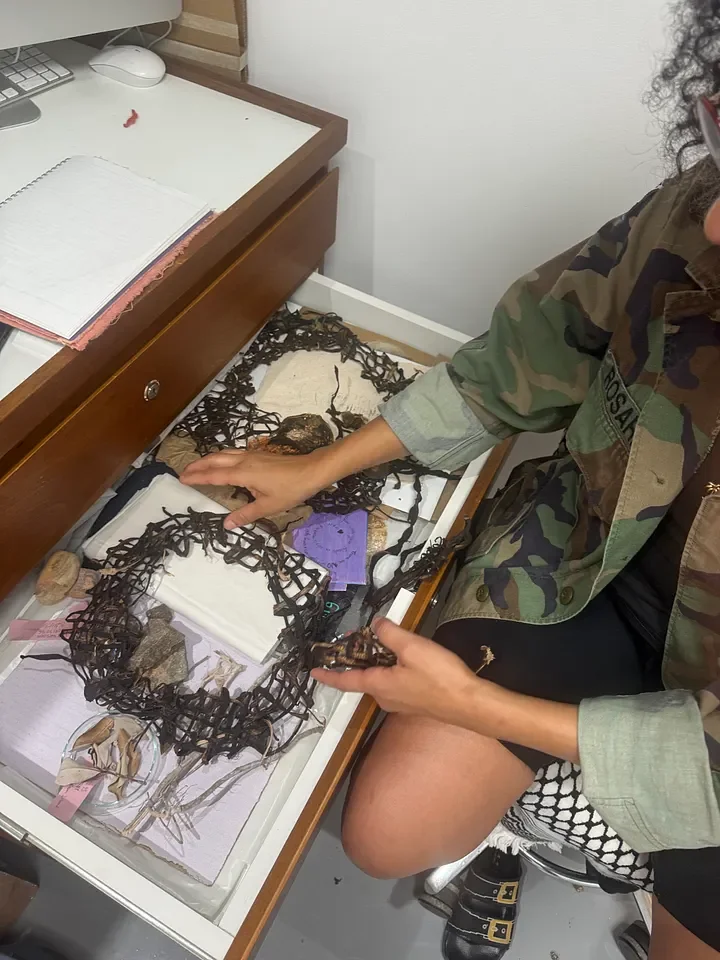
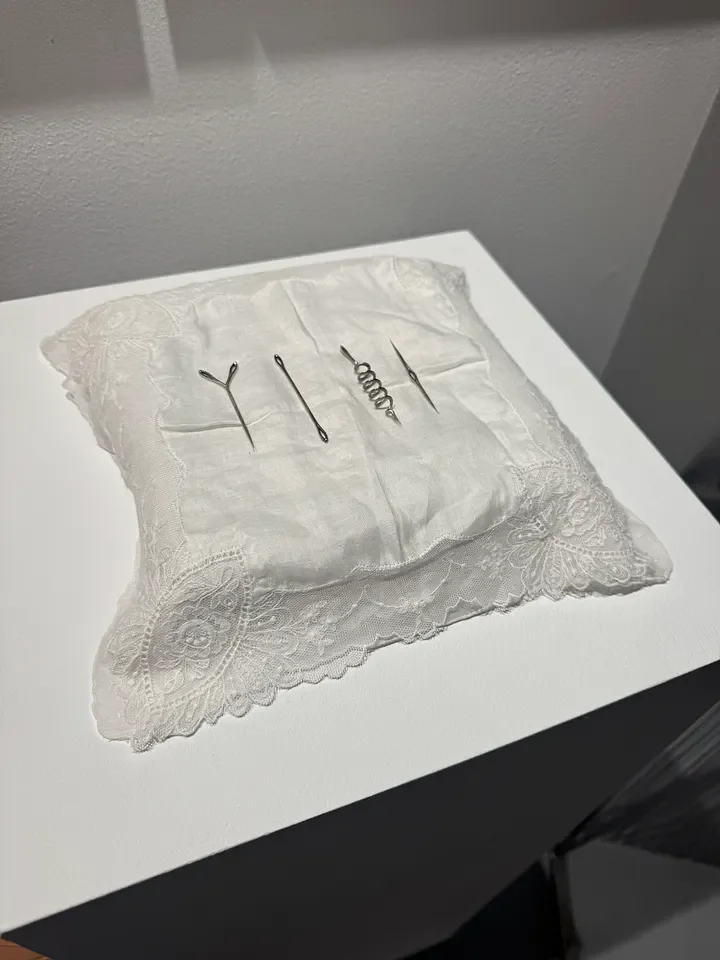
Maha AlAskar and Shaima Shamsi Studio Visits, Courtesy of Hamzeh Alfarahneh
Curating as Responsibility: Building Structures of Knowledge
If Alfarahneh’s path into curating was accidental, his approach to it is anything but. Over time, his practice evolves into a system: one that he defines through what he calls structures of knowledge. The need for this framework is both practical and conceptual. “I need parameters… to feel safe,” he explains , revealing a methodology that embraces structure not as limitation, but as a means of navigating complexity.
Within this system, exhibitions are constructed through “planes of knowledge” - distinct yet interconnected layers that, when brought together, form a larger conceptual architecture. “When you connect various planes… you arrive at a structure of knowledge”.
This way of thinking allows him to approach curating as both analytical and intuitive. It also extends beyond exhibitions into his advisory work, where he positions himself not simply as a facilitator, but as a mediator of narratives and relationships. At times, he goes further—framing his role in institutional terms. “I really see myself as an institution,” he says, not as a claim to authority, but as an acknowledgment of responsibility.
This sense of responsibility is deeply tied to representation. His work consistently seeks to platform artists from the region, not in isolation, but in conversation with broader global contexts. It is about building bridges: between geographies, between practices, and between audiences.
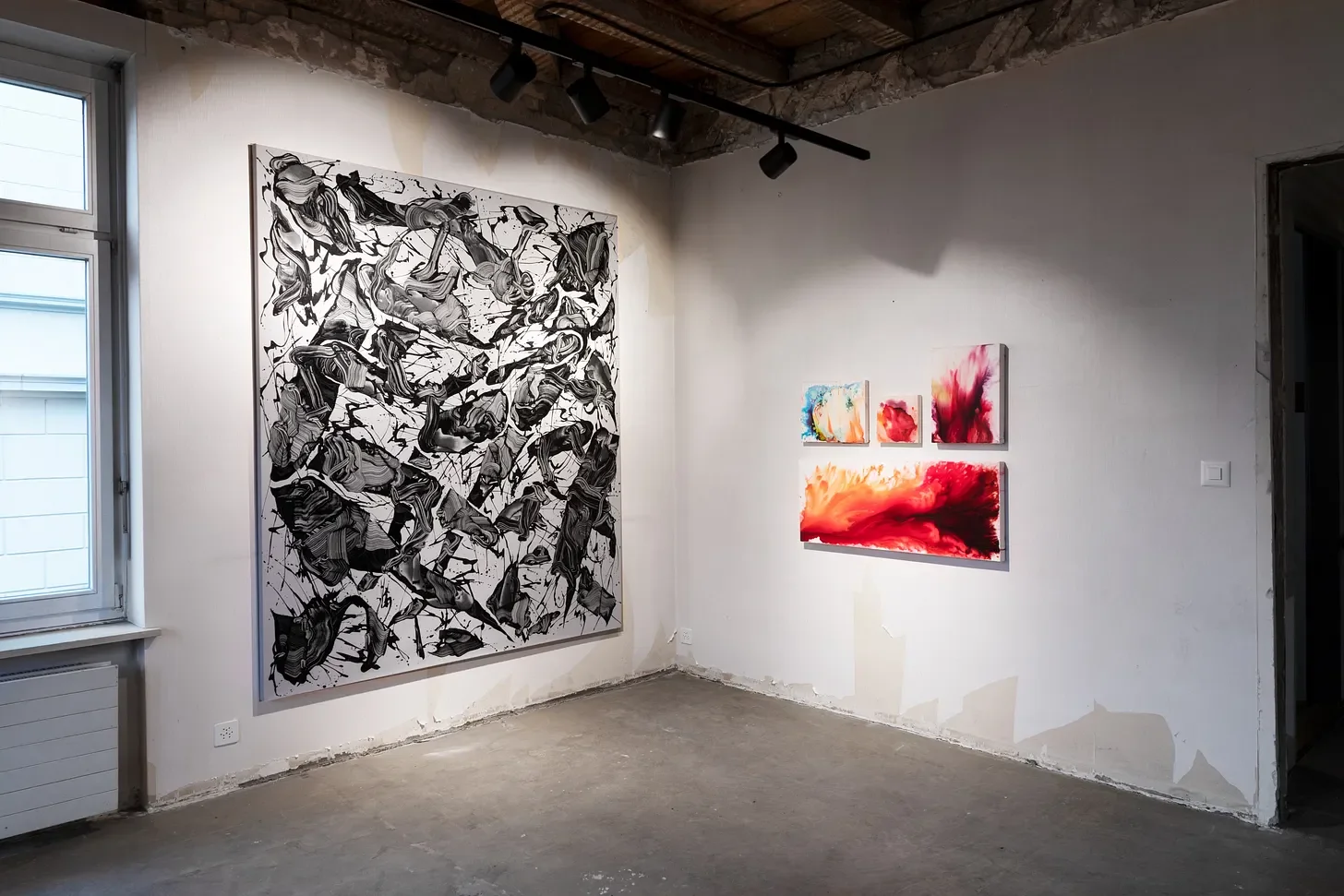
Install shot of Ex-Situ (2024)-Image courtesy of Anthracite and Kopie
Naming, Belonging, and the Global Majority
Language, in the curator’s world, is never neutral. It is positional. It carries histories, hierarchies, and the potential to reframe both. His use of the term global majority is deliberate, rooted in both politics and possibility. It is, as he explains, “a term that the global South has chosen… and it’s factually accurate. We are the biggest population on earth”.
What is striking is not just the terminology, but the refusal of opposition. He is not interested in reversing binaries or constructing a mirrored hierarchy. “I don’t see it… in a lens of us versus them,” he notes, insisting instead on a language that emerges from within rather than being imposed from outside .
This orientation carries through his work. Rather than rejecting existing structures outright, he navigates them, stretches them, and ultimately redefines them from a position that is self-authored. The “global majority” becomes less a category and more a field of possibility - one that allows for multiplicity without fragmentation.
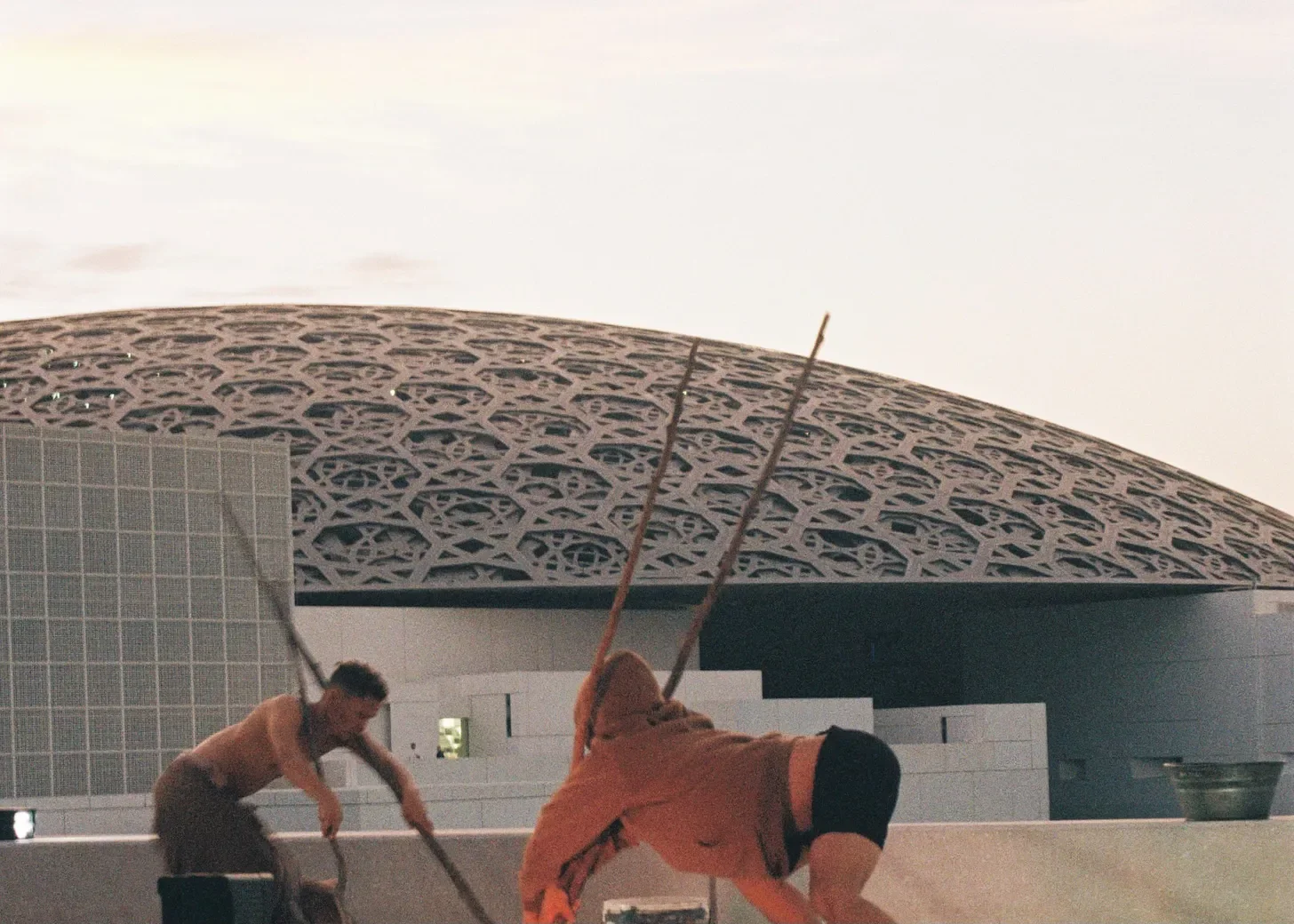
Fables from the Earth that stood Still (2024)- Image courtesy of Art Advisory
Movement, Curiosity, and the Expanding Canon
In his exhibition ‘By the Movement of All Things’, these ideas find a tangible form. Movement becomes both subject and method - a way of thinking through knowledge, perception, and experience. The starting point is not a fixed thesis, but a feeling: an “overwhelming impression… of being curious about the world” .
Curiosity, here, is not passive. It is generative. It shapes how the exhibition unfolds, how works are encountered, and how viewers engage with space. The exhibition resists linearity, inviting multiple points of entry and interpretation. It asks the viewer not just to observe, but to participate, to move, to shift, to see differently.
Underlying this is a broader ambition: to expand the frameworks through which art is understood. Alfarahneh is clear in his position. He is “not interested in erasing the western canon” but rather in “expanding the canon” . This expansion is not additive in a superficial sense; it is structural. It challenges inherited hierarchies while acknowledging their influence, creating space for practices from the global majority to exist not on the margins, but within the core of the discourse.
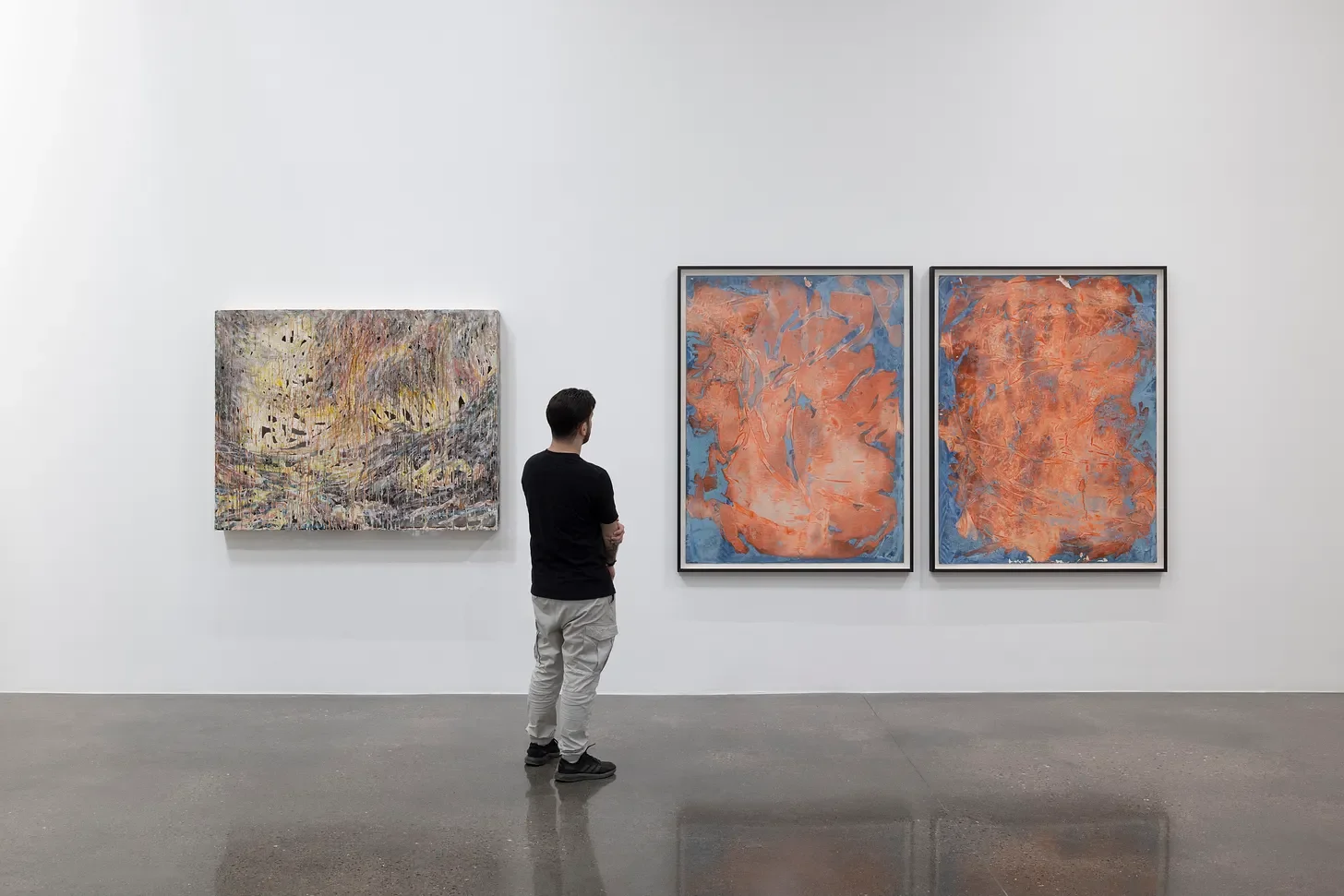
‘By the Movement of All Things” Exhibition - Courtesy of Lawerie Shabibi
Not Knowing as Practice
If there is a single principle that anchors Alfarahneh’s work, it is an embrace of uncertainty. Knowledge, for him, is always partial, always in flux. “What I know is just a drop in an ocean,” he reflects , positioning humility as a driving force rather than a limitation.
This perspective reshapes the role of the curator. Rather than arriving with a fully formed vision, he allows the process to guide the outcome. “I never come in with a fully realized vision… I let the process shape the exhibition” .
In this, curating becomes less about control and more about facilitation - an ongoing negotiation between intention and discovery. It is a practice rooted not in certainty, but in curiosity. Not in authority, but in openness.
And perhaps it is here, in this refusal to claim complete knowledge, that his work finds its most compelling form: as a structure that is always in motion, always evolving, and always unfinished.
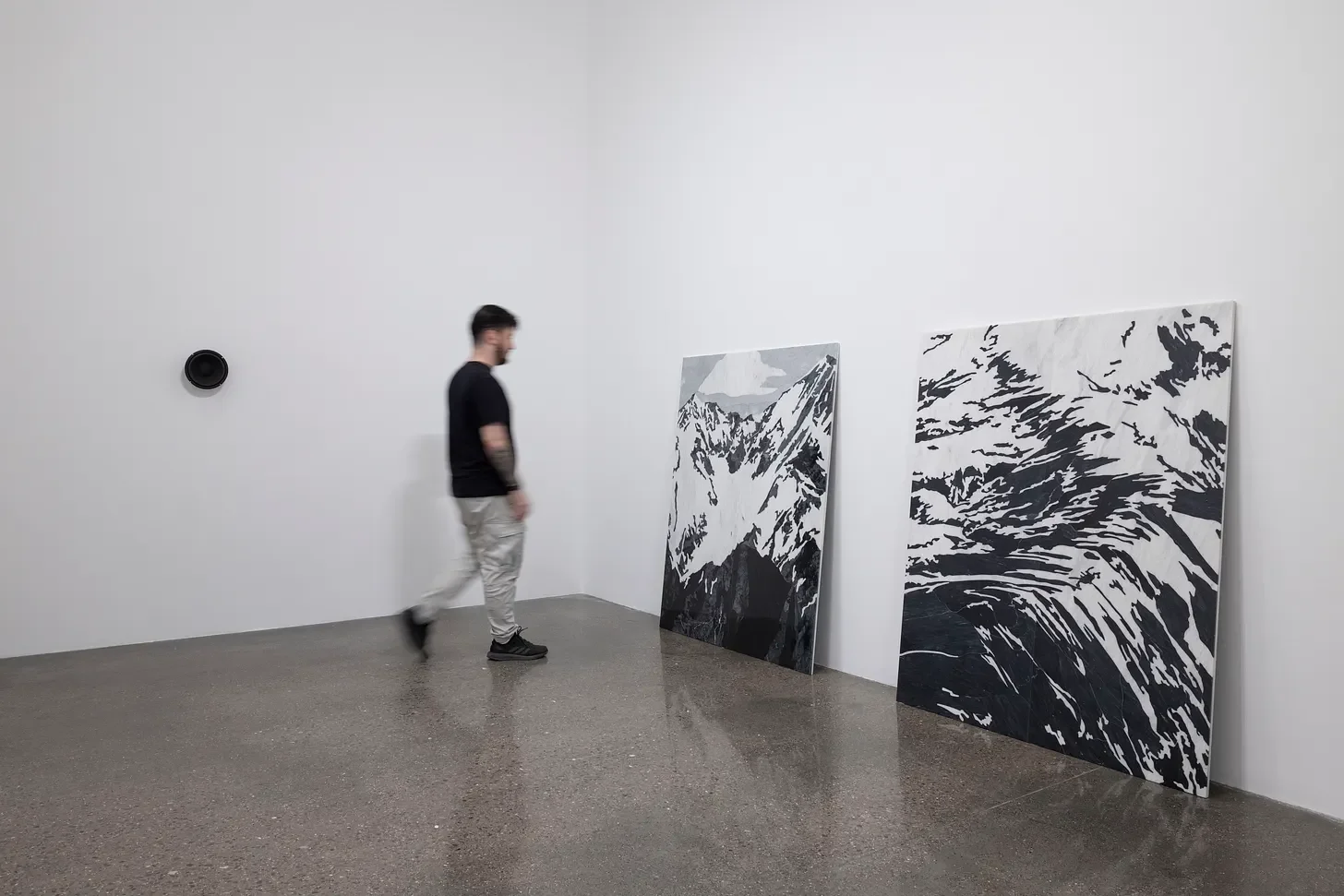
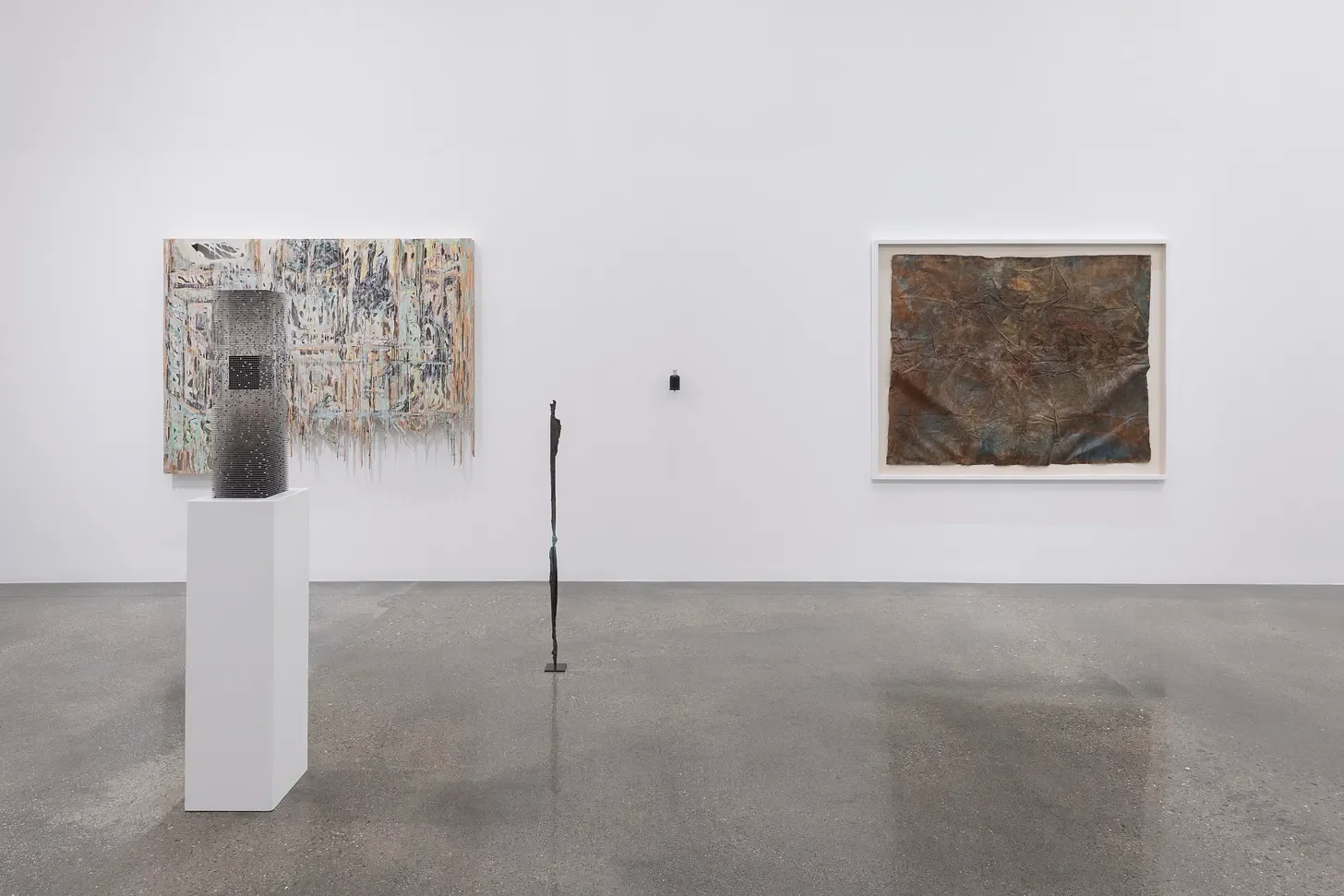
‘By the Movement of All Things” Exhibition - Courtesy of Lawerie Shabibi
Words copyright of Naso Art Journal.
Images Courtesy of Hamzeh Alfarahneh
