
Reflections on Art in the UAE
In conversation with Rémi Homs and Gaith Abdulla
It has been a difficult year across the region, shaped by uncertainty, grief, and the pressures of a wider geopolitical landscape. Yet within this moment, the arts have continued to offer spaces for continuity, exchange, and reflection. In the UAE, this has been especially visible. Across museums, foundations, fairs, independent spaces, and market initiatives, the cultural landscape has continued to expand, not only through scale, but through the structures now emerging around art: how it is collected, displayed, circulated, studied, and made accessible.
In May, Art Dubai presented a special edition at Madinat Jumeirah, while later this year the inaugural edition of Frieze Abu Dhabi will take place at Manarat Al Saadiyat. These developments sit alongside a broader movement of institutional and infrastructural growth, one that is not limited to large-scale museums or international fairs, but also includes independent and locally responsive initiatives.
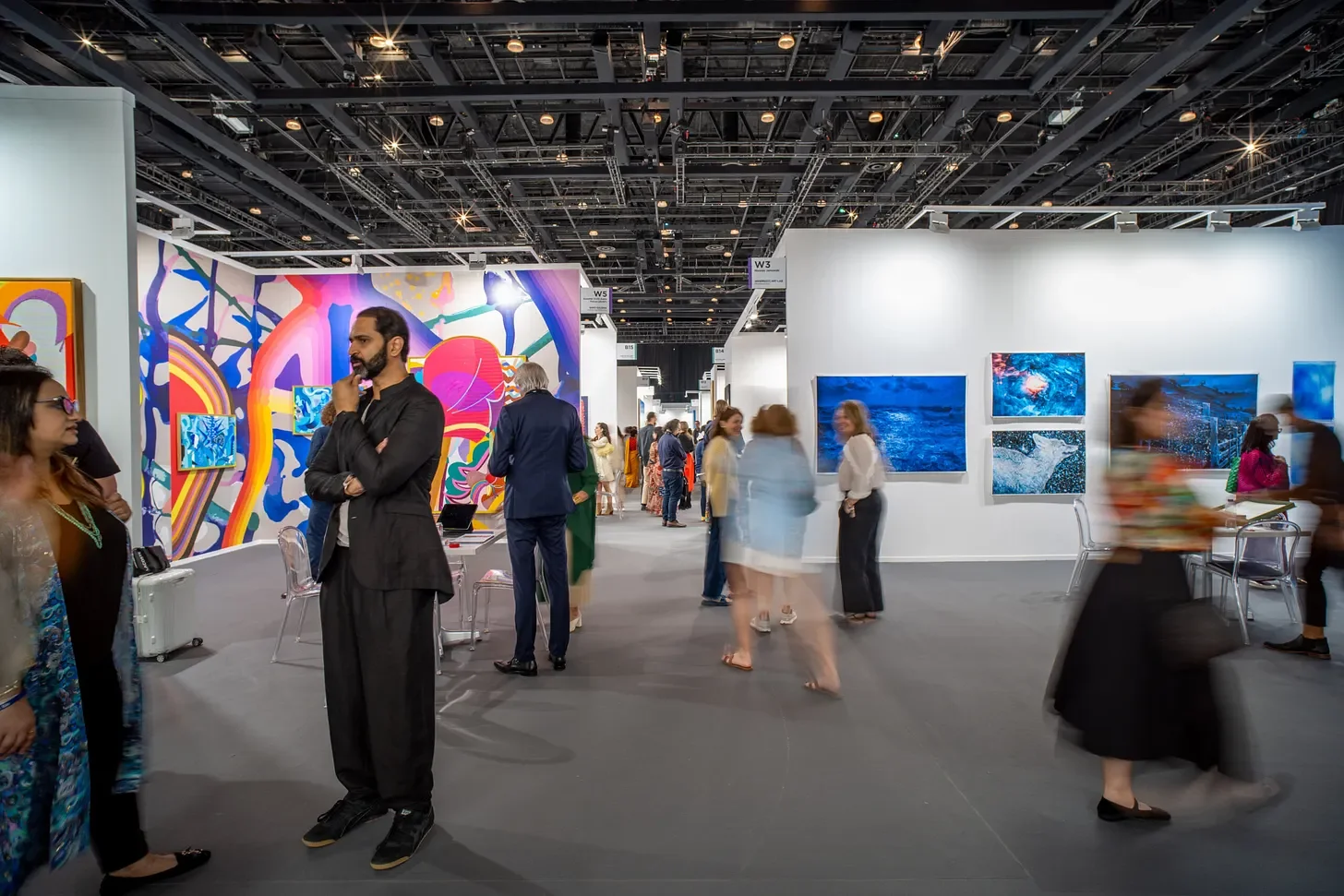
Image Credit Spark Media for Art Dubai
Two recent developments speak to this shift in distinct ways: the Barjeel Art Foundation’s announcement of its own museum in Sharjah, set to open in early 2028, and the launch of BAM Auctions by Bayt AlMamzar in Dubai. One looks toward the long-term public life of a major collection of modern and contemporary Arab art. The other responds to a structural gap in the secondary market, creating a platform for works at a price point often overlooked by larger auction houses. Together, they suggest that the UAE’s art scene is being shaped not only by visibility, but by the conditions that allow art to remain accessible, legible, and in circulation over time.
For Barjeel, the museum marks a new chapter in a project that has always operated between private collecting and public responsibility. Founded in 2010 by Sultan Sooud Al Qassemi, the foundation has built one of the leading collections of modern and contemporary art from the Arab world. Its works have moved through long-term displays, international loans, publications, and collaborations, contributing to a wider understanding of Arab art history.
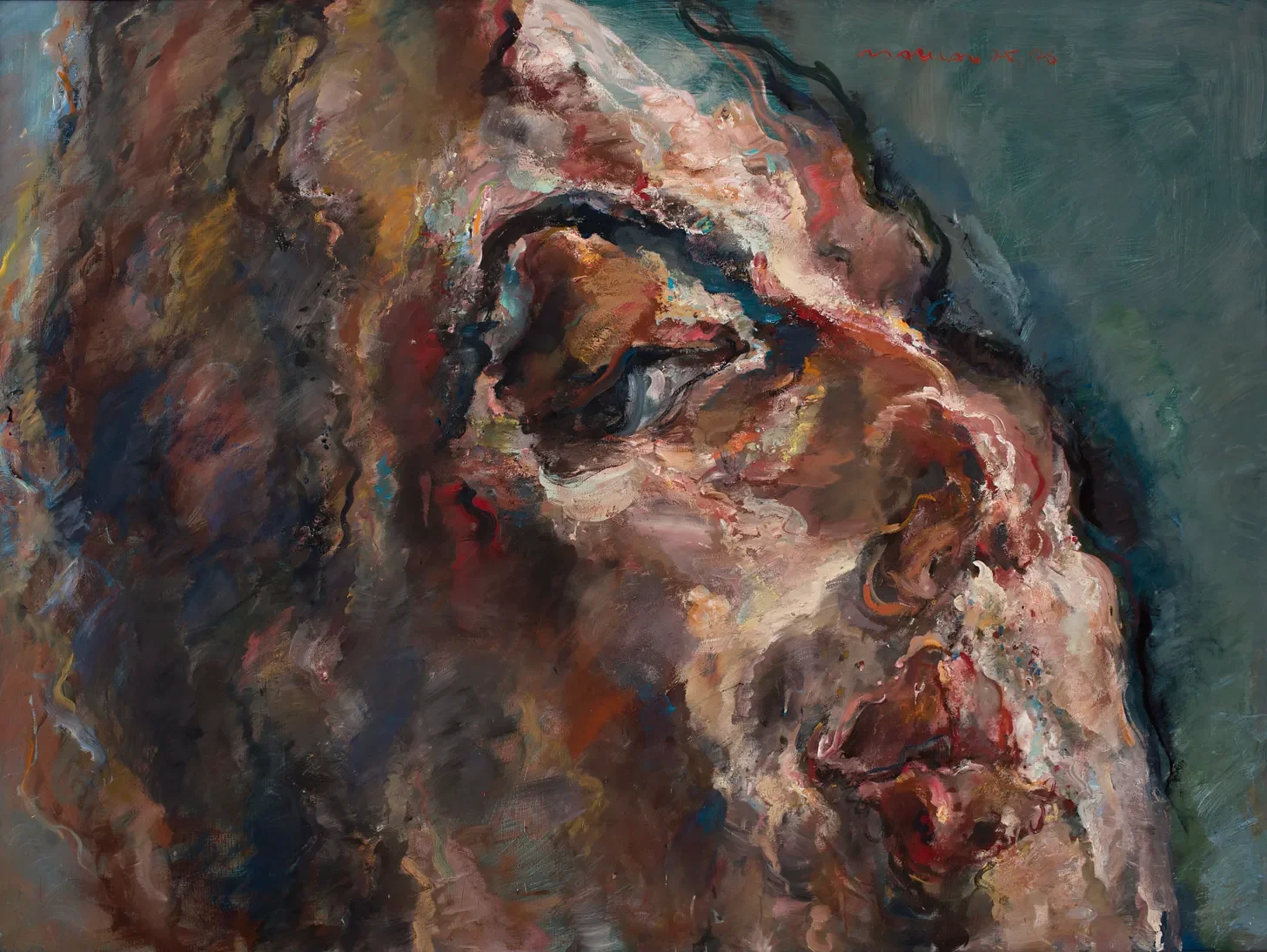
Speaking with Naso, Barjeel curator Rémi Homs described the museum as a natural evolution of this work. What changes most immediately is scale. Past exhibitions allowed Barjeel to show 40, 100, or at times around 160 works. With the museum, he explained, “we’ll try to multiply this by five or six times,” allowing the public to see “connections between countries, between trends, between ways of representing the region” that are less visible in smaller displays.
Curatorially, the museum will allow Barjeel to place widely recognized figures alongside lesser-known artists whose practices remain under-documented. Homs spoke of the importance of presenting names already central to narratives of Arab modernism, while also introducing artists such as Myriam Ben, a Jewish Algerian artist active in Algeria between the 1960s and 1990s, whose work has rarely entered public institutional collections. For Homs, the aim is to “mix these very recognizable figures with lesser-known names that the public can discover.”
Rather than organizing the collection strictly by country, decade, or movement, Barjeel’s curatorial approach will seek to reflect the ways artists, ideas, and forms have moved across geographies and time. “Things are not rigid,” Homs noted, describing a history shaped by dialogue and flux. Within the museum, this allows Barjeel to resist a simplified account of Arab modernism, foregrounding the complexity of a region shaped by exchange, migration, and overlapping cultural vocabularies.
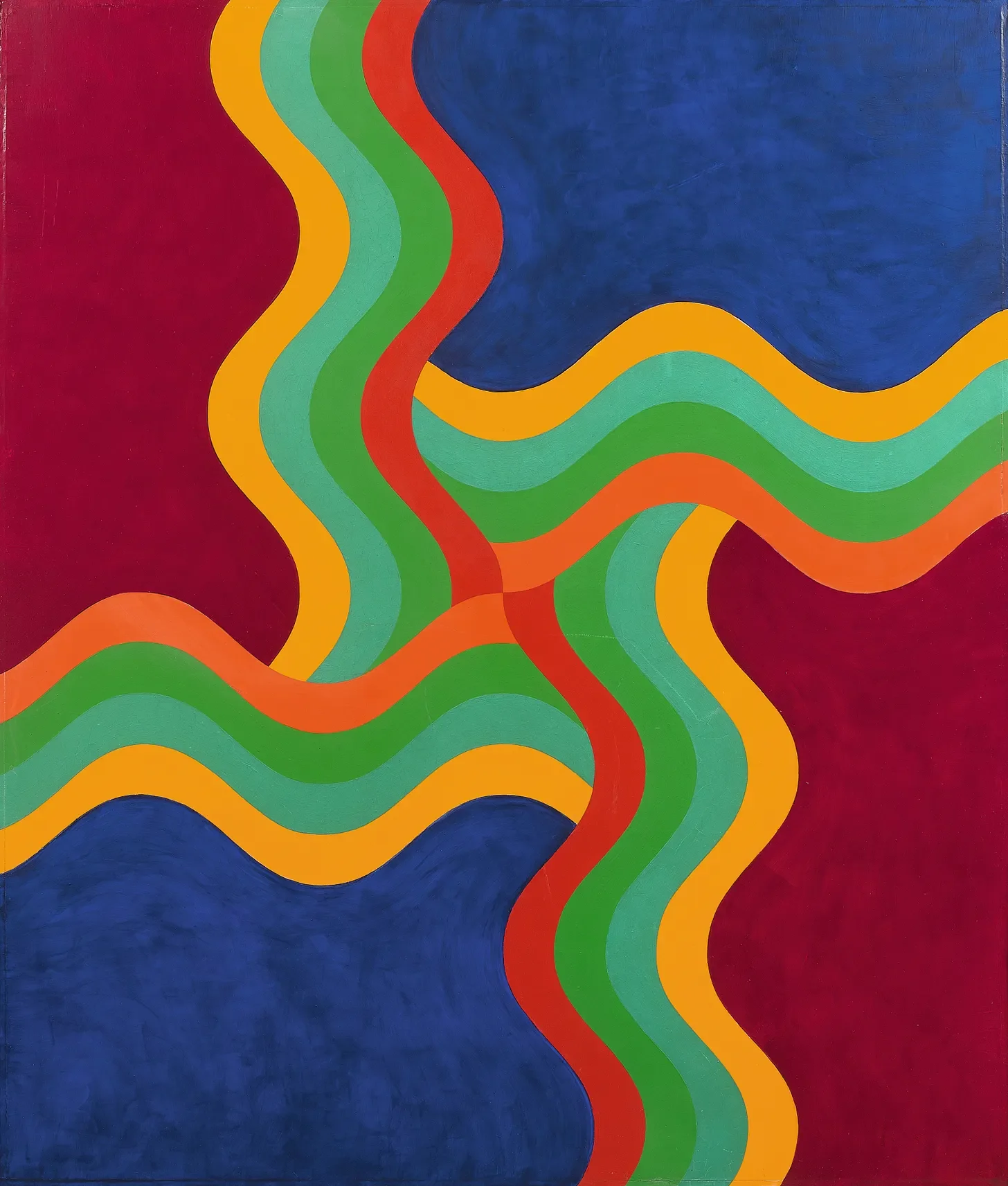
Mohamed Melehi, Composition, 1970. Acrylic on wood, 120 x 100 cm. Courtesy of Barjeel Art Foundation, Sharjah.
At the same time, the museum does not signal an end to circulation. Homs emphasized that Barjeel will remain open to loans and collaborations, holding together two roles: offering “a home for the art history in the region” while continuing to act as a resource for institutions elsewhere. With more than 2,000 works in the collection, a significant portion will remain in storage at any given time, allowing for rotation, new acquisitions, and continued collaboration.
If Barjeel speaks to the public life of a collection, Bayt AlMamzar’s BAM Auctions speaks to another question: how art circulates once it has entered private hands. Founded in Dubai in 2021 by Gaith Abdulla and his brother in their grandmother’s home, Bayt AlMamzar began as an independent art space responding to gaps in the local ecosystem. Its early priorities included affordable studio space, residencies, and critical exhibition-making, particularly within a city where much of the art scene is shaped by commercial galleries.
BAM Auctions emerged unexpectedly. As Abdulla explained, the idea began after Bayt AlMamzar organized a benefit-style sale to support the space. The sale took place through WhatsApp and exceeded expectations, raising significant funds and drawing competitive bidding across several lots. Afterwards, collectors began approaching them to consign works, suggesting that the format had revealed a need that already existed within the market. What began as a one-off initiative gradually developed into a more structured response to that demand.
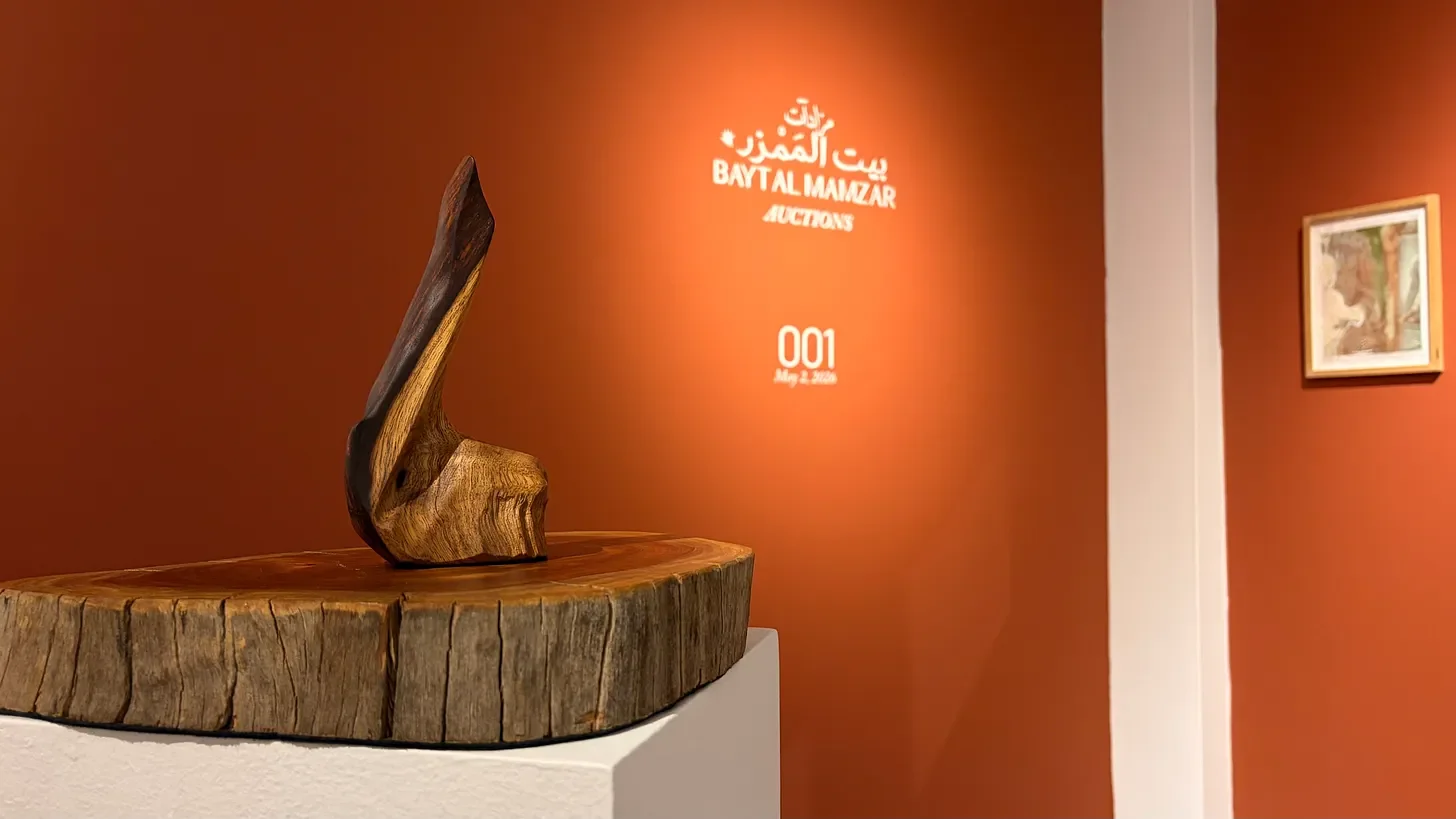
Courtesy of Bayt AlMamzar
For Abdulla, the issue was not simply the emergence of a younger collector base, though he acknowledged that younger buyers are part of the regional market. The more pressing question was structural. Larger auction houses operating in the region often focus on works above a certain price threshold, leaving a gap for works under 10,000 dollars. BAM Auctions was developed to address what he described as “an underserved segment in the secondary art market in the Gulf,” focusing on mid-range works consigned by collectors, estates, or institutions rather than directly from artists or galleries.
This distinction matters. BAM is not attempting to replicate the model of major auction houses. Abdulla emphasized that trust, accountability, transparency, provenance, and public records remain essential, but beyond those foundations, Bayt AlMamzar is interested in shaping the format on its own terms. “We’re not trying to emulate Western auction models,” he said. “We realise that especially with Bayt AlMamzar, one of the things that differentiates it is the ethos and the spirit.”
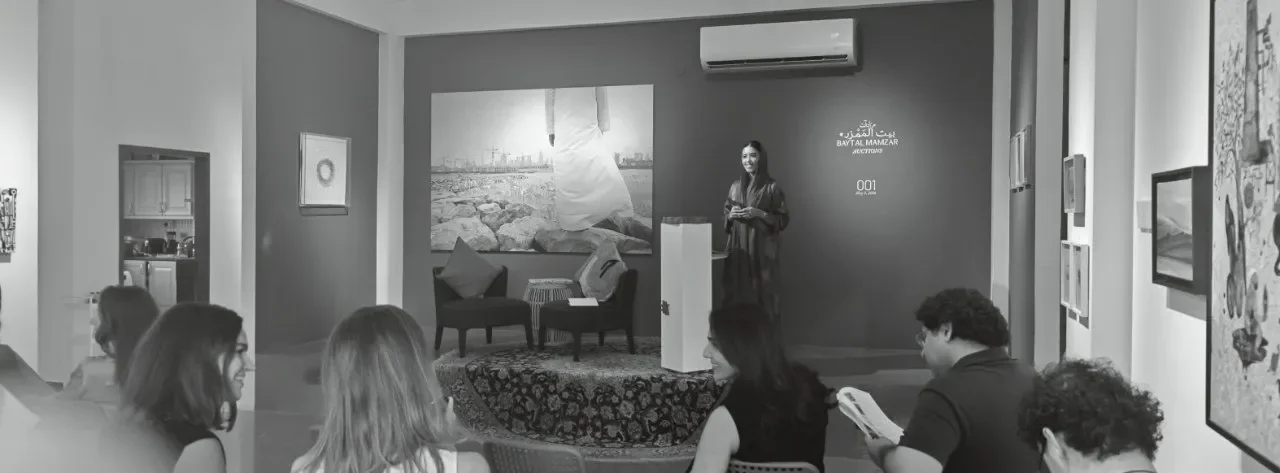
Courtesy of Bayt AlMamzar
Seen within the wider UAE landscape, BAM Auctions offers another kind of infrastructure. While museums and foundations shape art history through display, research, and public access, platforms like BAM shape the conditions of circulation: how works move, how value is recorded, and how collectors at different levels enter or remain within the market.
Together, Barjeel and BAM point toward a cultural landscape becoming more layered. One is concerned with preserving and narrating histories of Arab art through a permanent public home. The other responds to the practical realities of a developing secondary market, creating space for works and collectors that might otherwise sit outside dominant systems of exchange. Their significance is different, but connected. Both address what is needed for an art scene to sustain itself beyond moments of visibility.
In this sense, the current moment in the UAE is shaped by multiple forms of cultural work taking place at once: institutional memory, public access, collecting, experimentation, and market circulation. What emerges is an ecosystem increasingly concerned with the structures around art, not only with what is shown, but with how it is encountered, understood, collected, and carried forward.
Cover image: Union of Artists, Sculpture. Photo by Cedric Ribeiro/Getty Images for Art Dubai.
