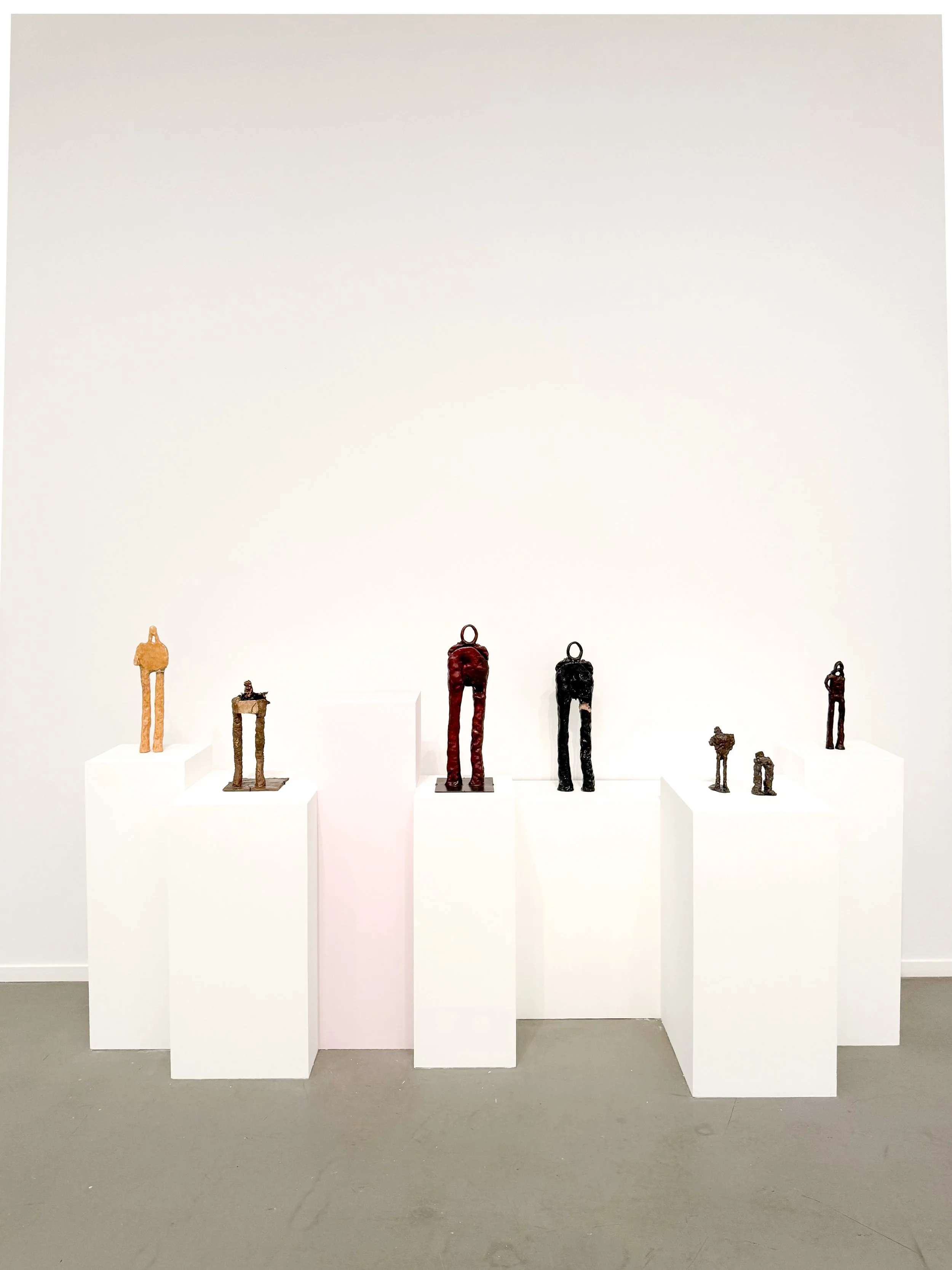
Simone Fattal: Cities at the Bottom of a Lake
Musée d’Art Moderne de Paris, 18 September 2026 – 24 January 2027. Curated by Jessica Castex.
Written by Soraya
Who is Simone Fattal
Simone Fattal was born in Damascus in 1942 and raised in Lebanon, where she went to boarding school in Beirut. She studied philosophy at the École des Lettres in Beirut and then at the Sorbonne in Paris, alongside archaeology at the École du Louvre — a training that never left the work. She returned to Beirut in 1969 and began painting: abstract, colour-led canvases drawn from Lebanese landscape, Mount Sannine and the Beirut waterfront among them, at a time when figuration dominated what was shown in the city. Her first solo exhibition was at Gallery One in 1973. She went on painting through the early years of the civil war.
In 1980 she left Lebanon with her partner, the poet and artist Etel Adnan, whom she had met in 1972, and settled in Sausalito, California. Painting stopped. In 1982 she founded the Post-Apollo Press, a publishing house devoted to experimental poetry, prose and translation; one of its first titles was the English translation of Adnan’s Sitt Marie Rose. The press ran until 2017 and published, among others, Leslie Scalapino, Lyn Hejinian, Marguerite Duras and Rûmî. Fattal edited, designed, sometimes translated, and made the covers.
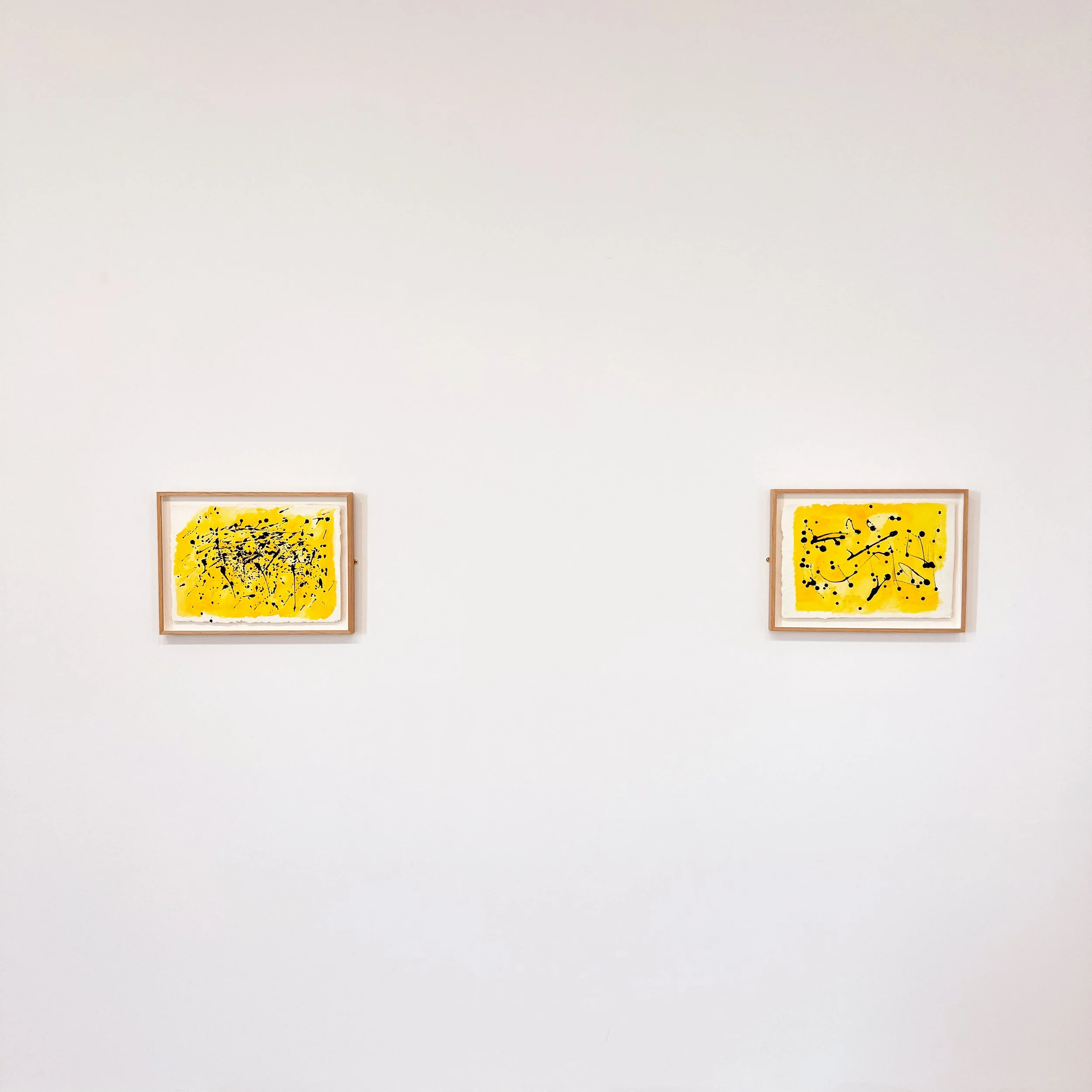
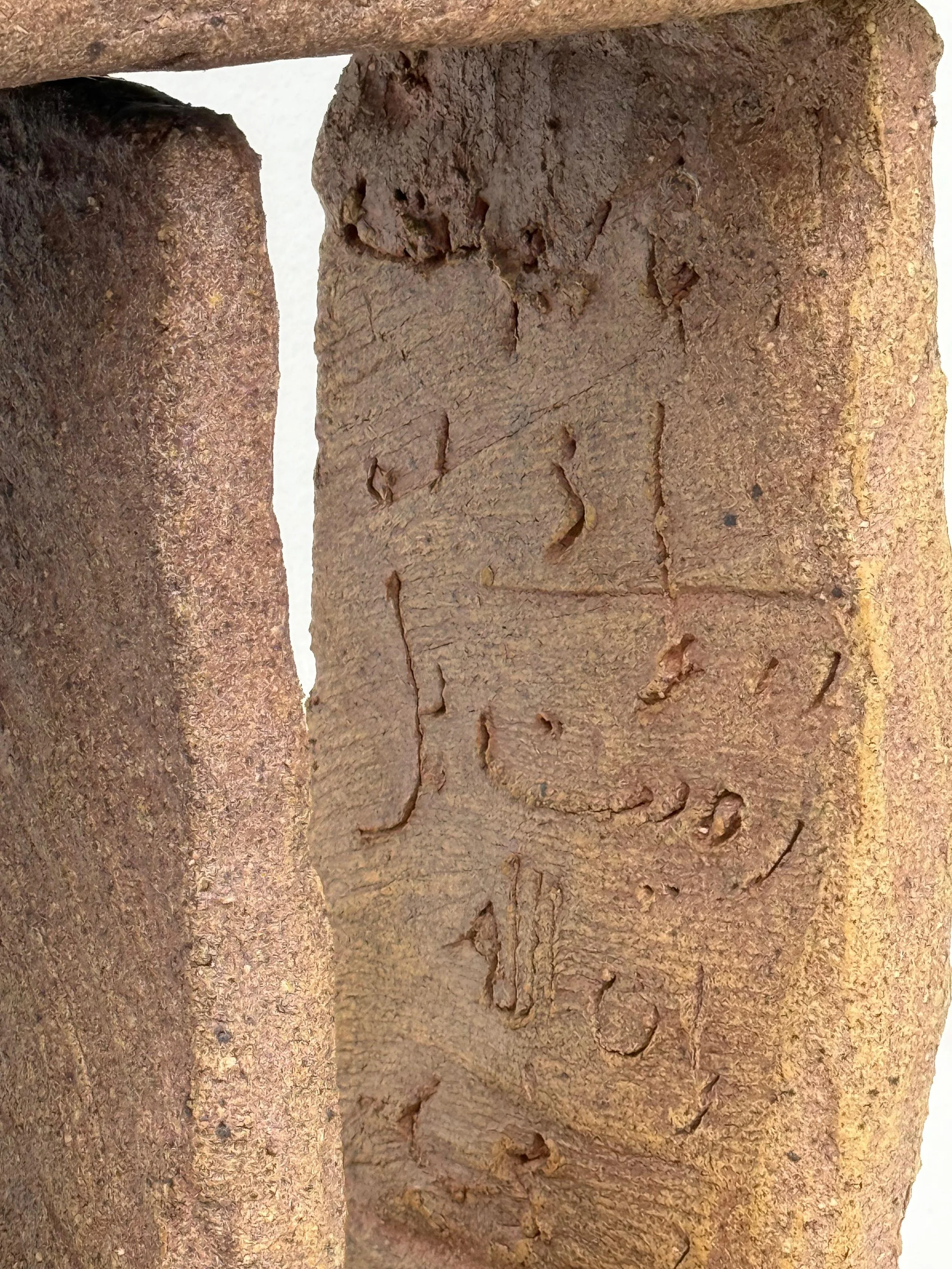
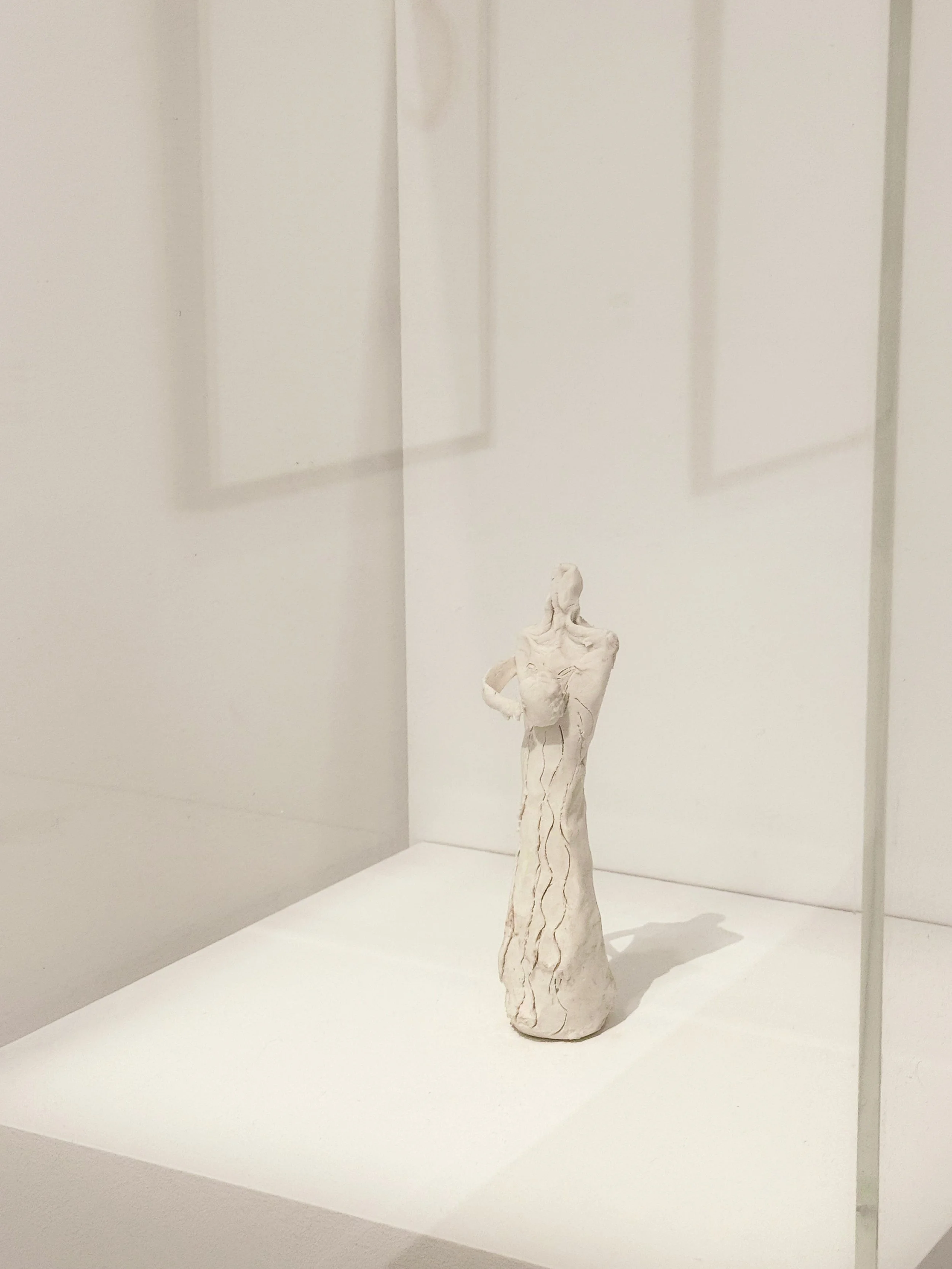
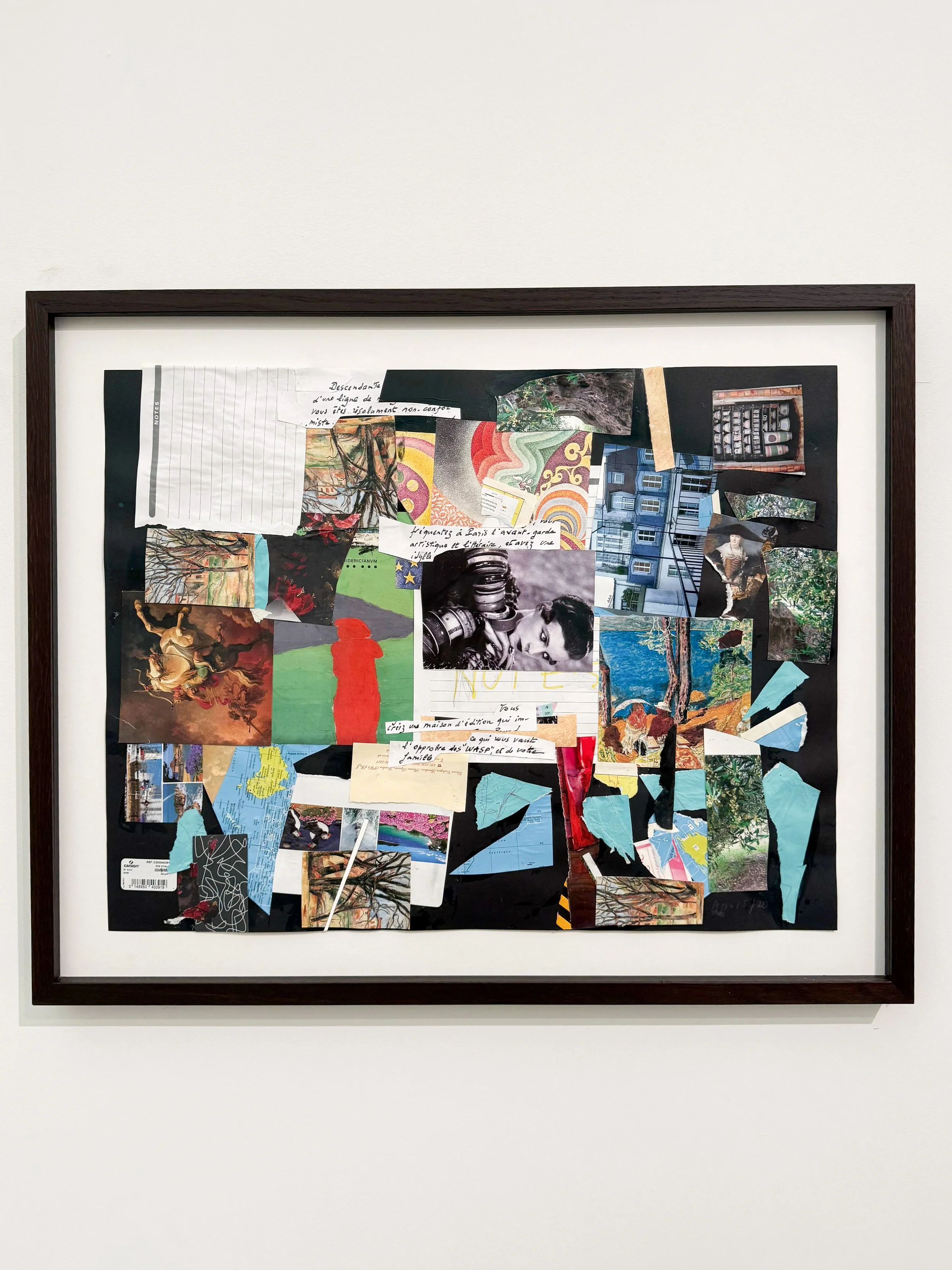
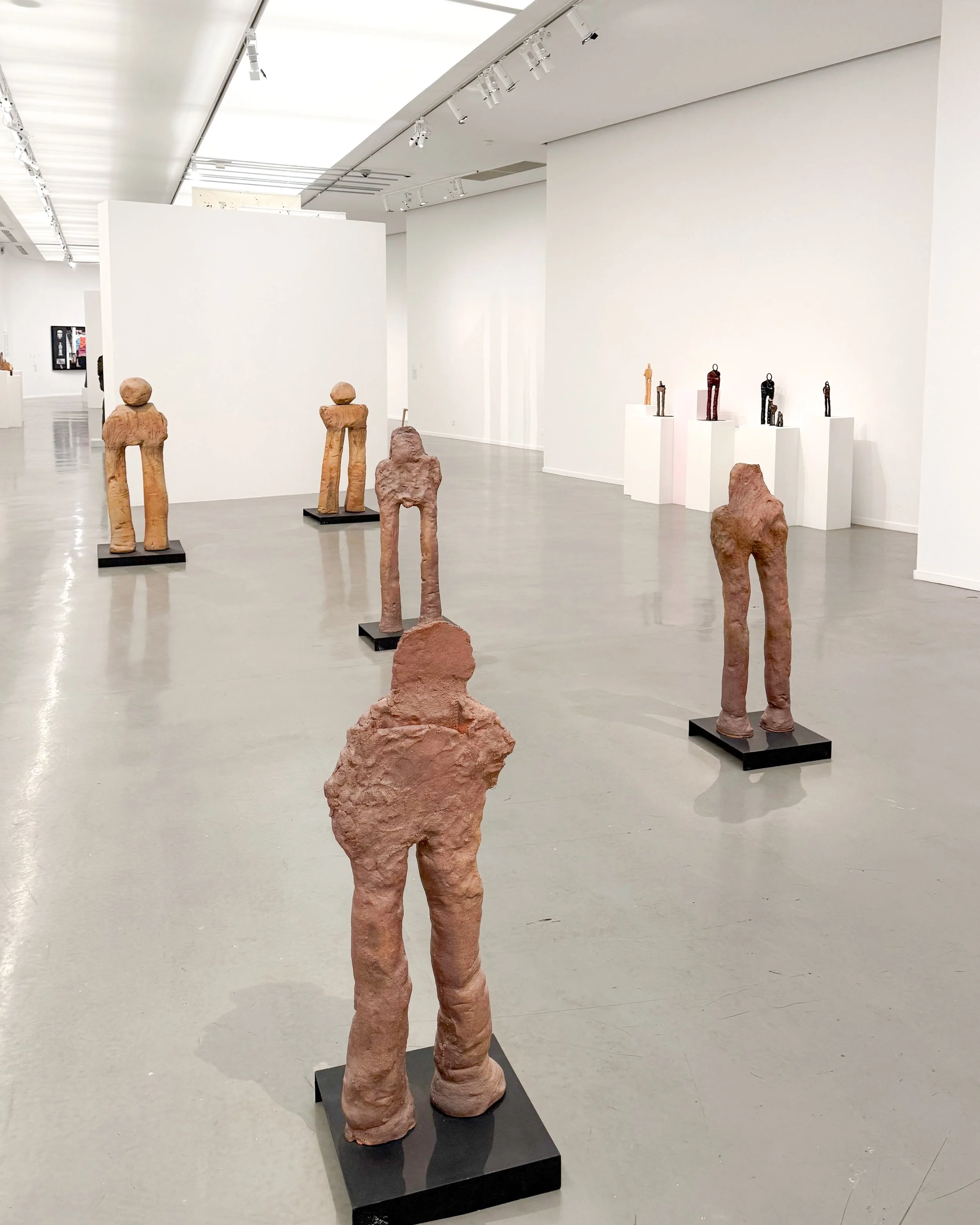
In 1988, at forty-six, she enrolled in classes at the College of Marin and the San Francisco Art Institute and came back to art through sculpture — first a found alabaster stone, then bronze, then clay, which became her material. Since 2006 she has worked regularly at Hans Spinner’s ceramic workshop in Grasse. Her figures — warriors, standing men, gods and travellers — draw on Gilgamesh, Sufi poetry, Greco-Roman myth and archaeology, and read as though they had been excavated rather than made. Watercolour, ink and collage run alongside them.
Fattal and Adnan later moved to Paris, where Fattal still lives and works; Adnan died there in November 2021. Fattal’s first solo museum exhibition in the United States, Works and Days, was held at MoMA PS1 in 2019. Since then she has shown at the Whitechapel Gallery in London, Ocean Space in Venice, Portikus in Frankfurt, the Secession in Vienna and the Louvre, and she won both the Berlin Grand Art Prize and the Julio González International Prize in 2024. Her work is held by the Centre Pompidou, mumok, the Sharjah Art Foundation, the Walker Art Center and the Musée d’Art Moderne de Paris.
A room of her own, at last
Simone Fattal has lived in Paris for years. Her studio is here, her publishing house ended here, her life with Etel Adnan was spent largely here. And yet it has taken until the autumn of 2026 for a Parisian museum to give her a room of her own — one hundred works, fifty years, the first exhibition of its kind in the city she calls home. Cities at the Bottom of a Lake opened at the Musée d’Art Moderne de Paris on 18 September, curated by Jessica Castex, and it arrives with the particular weight of a recognition that is both deserved and overdue.
France is not a footnote in Fattal’s life: she studied philosophy at the Sorbonne and archaeology at the École du Louvre, she and Etel Adnan made their home in the Latin Quarter, and her studio has been a few streets away for years. To be internationally renowned and barely shown in the country you live in is a strange kind of half-visibility — and in Paris it has often meant being read through Adnan, whose retrospectives and paintings arrived here first. A museum show on the scale of the MAM’s changes the terms. One hundred works across fifty years give a French public the whole of her rather than a fragment: the self-taught painter of Mount Sannine, the publisher who ran Post-Apollo Press for thirty-five years, the sculptor who came to clay at forty-six. Recognition this late is an introduction, finally made properly, to an audience that should have had her all along.
Three curatorial decisions make it more than a dutiful late survey.
The first is the refusal of chronology. The works are organised into successive thematic groupings rather than a timeline — Early Paintings, The Warrior Figure and the Standing Man, Ancient Mythologies, Individual and Collective Narratives, Texts, The Post-Apollo Press, White Paintings, The Living World, Constructions. The effect is that the 1969–70 canvases of Mount Sannine and the Chouf cedars, and the ink and watercolour work of the 2010s and after, are read as the same preoccupation rather than two ends of a career. The rugs her father collected and Expo 58 in Brussels sit behind the first paintings; the same doubled inheritance, Middle Eastern and Western, is still legible at the other end of the galleries.
The second is that the books are treated as work. Around thirty Post-Apollo Press titles are installed in the heart of the exhibition, not at its margins. The press ran from 1982 to 2017 and began because Etel Adnan’s From A to Z had just been rejected by a publisher; Fattal took on every role — editorial direction, graphic design, cover art, sometimes translation — and built a list that ran from Leslie Scalapino and Lyn Hejinian to Marguerite Duras and Rûmî. Placing that at the centre argues that the years she spent publishing were not a gap in the practice.
The third is that the exhibition stays open-ended. Humbaba (2026) is new, made for this show, joining the cast of Gilgamesh, Ishtar, Dionysus and Ulysses that Fattal has described feeling close to — figures who, by her account, appeared one after another rather than being chosen. Guardian of the cedar forest in the Epic of Gilgamesh, the oldest epic we have, he is placed alongside the large-format ink drawings of La forêt (2023), so that the forest appears twice over: as a body in clay and as a mass of black ink. A survey usually closes a body of work. This one ends with something made this year, which is a quieter way of saying the story isn’t finished.