
Saloua Raouda Choucair: The Geometry of Abstraction
Before turning to art, Saloua Raouda Choucair studied mathematics and physics at what is now the Lebanese American University in Beirut. That early training would remain closely connected to her practice, particularly in the systems of proportion, repetition and geometry that came to define her work.
Born in Beirut in 1916, Choucair lost her father the following year while he was serving in the Ottoman army and was raised by her mother alongside her two siblings. Her early artistic training was under the Lebanese painters Mustafa Farroukh and Omar Onsi, whose practices were rooted largely in landscape and figurative painting. Choucair initially worked within this tradition, before gradually moving away from it.
A significant shift came during a visit to Cairo in 1943, where she encountered Islamic architecture and geometric design more closely. She began studying the proportions and structures she found in mosques, paying particular attention to the way complex patterns could develop through repetition and a defined set of geometric principles. Choucair would later describe Islamic geometric design as fundamental to the rules that governed her own work.
By the late 1940s, she had moved to Paris, where she studied at the École des Beaux-Arts and worked in Fernand Léger’s studio. During this period, she was among the first artists from the Arab world to exhibit at the Salon des Réalités Nouvelles, an important forum for abstract art in Paris.
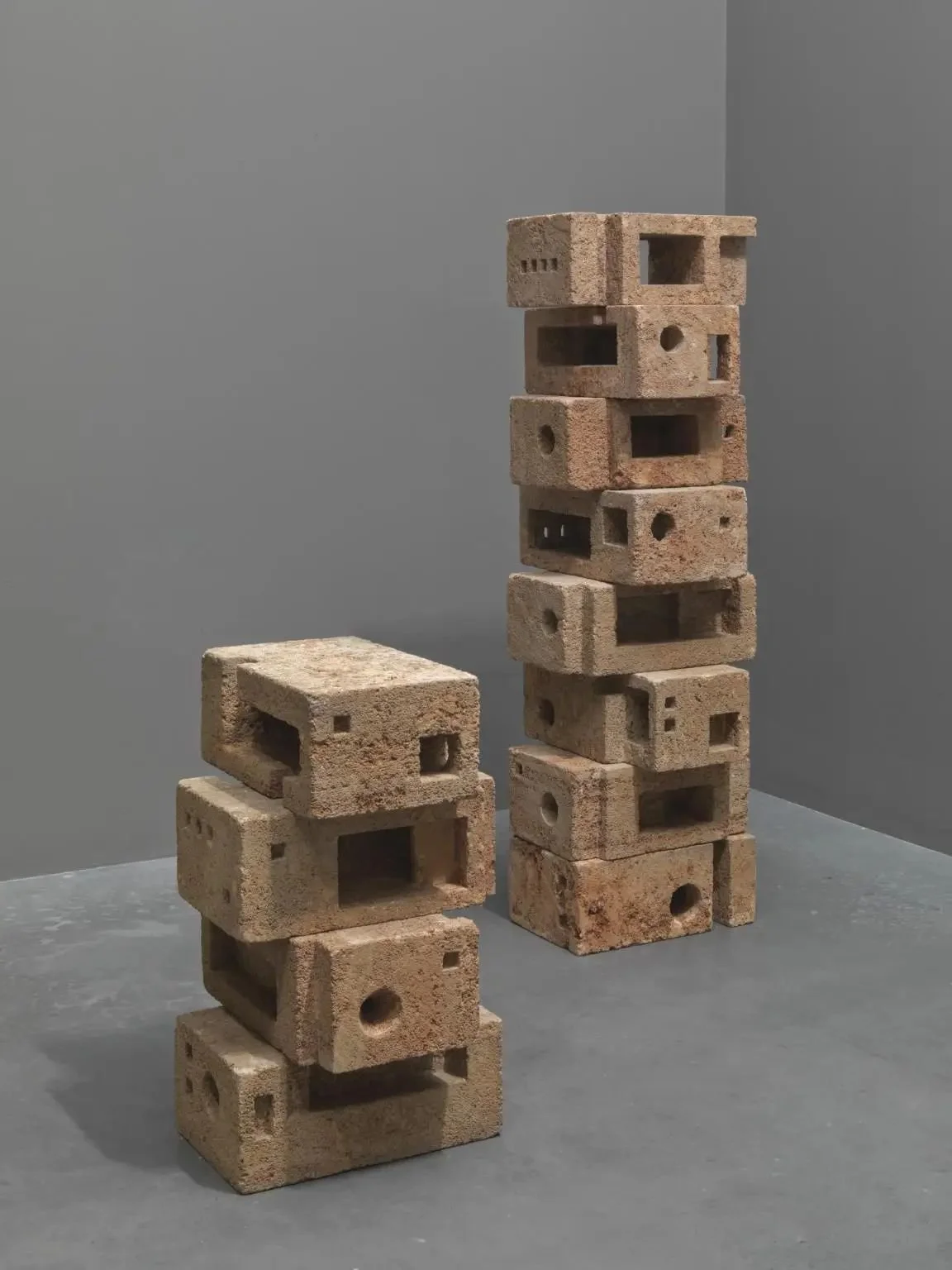
Choucair returned to Beirut in 1951 and increasingly turned towards sculpture. Working across wood, stone, aluminium and glass, she developed modular forms composed of individual elements that could be separated, rearranged and brought together again. She connected this approach to Arabic and Sufi poetry, where individual lines could retain their own meaning while also forming part of a larger structure.
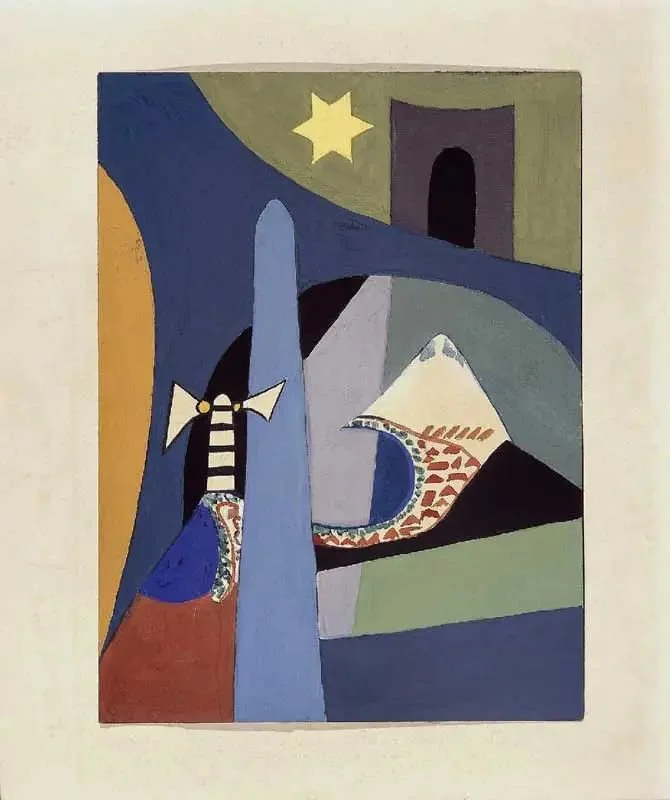
Her approach had few parallels within the Lebanese art scene of the period. While many artists around her were still working through figurative and Impressionist traditions, Choucair was developing an abstract sculptural language informed by mathematics, Islamic geometry, architecture and poetry. For much of her career, she worked from her home in Beirut and received relatively little attention from the wider art world. She did not begin selling her work until she was in her fifties.
Recognition came gradually. A retrospective was held in Beirut in 1974, followed decades later by a major exhibition at the Beirut Exhibition Center in 2011. In 2013, Tate Modern presented the first major international museum exhibition dedicated to her work. Bringing together more than 120 works, many shown publicly for the first time, the exhibition traced her development from early figurative paintings such as Self Portrait (1943) to sculptures including Infinite Structure (1963–65) and The Screw (1975–77).
Choucair died in Beirut in January 2017 at the age of 100. Her work is now recognised as an important contribution to twentieth-century abstraction, developed through a distinctly different set of references from many of the European modernist movements with which abstraction is commonly associated. Across more than five decades, she drew on mathematics, Islamic geometric design, architecture and Arabic poetry to develop a sculptural language structured around proportion, repetition and the relationship between individual parts and a larger whole.
Words copyright of Naso Art Journal
Images copyright and courtesy of Saloua Raouda Choucair Foundation.
