
What Happens After the Acquisition?
On Ramak Fazel’s Milan Unit 1994–2009 at MAXXI and the responsibility of documenting a living practice
Written by Nayla
In an earlier piece for Naso, I wrote about a question a friend of mine, an artist, had been turning over: where her paintings go once they sell, which walls they end up on, what they become part of day to day. That piece focused on the collector, and on what someone who buys a work might owe it afterwards. I argued that this responsibility does not necessarily mean establishing a foundation or building a public collection. Making works available for loans and research, and keeping proper records of an artist’s work and its provenance, can matter just as much.
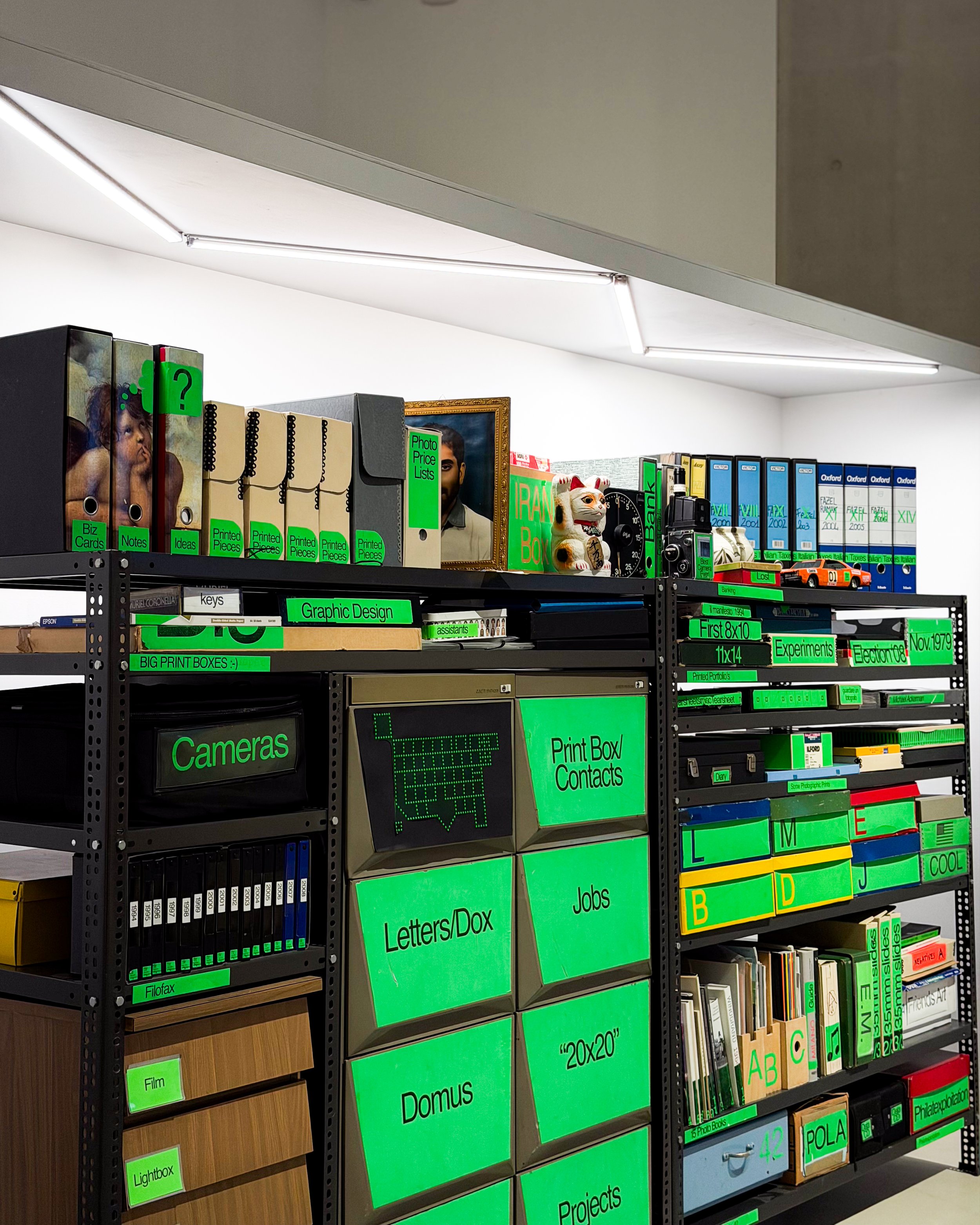
This summer, while in Rome, I went to MAXXI to see Milan Unit 1994–2009, an exhibition built around an archive the Iranian photographer Ramak Fazel assembled over fifteen years in Milan. Moving between artists’ studios, newsrooms, homes and design ateliers, he kept everything that gathered around his photographs: contact sheets, letters, notebooks, publications, documents and objects, until the archive itself became the work. MAXXI acquired it in 2025, and showed it in Spazio Ghella, a new room dedicated to photography, after spending the spring letting visitors watch the installation take shape.
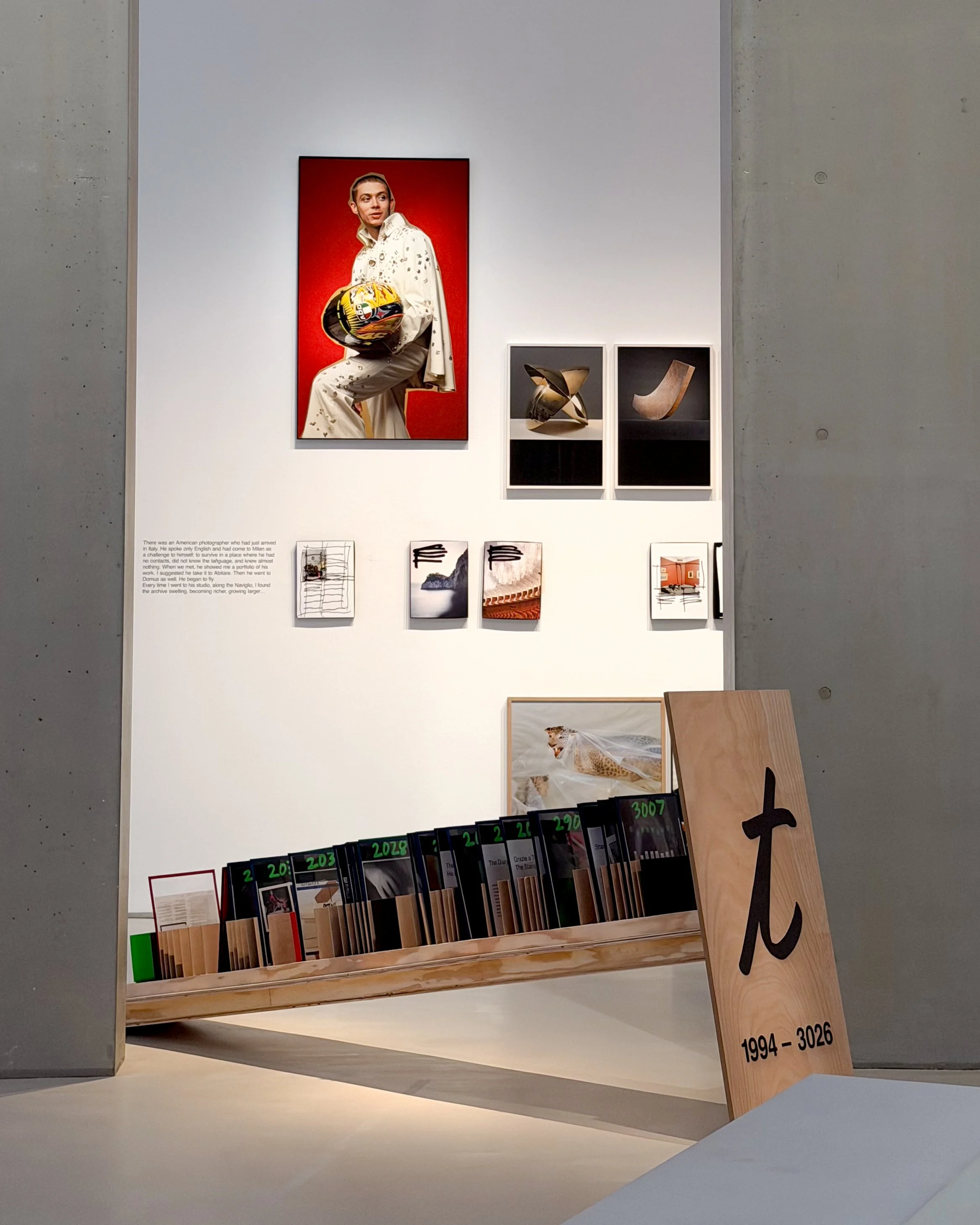
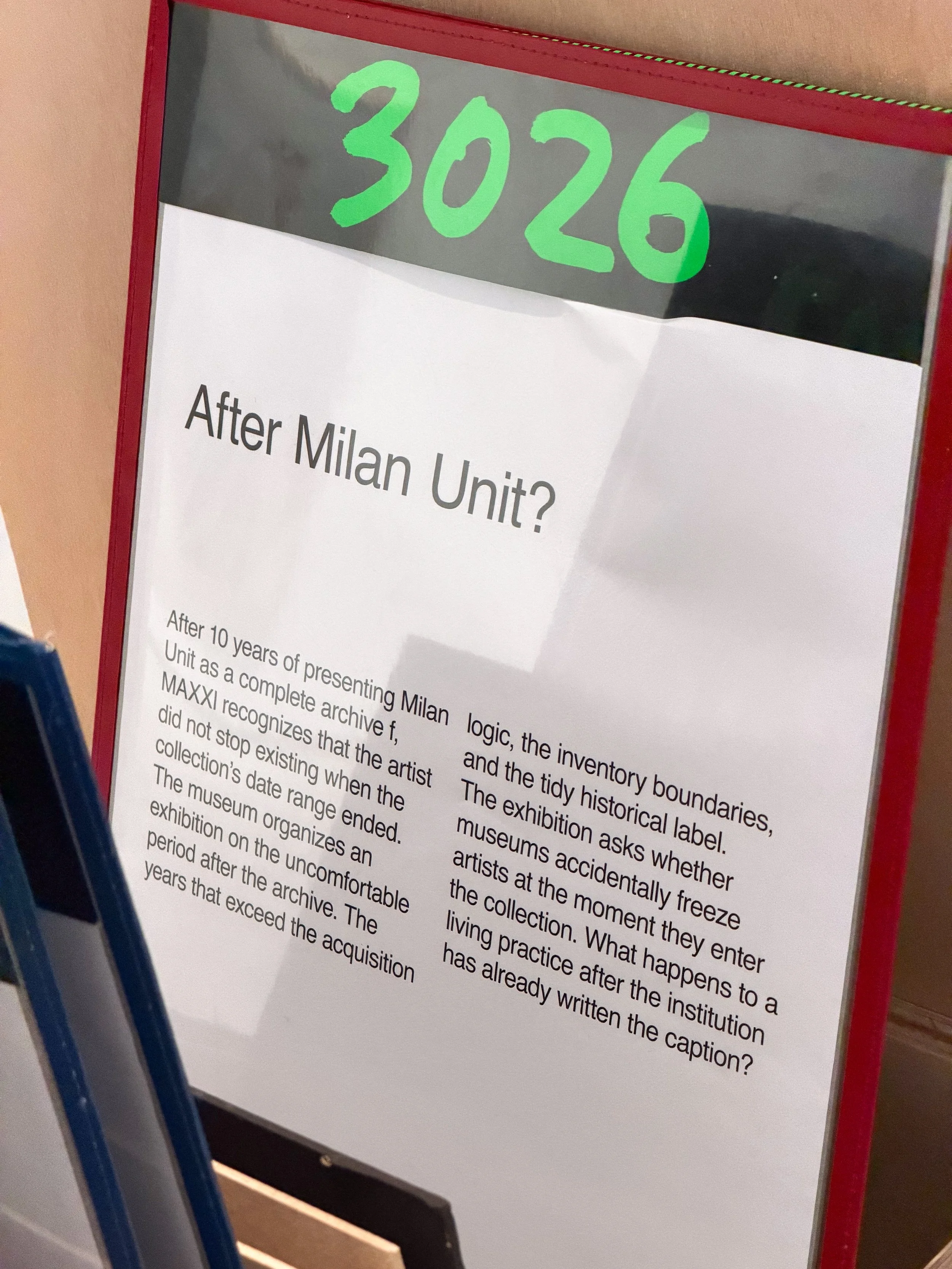
Among the files in the room was one inscribed, in bright green, with the year 3026. The question written on it belonged to the museum, and it was addressed to the museum itself. It imagined a future in which Milan Unit had been presented for years as a complete archive while the artist went on living and working well past the dates on its label. It asked whether museums freeze artists at the moment they enter the collection, and what happens to a living practice once the institution “has already written the caption.”
My friend’s question began with a painting leaving the studio and followed it into a private home. This one begins where a practice enters an institution. What does the institution owe the artist once the acquisition text has been written, the dates have been set, and the collection has decided which years ‘count’?
An institution often encounters an artist at a particular point in their career: through a body of work, a survey, an acquisition or, as with Fazel, an archive with a beginning and an end date. The language produced around that moment can travel far. It moves through catalogues, collection texts, press releases and future exhibitions, and can become the language through which the artist continues to be understood. The problem comes when the practice moves on, grows and changes, while the description remains the same.
A journal is capable of doing the same thing. Every studio visit, profile and interview we publish describes an artist at one point in their practice and sends that description out to be read after that point has passed. Print makes this particularly visible. An issue of Naso comes out twice a year and stays in circulation, and the artist in its pages remains exactly where we met them: in that studio, speaking about the work they were making then.
We have already begun returning to some of the artists Naso first encountered in its earliest issues. Mohammad AlFaraj was the cover artist of our first issue, with an interview published alongside it. More than a year on, he has returned to Naso for a podcast conversation with my co-founder Soraya, set to be released soon. There is value in having both conversations exist alongside one another. They belong to different moments in his practice, and neither needs to stand as a final or complete account of it.
Returning has its own limits though. We tend to go back to an artist when there is a reason to: a new body of work, an exhibition, a prize or a residency. This means that much of what happens between those moments is less likely to be documented. Institutions can fall into a similar pattern. An artist’s work often enters a collection at a particular point in their career, and may only be revisited when another significant moment draws attention to it.
The question, then, is how to write about a living practice without allowing one account of it to become the account. Returning is part of the answer, but it also matters when we return. If artists are only revisited when there is another exhibition, acquisition or milestone to write about, we end up documenting a career through the moments that institutions have already decided are significant. What falls outside those moments becomes much harder to see.
Milan Unit makes this particularly clear. MAXXI holds an archive dated 1994–2009, while Fazel’s practice continues beyond it. The file marked 3026 imagines what happens when one period of a living artist’s career is preserved so thoroughly that, over time, it risks becoming the only period through which they are known.
An acquisition can be the beginning of a longer relationship with an artist, extending beyond the work or period already held in the collection. That could mean returning to their practice over time, acquiring later work, or, in the case of an archive, giving the artist the opportunity to add to or respond to the existing record. For Naso, it means being more conscious of when and why we return to artists, and not always waiting for another exhibition, prize or announcement to provide the occasion.
That is what brings me back to the year written in green on the file at MAXXI. The distance of 3026 makes the question easier to see, but it begins much earlier. A museum will always hold only part of an artist’s practice, just as a publication will only ever encounter it at particular moments. Perhaps the responsibility lies in remembering that distinction, and leaving room for what comes next.
Words and Images Copyright of Naso Art Journal
